
Uninsured Motorist Coverage Explained: UM vs UIM
Uninsured motorist coverage explained in plain terms, including UM vs UIM and how to add it. Call (833)-214-7506 to compare quotes today.

By Rowan Hale
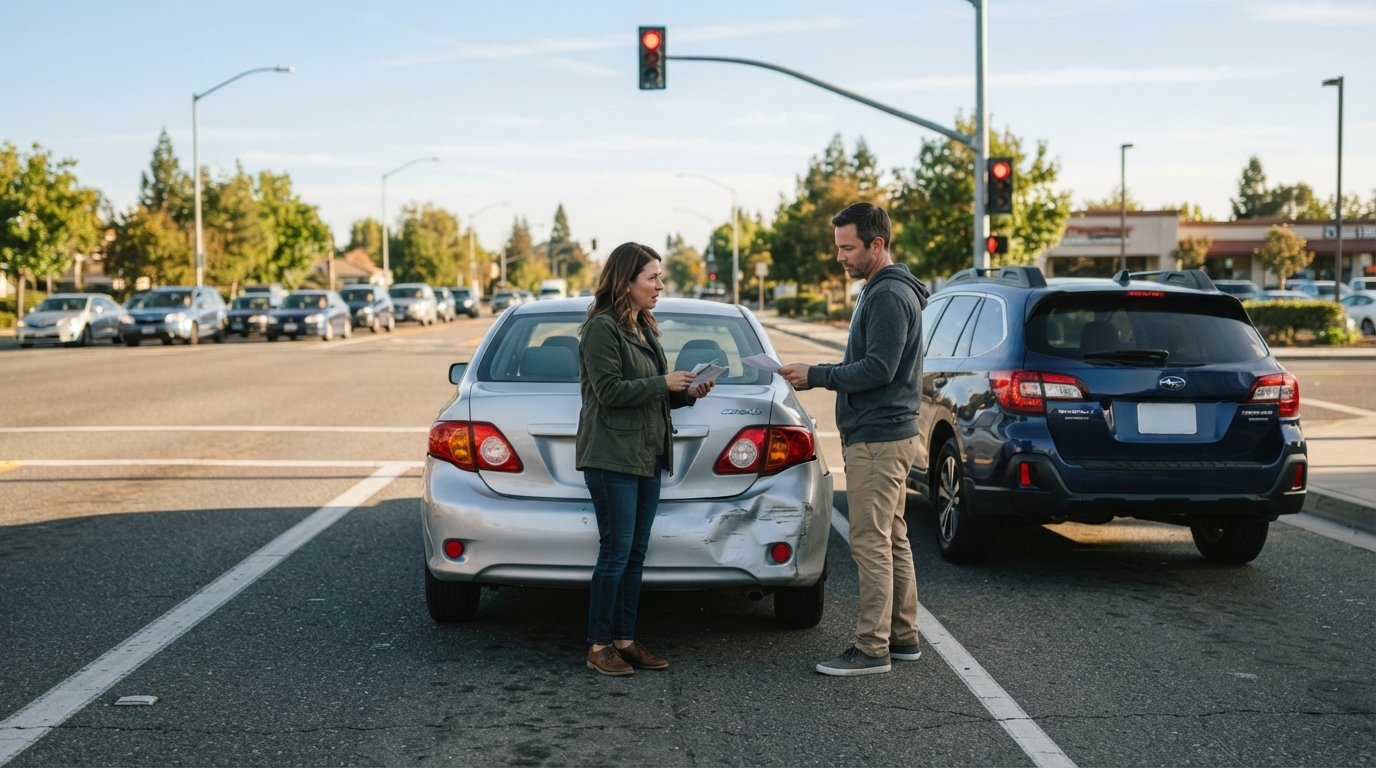
You are sitting at a red light when a driver rear-ends your car. You exchange information, but the other driver cannot produce proof of insurance. Or worse, they hand you a policy card that turns out to be expired. Your own collision coverage might repair your car, but who pays for your medical bills, lost wages, or pain and suffering when the at-fault driver has no insurance? That is exactly the gap uninsured motorist coverage is designed to close. Understanding how this protection works, what it covers, and how it differs from underinsured motorist coverage can mean the difference between a manageable claim and thousands of dollars in out-of-pocket costs.
This guide walks through uninsured motorist coverage explained in plain terms, from the basic definition to state requirements and the practical steps for adding it to your policy. Whether you are shopping for a new policy or reviewing the one you already have, the goal is the same: make sure you and your passengers are protected when the other driver cannot or will not pay.
What Uninsured Motorist Coverage Actually Covers
Uninsured motorist coverage, often abbreviated as UM, is a component of your auto policy that responds when you are injured in an accident caused by a driver who has no liability insurance at all. It can also apply in hit-and-run situations where the at-fault driver leaves the scene and cannot be identified. Think of it as a substitute for the liability coverage the other driver should have carried but did not.
The core benefit is that UM pays for your damages that the uninsured driver is legally responsible for, up to the limits you select. This typically includes medical expenses for you and your passengers, lost wages if injuries keep you out of work, and in many states, compensation for pain and suffering and other non-economic damages. Some policies also extend UM to cover you as a pedestrian or cyclist if you are struck by an uninsured vehicle.
There is an important distinction between the two main flavors of this protection. Uninsured motorist bodily injury (UMBI) covers injuries to people, while uninsured motorist property damage (UMPD) covers damage to your vehicle. Not every state offers UMPD, and in states where it exists, it sometimes comes with a deductible and may not apply if you already carry collision coverage. For many drivers, the bodily injury portion is the more critical piece because medical costs and lost income can far exceed the value of a vehicle.
A common misconception is that UM duplicates your health insurance or your own collision coverage. In practice, UM often fills gaps that health plans do not touch, such as lost wages and pain and suffering. It also typically avoids the deductible that applies to collision claims. If you want a deeper look at how physical damage coverage handles repairs, our guide on travel trailer insurance coverage explained walks through similar principles for towable vehicles.
UM vs UIM: The Difference That Matters
The terms uninsured and underinsured are often used interchangeably in casual conversation, but they describe two different scenarios. Uninsured motorist coverage applies when the at-fault driver has no liability insurance whatsoever. Underinsured motorist coverage, or UIM, applies when the at-fault driver does have insurance, but their liability limits are too low to cover the full extent of your damages.
Here is a simple way to picture it. Suppose you suffer $80,000 in medical bills and lost wages after an accident, and the other driver carries the state minimum of $25,000 per person. Their insurer pays $25,000, leaving a $55,000 shortfall. If you carry UIM coverage with adequate limits, your own policy can step in to cover the difference, up to your UIM limit. Without UIM, that $55,000 gap falls on you, your health insurance, or your savings.
Many states that require UM also require insurers to offer UIM, though you may be allowed to reject it in writing. Some states treat UM and UIM as a single combined coverage, while others list them separately on the declarations page. When you review your policy, check whether the line item says uninsured motorist, underinsured motorist, or both. The coverage trigger language matters, and a licensed agent can confirm exactly how your state handles the distinction.
Both coverages generally follow the same claim process and stack on top of the at-fault driver's available liability coverage. In practical terms, UIM is the more frequently used protection because a large share of drivers carry only the legal minimum. The Insurance Research Council has repeatedly found that a meaningful percentage of drivers are uninsured, and a much larger share are underinsured relative to the cost of a serious injury claim.
State Requirements and Limits You Should Know
Uninsured motorist requirements vary widely by state. Some states mandate UM coverage and require you to purchase it unless you sign a written waiver. Others require insurers to offer it but allow you to decline. A handful of states do not require UM at all, though insurers may still offer it as an optional add-on. Because the rules are state-specific, the first step is to check what your state requires and what your policy actually includes.
Coverage limits are equally important. UM and UIM limits are usually expressed as two numbers, such as 25/50, meaning $25,000 per person and $50,000 per accident. Many insurance professionals recommend carrying UM and UIM limits that match your bodily injury liability limits, because that symmetry ensures you protect yourself as well as you protect others. If you carry $100,000 per person in liability coverage but only $25,000 in UM, you are leaving a significant gap in your own protection.
Here are the key variables to confirm with your insurer or agent:
- Whether UM and UIM are required, optional, or subject to a written waiver in your state
- The default limits offered and whether you can increase them
- Whether uninsured motorist property damage is available and how it interacts with your collision deductible
- Whether the policy includes stacking, which allows limits from multiple vehicles to combine in some states
- Whether UM applies to hit-and-run accidents and to you as a pedestrian
Stacking deserves a closer look because it can substantially increase the available coverage. If you insure three vehicles on one policy and your state permits stacking, some policies will combine the UM limits for all three vehicles in a single claim. Not all states allow this, and some insurers charge extra for it, so confirm the details in writing. Understanding these mechanics is part of a broader effort to optimize your coverage rather than simply buying the cheapest policy on the market.
How to Add UM and UIM to Your Policy
Adding uninsured and underinsured motorist coverage is usually straightforward, but the process differs depending on whether you are starting a new policy or modifying an existing one. The steps below outline a practical approach that works in most situations.
- Review your current declarations page to see whether UM and UIM already appear and at what limits.
- Decide on target limits, ideally matching your bodily injury liability limits or the highest level you can comfortably afford.
- Request quotes that show the premium impact of increasing UM and UIM, since the cost is often modest relative to the protection gained.
- Confirm state-specific details such as stacking, property damage availability, and waiver rules with a licensed agent.
- Update your policy and store the new declarations page with your insurance documents.
If you are shopping for a new policy, it helps to compare multiple quotes side by side with the same UM and UIM limits so the comparison is apples to apples. NewAutoInsurance.com connects drivers with licensed agents who can provide personalized quotes and explain how each option applies in your state. There is no obligation to buy, and the service is built around education first. Drivers who also want to reduce financing costs on the vehicle itself can explore auto loan refinancing options through CarLoanRefinancing.com, which offers rate comparisons and calculators for vehicle owners.
Common Claim Scenarios and How Payouts Work
Understanding how a UM or UIM claim unfolds helps you act quickly if an accident happens. The first step is always to document the other driver's insurance status. Call the police, get a report, and photograph any insurance cards or lack thereof. If the other driver flees, report the hit-and-run immediately, because many policies require prompt notice and some require a police report within a specified window.
Once you file a claim, your insurer will investigate the accident just as it would a liability claim. You will provide medical records, wage statements, and evidence of the other driver's fault. If the other driver is confirmed uninsured, UM responds. If the other driver has insurance but the limits are exhausted, UIM responds after that policy pays its share. In either case, your insurer stands in the shoes of the at-fault driver and evaluates damages under the same legal standards.
One nuance is that UM and UIM claims can involve a dispute over the value of your injuries. Insurers may make an initial offer that is lower than what you believe the claim is worth, and policyholders are generally free to negotiate or seek legal advice. Keeping thorough records from the outset, including medical bills, pay stubs, and a daily symptom log, strengthens your position. The process mirrors what you would expect from a liability claim, except the money comes from your own policy rather than the other driver's.
How UM Fits Into a Well-Balanced Auto Policy
Uninsured motorist coverage is not a standalone solution, and it works best alongside other protections. Liability coverage protects others when you are at fault. Collision coverage repairs your vehicle regardless of fault. Comprehensive coverage handles theft, weather, and vandalism. Medical payments or personal injury protection can cover immediate medical costs. UM and UIM fill the specific gap created by drivers who cannot pay, and that gap is wide enough that most experts consider this coverage essential rather than optional.
Cost is often less of a barrier than drivers expect. The premium for UM and UIM is typically a small fraction of the total policy cost, especially when compared with the financial exposure of an accident involving an uninsured driver. Bundling auto coverage with renters or homeowners insurance can further reduce the overall premium, freeing up room in the budget for stronger UM limits. The right balance depends on your state, your assets, and your risk tolerance, which is why a conversation with a licensed agent is worth the time.
Uninsured motorist coverage explained in one sentence is this: it is the part of your policy that protects you when the other driver cannot. Review your declarations page today, confirm your limits, and ask whether increasing them makes sense for your situation. A few minutes of review now can prevent a financial shock later.