
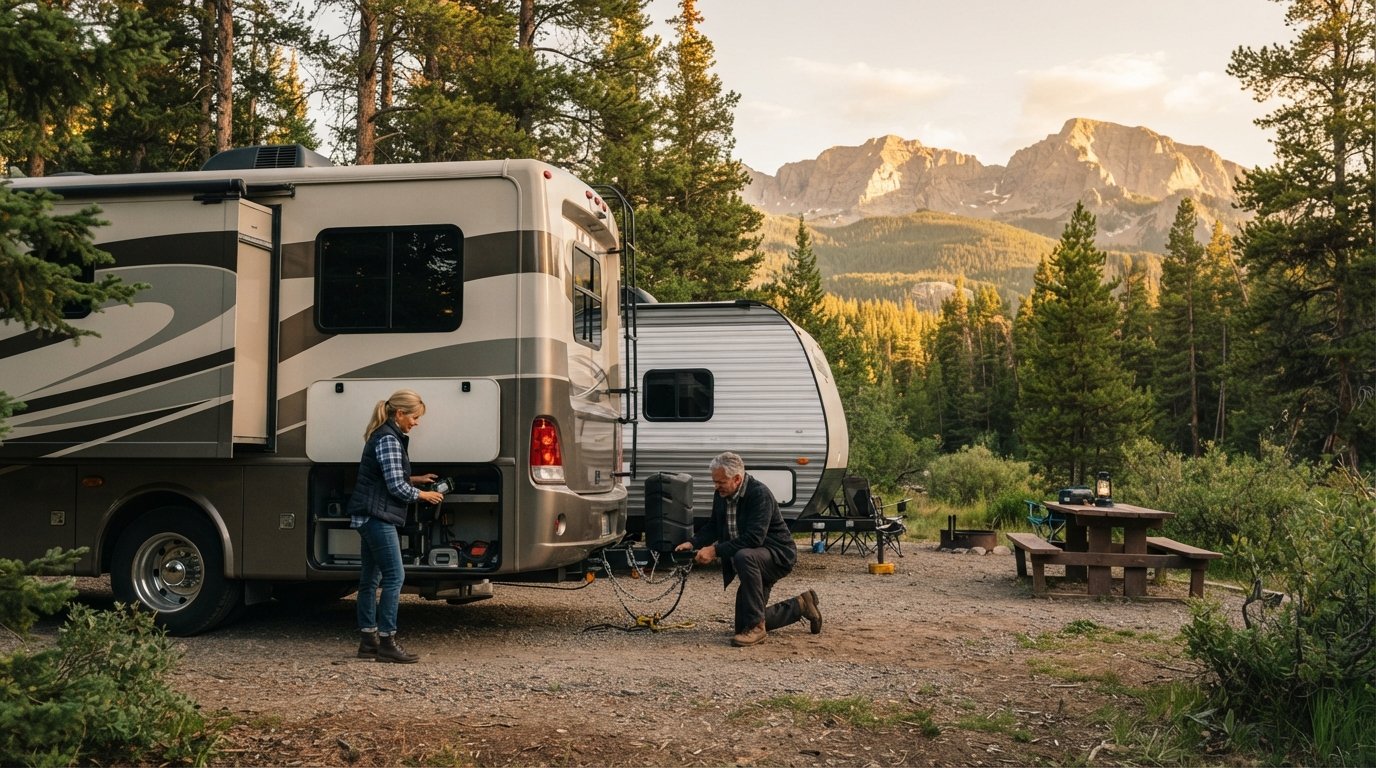
RV Insurance Coverage for Motorhomes and Travel Trailers
Understand rv insurance coverage for motorhomes and travel trailers, from liability to full-timer protection. Call (833)-214-7506 to compare quotes today.

By Isobel Crane
Your motorhome or travel trailer is more than a vehicle. It is a rolling home, a weekend escape pod, and often a significant financial investment. When you are towing a trailer down a mountain pass or navigating a motorhome through a crowded campground, the last thing you want to worry about is whether a fender bender or a fallen tree branch will come out of your own pocket. Understanding rv insurance coverage for motorhomes and travel trailers is the first step toward protecting both your rig and your peace of mind. Whether you are a full-time RVer or a seasonal camper, the right policy can mean the difference between a minor inconvenience and a financial disaster.
Many owners assume their standard auto policy will cover their RV. That assumption can be costly. While a standard auto policy might extend some liability protection to a travel trailer while it is attached to your truck, it rarely covers the unique risks associated with a motorhome or a standalone trailer. From theft of personal belongings inside the camper to structural damage from a storm, RV insurance is designed to fill the gaps that a regular car policy leaves open. This guide will walk you through the specific coverage types, how they differ from auto insurance, the factors that drive your premium, and how to compare quotes effectively.
Understanding the Core Coverage Types for RVs
At its foundation, rv insurance coverage for motorhomes and travel trailers mirrors the structure of a standard auto policy, but with important additions tailored to the RV lifestyle. The core components typically include liability, collision, and comprehensive coverage. Liability coverage is the legal foundation. It pays for bodily injury or property damage you cause to others in an accident. For motorhomes, liability limits are often higher than standard auto limits because a large vehicle can cause more damage. For travel trailers, liability usually applies while the trailer is attached to your towing vehicle, but separate liability coverage may be needed when the trailer is parked and detached at a campsite.
Collision coverage pays to repair or replace your RV if it is damaged in an accident with another vehicle or object, regardless of fault. Comprehensive coverage handles non-collision incidents such as theft, fire, vandalism, hail, or animal strikes. For travel trailers, comprehensive coverage is particularly valuable because trailers are often exposed to weather and theft when stored at a campsite or in a storage lot. A critical distinction for motorhomes is that they are often classified as both a vehicle and a residence. This dual nature gives rise to specialized coverage like full-timer coverage, which we will explore next.
Full-timer coverage is a specialized endorsement or policy designed for people who live in their motorhome or travel trailer year-round. Standard RV policies assume the RV is a recreational vehicle, not a primary residence. If you live in your RV full-time, you need coverage that includes personal liability, medical payments, and loss assessment coverage that mimics a homeowners policy. Without full-timer coverage, you could face significant gaps if someone is injured inside your RV or if your personal belongings are destroyed. When comparing rv insurance coverage for motorhomes and travel trailers, always clarify whether you are a full-timer or a part-timer, as this single factor dramatically changes the policy structure.
How RV Insurance Differs from Standard Auto Insurance
The most obvious difference between RV insurance and auto insurance is the scope of protection. A standard auto policy is built around the vehicle's function as transportation. An RV policy is built around the vehicle's function as a home on wheels. This means RV policies often include coverage for personal effects, such as clothing, electronics, and camping gear stored inside the RV. They may also include vacation liability coverage, which extends liability protection to the campsite itself, covering incidents that occur while you are parked and set up. Standard auto policies do not offer these protections.
Another key difference is the handling of specialized equipment. Motorhomes often have awnings, satellite dishes, solar panels, and upgraded appliances. Travel trailers may have slide-outs, stabilizer jacks, and custom interior modifications. Standard auto policies may not adequately cover these additions. RV insurance policies typically allow you to schedule or include coverage for custom equipment and accessories, ensuring you are reimbursed for the full value of your rig, not just the base vehicle. Additionally, RV policies often include emergency expense coverage, which pays for hotel stays, meals, and transportation if your RV is disabled and you are stranded away from home.
For travel trailer owners, the distinction is even more pronounced. A travel trailer is not a self-propelled vehicle. It relies on a tow vehicle. While the tow vehicle's auto policy may cover liability while towing, it typically does not cover the trailer itself for physical damage. You need a separate travel trailer insurance policy to protect the trailer's structure, contents, and liability when it is detached. This is a common point of confusion. Many trailer owners discover too late that their auto policy only covers the trailer for liability, leaving the trailer's own damage unprotected. To avoid this, you should review travel trailer insurance coverage explained in detail before you hit the road.
Factors That Influence Your RV Insurance Premium
Insurers calculate RV insurance premiums based on a combination of vehicle-specific and driver-specific factors. The type of RV is the starting point. Motorhomes, especially Class A diesel pushers, are more expensive to insure than travel trailers because they are more complex, cost more to repair, and can cause more damage in an accident. Travel trailers are generally cheaper to insure, but their premiums are still influenced by size, weight, and value. A small pop-up camper will cost far less to insure than a 40-foot fifth wheel with a luxury interior.
Usage is another major factor. Insurers want to know how often you use your RV and where you store it. A motorhome stored in a secure, enclosed facility will often qualify for lower comprehensive rates than one parked on a street. Full-time use typically increases premiums because the RV is exposed to more risk on a daily basis. Your driving history and claims history also play a role, just as they do with auto insurance. A clean record can earn you discounts, while accidents or moving violations will increase your rate. Geographic location matters as well. Areas prone to severe weather, theft, or high traffic density will have higher premiums.
Deductibles and coverage limits are the levers you control. Choosing a higher deductible lowers your premium but increases your out-of-pocket cost if you file a claim. Selecting higher liability limits increases your premium but provides better protection. When you request quotes, compare the same coverage levels and deductibles to make an apples-to-apples comparison. Here is a quick checklist of factors to discuss with an agent:
- RV type (Class A, Class B, Class C, travel trailer, fifth wheel, pop-up)
- Usage (part-time, full-time, seasonal)
- Storage location (enclosed garage, outdoor lot, driveway)
- Driving record and claims history
- Desired deductible and liability limits
Having this information ready will streamline the quote process and help you get accurate numbers. It also allows you to identify which factors are driving your premium and where you might adjust coverage to save money without sacrificing essential protection.
How to Compare RV Insurance Quotes Effectively
Comparing RV insurance quotes is not just about finding the lowest price. It is about finding the best value for your specific needs. Start by gathering quotes from multiple insurers. You can work with an independent agent who represents several carriers or use an online comparison tool. At NewAutoInsurance.com, we connect you with licensed agents who can provide personalized quotes from a network of carriers. This saves you time and ensures you are comparing policies with similar coverage levels. Always request quotes for the same deductible and liability limits to make a fair comparison.
When reviewing quotes, look beyond the premium. Examine the coverage details. Does the policy include full-timer coverage if you need it? Are your custom accessories covered? What is the claims process like? Does the insurer offer emergency expense coverage? A slightly higher premium may be worth it if it includes coverage that prevents a large out-of-pocket expense later. Also, ask about discounts. Many insurers offer discounts for bundling RV insurance with auto or homeowners insurance, for being a member of a camping club, or for completing a defensive driving course. These discounts can significantly reduce your premium.
One often-overlooked strategy is to review your overall financial picture before committing to a policy. If you are financing your RV, your lender may require specific coverage limits. If you are considering refinancing your tow vehicle or other auto loans to free up cash for insurance, it is worth exploring your options. Platforms like CarLoanRefinancing can help you compare refinancing rates and potentially lower your monthly payments, which could make room in your budget for better RV coverage. This holistic approach ensures you are not sacrificing protection in one area to save money in another.
Finally, do not be afraid to ask questions. Insurance policies are full of fine print. Ask the agent to explain what is covered and what is excluded. For example, does the policy cover pest damage (often excluded)? Does it cover roof leaks (sometimes only if the leak is sudden and accidental)? Understanding these details will help you choose the right policy and avoid surprises at claim time. The goal is to secure rv insurance coverage for motorhomes and travel trailers that matches your actual risk exposure, not just the lowest advertised rate.
Special Considerations for Motorhome and Travel Trailer Owners
Motorhome owners face unique risks that require tailored coverage. A motorhome is a heavy vehicle that can cause significant damage in a collision. It also contains plumbing, electrical systems, and appliances that can fail and cause water damage or fire. Standard auto policies may not cover these internal systems. RV policies often include coverage for the living area, including the plumbing and electrical systems, as part of the comprehensive or collision claim. Additionally, motorhomes are attractive targets for theft. Comprehensive coverage is essential to protect against theft and vandalism.
Travel trailer owners have a different set of concerns. Travel trailers are often towed at highway speeds, which introduces risks like sway, tire blowouts, and hitch failure. While the trailer itself is covered by a travel trailer policy, you also need to ensure your tow vehicle has adequate liability coverage. Some travel trailer policies include coverage for emergency roadside assistance, which is invaluable if you have a flat tire or a mechanical issue on the road. Also, consider coverage for personal belongings inside the trailer. If you carry expensive gear, such as generators, bikes, or fishing equipment, you may need to schedule these items separately or increase your personal effects coverage limit.
Another consideration is seasonal use. If you only use your RV during the summer, you might qualify for a seasonal or lay-up policy that reduces your premium during the months when the RV is in storage. However, you must ensure that the policy still provides comprehensive coverage during storage, as theft and weather damage can occur year-round. Discuss your usage patterns with your agent to find the right balance between coverage and cost. By understanding these nuances, you can make informed decisions and avoid common pitfalls that lead to denied claims.
Your RV is a significant investment, and protecting it requires more than a one-size-fits-all auto policy. By exploring the specific coverage types, understanding how RV insurance differs from auto insurance, and comparing quotes carefully, you can secure the protection you need. Whether you are a weekend warrior or a full-time nomad, the right policy provides the confidence to enjoy the open road. To get started, call (833)-214-7506 to compare bundled options today and speak with a licensed agent who can tailor coverage to your specific RV and travel trailer needs.