
Rhode Island Car Insurance Quotes: Minimum Limits Guide
Compare Rhode Island car insurance quotes minimum limits and higher-limit options. Call (833)-214-7506 to review coverage with a licensed agent.

By Tamsin Reed
Rhode Island is the smallest state in the country, but the financial risk of a serious car crash here is anything but small. If you are shopping for coverage, you have probably noticed that Rhode Island car insurance quotes minimum limits look surprisingly low on paper. The state requires drivers to carry only a modest amount of liability protection, and while that keeps the entry price of a policy down, it can leave you exposed to thousands of dollars in out-of-pocket costs after a bad accident. Understanding what those minimums actually buy you, and where they stop protecting you, is the first step toward choosing a policy that fits your real risk instead of just satisfying a legal checkbox.
This guide breaks down the required limits, explains why so many Rhode Island drivers choose to buy more, and walks through how to request and compare quotes from licensed agents so you can see the true cost of each option. Along the way, we will look at average premium ranges, optional coverages worth considering, and the practical steps to get accurate numbers rather than guesswork. Whether you drive in Providence traffic daily or keep a car for weekend errands in South County, the goal is the same: know exactly what your policy does and does not cover before you sign.
Rhode Island Minimum Liability Limits Explained
Rhode Island law requires every registered vehicle to carry liability insurance, and the state sets specific minimum amounts for bodily injury and property damage. The current minimums are commonly written as 25/50/25. That shorthand means $25,000 for bodily injury per person, $50,000 for bodily injury per accident, and $25,000 for property damage per accident. These figures apply to the damage and injuries you cause to other people, not to your own car or your own medical bills.
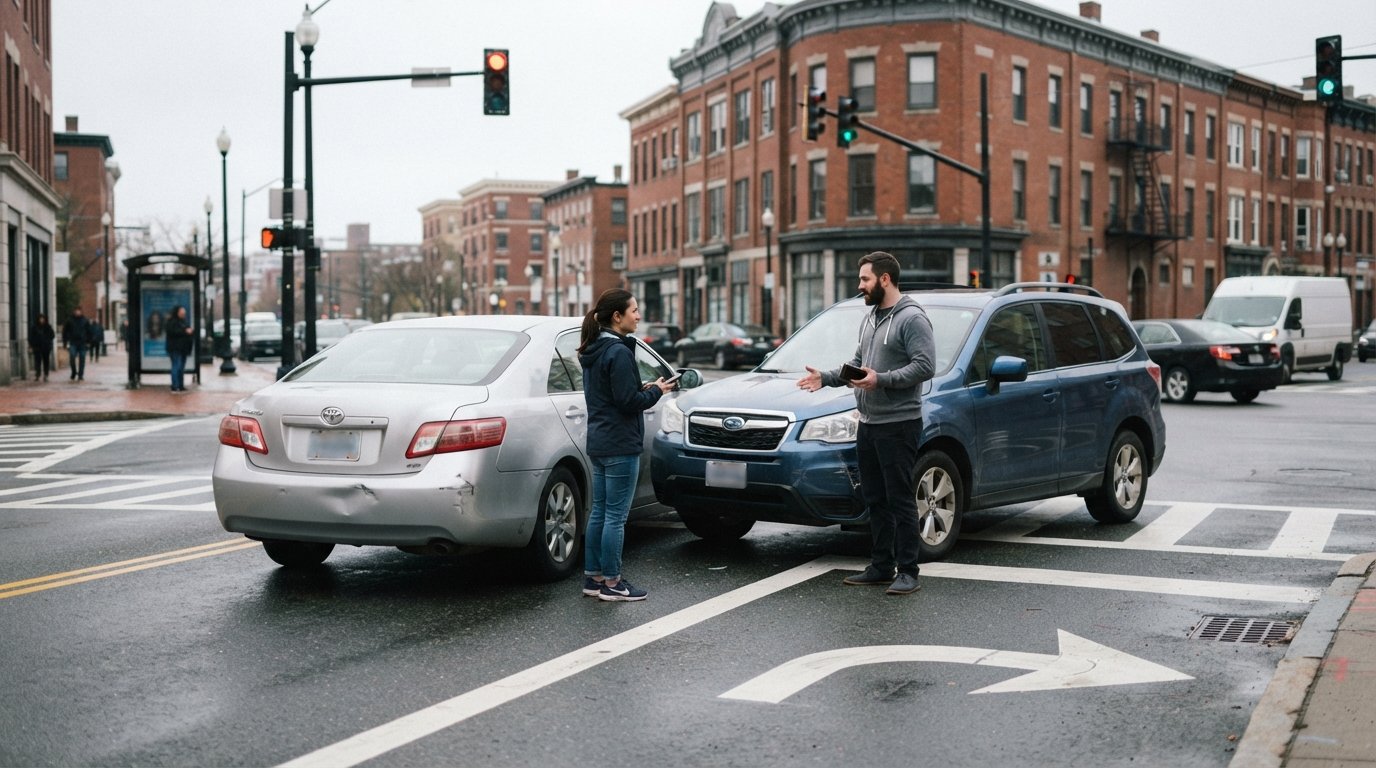
It helps to picture how those numbers play out in a real scenario. If you rear-end a newer SUV and cause $18,000 in damage, your $25,000 property damage limit covers it and you are fine. If you total two vehicles in a chain-reaction crash with $40,000 in combined property damage, your policy pays $25,000 and you are personally responsible for the remaining $15,000. The same logic applies to injuries: a single serious injury can exceed $25,000 quickly once emergency transport, surgery, and rehabilitation are factored in.
Rhode Island also requires uninsured motorist coverage at the same 25/50 minimums, which protects you if you are hit by a driver with no insurance. That is an important detail because it means your own policy can respond even when the at-fault driver cannot pay. Still, the required amounts are modest, and the state does not mandate coverage for your own vehicle. If you want your insurer to pay for repairs to your car after a collision or a theft, you need to add optional coverage beyond the legal minimums.
The key takeaway is that minimum limits are a floor, not a recommendation. They satisfy the law and get you on the road, but they are not designed to fully protect your finances in a severe crash. Drivers who carry only the minimum are essentially self-insuring the gap between the required limit and the actual cost of a serious accident.
Why Rhode Island Minimum Limits Fall Short in Serious Crashes
The gap between minimum limits and real-world costs is the single most important concept in this article. Modern vehicles are expensive to repair, and medical care is even more expensive. A $25,000 bodily injury limit per person sounds reasonable until you consider that a single hospital stay with surgery can exceed that amount before the patient even begins physical therapy. When injuries are catastrophic, the at-fault driver's minimum policy can be exhausted in days.
Rhode Island drivers also face a legal reality that many people do not think about until it is too late: if you cause an accident and your insurance does not cover the full damage, the injured party or their insurer can pursue you personally for the difference. That can mean wage garnishment, a civil judgment, or a settlement that follows you for years. In other words, the money you save by buying minimum limits today can become a much larger debt tomorrow.
There is also the problem of underinsured drivers on the road. Even if the other driver has insurance, they may be carrying only the state minimum, which means their policy may not cover your injuries or repairs if the crash is severe. This is why many Rhode Island drivers buy higher limits for themselves and add underinsured motorist coverage. It is a way of protecting your own finances against the low limits that other drivers choose.
Finally, consider the property damage side. Rhode Island traffic is dense, and a multi-vehicle crash can involve several cars. A $25,000 property damage limit can be consumed by two or three moderately damaged vehicles. Drivers who frequently travel busy corridors like I-95 or Route 146 often find that higher property damage limits are worth the modest additional premium.
Optional Coverages Rhode Island Drivers Commonly Elect
Because the required limits are low, most Rhode Island drivers who want real protection end up adding optional coverages. These are the add-ons that fill the gaps left by minimum liability. The right mix depends on your vehicle, your budget, and how much risk you are willing to carry yourself, but the following options come up again and again in quotes.
- Higher liability limits: Increasing bodily injury and property damage limits above the minimum is often the cheapest way to add meaningful protection. Moving from 25/50/25 to 100/300/100 typically costs far less than people expect.
- Collision coverage: Pays to repair or replace your own vehicle after a crash with another object or vehicle, regardless of who is at fault. It usually comes with a deductible you choose.
- Comprehensive coverage: Covers damage to your car from events other than collisions, such as theft, fire, hail, flooding, or hitting an animal. It also carries a deductible.
- Uninsured and underinsured motorist coverage: Rhode Island requires uninsured motorist coverage, but you can often increase the limits and add underinsured motorist protection for crashes where the other driver's policy is too small.
- Medical payments or personal injury protection: Helps pay medical bills for you and your passengers after an accident, regardless of fault. This can be valuable if you have a high health insurance deductible.
Each of these coverages changes your premium, and the combination you choose should reflect how you use your car. A driver with a newer vehicle and a long commute may want collision and comprehensive coverage plus higher liability limits. A driver with an older paid-off car might skip collision and comprehensive and put the savings toward higher liability limits instead. The important point is that you are making a deliberate choice rather than defaulting to the minimum because it is the cheapest quote on the page.
If you drive a specialized vehicle, the coverage conversation gets more nuanced. For example, electric vehicles often carry higher repair costs and different valuation rules, which can affect how collision and comprehensive coverage are priced. Our guide on how auto insurance quotes for electric cars differ explains those differences in more detail, and it is worth a read if you are comparing quotes for an EV in Rhode Island.
Average Rhode Island Premium Ranges by Driver Profile
Premiums in Rhode Island vary widely based on driving record, age, vehicle, location, and the coverage levels you choose. There is no single statewide number that applies to everyone, but it helps to understand the general ranges so you can tell whether a quote is reasonable. The figures below are broad estimates for context, not quotes, and your actual rate will depend on the underwriting of the insurer and the details of your situation.
Drivers with clean records and minimum coverage tend to see the lowest annual premiums, often in the range of several hundred to roughly a thousand dollars. Moving to full coverage with higher limits commonly pushes annual premiums higher, sometimes into the low thousands depending on the vehicle and deductible. Drivers with recent accidents, tickets, or DUI convictions pay substantially more, and young drivers, especially those under 25, are among the highest-rated groups in the state.
Location matters as well. Urban areas like Providence and Pawtucket tend to have higher rates than rural parts of the state because of traffic density and theft rates. Your vehicle also plays a role: a sports car or a luxury SUV costs more to insure than a mid-range sedan. The best way to know your actual range is to request quotes with specific coverage levels and compare them side by side.
One practical tip is to request quotes at both the minimum limits and at higher limits so you can see the price difference. Many drivers are surprised to find that the jump from minimum to significantly higher liability limits costs only a small amount per month. That comparison is the heart of smart shopping, and it is much easier when you have real numbers in front of you.
How to Request and Compare Rhode Island Quotes Step by Step
Getting accurate Rhode Island car insurance quotes minimum limits and higher-limit alternatives is a straightforward process if you prepare the right information. The goal is to compare apples to apples, meaning the same coverage levels, deductibles, and drivers across every quote. Follow these steps to keep the comparison clean.
- Gather your details: Have your driver's license, vehicle identification numbers, current policy declarations if you have one, and basic information about all drivers in the household. Lapses in coverage and driving records affect pricing, so be accurate.
- Decide on coverage levels: Choose a target for liability limits, property damage, and optional coverages. Request one quote at the state minimum and one at your target levels so you can see the difference in cost.
- Submit requests to multiple licensed agents: Use a comparison service or contact agents directly. Make sure each quote reflects the same deductibles and coverage options so the numbers are comparable.
- Review the declarations page: Check that the limits, deductibles, and optional coverages match what you asked for. Look for any exclusions or endorsements that could affect coverage.
- Compare total cost and protection: Do not compare premium alone. Compare what each policy pays for, including uninsured motorist limits, medical payments, and roadside assistance if included.
Once you have quotes in hand, take a moment to read the fine print. Some low quotes achieve their price by stripping out optional coverages or applying discounts you may not qualify for after underwriting. A quote is an estimate until the policy is issued, so ask the agent to explain any assumptions. If a quote seems dramatically lower than the others, ask why.
It also helps to ask about discounts you might be eligible for, such as multi-policy bundling, annual payment discounts, student discounts, or new car discounts. These can meaningfully change the final price, and a good agent will walk you through them. If you are also a renter or homeowner, bundling auto and home or renters coverage is one of the most reliable ways to lower your total insurance cost, and it is worth asking each agent to quote the bundle alongside the standalone auto policy.
For drivers with credit challenges or a need for vehicle financing, it is worth understanding how auto loans and insurance interact. Platforms like AutoTitleLoan connect consumers with auto loan financing options and can be a useful starting point if you are exploring vehicle financing alongside your insurance shopping. Insurance and financing are separate decisions, but they often come up at the same time, and knowing your options helps you plan.
Common Questions About Rhode Island Minimum Limits
Drivers often ask whether they can be fined for driving without insurance in Rhode Island. The answer is yes: the state requires proof of insurance at registration and can impose penalties for lapses. Driving uninsured can lead to fines, license suspension, and higher premiums when you reinstate coverage. Keeping at least the minimum limits in force is a legal obligation, not just a good idea.
Another common question is whether minimum limits are enough for a leased or financed vehicle. In most cases, the lender or leasing company requires collision and comprehensive coverage in addition to liability, so the state minimum alone will not satisfy the contract. Check your loan or lease agreement before choosing coverage levels.
Drivers also ask whether they should drop optional coverages to save money. The answer depends on your risk tolerance and the value of your vehicle. Dropping collision and comprehensive on an older car with low value can make sense, but dropping liability limits below a comfortable level is rarely a good trade. The savings are small compared with the potential exposure.
Finally, many drivers want to know how often they should re-shop their policy. A good rule of thumb is to compare quotes every year or two, and whenever your life changes: a new vehicle, a move, a marriage, a new driver in the household, or a change in your driving record. Rates change, and a policy that was competitive two years ago may no longer be the best option.
Rhode Island car insurance quotes minimum limits are a starting point, not a finish line. The state's required coverage is modest, and serious crashes can easily exceed it. By understanding the limits, adding the optional coverages that fit your situation, and comparing quotes from licensed agents with the same coverage levels, you can protect your finances without overpaying. Take the time to request real numbers, ask about discounts and bundling, and choose a policy that reflects the actual risk you face on Rhode Island roads.