
Antique Car Insurance for Modified and Restored Vehicles
Protect your build with antique car insurance for modified and restored vehicles. Call (833)-214-7506 to compare agreed value collector policies.

By Owen Calder
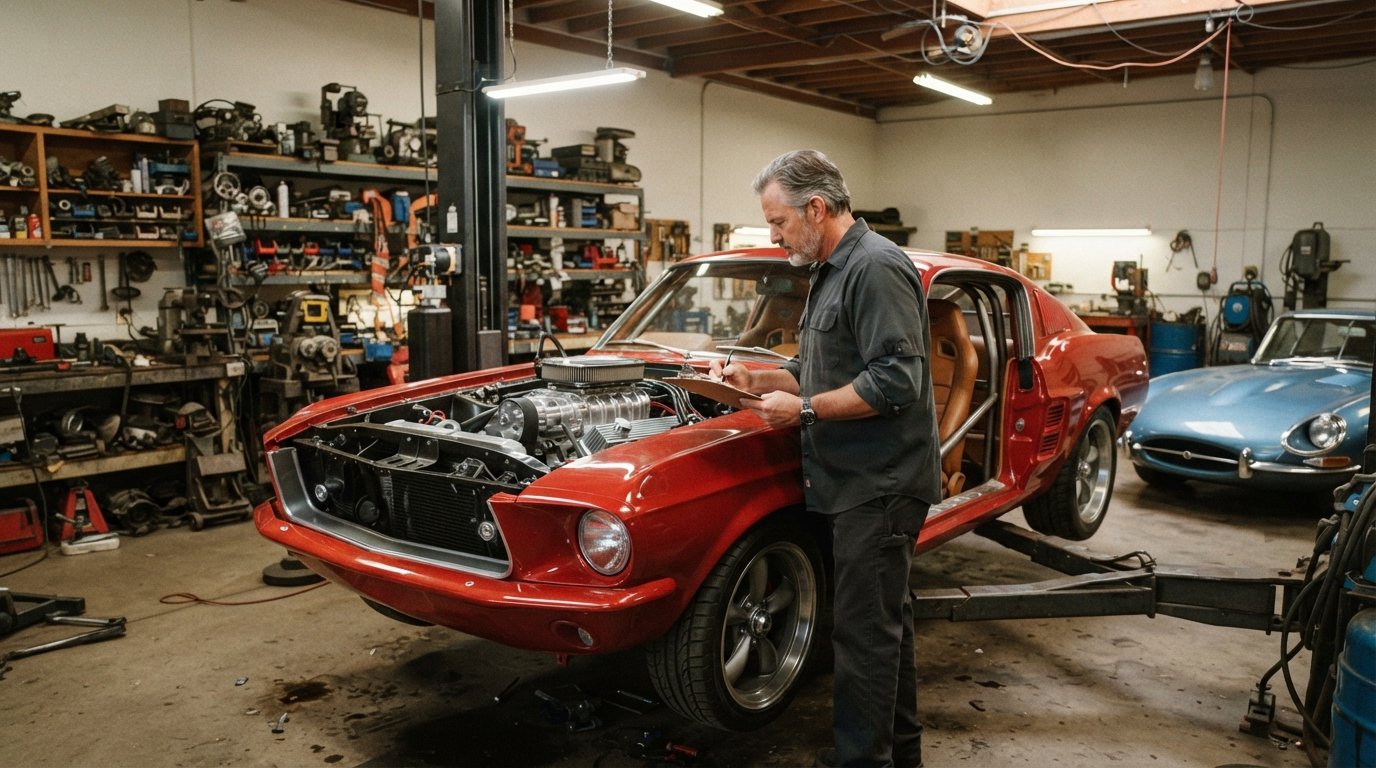
A numbers-matching 1967 Mustang Fastback is not the same insurance risk as a pro-touring build with a supercharged crate engine, coilover suspension, and a custom leather interior. Yet thousands of collectors discover this difference the hard way, usually after a claim, when they learn their standard policy or even a basic antique policy will not pay to rebuild what they spent years creating. Antique car insurance for modified and restored vehicles requires a different conversation with an insurer, one that starts with documentation, agreed value, and honest disclosure about how the car is built and how it is used.
The stakes are higher than most owners realize. A restoration can easily double or triple a vehicle's market value, and performance modifications can push replacement cost well beyond what a generic collector vehicle policy will cover. If you have ever wondered whether your build is properly protected, the answer usually comes down to three things: whether the insurer knows about the modifications, whether the policy uses agreed value, and whether your usage matches the restrictions in the contract. This guide walks through each of those issues so you can shop with confidence and avoid the surprise of a partial settlement.
How Modifications Affect Eligibility for Antique Car Coverage
Traditional antique and classic car policies are built around preservation, not transformation. Insurers that write these policies expect vehicles that are kept largely original, driven sparingly, and stored securely. When a collector adds a modern engine, upgrades the brakes, swaps the transmission, or changes the paint and interior from factory specifications, the vehicle no longer fits the clean definition of a stock classic. That does not automatically make it uninsurable, but it does change which programs will accept it and how the policy must be written.
Most specialty insurers divide collector vehicles into categories such as original, restored, modified, and custom or exotic. A restored vehicle is typically one that has been returned to factory condition using correct or period-correct parts. A modified vehicle has been altered from original specification, whether for performance, safety, comfort, or appearance. Insurers treat these categories differently because the risk profile differs: a modified car may be driven more aggressively, may be harder to repair because of one-off parts, and may attract a different kind of owner. Some companies will write modified classics under a standard collector program with an endorsement, while others require a dedicated modified or custom vehicle program.
Eligibility also depends on the type and extent of the modifications. Bolt-on changes such as wheels, tires, and audio equipment are usually easier to accommodate than frame alterations, engine swaps, or custom fabrication. The more the vehicle departs from factory specification, the more likely the insurer will want an appraisal, photos, and a detailed build sheet before agreeing to coverage. If you are unsure how your vehicle would be classified, it helps to understand the broader landscape of antique and classic car insurance coverage before you start requesting quotes, because the category your car falls into will shape every conversation that follows.
One practical step is to gather your build documentation before you shop. Insurers respond well to organized owners, and a complete file can mean the difference between a smooth approval and a lengthy back-and-forth. The following items are commonly requested for modified and restored vehicles:
- A written build sheet or restoration log listing every major modification, part number, and vendor
- Receipts for parts, labor, paint, and any professional fabrication work
- Current photographs of the exterior, interior, engine bay, undercarriage, and trunk
- A professional appraisal or documented comparable sales for high-value builds
- Storage details, including garage type, security features, and whether the car is driven on a restricted basis
Having this package ready does more than speed up underwriting. It also demonstrates that you understand your vehicle's value and that you are not trying to hide modifications, which is the single fastest way to create problems at claim time. Insurers are not looking for reasons to reject modified cars; they are looking for reasons to trust that the stated value and the described use are accurate.
Agreed Value Versus Stated Value for Restored Vehicles
The most important number in any collector policy is not the premium. It is the value the insurer will actually pay if the car is totaled or stolen. Two policy structures dominate this space, and the difference between them can be enormous for a restored or modified vehicle. Understanding that difference before you sign is essential, because the wrong structure can leave you funding a rebuild out of pocket even though you paid premiums for years.
Agreed value is a contract term in which you and the insurer agree, in advance and in writing, on the vehicle's value. If the car is totaled, the insurer pays that agreed amount, subject to the policy terms, without depreciating the car or arguing about current market conditions. Stated value is different: it is an amount listed on the policy, but the insurer may pay the lesser of the stated amount or the actual cash value at the time of loss. In practice, stated value policies can function much like actual cash value coverage for collector cars, which means a restored vehicle with substantial labor and parts invested may settle for far less than the owner expects.
For modified and restored vehicles, agreed value is almost always the better choice. Restoration labor is expensive and rarely reflected in book values, and one-off modifications have no standard market comparables. An agreed value policy locks in a number that reflects your actual investment and the car's appraised worth. The tradeoff is that insurers will scrutinize the value more closely, which is why documentation matters so much. You may need to update the agreed value periodically as the build evolves or as market values rise, and some policies include automatic inflation adjustments or require periodic reappraisal.
When comparing quotes, do not simply compare premiums. Compare the valuation method, the payout terms, and any conditions attached to the agreed value. A slightly higher premium for a true agreed value policy is often the best money a collector spends, because it converts an uncertain claim outcome into a predictable one. If you are also financing a daily driver or a project vehicle, it can help to review your broader auto loan options through resources such as car loan refinancing guidance so that your insurance and financing decisions work together rather than against each other.
Usage Limits Collectors Must Respect to Keep Specialty Coverage
Specialty collector policies are inexpensive largely because they restrict how the vehicle is used. Insurers assume the car is a hobby vehicle, not a primary mode of transportation, and the policy language usually reflects that assumption in specific, enforceable ways. Common restrictions include annual mileage caps, prohibitions on commuting and errands, requirements for enclosed or secure storage, and limits on commercial use such as racing, track days, or paid appearances. Violating these terms can give the insurer grounds to deny a claim or cancel the policy, even if the violation seems minor.
Mileage limits vary widely by program and by vehicle. Some policies allow a few thousand miles per year, while others offer higher allowances for drivers who regularly attend shows and tours. The key is to track your mileage honestly and choose a program that matches your actual driving. If you routinely exceed the cap, the insurer may reclassify the vehicle as a standard car, which usually means a much higher premium and different coverage terms. Some collectors install odometer disclosures or mileage logs to demonstrate compliance, and a few programs offer flexible mileage tiers that can be adjusted at renewal.
Storage requirements are equally important. Many collector policies require the vehicle to be kept in a locked, private garage when not in use, and some require specific security measures such as alarms, wheel locks, or GPS tracking for high-value builds. Daily driving a classic, even occasionally, can conflict with these requirements if the car is left in parking lots, driven to work, or parked on the street overnight. If your lifestyle does not fit the restrictions, a stated value or standard policy with a collector endorsement may be a better fit, even if it costs more.
The following usage practices help collectors stay within specialty policy terms and avoid claim disputes:
- Keep a written mileage log and review it before each renewal
- Avoid commuting, errands, and everyday transportation in the collector vehicle
- Store the car in a locked garage with the security features your policy requires
- Disclose any track use, racing, or commercial activity before it happens
- Notify the insurer promptly if your annual mileage or storage situation changes
These rules are not arbitrary. They reflect the risk model that makes collector coverage affordable. Respecting them protects both your premium and your claim. If you are ever unsure whether a particular trip or event falls within your policy terms, ask the insurer in writing before you go, and keep the response with your policy documents.
Documentation to Support a Higher Agreed Value
An agreed value is only as strong as the evidence behind it. Insurers are not trying to lowball collectors, but they cannot pay for value they cannot verify. A well-documented build gives the underwriter a clear basis for setting a higher agreed value, and it gives you a defensible position if the value is ever questioned. Documentation also protects you at claim time, when memories fade and receipts go missing.
Start with a professional appraisal from an appraiser who understands modified and restored vehicles. A good appraisal will describe the vehicle's condition, list the modifications, explain the valuation methodology, and provide comparable sales or cost-to-rebuild figures. Appraisals typically need to be updated every few years or after major changes to the build. Alongside the appraisal, keep a complete file of receipts for parts, labor, paint, machining, and fabrication. Photographs should be dated and should show the car from multiple angles, including the engine bay, interior, and undercarriage. A build sheet that lists every modification, part number, and vendor is especially valuable for modified vehicles because it allows the insurer to understand exactly what has been done.
Documentation also matters for restored vehicles that are returning to original specification. Correct part numbers, restoration photos, and receipts for NOS or reproduction parts help establish that the restoration was done to a high standard. If the car has won awards or been featured in publications, include that as well, since provenance can support value. For heavily modified cars, dyno sheets, build threads, and professional shop invoices can all strengthen the file. The goal is to make the insurer's job easy: the clearer the evidence, the more likely you are to receive the agreed value you request.
Finally, review your documentation annually and update it when the build changes. A policy written for a stock restoration will not accurately reflect a car that has since received a new engine, paint, and interior. Keeping the file current ensures that your coverage grows with your investment rather than lagging behind it.
What Happens If a Collector Starts Daily Driving a Classic
Daily driving a classic is one of the most common ways collectors unintentionally void their specialty coverage. The scenario usually unfolds gradually: a weekend drive becomes a weekly commute, the modern car sells, and suddenly the classic is the primary vehicle. The policy may still be in force, but the usage no longer matches the terms, and that mismatch can become a serious problem if a claim occurs. Insurers can deny coverage for material misrepresentation or for use that falls outside the policy's stated purpose, and cancellation is also possible.
The better path is to tell the insurer before the change becomes routine. Some companies offer collector policies with limited commuting allowances, and others will convert the vehicle to a standard policy with actual cash value coverage. The premium will usually rise, sometimes significantly, but the coverage will match reality. Driving a classic daily without disclosure is a gamble that can cost far more than the premium increase. It can also affect future insurability, since a denied claim or cancellation may follow you to other carriers.
If you are transitioning a classic into regular use, consider a middle path: keep a separate daily driver and reserve the classic for occasional pleasure use, or ask about a policy that allows limited commuting with a higher mileage cap. Review the options with a licensed agent who can compare programs, and get the change in writing. The goal is not to hide the usage but to find a policy that fits it. Collectors who plan ahead usually find that the cost of proper coverage is manageable, while the cost of a denied claim is not.
Antique car insurance for modified and restored vehicles rewards preparation and honesty. Document your build, insist on agreed value, respect the usage limits, and update your policy as your car and your habits change. Do that, and your coverage will protect the investment you have made rather than merely satisfy a legal minimum.