
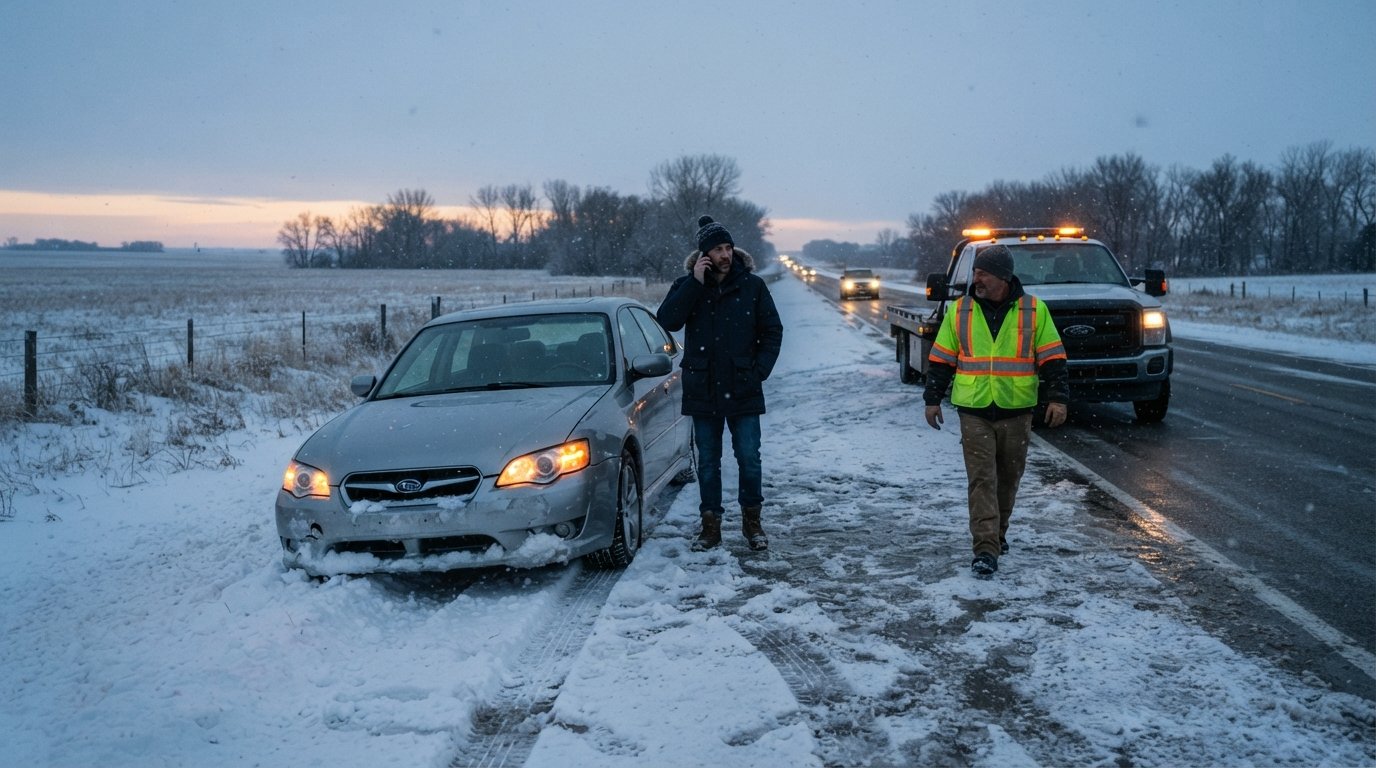
Nebraska Car Insurance Requirements and Savings Tips
Nebraska car insurance requirements and savings tips help you cut premiums without cutting protection. Call (833)-214-7506 to compare quotes.

By Luca Harrington
Nebraska law requires every driver to carry auto liability insurance, but the minimum limits may not be enough to protect your assets if you cause a serious accident. Beyond the legal basics, Nebraska drivers face unique cost factors, from harsh winter weather to deer collisions, that can push premiums higher than expected. The good news is that Nebraska offers a competitive insurance market with numerous discounts and savings opportunities that can significantly reduce your annual costs. This guide breaks down the state's car insurance requirements, explains what each coverage does, and provides practical strategies to lower your premium without sacrificing protection.
Nebraska Minimum Liability Insurance Requirements
Nebraska law mandates that all drivers maintain liability insurance that meets specific minimum limits. As of 2026, the required minimums are 25,000 dollars per person for bodily injury or death, 50,000 dollars per accident for bodily injury or death when two or more people are injured, and 25,000 dollars per accident for property damage. These limits are often written as 25/50/25. This coverage pays for injuries and property damage you cause to others in an at-fault accident, but it does not cover your own injuries or vehicle damage.
These minimum limits are relatively low compared to the actual costs of a serious accident. A single hospital stay for a broken bone can exceed 25,000 dollars, and replacing a new vehicle can easily surpass the property damage limit. If you cause an accident and the damages exceed your policy limits, you are personally responsible for the difference. That is why many Nebraska drivers choose higher limits for better financial protection. The Nebraska Department of Motor Vehicles requires proof of insurance when you register a vehicle, and law enforcement officers can request proof of insurance during a traffic stop. Driving without insurance can result in fines, license suspension, and registration revocation.
Additional Coverage Types Nebraska Drivers Should Consider
While liability insurance is the legal minimum, Nebraska does not require uninsured or underinsured motorist coverage, medical payments coverage, or physical damage coverage like comprehensive and collision. However, these optional coverages can be valuable given local risks. Nebraska has a significant deer population, and animal collisions are common, especially in rural areas and at dawn or dusk. Comprehensive coverage pays for damage from animal strikes, theft, vandalism, weather events, and other non-collision incidents. Collision coverage pays for damage to your vehicle from an accident with another vehicle or object, regardless of fault.
Uninsured and underinsured motorist coverage is particularly important because Nebraska has a notable number of uninsured drivers. According to recent estimates, roughly one in ten Nebraska drivers lacks insurance. If an uninsured driver hits you, this coverage can pay for your medical bills and vehicle damage. Medical payments coverage, or MedPay, helps pay for medical expenses for you and your passengers after an accident, regardless of who caused it. It can cover health insurance deductibles and copays. If you are leasing or financing a vehicle, your lender will likely require comprehensive and collision coverage until the loan is paid off.
When comparing quotes, it is smart to evaluate not just the minimum requirements but also the coverage levels that match your risk tolerance and financial situation. A licensed insurance agent can help you understand the trade-offs. Platforms like NewAutoInsurance.com can connect you with agents who offer personalized quotes based on your specific needs and Nebraska location.
Average Car Insurance Rates in Nebraska
Nebraska car insurance rates vary based on a range of factors, but the state generally falls near the middle of national averages. As of 2026, the average annual premium for a full coverage policy in Nebraska is approximately 1,600 to 1,900 dollars, while minimum liability coverage averages around 500 to 700 dollars per year. These figures are for a typical driver with a clean record, good credit, and a standard vehicle. Your actual rate will depend on your driving history, age, location, credit score, vehicle type, and the coverage limits you choose.
Several factors can push Nebraska premiums higher than the national average. The state's weather includes hailstorms, tornadoes, and winter ice, which increase comprehensive claims. Deer collisions are a persistent risk, particularly in rural counties. Urban areas like Omaha and Lincoln have higher rates of theft and accidents, leading to higher premiums than rural areas. Conversely, drivers in smaller towns often see lower rates due to less traffic and lower crime rates. Your credit score is a major rating factor in Nebraska; insurers can use credit-based insurance scores to determine premiums, and a poor score can significantly increase costs. Maintaining good credit is one of the most effective long-term savings strategies.
Driving record is another critical factor. A single at-fault accident or a speeding ticket can raise your premium by 20 to 40 percent or more. Many insurers offer accident forgiveness programs, but these typically require a clean record for several years. Shopping around and comparing quotes from multiple insurers is essential because each company weighs these factors differently. A driver with a blemish on their record might find one insurer much more forgiving than another. Using an independent comparison resource like NewAutoInsurance.com can streamline this process and help you find competitive rates.
Common Nebraska Car Insurance Discounts
Nebraska insurers offer a wide array of discounts that can reduce your premium by hundreds of dollars per year. These discounts reward safe driving, loyalty, and certain vehicle or driver characteristics. The availability and size of discounts vary by company, so it is important to ask about every discount you might qualify for when requesting quotes. Here are some of the most common and valuable discounts available to Nebraska drivers:
- Multi-policy bundling: Combining auto insurance with homeowners or renters insurance is one of the largest discounts available, often saving 10 to 25 percent on both policies.
- Multi-vehicle discount: Insuring two or more vehicles on the same policy can reduce premiums by 10 to 25 percent.
- Safe driver discount: Drivers with a clean record for three to five years may qualify for a discount of 10 to 20 percent.
- Defensive driving course discount: Completing an approved defensive driving course can earn a discount, especially for drivers over 55.
- Good student discount: Full-time students with good grades can save 5 to 15 percent.
- Vehicle safety features: Airbags, anti-lock brakes, anti-theft devices, and daytime running lights can earn discounts.
- Pay-in-full discount: Paying your annual premium upfront instead of monthly installments can save 5 to 10 percent.
- Paperless billing and autopay: Signing up for electronic statements and automatic payments can reduce administrative fees and earn small discounts.
- Loyalty discount: Staying with the same insurer for multiple years may qualify you for a loyalty credit.
To maximize savings, ask each insurer which discounts you qualify for and how they are applied. Some discounts apply only to certain coverage types, and others may not be combinable. For example, a bundling discount may not stack with a new customer discount. Reviewing your policy annually and re-shopping your coverage can ensure you are not missing out on new discounts or better rates. Many Nebraska insurers also offer usage-based programs that monitor your driving habits through a mobile app or device and reward safe, low-mileage driving with discounts. These programs can be particularly beneficial for drivers who work from home or drive infrequently.
How to Compare Nebraska Car Insurance Quotes
Comparing car insurance quotes is the most reliable way to find the best combination of price and coverage for your situation. Nebraska has a competitive insurance market with dozens of licensed carriers, and rates for the same driver can vary by hundreds of dollars between companies. The comparison process does not have to be time-consuming if you approach it systematically. Start by gathering the information you need: your driver's license number, vehicle identification number (VIN), current insurance declarations page, and details about your driving history. Then follow these steps:
- Determine your coverage needs: Decide whether you need just the state minimum or higher limits and optional coverages like comprehensive, collision, and uninsured motorist. Consider your vehicle's value and your financial ability to pay out of pocket for damages.
- Collect quotes from multiple insurers: Aim for at least three to five quotes. You can request quotes directly from insurers, through an independent agent, or via an online comparison platform. NewAutoInsurance.com connects you with licensed agents who can provide tailored quotes from multiple carriers.
- Compare apples to apples: Ensure each quote includes the same coverage limits, deductibles, and optional coverages. A lower premium may simply reflect lower coverage, which could leave you underinsured.
- Ask about discounts: For each quote, confirm which discounts are included and whether you qualify for additional savings. Ask about bundling, safe driver, and vehicle safety discounts.
- Review the insurer's reputation: Check financial strength ratings and customer complaint records. A low price is not a bargain if the insurer is difficult to reach during a claim.
After selecting a policy, review it annually and whenever your circumstances change, such as moving to a new address, buying a new vehicle, or adding a teen driver. Life changes often present opportunities to save or require coverage adjustments. If you are also financing a vehicle, you might explore options to refinance your auto loan to lower your monthly payments; resources like CarLoanRefinancing offer educational guides and rate comparisons that can help you evaluate whether refinancing makes sense for your budget.
For drivers who have recently moved from another state, it is worth reviewing how requirements differ. For example, our guide on Nevada auto insurance requirements explains how Nevada's rules and costs compare, which can be helpful if you split time between states or are planning a move.
Factors That Affect Nebraska Car Insurance Costs
Understanding what drives your premium can help you make informed decisions about coverage and savings. Nebraska insurers consider a variety of rating factors, and while some are outside your control, others can be managed. Your driving record is one of the most significant factors; accidents, tickets, and DUI convictions can raise rates substantially. Your age and experience matter as well: teen drivers and drivers over 70 typically pay more due to statistical risk. Your location influences rates based on local traffic density, crime rates, and weather patterns. Your vehicle's make, model, age, and safety features also play a role; sports cars and expensive vehicles cost more to insure, while vehicles with advanced safety technology may qualify for discounts.
Credit history is a major rating factor in Nebraska. Insurers use credit-based insurance scores to predict the likelihood of filing a claim. A poor credit score can increase your premium by 50 percent or more. Improving your credit score over time can lead to significant savings. Your coverage choices, including limits and deductibles, directly affect your premium. Choosing a higher deductible, such as 1,000 dollars instead of 500 dollars, can lower your premium by 15 to 30 percent, but you need to be able to pay that amount out of pocket if you file a claim. Mileage and usage also matter; drivers who commute long distances or use their vehicle for business pay more. Usage-based insurance programs can help low-mileage drivers save.
Marital status and gender are also used in rating in Nebraska, though some states restrict these factors. Married drivers often pay less than single drivers. Finally, the insurance company itself is a major variable. Each insurer has its own rating algorithm and appetite for risk. That is why comparing quotes is so important. A driver who is penalized by one company may be rewarded by another. Working with an independent agent who represents multiple insurers can help you navigate these differences and find the most competitive rate for your profile.
Nebraska-Specific Savings Strategies
Beyond standard discounts, Nebraska drivers can take advantage of state-specific opportunities to save. The Nebraska Insurance Department provides consumer resources and rate comparison tools that can help you understand the market. If you are a low-income driver, you may qualify for assistance programs, though these are limited. Defensive driving courses approved by the Nebraska DMV can earn discounts with many insurers, and some employers and organizations offer group auto insurance discounts. If you are a member of a credit union, alumni association, or professional group, ask whether the insurer offers an affinity discount. Nebraska's competitive market means that switching insurers can yield immediate savings; loyalty does not always pay. Many insurers offer new customer discounts that can be substantial in the first year, but be sure to compare the renewal rate as well.
Another strategy is to adjust your coverage as your vehicle ages. If your car is worth less than 10 times the annual premium for comprehensive and collision, it may not make financial sense to keep those coverages. Dropping them can save hundreds of dollars per year. However, you should maintain liability coverage at all times to comply with state law and protect your assets. If you have a teen driver, ask about good student and driver training discounts, and consider whether adding them to your policy is more cost-effective than a separate policy. In some cases, a separate policy for a teen can be cheaper, especially if they drive an older vehicle.
Finally, take advantage of technology. Many insurers offer telematics programs that track your driving and reward safe habits with discounts of 10 to 30 percent. These programs are voluntary and can be a good fit for careful drivers. If you are uncomfortable with data sharing, you can opt out. Review your policy annually and never auto-renew without checking for better options. A few minutes of comparison each year can save you hundreds of dollars and ensure you have the right coverage for your needs.
Nebraska car insurance requirements are straightforward, but the choices you make about coverage and insurers can have a big impact on your financial protection and your wallet. By understanding the minimum limits, considering optional coverages, and actively seeking discounts, you can secure affordable coverage that fits your life. Comparing quotes from multiple insurers is the single most effective way to save, and resources like NewAutoInsurance.com can connect you with licensed agents who provide personalized quotes without obligation. Take control of your auto insurance costs today and drive with confidence knowing you are properly covered.