
Michigan No-Fault Auto Insurance Explained
Michigan no-fault auto insurance explained: learn how PIP, mini-tort, and liability work to protect you. Call (833)-214-7506 for personalized guidance.

By Emily Roberts
If you live in Michigan, you have probably heard the phrase no-fault insurance tossed around at the dinner table or in a conversation with a coworker. But what does it actually mean for your wallet, your coverage choices, and what happens after a crash? Michigan is the only state in the country with a truly unique no-fault system that combines unlimited medical benefits with a tiered structure for choosing your personal injury protection. Understanding these rules is not just academic: it directly affects how much you pay, what you can claim, and how quickly you can recover after an accident. This guide breaks down the Michigan no-fault system in plain English so you can make confident decisions about your policy and avoid costly surprises.
The Core Mechanics of Michigan No-Fault Insurance
At its heart, Michigan's no-fault system is designed to reduce lawsuits and ensure that people injured in car crashes get medical care quickly, regardless of who caused the accident. After a crash, your own insurance company pays for your medical expenses, wage loss, and other related costs through a coverage called Personal Injury Protection, or PIP. This means you generally do not have to wait for a court to determine fault before your hospital bills are covered. The trade-off is that your ability to sue the other driver is limited to specific, severe situations.
The system operates on three main pillars: PIP, mini-tort, and liability coverage. PIP is the cornerstone, covering your medical care, rehabilitation, and in some cases, lost wages and replacement services like housekeeping. Mini-tort, officially known as limited property damage, allows you to recover up to a certain amount for vehicle damage from the at-fault driver without going through a full lawsuit. Finally, liability coverage protects you financially if you are found responsible for injuring someone else or damaging their property. These three components work together to create a structured, predictable framework for handling accidents.
One critical distinction in Michigan is that the no-fault system applies to economic damages, such as medical bills and lost income, not to pain and suffering. To sue for non-economic damages like pain and suffering, you must meet a serious threshold defined by law, such as death, serious impairment of body function, or permanent serious disfigurement. This threshold is intentionally high to keep most minor claims out of the court system. Understanding this boundary helps you set realistic expectations if you are ever injured in a crash.
Personal Injury Protection (PIP): The Heart of the System
Personal Injury Protection is what makes Michigan's system distinctive. Historically, Michigan required unlimited PIP coverage, meaning your medical bills from a car accident were covered for life, with no cap. However, reforms enacted in 2019 introduced flexibility, allowing drivers to choose lower PIP limits to reduce their premiums. Today, you can select from several options: unlimited coverage, up to $500,000, up to $250,000, or up to $50,000. There is also a option to coordinate PIP with your health insurance, which can further lower costs if you have robust medical coverage.
The choice of PIP limit is one of the most consequential decisions you will make when buying auto insurance in Michigan. Selecting a lower limit lowers your premium, but it also shifts financial risk onto you if you are seriously injured in an accident. For example, if you choose the $50,000 limit and suffer injuries requiring $200,000 in medical care, you could be personally responsible for the difference. Conversely, unlimited PIP provides the broadest protection but comes with a higher price tag. Your decision should factor in your health insurance, your savings, and your risk tolerance.
It is also important to note that PIP covers more than just hospital bills. It can reimburse you for lost wages (up to a monthly cap), pay for replacement services such as lawn care or cleaning if you cannot perform those tasks, and cover essential transportation to medical appointments. These benefits can be a lifeline during recovery, which is why understanding the full scope of PIP is essential. If you have questions about how PIP interacts with your health coverage, speaking with a licensed agent can clarify your options.
Mini-Tort and Liability: When You Can Seek or Face Payment
Mini-tort is a unique Michigan rule that allows you to recover up to $3,000 from the at-fault driver for vehicle damage, even though the no-fault system generally bars lawsuits for property damage. This is a simplified process that does not require proving pain and suffering; you simply file a claim with the other driver's insurance company (or your own, in some cases) for your deductible or unreimbursed repair costs, up to the cap. Mini-tort is a practical way to handle common fender-benders without clogging the courts.
Liability coverage, on the other hand, is what protects you when you are at fault. Michigan requires minimum liability limits of $50,000 per person and $100,000 per accident for bodily injury, and $10,000 for property damage. These are among the lowest minimums in the country, and many experts recommend purchasing higher limits to protect your assets. If you cause a serious accident and your liability limits are too low, you could be personally sued for the excess. Higher liability coverage is relatively inexpensive and provides a crucial safety net.
Beyond the minimums, you should also consider uninsured and underinsured motorist coverage. Michigan has a significant number of uninsured drivers, and if you are hit by one, your own UM coverage can step in to pay for your injuries or damages. Similarly, underinsured motorist coverage helps if the at-fault driver has insurance but not enough to cover your losses. These coverages are optional but highly recommended for comprehensive protection.
Required Coverage Limits and Options for Michigan Drivers
Michigan law mandates a specific set of coverages for all registered vehicles. At a minimum, you must carry PIP (with your chosen limit), liability coverage (50/100/10), and property protection insurance (PPI), which covers damage you cause to others' property in Michigan up to $1 million. PPI is unique to Michigan and pays for damage to structures, parked cars, and other property, but not for the repair of the other vehicle (that is handled by mini-tort or collision coverage).
In addition to the required coverages, you have several optional add-ons that can enhance your protection. Collision coverage pays for damage to your own vehicle regardless of fault, and comprehensive coverage handles non-collision events like theft, fire, or weather. Uninsured and underinsured motorist coverage, as mentioned, is valuable in a state with many uninsured drivers. You can also purchase limited property damage coverage (mini-tort) and roadside assistance. Building a policy that fits your needs requires balancing cost against risk.
When selecting your coverage limits, consider your personal circumstances. If you have significant assets, higher liability limits are a wise investment. If you drive an older car, you might choose to drop collision and comprehensive to save money, but be aware that you will receive nothing for your vehicle if it is totaled. For a detailed walkthrough of coverage options, you can explore top auto insurance options for bad credit, which often include guidance on state-specific requirements. This can be particularly helpful if you are rebuilding your credit and want to avoid overpaying.
Why Michigan Premiums Are High and How to Lower Them
Michigan consistently ranks among the most expensive states for auto insurance, and the no-fault system is a major reason. Unlimited PIP coverage, while generous, is costly, and the state also has a high rate of uninsured drivers and severe weather that contributes to claims. Additionally, Michigan's litigation environment and the presence of catastrophic claims have historically driven up costs. However, the 2019 reforms introduced new tools for consumers to manage premiums, and there are several strategies you can use to reduce your bill.
The most direct way to lower your premium is to choose a lower PIP limit. If you have health insurance that covers auto accident injuries, you may be able to coordinate benefits and select a lower PIP option. However, be sure to verify that your health plan actually covers car crash injuries, as some exclude them. Another effective strategy is to increase your deductibles on collision and comprehensive coverage. A higher deductible means you pay more out of pocket for repairs, but it can significantly reduce your monthly premium.
Discounts are also available for safe drivers, students, military members, and those who pay annually. Bundling your auto insurance with homeowners or renters insurance is another common way to save. If you are struggling with credit, you might face higher rates, but you can still find competitive options by comparing quotes from multiple insurers. For those with less-than-perfect credit, the guide to auto insurance for bad credit drivers offers practical advice on securing affordable coverage. Additionally, consider taking a defensive driving course, which can earn you a discount with many carriers.
Finally, shopping around is essential. Rates can vary dramatically between insurers for the same coverage, so obtaining quotes from several companies is one of the most effective ways to save. Using an independent agent or an online comparison tool can streamline the process. If you are also financing a vehicle, you might explore car loan refinancing options to lower your overall transportation costs, freeing up room in your budget for insurance. Balancing your premium with your deductible and coverage limits is key to finding the best value.
What to Do After a Crash Under No-Fault Rules
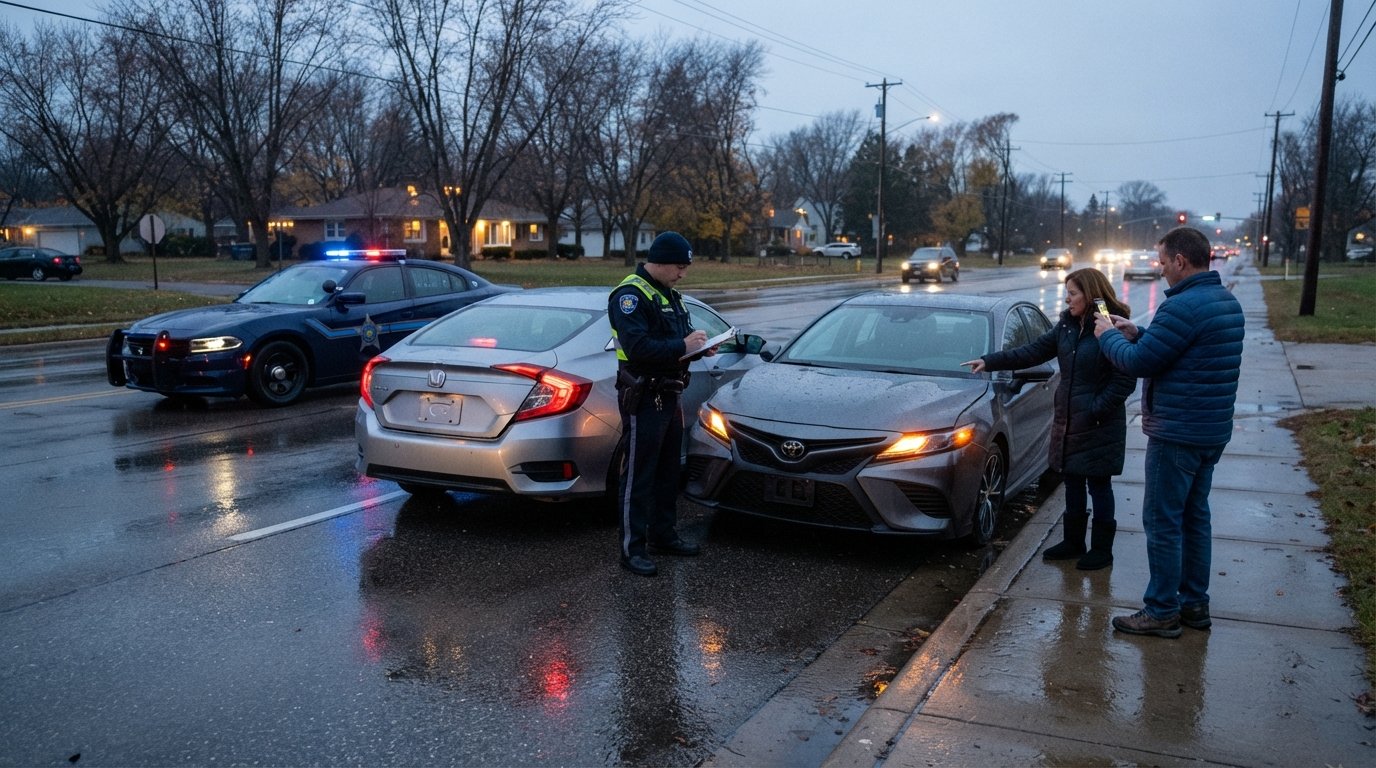
After an accident in Michigan, the first step is always to ensure safety and call 911 if anyone is injured. Once everyone is safe, exchange information with the other driver, including names, contact details, insurance information, and license plate numbers. Even in a no-fault state, it is crucial to gather this information because you will need it for your claim. If there are witnesses, collect their contact information as well. Police may or may not respond to minor accidents, but you should file a report if required by law or if there are injuries.
Next, report the accident to your own insurance company as soon as possible. Under no-fault, you file a claim with your own insurer for PIP benefits, regardless of who caused the crash. Your insurer will guide you through the process of getting medical care and submitting bills. Keep detailed records of all medical treatments, lost wages, and other expenses related to the accident. If you are seeking mini-tort payment for vehicle damage, you will need to file a claim with the at-fault driver's insurer, and you should do so promptly.
If you are seriously injured and believe you meet the threshold for a lawsuit, consult with a personal injury attorney to understand your rights. However, most claims are handled entirely within the no-fault system. Be wary of any early settlement offers from insurance companies before you fully understand the extent of your injuries. It is also wise to keep a file with all accident-related documents, including the police report, medical records, and correspondence with insurers. Following these steps can help ensure your claim is processed smoothly and you receive the benefits you are entitled to.
Common Pitfalls and How to Avoid Them
One common mistake Michigan drivers make is selecting the lowest possible PIP limit without understanding the consequences. While it lowers premiums, it can leave you underinsured if you are seriously hurt. Another pitfall is failing to coordinate PIP with health insurance correctly; if you choose coordinated coverage but your health plan denies the claim, you could be stuck with bills. Always confirm your health insurance benefits before opting for coordinated PIP. Additionally, many drivers overlook the importance of uninsured motorist coverage, only to regret it after an accident with an uninsured driver.
Another frequent error is not reviewing your policy annually. Life changes such as moving, changing jobs, or buying a new car can affect your coverage needs and premiums. Set a reminder to review your policy each year and compare quotes to ensure you are still getting a competitive rate. Finally, do not assume that the no-fault system means you never need to worry about liability. If you cause an accident, you can still be sued for amounts above your liability limits, so carrying adequate coverage is essential.
Education is your best defense against costly mistakes. Take the time to understand the nuances of Michigan's no-fault law, and do not hesitate to ask questions. Licensed insurance agents can provide personalized guidance, and resources like NewAutoInsurance.com offer unbiased information to help you make informed decisions. Remember, the goal is to protect yourself and your family financially while satisfying state requirements.
Michigan's no-fault insurance system is complex, but it is manageable with the right knowledge. By understanding PIP, mini-tort, and liability coverage, you can choose a policy that balances cost and protection. Take advantage of the flexibility introduced by recent reforms, shop around for the best rates, and review your coverage regularly. With a clear grasp of the rules, you can navigate the Michigan auto insurance landscape with confidence and peace of mind.