
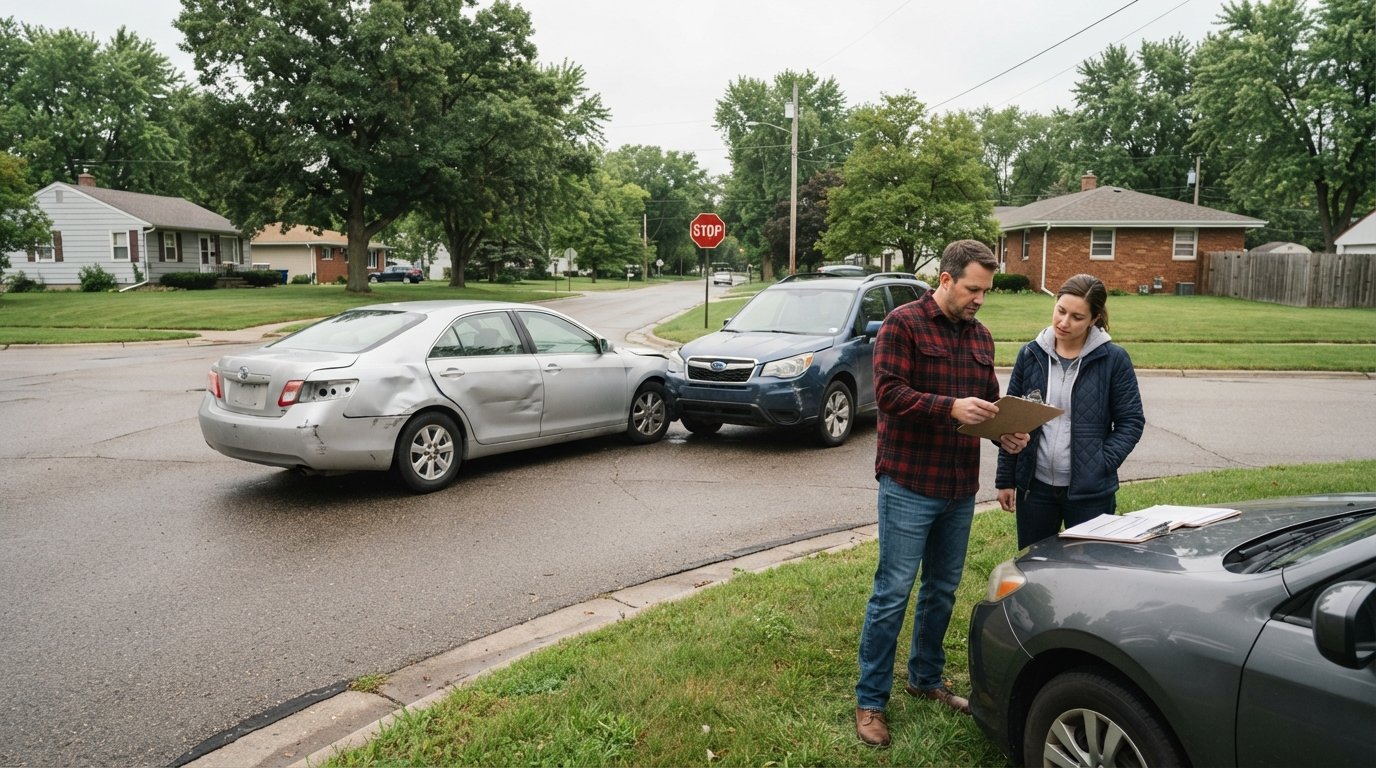
Iowa Car Insurance: Minimum Limits and Discounts
Iowa's minimum limits leave gaps; learn how discounts can close them. Call (833)-214-7506 for expert guidance on car insurance iowa minimum limits and discounts.

By Robert Anderson
Iowa drivers face a unique insurance landscape: the state sets some of the lowest mandatory liability limits in the country, yet repair costs and medical bills continue to climb. That gap between legal minimums and real-world expenses can leave you financially exposed after an accident. The good news? Iowa also offers a wide range of discounts that can significantly reduce your premium, often without sacrificing coverage. This guide breaks down the required limits, the discounts worth pursuing, and how to compare quotes effectively so you can protect yourself without overpaying.
Iowa's Minimum Car Insurance Requirements
Iowa law requires every registered vehicle to carry liability insurance that meets specific minimum limits. These limits are designed to cover damages you cause to others, but they do not protect your own vehicle or your own medical bills. The state minimums are as follows:
- Bodily injury liability: $20,000 per person and $40,000 per accident.
- Property damage liability: $15,000 per accident.
These limits are among the lowest in the United States. While they satisfy the legal requirement to drive, they may not be enough to cover serious injuries or extensive property damage. For example, if you cause an accident that injures two people and each requires $30,000 in medical care, your policy would pay $20,000 per person (up to $40,000 total), leaving you responsible for the remaining $20,000. Similarly, if you total a new vehicle worth $30,000, your $15,000 property damage limit would leave a $15,000 gap.
Iowa does not require uninsured/underinsured motorist (UM/UIM) coverage, medical payments (MedPay), or personal injury protection (PIP). However, many insurers and agents strongly recommend adding UM/UIM because a significant number of Iowa drivers are uninsured or carry only minimum limits. Without UM/UIM, you would have no recourse if hit by an uninsured driver. Similarly, MedPay can help cover your own medical expenses regardless of fault. If you are financing or leasing a vehicle, your lender will likely require comprehensive and collision coverage as well.
It is also important to note that Iowa operates under a tort system, meaning the at-fault driver is responsible for damages. There is no no-fault threshold, so lawsuits are common in serious accidents. Carrying higher limits than the minimum can protect your assets from being seized in a judgment. For drivers with significant savings or home equity, a $100,000/$300,000 policy or an umbrella policy may be worth the extra cost.
Common Discounts for Iowa Drivers
Iowa insurers offer a variety of discounts that can lower your premium by 5% to 30% or more. Some discounts are automatic, while others require you to ask or meet specific criteria. Understanding these opportunities is key to reducing your car insurance cost in Iowa. Below are the most common discounts available to Iowa drivers:
- Multi-policy (bundling) discount: Combine your auto insurance with homeowners or renters insurance. This is often the largest discount, sometimes saving 10% to 25% on both policies.
- Multi-vehicle discount: Insure two or more vehicles on the same policy. Savings typically range from 10% to 20%.
- Safe driver discount: Maintain a clean driving record with no accidents or violations for three to five years. Discounts can be 10% to 20%.
- Defensive driving course discount: Completing an approved course (often for drivers 55 and older) can reduce premiums by 5% to 10%.
- Good student discount: Full-time students with a B average or higher may qualify for 5% to 15% off.
- New car discount: Vehicles with advanced safety features or those that are new to the market may qualify for discounts.
- Annual payment discount: Paying your premium in full upfront instead of monthly can save 5% to 10%.
- Loyalty discount: Staying with the same insurer for multiple years may yield a small discount.
- Paperless and auto-pay discounts: Opting for electronic statements and automatic payments can save a few dollars per month.
Discounts vary by insurer and are not always stackable. For instance, some companies allow you to combine a bundling discount with a safe driver discount, while others cap the total discount amount. It is important to ask each insurer which discounts you qualify for and how they apply. Additionally, Iowa law prohibits insurers from using credit scores as a sole factor in denying coverage, but they may use credit-based insurance scores to determine rates in some cases. Checking your credit report for errors can indirectly help your premium.
Beyond standard discounts, some insurers offer telematics programs that monitor your driving habits and reward safe behavior with lower rates. These programs can be particularly beneficial for low-mileage drivers or those with clean records. However, they may also increase rates if your driving data shows risky patterns. Always read the fine print before enrolling.
Average Premiums and Factors Affecting Rates
Iowa's average car insurance premiums are generally lower than the national average, thanks to the state's low minimum requirements and relatively low traffic density. According to recent data, the average annual premium for a full-coverage policy in Iowa is around $1,200 to $1,500, while minimum-liability coverage averages $400 to $600 per year. However, these are averages; your actual rate depends on a multitude of personal and vehicle-specific factors.
Insurers evaluate risk based on several key criteria. The most significant include your driving history, age, location, vehicle type, and coverage selections. Young drivers, especially males under 25, face substantially higher rates due to inexperience. Drivers with accidents or moving violations also pay more. Your ZIP code matters: urban areas like Des Moines or Cedar Rapids may have higher rates due to theft and accident frequency, while rural areas often see lower premiums. The vehicle you drive influences rates through its safety ratings, repair costs, and theft rates. Finally, the coverage limits and deductibles you choose directly impact your premium. Higher limits and lower deductibles increase your cost but provide better protection.
Other factors that can affect your Iowa car insurance rate include your marital status (married drivers often pay less), homeownership (some insurers offer discounts), and whether you have continuous prior insurance coverage. A lapse in coverage can lead to higher rates when you re-apply. It is also worth noting that Iowa does not require insurers to offer a good driver discount, but most do as a competitive measure.
To get a sense of how rates vary, consider two drivers in Iowa: Driver A is 35, married, with a clean record, driving a 2020 sedan, and carrying $100,000/$300,000 liability plus comprehensive and collision. Driver B is 22, single, with one speeding ticket, driving a 2015 sports car, and carrying minimum liability only. Driver A might pay $1,400 per year, while Driver B could pay $2,200 or more despite having less coverage, because age and driving record weigh heavily. This illustrates why comparing personalized quotes is essential.
How to Compare Iowa Car Insurance Quotes
Comparing quotes is the most effective way to find the best combination of price and coverage in Iowa. Follow these steps to ensure a thorough comparison:
- Determine your coverage needs: Decide whether minimum limits are sufficient or if you need higher liability, UM/UIM, comprehensive, and collision. Consider your assets and risk tolerance.
- Gather necessary information: Have your driver's license, vehicle registration, VIN, and current policy details ready. You will also need to provide driving history for all household drivers.
- Request quotes from multiple insurers: Aim for at least three to five quotes. You can use an independent agent or an online comparison platform like FreeAutoInsuranceQuotesOnline to streamline the process and receive quotes from multiple carriers at once.
- Compare coverage apples-to-apples: Ensure each quote includes the same limits, deductibles, and optional coverages. A lower premium may reflect less coverage.
- Ask about discounts: Inquire about every discount you might qualify for, including bundling, safe driver, and payment discounts. Verify which are applied in the quote.
- Check insurer financial strength and customer service: Use ratings from A.M. Best, J.D. Power, or the Iowa Insurance Division to evaluate an insurer's reliability and complaint history.
When comparing quotes, pay attention to the insurer's reputation for claims handling. A low premium from a company with poor claims service can cost you more in the long run. Also, consider the convenience of managing your policy online or through a local agent. If you are bundling with homeowners or renters insurance, ask for a combined quote to see the total savings.
For drivers with new vehicles, specialized coverage options may be worth exploring. Our guide on affordable car insurance for new vehicles explains how to balance comprehensive coverage with cost-saving strategies. New cars often qualify for new car discounts and may require gap insurance to cover the difference between the vehicle's value and the loan balance.
Finally, remember that Iowa's minimum limits are just a starting point. Many drivers choose to increase their liability limits to protect their assets. If you have significant savings, a home, or future earnings to protect, higher limits are a wise investment. An independent agent can help you weigh the cost of higher limits against the potential financial risk.
Strategies to Lower Your Iowa Car Insurance Premium
Beyond standard discounts, there are several proactive steps you can take to reduce your Iowa car insurance costs. First, consider raising your deductibles. Increasing your comprehensive and collision deductible from $500 to $1,000 can lower your premium by 10% to 20%, but be sure you have enough savings to cover the higher out-of-pocket cost in case of a claim. Second, maintain a clean driving record; even a single speeding ticket can raise your rates for three years. Third, improve your credit-based insurance score by paying bills on time and reducing debt, as many insurers use this score in Iowa (though it cannot be the sole reason for denial). Fourth, shop around every renewal period. Insurers adjust rates frequently, and loyalty does not always pay. A new quote could reveal savings of hundreds of dollars.
If you are a low-mileage driver, ask about usage-based insurance programs. These telematics programs can reward you for driving less and driving safely. However, they are not ideal for everyone; if you drive frequently or during high-risk hours, your rate could increase. Additionally, consider dropping comprehensive and collision coverage on older vehicles. If your car is worth less than 10 times the annual premium for these coverages, the cost may outweigh the benefit. Use the 10% rule: if your annual comprehensive and collision premium exceeds 10% of your car's value, it may be time to drop those coverages.
Another often-overlooked strategy is to bundle auto insurance with renters or homeowners insurance. Iowa has a high homeownership rate, and bundling can yield substantial savings. If you rent, bundling auto with renters insurance is equally beneficial. Many insurers offer discounts of 10% to 25% when you bundle. Our site provides educational resources on bundling and other savings strategies to help you make informed decisions. For personalized quotes from licensed agents, you can also call 833-214-7506 to compare options.
Finally, review your policy annually. Life changes such as marriage, retirement, or moving to a new ZIP code can affect your rates. Update your policy to reflect these changes and ask your insurer to re-evaluate your discounts. Sometimes a simple phone call can uncover savings you were not aware of.
Special Considerations for Iowa Drivers
Iowa has specific regulations that affect car insurance. For instance, insurers must provide a 30-day grace period for premium payments before canceling a policy for nonpayment. This can be a lifesaver if you are temporarily short on funds. Additionally, Iowa law requires insurers to offer uninsured/underinsured motorist coverage, but you can reject it in writing. Given that roughly 10% of Iowa drivers are uninsured, rejecting UM/UIM is a risky gamble. If you are hit by an uninsured driver, UM/UIM pays for your medical bills and vehicle damage up to your policy limits. It is usually inexpensive to add and well worth the peace of mind.
Iowa also mandates that insurers offer a discount for drivers 55 and older who complete a defensive driving course, though the discount amount is not specified by law. This is a valuable opportunity for older drivers to save. Furthermore, Iowa prohibits insurers from surcharging for the first accident that is not your fault, provided you were not cited for a moving violation. If you are involved in a not-at-fault accident, your rates should not increase.
For drivers with specialized vehicles such as motorcycles, RVs, or antique cars, Iowa's minimum requirements for standard autos do not apply. Motorcycles require liability coverage, but the limits are the same as for cars. RVs and antique vehicles may need specialized policies. NewAutoInsurance.com offers guidance on these specialized coverages, helping you understand the unique requirements and discounts available. Always consult with a licensed agent to ensure compliance and adequate protection.
Frequently Asked Questions About Iowa Car Insurance
Is Iowa a no-fault state? No, Iowa is a tort state, meaning the at-fault driver is responsible for damages. You can sue for pain and suffering and other non-economic damages if you are injured.
What happens if I drive without insurance in Iowa? Penalties include fines, license suspension, and vehicle registration suspension. You may also be required to file an SR-22 for three years, which significantly increases your insurance costs.
Can I get car insurance with a suspended license in Iowa? It is difficult but possible. You may need an SR-22 and must show proof of financial responsibility. Some insurers specialize in high-risk drivers.
Does Iowa require proof of insurance? Yes, you must carry proof of insurance in your vehicle at all times. Law enforcement may request it during a traffic stop or accident.
Are discounts the same for all insurers? No, discounts vary widely by company. It is essential to compare quotes and ask each insurer about their specific discounts.
Understanding Iowa's minimum limits and discounts is the first step toward smart car insurance decisions. By carrying adequate coverage, taking advantage of every discount you qualify for, and comparing quotes regularly, you can protect your finances and your vehicle without overspending. For a personalized comparison, consider reaching out to a licensed agent or using an online tool to gather quotes. The right policy is out there; a little research goes a long way.