
Auto Insurance for Active Duty Military and Veterans
Auto insurance for active duty military and veterans offers unique discounts and SCRA protections. Call 8332147506 to compare personalized quotes today.
By Scott Thompson
Military service members and veterans face a unique set of financial and logistical challenges when it comes to car insurance. Frequent relocations, deployments, and the transition back to civilian life can complicate coverage decisions in ways that most drivers never encounter. Fortunately, a combination of federal law, state regulations, and insurer-specific programs offers real protections and savings for those who have served. Understanding how auto insurance for active duty military and veterans actually works can mean the difference between paying hundreds of dollars more than necessary and securing comprehensive coverage at a fair price.
Why Military Drivers Face Unique Insurance Challenges
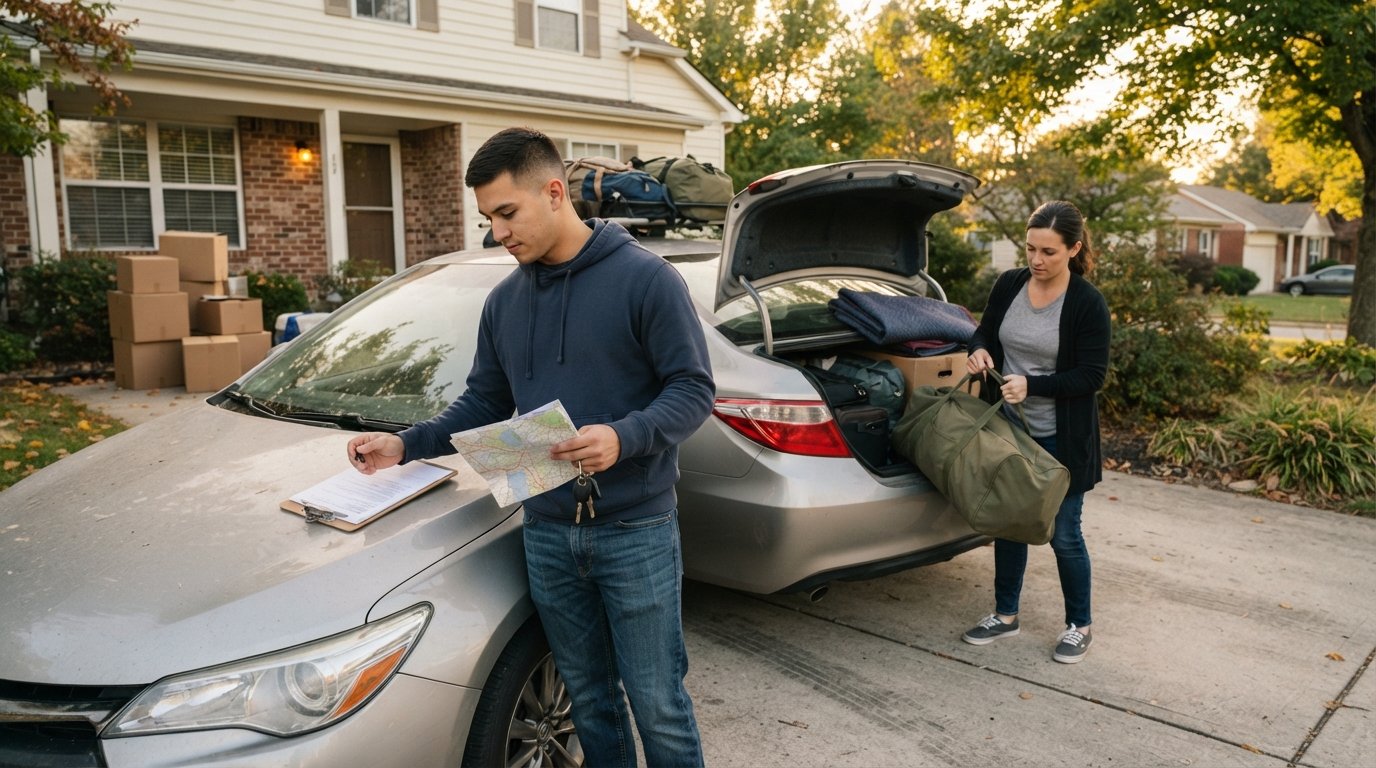
Active duty service members move far more often than the average American. A permanent change of station (PCS) order can send a driver from California to Virginia, from Texas to Germany, or from Florida to Japan within a matter of weeks. Each move raises immediate questions about which state's insurance rules apply, whether the current policy will remain valid, and how to register a vehicle in a new jurisdiction. These are not minor administrative details. They directly affect premiums, legal compliance, and the ability to file a claim after an accident.
Deployments add another layer of complexity. A service member who leaves for nine months may store a vehicle, lend it to a family member, or leave it parked at a base. Each scenario changes the risk profile that an insurer evaluates. Some carriers respond by raising rates because a stored vehicle may be unmonitored, while others offer reduced-mileage or storage discounts that can cut premiums significantly. Knowing which options exist and how to ask for them is essential.
Veterans encounter a different set of obstacles. After separating from the military, many find that their driving record includes gaps in coverage, out-of-state violations, or a history of addresses scattered across multiple states. Insurers may view this pattern as higher risk even when the driver has an excellent safety record. Understanding how to present a military driving history to a civilian insurer can prevent unnecessary rate increases.
The Servicemembers Civil Relief Act and Your Auto Insurance
The Servicemembers Civil Relief Act (SCRA) provides several protections that directly affect auto insurance for active duty military personnel. One of the most important provisions allows service members to terminate an auto insurance policy without penalty when they receive deployment orders or permanent change of station orders. This right applies even if the policy term has not expired and even if the insurer would normally charge a cancellation fee.
To use this protection, a service member typically needs to provide written notice and a copy of the deployment or PCS orders to the insurer. The cancellation takes effect on the date the orders take effect or on the date the notice is delivered, whichever is later. This means a service member who receives orders to deploy overseas can avoid paying premiums on a vehicle that will sit unused for months.
The SCRA also caps interest rates on pre-service obligations at six percent during active duty, though this provision applies more often to credit cards and loans than to insurance premiums. Still, it is worth understanding the full scope of SCRA protections because they can reduce financial pressure during deployments and other periods of active service.
Veterans should note that SCRA protections generally apply during active duty and for a limited period afterward. Once a service member separates from the military, those specific protections no longer apply, but other state-level protections and insurer-specific military programs may still be available.
State-Specific Protections for Military Members
Many states have enacted their own laws that go beyond the SCRA. These laws often address issues such as vehicle registration, driver's license renewal, and insurance requirements for service members stationed outside their home state. For example, some states allow active duty members to maintain their home-state driver's license and vehicle registration even while stationed elsewhere, which can simplify insurance decisions.
Other states require insurers to offer premium reductions for service members who are deployed or who drive fewer miles because of military service. These requirements vary widely, so it is important to check the specific rules in your state of legal residence. The insurance department in that state is usually the best source of current information.
For veterans, some states offer additional protections related to insurance scoring or claims handling. These protections recognize that military service can create unusual patterns in a driving record and that those patterns should not automatically result in higher premiums. Understanding these state-level rules can help veterans advocate for fair treatment when shopping for coverage.
Military Discounts Offered by Insurance Companies
Beyond legal protections, many insurance companies offer discounts specifically designed for military members and veterans. These discounts vary by carrier, but several common categories appear across the industry. Understanding what is available can help you ask the right questions when comparing quotes.
- Military affiliation discount: A percentage reduction for active duty members, reservists, National Guard members, and veterans. Some carriers extend this to immediate family members as well.
- Deployment discount: A reduced premium for vehicles that will be stored or driven very little during a deployment. This often requires documentation of the deployment orders.
- Military base proximity discount: A discount for drivers who live on or near a military installation, based on the assumption that base housing and base driving environments present lower risk.
- USAA and similar programs: Some insurers were founded specifically to serve the military community and offer rates and benefits that are not available to the general public.
- Loyalty and tenure discounts: Discounts for maintaining continuous coverage, which can benefit service members who keep the same policy through multiple PCS moves.
It is important to note that discounts do not always stack. Some insurers allow multiple military-related discounts to apply at the same time, while others cap the total discount or exclude certain combinations. When comparing quotes, ask specifically how each discount interacts with the others and what documentation is required to qualify.
Veterans should also ask whether the discount applies for life or only during active duty. Some carriers continue the military discount after separation, while others end it once active duty status ends. Clarifying this upfront prevents surprises at renewal.
How PCS Moves Affect Your Policy
A permanent change of station is one of the most common events that triggers a need to revisit auto insurance. When you receive PCS orders, several things change at once: your address, your state of residence (sometimes), your daily driving patterns, and potentially your vehicle registration requirements. Each of these changes can affect your premium.
The first step after receiving PCS orders is to contact your current insurer and ask how the move will affect your policy. Some insurers operate in all fifty states and can simply transfer your policy to the new location. Others operate only regionally and may require you to find a new carrier. Knowing which situation applies to you helps you plan ahead.
If you are moving to a state with different minimum coverage requirements, you may need to adjust your policy to comply with local law. For example, some states require higher liability limits or additional coverage types such as personal injury protection. Failing to update your policy after a PCS move can leave you underinsured or in violation of state law.
If you are moving overseas, the situation becomes more complex. Vehicles shipped to another country may need different coverage than vehicles left in the United States. Some service members choose to store their vehicles stateside and suspend coverage, while others maintain minimal coverage to protect against theft or damage while the vehicle is in storage. Each option has trade-offs, and the right choice depends on your specific circumstances.
Coverage Options That Matter for Military Drivers
Standard auto insurance includes several coverage types that are especially relevant for military members and veterans. Liability coverage pays for damage you cause to others, and it is required in most states. Collision coverage pays for damage to your own vehicle after an accident, regardless of fault. Comprehensive coverage pays for non-collision events such as theft, vandalism, fire, or weather damage.
For military drivers, two additional coverage types deserve attention. The first is uninsured and underinsured motorist coverage, which protects you if you are hit by a driver who has no insurance or insufficient insurance. Given that military members often drive in areas with high rates of uninsured drivers, this coverage can be especially valuable. The second is rental reimbursement coverage, which pays for a rental car while your vehicle is being repaired. This can be important during PCS moves when a vehicle is essential for transportation.
If you are bundling auto insurance with renters or homeowners coverage, you may be able to reduce premiums while maintaining strong protection. Our guide on auto insurance for renters and homeowners explains how bundling works and when it makes sense.
Veterans who own their homes should also consider whether their auto policy and homeowners policy work together effectively. Bundling can simplify claims and reduce costs, but it is not always the cheapest option. Comparing quotes both bundled and unbundled is the only way to know for sure.
Tips for Finding the Best Rates
Finding the best auto insurance for active duty military and veterans requires more than accepting the first quote you receive. Rates vary widely between carriers, and the same driver with the same vehicle can receive quotes that differ by hundreds of dollars per year. Taking a systematic approach to comparison shopping can produce significant savings.
Start by gathering your driving record, vehicle information, and current policy details. Then request quotes from multiple carriers, including at least one that specializes in military coverage. Be prepared to provide documentation of your military status, such as a copy of your orders or a military ID, to qualify for military-specific discounts.
When comparing quotes, look beyond the monthly premium. Consider the deductible, the coverage limits, the claims process, and the availability of customer service. A slightly higher premium may be worth it if the insurer offers better support during a deployment or a PCS move.
If you want a faster way to compare options, you can use a service that connects you with licensed agents who can provide personalized quotes. For example, FreeAutoInsuranceQuotesOnline is a consumer education and comparison platform that helps drivers understand coverage options and compare rates from multiple carriers without obligation.
Common Mistakes to Avoid
One of the most common mistakes military drivers make is failing to update their policy after a PCS move. This can lead to coverage gaps, legal violations, and higher premiums at renewal. Another mistake is assuming that all military discounts are automatic. In most cases, you must ask for the discount and provide documentation to receive it.
A third mistake is overlooking the value of uninsured motorist coverage. Military members often drive in areas where uninsured driving rates are high, and without this coverage, an accident with an uninsured driver can result in significant out-of-pocket costs. Finally, many service members fail to shop around after separating from the military. Rates that were competitive during active duty may no longer be the best option once military-specific discounts no longer apply.
Veterans should also be careful about letting coverage lapse during transitions. Even a short gap can result in higher rates when you resume coverage. If you are unsure about your options, speaking with a licensed agent can help you avoid costly mistakes.
Frequently Asked Questions
Do all insurance companies offer military discounts?
No. Military discounts are voluntary for most insurers, though some states require certain discounts for deployed service members. USAA is the most well-known insurer that serves the military community exclusively, but many other carriers offer military-specific discounts as well. It is always worth asking.
Can I keep my auto insurance when I deploy overseas?
Yes, but the coverage you need may change. If your vehicle will be stored, you may be able to reduce coverage to comprehensive only, which protects against theft and damage while the vehicle is not being driven. If your vehicle will be shipped overseas, you may need a different policy that complies with local requirements.
Does the SCRA apply to auto insurance?
Yes. The SCRA allows active duty service members to cancel auto insurance policies without penalty when they receive deployment or PCS orders. To use this protection, you must provide written notice and a copy of your orders to the insurer.
How can veterans save on auto insurance?
Veterans can save by asking about military-affiliation discounts, bundling auto insurance with home or renters insurance, maintaining a clean driving record, and comparing quotes from multiple carriers. Some insurers continue to offer military discounts after separation, so it is worth asking.
What is the best auto insurance for active duty military?
The best insurer depends on your specific circumstances, including your state of residence, vehicle, driving record, and coverage needs. Comparing quotes from multiple carriers, including at least one that specializes in military coverage, is the most reliable way to find the best rate.
Auto insurance for active duty military and veterans does not have to be complicated. By understanding your legal protections, asking about military-specific discounts, and comparing quotes carefully, you can secure strong coverage at a fair price. Whether you are preparing for a PCS move, returning from deployment, or transitioning to civilian life, taking a few extra steps now can save you money and prevent problems later.