
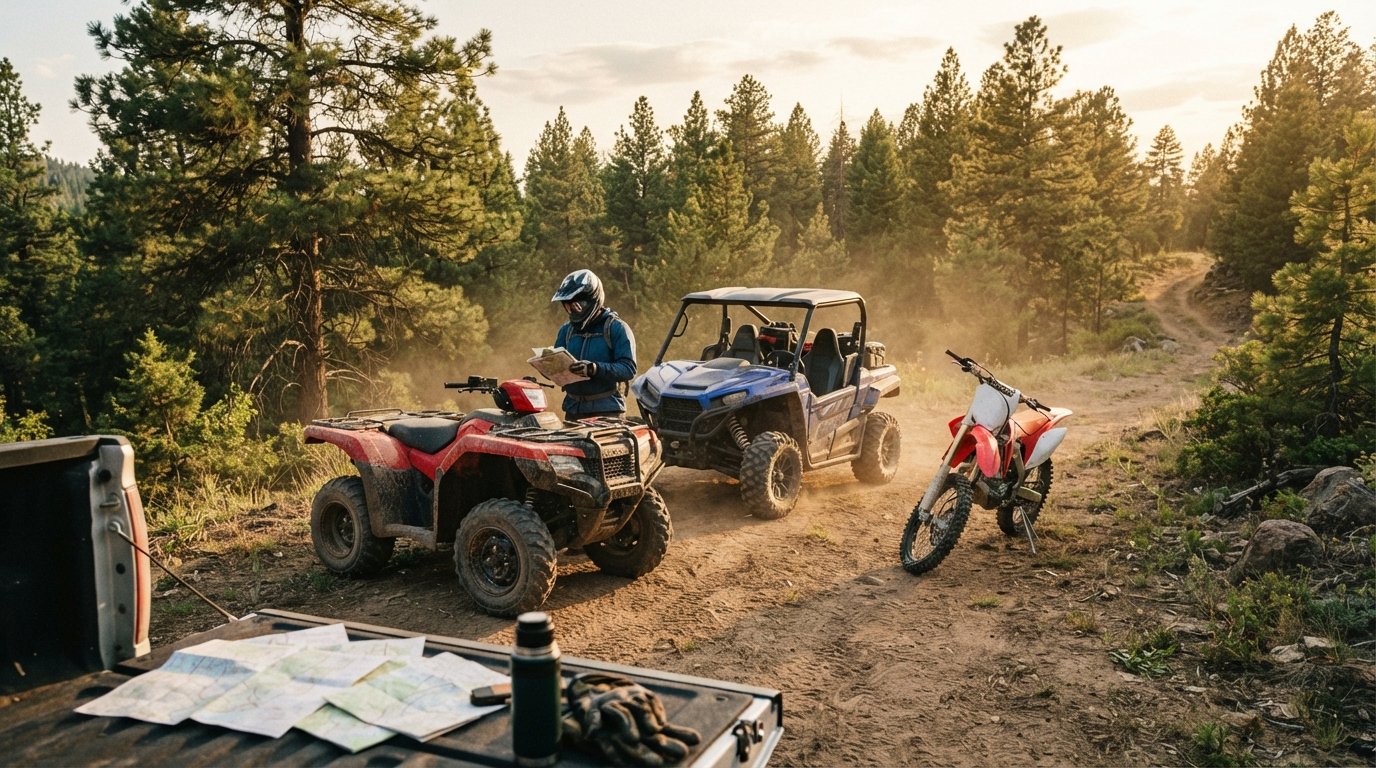
ATV and Off-Road Vehicle Insurance Guide for 2026
An atv and off-road vehicle insurance guide covering coverage types, costs, and how to compare quotes so a trail accident never becomes a financial crisis.

By Elowen Parker
ATVs, side-by-sides, and dirt bikes deliver freedom that a standard car simply cannot match. They also carry risks that a standard auto policy was never designed to handle. That gap between the fun and the financial exposure is exactly where an ATV and off-road vehicle insurance guide becomes essential reading, not optional homework. Whether you ride a four-wheeler on private trails, a UTV on public lands, or a dirt bike at a motocross track, the right coverage determines whether an accident is a minor inconvenience or a devastating bill.
Many riders assume their homeowners policy or auto policy already protects them. Sometimes it does, partially, and only under narrow conditions. More often, it does not. This guide walks through what off-road vehicle insurance actually covers, how it differs from street vehicle policies, what it typically costs, and how to compare quotes without overpaying. By the end, you will know exactly which questions to ask before you sign anything.
Why ATVs and Off-Road Vehicles Need Their Own Coverage
Standard auto insurance is built around vehicles driven on public roads. Registration, licensing, and road use are baked into the rating structure. ATVs, UTVs, dirt bikes, and dune buggies usually fall outside that framework. They are ridden on trails, private property, sand dunes, and closed courses, which means the risk profile is completely different from a commuter car. Insurers price that difference, and they also limit what a standard policy will pay when an off-road vehicle is involved.
Homeowners insurance is the other common assumption. It may extend liability coverage to a recreational vehicle in some situations, but the limits are usually modest and the exclusions are numerous. Many policies exclude motorized vehicles entirely once they leave your property, and some exclude them even on your own land if they are registered for road use. That leaves a significant hole: if you injure someone or damage property while riding, you could be paying out of pocket.
This is why a dedicated policy exists. Off-road vehicle insurance combines liability protection with physical damage coverage for the machine itself, and it can be tailored to how and where you actually ride. A trail rider in the mountains has different needs than a farmer using a UTV for work, and a dedicated policy reflects that. If you also own other specialized vehicles, it helps to understand how coverage works across categories, which is why our breakdown of electric vehicle insurance coverage is a useful comparison point for how insurers treat non-traditional vehicles.
What an Off-Road Vehicle Policy Typically Covers
Coverage structures vary by insurer and state, but most off-road policies bundle several core protections. Understanding each one helps you decide which limits make sense for your riding style and budget. The most common components include:
- Liability coverage: Pays for injuries or property damage you cause to others, up to your policy limits. This is often the most important part of the policy because medical bills and legal costs can dwarf the value of the vehicle itself.
- Collision coverage: Repairs or replaces your ATV after a crash, rollover, or impact with another object, regardless of fault.
- Comprehensive coverage: Handles non-collision losses such as theft, fire, vandalism, hail, and storm damage. Theft is a major concern for ATV owners because these machines are relatively easy to haul away.
- Medical payments or personal injury protection: Covers treatment costs for you and your passengers after an accident, sometimes regardless of who was at fault.
- Uninsured or underinsured rider coverage: Protects you when the other party in an accident has no insurance or insufficient limits. This matters on shared trails where another rider may be at fault.
Beyond these basics, many insurers offer add-ons that matter for serious riders. Optional equipment coverage pays for aftermarket parts, winches, lights, and custom modifications. Trailer coverage protects the trailer you use to haul your machine. Some policies also include roadside assistance or towing specifically for off-road situations, which can be a lifesaver when you break down miles from the nearest road.
One point riders frequently overlook is passenger coverage. If you carry a passenger and they are injured, their medical costs may fall under your policy. Confirm whether passenger liability is included or requires an endorsement, because a serious injury claim from a passenger can quickly exceed a basic limit.
How Off-Road Insurance Differs From Auto Insurance
The biggest structural difference is where the vehicle is used. Auto policies are rated for public roads and traffic conditions. Off-road policies are rated for recreational or utility use on non-public terrain. That distinction affects almost everything: eligibility, pricing, exclusions, and claims handling. An insurer that writes excellent auto policies may have little appetite for trail riding risk, and vice versa.
Another difference is registration and titling. In many states, ATVs and UTVs are not titled or registered the same way cars are, and some are not registered at all. Insurers handle this in different ways. Some require a VIN, some accept a bill of sale, and some write policies on an agreed value basis rather than a standard market value basis. Agreed value is often preferable for modified machines, because it locks in a payout amount instead of depreciating your investment.
Usage also plays a role. A policy for a weekend trail rider looks different from one for a hunting camp, a farm, or a rental operation. Commercial or business use typically requires a different policy form, and using a personal policy for business purposes can lead to a denied claim. Be honest about how you use your machine, because misrepresenting usage is one of the most common reasons claims get rejected.
State Rules and Legal Requirements
There is no single national rule for off-road vehicle insurance. Requirements vary widely by state and even by land management area. Some states require liability insurance to ride on public lands. Others require it only if the vehicle is registered for road use. Many private trail systems and riding parks require proof of insurance before allowing access, regardless of state law. Federal lands may impose their own rules on top of state requirements.
Because the landscape is so fragmented, the safest approach is to check three sources before you ride: your state motor vehicle agency, the specific trail or park you plan to visit, and your insurer. A quick call to each takes minutes and prevents unpleasant surprises. If you ride across state lines, verify requirements in every state you enter, since reciprocity for off-road vehicles is limited.
Liability limits deserve special attention. State minimums, where they exist, are often low, sometimes far below the cost of a single serious injury. Riders who carry only the minimum expose themselves to personal financial risk. A modest increase in liability limits usually costs relatively little and provides substantially more protection, making it one of the best value upgrades in any off-road policy.
What Off-Road Insurance Typically Costs
Costs vary based on vehicle type, engine size, rider age and experience, location, usage, and the coverage you choose. As a general range, basic liability policies for ATVs often start at a relatively low annual premium, while full coverage with collision and comprehensive can run several hundred dollars per year or more. UTVs and side-by-sides tend to cost more than smaller ATVs because they are heavier, faster, and more expensive to repair or replace. Dirt bikes may cost less, depending on engine size and whether they are used competitively.
Several factors can push your premium up or down. Younger riders and riders with at-fault accidents typically pay more. Machines with large engines, high performance modifications, or high replacement values cost more to insure. Storing your vehicle in a locked garage, completing a safety course, and maintaining a clean riding record can reduce premiums. Some insurers offer discounts for bundling your off-road policy with your auto or homeowners coverage, which is a common way to lower total insurance spending.
Comparing quotes is the single most effective way to control cost. Rates for the same machine and rider can differ significantly between insurers because each company weighs risk differently. Getting multiple quotes side by side reveals those differences quickly and gives you leverage to ask about discounts or adjust limits. A free comparison service can streamline that process and connect you with licensed agents who write off-road policies in your state.
How to Compare Off-Road Vehicle Insurance Quotes
Comparing quotes is not just about the lowest number. Two policies with the same premium can offer very different value depending on limits, deductibles, exclusions, and claims service. A disciplined comparison process helps you see past the headline price. Start by gathering the details insurers will ask for, then evaluate each quote against the same criteria.
- Gather your information: Have your VIN or bill of sale, vehicle details (make, model, year, engine size), your riding history, storage location, and intended usage ready before you start.
- Decide your coverage priorities: Determine whether you need liability only or full coverage, and choose limits that reflect your assets and risk tolerance.
- Request quotes from multiple insurers: Use a comparison platform or contact several agents to see a range of options for identical coverage.
- Compare apples to apples: Check liability limits, deductibles, comprehensive and collision terms, agreed value versus actual cash value, and any exclusions for racing, commercial use, or riding on public roads.
- Ask about discounts and bundling: Inquire about safety course discounts, multi-vehicle discounts, and bundling with your auto or home policy.
After you have quotes in hand, read the exclusions carefully. Common exclusions include racing, competitive events, use on public roads, and intentional damage. If you race or ride competitively, you likely need a specialized policy or endorsement. If you ride on roads occasionally, confirm whether your policy permits it. Exclusions are where claims go to die, so treat them as seriously as the premium.
Finally, consider the claims experience. A slightly higher premium from an insurer with a strong reputation for paying off-road claims quickly may be worth more than a small saving from a company that fights every claim. Check reviews and ask agents directly about typical turnaround times for off-road claims.
Common Mistakes That Lead to Denied Claims
Most denied claims trace back to a handful of avoidable errors. The first is misrepresenting usage. If you tell your insurer the ATV is for personal recreation but you actually use it for a business, a claim may be denied. The second is letting coverage lapse. Off-road policies are often written for a riding season, and riders sometimes cancel during the off-season, then forget to reinstate before the first ride. An accident during a lapse is an uninsured accident.
A third mistake is assuming homeowners insurance will cover theft. Many homeowners policies exclude motorized vehicles or cap the payout well below the machine's value. A fourth is failing to document modifications. If you add thousands of dollars in aftermarket parts but never update your policy, a total loss claim may only pay for the stock vehicle. Keep receipts and update your coverage when you make significant changes.
Finally, many riders never review their policy after the first year. Life changes, new vehicles, and new riding locations can all affect your coverage needs. An annual review takes a few minutes and keeps your protection aligned with reality. If you want a broader look at how to structure coverage across all your vehicles, exploring educational resources on auto insurance options can help you see the full picture.
Final Thoughts on Protecting Your Ride
An ATV and off-road vehicle insurance guide is only useful if it leads to action. The key steps are straightforward: understand what your existing policies do and do not cover, choose limits that protect your assets, compare quotes from multiple insurers, and review your coverage every year. Riders who do this consistently spend less and worry less, because they know exactly what happens if something goes wrong on the trail.
Off-road riding is supposed to be fun. The right policy keeps it that way by turning unpredictable risk into a manageable, predictable cost. Take the time to compare options, ask hard questions about exclusions, and pick coverage that matches how you actually ride. Your future self, the one filing a claim after a bad day on the trails, will thank you. FreeAutoInsuranceQuotesOnline