
Antique Car Insurance: Agreed Value vs Stated Value
Compare antique car insurance agreed value vs stated value to protect your classic. Call (833)-214-7506 for expert guidance on the right coverage.

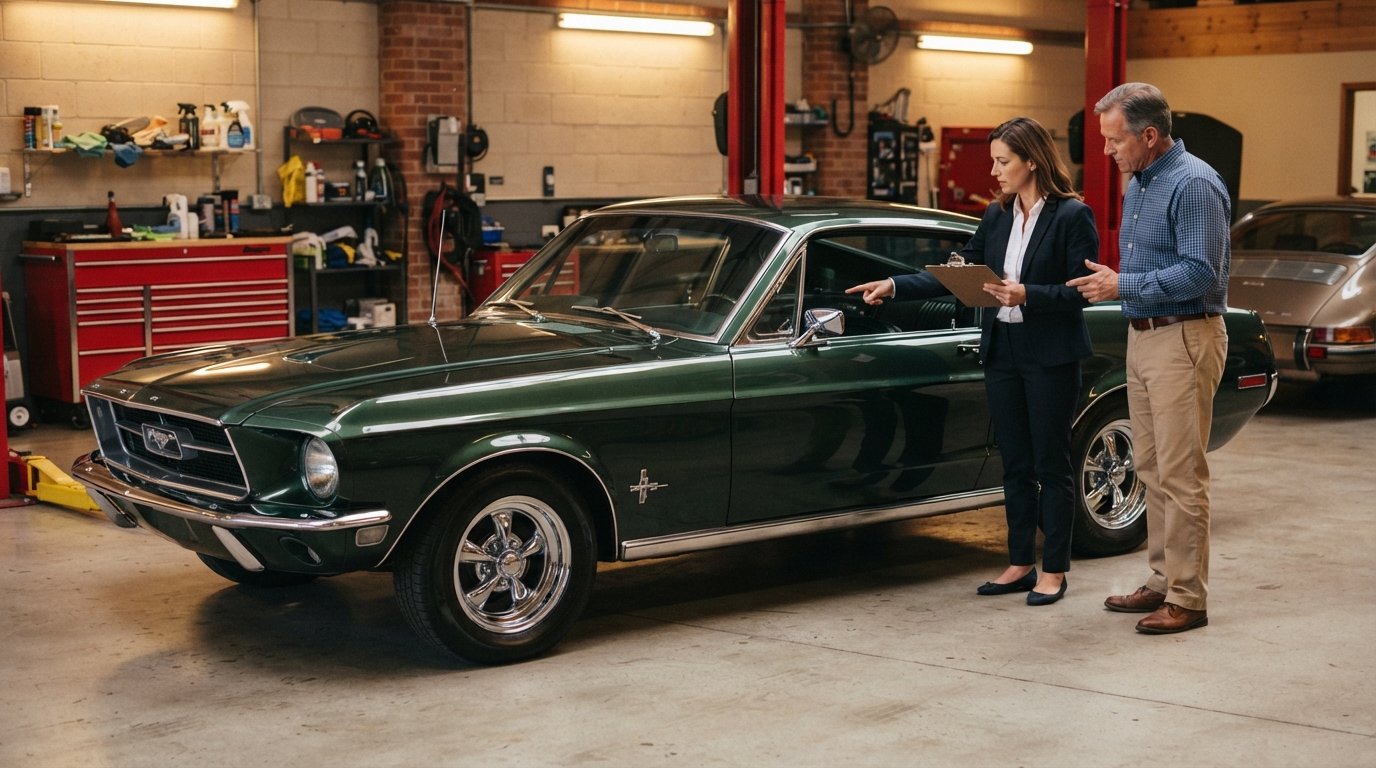
Your 1967 Mustang Fastback is more than a car. It is a rolling piece of history, a weekend passion, and a significant financial asset. When you insure a standard daily driver, you accept that the insurance company will pay actual cash value (ACV) after a total loss, which means replacement cost minus depreciation. For a classic or antique vehicle, that approach is a financial disaster. You need a valuation method that respects the vehicle's true worth. This is where the antique car insurance agreed value vs stated value debate becomes critical. Choosing the wrong policy structure can leave you with a settlement check that barely covers a fraction of your car's real market value. Understanding the mechanical and financial differences between these two options is the single most important step in protecting your investment.
Defining the Core Difference: Agreed Value vs Stated Value
To make an informed decision, you must first strip away the jargon and understand how each policy calculates your payout. The distinction is not merely semantic; it dictates how the claims process unfolds and how much money you ultimately receive.
Agreed Value Coverage is a contract where you and the insurer agree on a specific, fixed dollar amount for your vehicle before the policy is issued. This amount is typically based on a professional appraisal, documented sales of comparable vehicles, or a recognized valuation guide. If your car is stolen or totaled, the insurer pays you that agreed-upon amount, minus any deductible, with no depreciation applied. The value is locked in for the policy term. This is the gold standard for collector car insurance because it provides certainty and predictability.
Stated Value Coverage is a different animal. You and the insurer agree on a "stated" amount that represents the maximum the policy will pay. However, at the time of a claim, the insurer will determine the actual cash value of the vehicle at the time of loss. The payout is the lesser of the stated value or the actual cash value. If your stated value is $50,000 but the insurer determines the market value at the time of the accident was only $35,000, you receive $35,000. The stated value acts as a ceiling, not a guarantee. This often leads to disappointment and disputes during the claims process.
To summarize the operational differences, consider this comparison:
- Agreed Value: Payout is the pre-negotiated amount (minus deductible). No depreciation is applied. The burden of proof for value is settled upfront.
- Stated Value: Payout is the lesser of the stated amount or the actual cash value at the time of loss. Depreciation is a factor. The burden of proof shifts to the claim time.
For a deeper dive into how agreed value policies function from start to finish, including how to establish that initial number, you can refer to our guide on insuring classic cars with agreed value. The key takeaway is that agreed value removes the ambiguity that often plagues classic car claims.
How Valuation Methods Affect Claim Payouts and Premiums
The financial implications of choosing between these two coverage types extend to both your monthly premium and your potential settlement. Understanding this trade-off is essential for budgeting and risk management.
Agreed value policies typically carry higher premiums than stated value policies. Why? Because the insurer is taking on a fixed, guaranteed liability. They cannot argue about the car's condition or market fluctuations after a loss. They must pay the agreed amount. This certainty costs more. However, for a vehicle that appreciates or holds steady value, the extra premium is often negligible compared to the risk of a low payout. For example, insuring a restored 1955 Chevrolet Bel Air for $80,000 agreed value might cost a few hundred dollars more per year than a stated value policy with an $80,000 ceiling. That extra cost is your insurance against a catastrophic loss.
Stated value policies often come with lower premiums because the insurer retains the right to adjust the payout based on actual cash value at the time of loss. The premium reflects the insurer's assessment of the risk that the car's value might be lower than the stated amount. The trade-off is significant: you save money on premiums but accept the risk that your payout could be substantially less than expected. In a total loss scenario, the difference between a $60,000 agreed value payout and a $40,000 actual cash value payout on a stated value policy is a $20,000 gap that comes directly out of your pocket.
Consider the claims process itself. With agreed value, the adjuster's job is relatively simple: verify the loss and pay the agreed amount. There is little room for negotiation or dispute over condition, mileage, or market comparables. With stated value, the adjuster must conduct a full valuation of your vehicle at the time of loss, which can involve inspecting comparables, assessing condition, and applying depreciation. This process is time-consuming and can lead to disagreements. You may find yourself hiring your own appraiser to counter the insurer's valuation, adding stress and expense to an already difficult situation.
Eligibility Requirements and Usage Restrictions for Antique Policies
Antique and classic car insurance is not the same as standard auto insurance. Insurers who offer agreed value policies typically impose strict eligibility requirements to manage risk. These requirements are designed to ensure the vehicle is a collector's item, not a daily driver, and that it is cared for appropriately. Failing to meet these requirements can void your policy or force you into a standard policy with actual cash value coverage.
Common eligibility and usage restrictions include:
- Usage Limits: Most antique policies limit driving to exhibitions, club events, parades, and occasional pleasure drives. Commuting to work or using the car for general errands is usually prohibited. Some policies allow a limited number of miles per year (e.g., 5,000 miles).
- Storage Requirements: The vehicle must be stored in a locked, enclosed garage or structure. Parking it in a carport or on the street typically disqualifies it from agreed value coverage.
- Vehicle Condition and Authenticity: The car must be in good to excellent condition and retain its original or period-correct features. Modified vehicles (restomods, customs) may require specialized coverage.
- Driving Record: A clean driving record is often required. Major violations or DUI convictions can make you ineligible.
- Proof of Value: You must provide documentation of the vehicle's value, such as a professional appraisal, purchase receipt, or detailed photo documentation.
These restrictions serve a dual purpose. They keep premiums lower for collectors by ensuring the cars are not exposed to daily driving risks, and they preserve the collectible nature of the vehicles. If you need to drive your classic car more frequently, you may need to seek a policy with higher mileage allowances, which may come with a higher premium or a different valuation structure. Always be honest with your agent about how you use the vehicle; misrepresenting usage can lead to a denied claim.
If you are financing a vehicle, whether a classic or a daily driver, it is wise to understand how loans and insurance interact. For instance, if you are considering refinancing a loan on a modern vehicle to free up cash for a restoration project, you can explore car loan refinancing options to potentially lower your monthly payments and redirect funds toward your hobby. However, always ensure your insurance coverage matches your financial obligations.
Choosing the Right Valuation Method for Your Situation
Selecting between agreed value and stated value is not a one-size-fits-all decision. It depends on the vehicle's value trajectory, your risk tolerance, and your budget. Here is a framework to help you decide.
Choose Agreed Value If:
- Your vehicle is a true collector's item with a stable or appreciating value (e.g., muscle cars, pre-war classics, limited-production models).
- You have invested significant money in a restoration and have documentation to prove it.
- You want the peace of mind of knowing exactly what you will receive in a total loss scenario.
- You use the vehicle strictly for hobby purposes and meet the storage and usage restrictions.
Consider Stated Value If:
- Your vehicle is a driver-quality classic or a newer collectible whose value may fluctuate.
- You are on a tight budget and the premium difference is a significant factor.
- You are willing to accept the risk of a lower payout in exchange for lower monthly costs.
- You have a clear understanding of the actual cash value and are comfortable with that ceiling.
In most cases, for a genuine antique or classic car, agreed value is the superior choice. The entire point of insuring a collector vehicle is to protect its special value, which is often not reflected in standard valuation guides. Stated value policies are more appropriate for vehicles that are transitioning between daily driver and collectible status, or for owners who are primarily focused on liability coverage and are willing to self-insure the difference in value.
Before making a final decision, gather documentation. Obtain a professional appraisal from a certified appraiser who specializes in your type of vehicle. Collect receipts for parts and labor. Take detailed photographs of the interior, exterior, engine, and undercarriage. This documentation will not only help you secure an agreed value policy but also support your claim if you ever need to file one. Remember that insurance is a contract of good faith; accurate information upfront prevents disputes later.
The Importance of Professional Guidance for Antique Policies
Antique car insurance is a niche market. Not all insurance agents are familiar with the nuances of agreed value vs stated value, nor do they understand the specific needs of collector car owners. Working with an agent who specializes in classic and antique vehicles is highly recommended. These professionals can help you navigate the appraisal process, understand the fine print of usage restrictions, and find carriers that offer the best combination of coverage and price.
An independent agent can also help you avoid common pitfalls. For example, they can explain how a "stated value" policy might actually be an "actual cash value" policy in disguise, or how a "agreed value" policy might have a "salvage retention" clause that affects your payout. They can review your policy annually to ensure the agreed value keeps pace with the market. If your car's value increases, you can adjust the policy accordingly.
At NewAutoInsurance.com, we are not an insurance carrier or broker, but we can connect you with licensed agents who specialize in antique car insurance. Our platform is designed to provide unbiased education and comparison resources, helping you make an informed decision. We encourage you to ask potential agents specific questions about how they handle claims, what documentation they require for agreed value, and whether they have experience with your type of vehicle. A knowledgeable agent is your best advocate when it comes to protecting your classic car.
Ultimately, the choice between agreed value and stated value comes down to how much certainty you want to buy. For most antique car owners, the extra premium for agreed value is a small price to pay for the assurance that their prized possession is fully protected. Take the time to understand your options, document your vehicle's value, and consult with a professional. Your classic car deserves nothing less.