
Adding Someone to Car Insurance vs Permissive Use
Understand adding someone to car insurance vs permissive use to avoid denied claims. Call (833)-214-7506 for guidance on listing drivers correctly.

By Isobel Crane
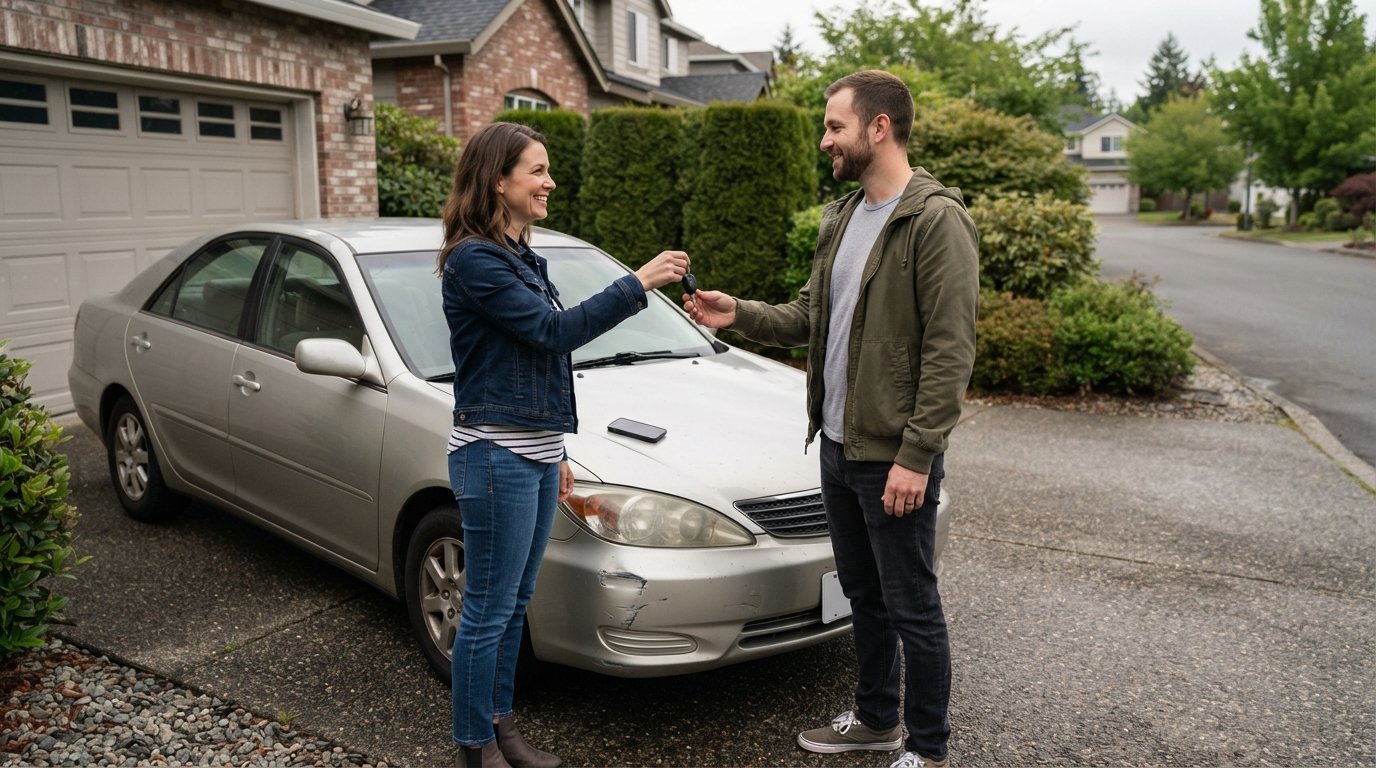
You let your friend borrow your car for the weekend. They get into an accident. Now you are staring at a claim, wondering if your policy will cover the damage or if you have just made a costly mistake. This is the exact moment when understanding the difference between adding someone to car insurance vs permissive use stops being a theoretical question and becomes a financial reality. The choice you make, or the choice you fail to make, determines whose insurance pays, how much your rates rise, and whether you face a lawsuit. This guide breaks down how permissive use works, when insurers demand you add a driver, and how each path affects your wallet.
What Permissive Use Coverage Actually Means
Permissive use is a standard feature in most personal auto policies. It extends your liability, collision, and comprehensive coverage to someone who is driving your car with your permission. The key word is permission. If you hand over your keys willingly, even for a quick errand, your insurance generally follows the car. This means if your friend causes an accident, your policy responds first, paying for the other driver's injuries and property damage, as well as the damage to your own vehicle if you carry collision coverage.
Most drivers assume this coverage is unlimited. It is not. Permissive use typically applies to occasional, infrequent drivers. It does not create a permanent right for someone to use your vehicle. Insurers expect that anyone living in your household or regularly operating your car should be listed on your policy. If you fail to list a regular driver, you are essentially hiding a risk from your insurer, and that can void your coverage when you need it most.
Understanding what permissive use includes and excludes helps you avoid surprise denials. Here is a quick breakdown of the common boundaries:
- Included: A friend or relative who borrows your car once or twice for a personal errand.
- Included: A valet or parking attendant moving your car as part of their job.
- Included: A mechanic test-driving your vehicle for repairs.
- Excluded: A household member who uses your car daily but is not listed on the policy.
- Excluded: A driver who takes your car without permission (that is theft, not permissive use).
Notice that the exclusions center on frequency and household status. If your roommate drives your car every week to run errands, your insurer considers that a regular operator, not a permissive user. The same logic applies to a family member who moves back home. Once they are a resident relative, most policies require them to be added or explicitly excluded. Failing to address this creates a gap that claims adjusters are trained to find.
When Insurers Require You to Add a Driver
Every auto insurance application asks who lives in your home and who has regular access to your vehicles. You are legally obligated to answer honestly. Insurers use this information to calculate risk. A 16-year-old novice driver poses a far greater risk than a 45-year-old with a clean record. If you omit a high-risk driver to save money, you are committing material misrepresentation. That is a fancy way of saying insurance fraud, and it gives your insurer grounds to deny a claim.
So when does a permissive user cross the line into a driver who must be added? The answer usually comes down to three factors: residency, frequency, and access. If the person lives at your address, they are almost always required to be listed. If they do not live with you but drive your car more than a few times a month, most insurers will demand they be added. If they have their own set of keys and can take the car whenever they want, that is another clear signal.
Here is a simple framework to decide whether you need to add someone:
- Check residency: Do they sleep at your address most nights? If yes, add them.
- Check frequency: Do they drive your car more than twice a month? If yes, add them.
- Check access: Do they have their own key or unrestricted access? If yes, add them.
- Check your policy language: Read the definitions section for "insured person" or "family member." It will spell out the exact rules.
If any of those checks point to regular use, call your insurer or agent before the next trip. Adding a driver is rarely free, but it is far cheaper than a denied claim. A denied claim means you pay out of pocket for the other driver's medical bills, your own repairs, and any legal fees. That is a financial hole that can take years to climb out of.
There is one exception worth noting: some policies allow you to exclude a specific driver. This is common when a household member has a terrible driving record and you want to keep your rates low. The excluded driver is then barred from using your car entirely. If they take it and crash, your insurer will not pay a dime. Exclusion forms must be signed and filed with the insurer. Never assume an exclusion is in place without written confirmation.
How Claims Change When an Unlisted Driver Crashes
The moment of truth for adding someone to car insurance vs permissive use arrives after an accident. If the driver was a true permissive user, your claim proceeds normally. Your insurer pays the covered damages, minus your deductible, and your rates may rise because the accident is tied to your policy. If the driver was a regular operator you failed to list, the claim can take a sharp turn.
Insurers investigate every claim. They pull driving records, interview witnesses, and check address databases. If they discover the driver lived with you or used the car regularly, they may rescind your policy or deny coverage entirely. Rescission means they treat the policy as if it never existed, refunding your premiums but leaving you financially exposed. You would then be personally responsible for all damages, and the other driver could sue you for amounts beyond your policy limits.
Even if the insurer does not deny the claim outright, the payout can be limited. Some policies cap permissive use coverage or apply it only as secondary insurance. That means the driver's own policy pays first, and yours pays only after theirs is exhausted. If the driver has no insurance, your policy becomes the primary source, but only if the use was truly permissive.
Consider a real-world scenario. You lend your car to a neighbor for a one-time trip to the airport. They rear-end another vehicle. Your insurer likely covers the claim under permissive use. Now imagine you lend the same car to your cousin who is staying with you for three months. They drive it daily to work. They cause the same accident. Your insurer investigates, finds your cousin is a resident relative who was never added, and denies the claim. You are now paying for two damaged cars and a personal injury lawsuit out of pocket.
The difference between those two outcomes is not luck. It is disclosure. Adding a driver to your policy removes the ambiguity. The insurer knows the risk, charges the appropriate premium, and cannot later claim you hid information. If you are comparing quotes or trying to understand how bundling fits into the picture, our guide on auto insurance for renters and homeowners explains how to align your policies and close coverage gaps.
Premium Implications: Adding a Driver vs Relying on Permissive Use
Money is usually the reason people hesitate to add a driver. Adding a teenager or a person with a spotty record can raise your annual premium by hundreds or even thousands of dollars. It feels unfair to pay more for someone else's risk. But the alternative, relying on permissive use when it does not apply, is a gamble with much higher stakes. A single denied claim can cost more than a decade of premium increases.
When you add a driver, the insurer recalculates your rate based on that person's age, driving history, and the vehicles they will operate. A clean-record adult may add only a small amount. A high-risk driver will add more. Some insurers offer discounts for good students, safe drivers, or drivers who complete defensive driving courses. These discounts can offset part of the increase. It is always worth asking what credits are available before you accept the new rate.
Permissive use, by contrast, feels free because you pay nothing upfront. But it carries an invisible price: risk. If the permissive driver has an accident, your policy absorbs the claim. That can trigger a surcharge on your renewal, costing you more for three to five years. If the claim is denied because the driver should have been listed, the cost shifts entirely to you. You pay for repairs, medical bills, and legal defense without any insurer support.
There is also the question of the driver's own insurance. If your friend has their own policy, it may respond as secondary coverage under permissive use. But that only helps if they have adequate limits. If they carry state-minimum coverage, their policy may not cover the full cost of a serious accident. Your policy then becomes the deeper pocket, and your insurer will expect to be reimbursed. This is called subrogation, and it can lead to a lawsuit against your friend. That is an easy way to lose a friendship and a lot of money at the same time.
For drivers who are struggling with bad credit or a thin insurance history, finding affordable coverage can feel impossible. If you are also in the market for a vehicle and need financing, exploring options through a service like StartAutoLoan can help you understand how lenders view risk. The same principle applies to insurance: disclosure and preparation lead to better outcomes than hoping a gap will go unnoticed.
Steps to Take Before You Lend Your Keys
Before you hand your keys to anyone, run through a short checklist. This takes five minutes and can save you thousands. First, confirm the driver has a valid license and their own insurance. Ask to see the card or take a photo of it. Second, confirm they are not a household resident. If they live with you, they need to be on your policy. Third, confirm the trip is occasional, not part of a regular pattern. Fourth, check your policy for any exclusions or restrictions on permissive use.
If you are unsure, call your insurer. A quick phone call can clarify whether the driver needs to be added. It is better to ask a question now than to file a claim later and learn the answer the hard way. Your insurer would rather add a driver and collect a higher premium than deny a claim and face a bad-faith lawsuit. They are on your side when you are honest with them.
For ongoing situations, such as a new driver in the family or a roommate who shares your car, adding them to the policy is the only safe path. Yes, your premium will rise. But you will have continuous coverage, no gaps, and no fear of denial. You can also shop around for new quotes once the driver is added. Different insurers price different risks differently. One company may charge a fortune for a teenage driver, while another offers a reasonable rate. Comparing quotes is the single best way to control costs without sacrificing protection.
Remember that insurance is a contract built on trust. You agree to tell the truth about who drives your car. The insurer agrees to pay covered claims. When you withhold information, you break that contract and forfeit the protection you paid for. Permissive use is a convenience for occasional borrowers, not a loophole for regular drivers. Treat it that way, and you will never have to worry about a denied claim.
If you want to compare personalized quotes from licensed agents and see how adding a driver affects your rate, start by gathering your current policy details and the driver's license information. A few minutes of preparation today can prevent a financial disaster tomorrow.