
How to Insure a Car You Rarely Drive: 2026 Cost Guide
Learn how to insure a car you rarely drive and cut premiums with low-mileage discounts. Call (833)-214-7506 for personalized quotes and savings.

By Isobel Crane
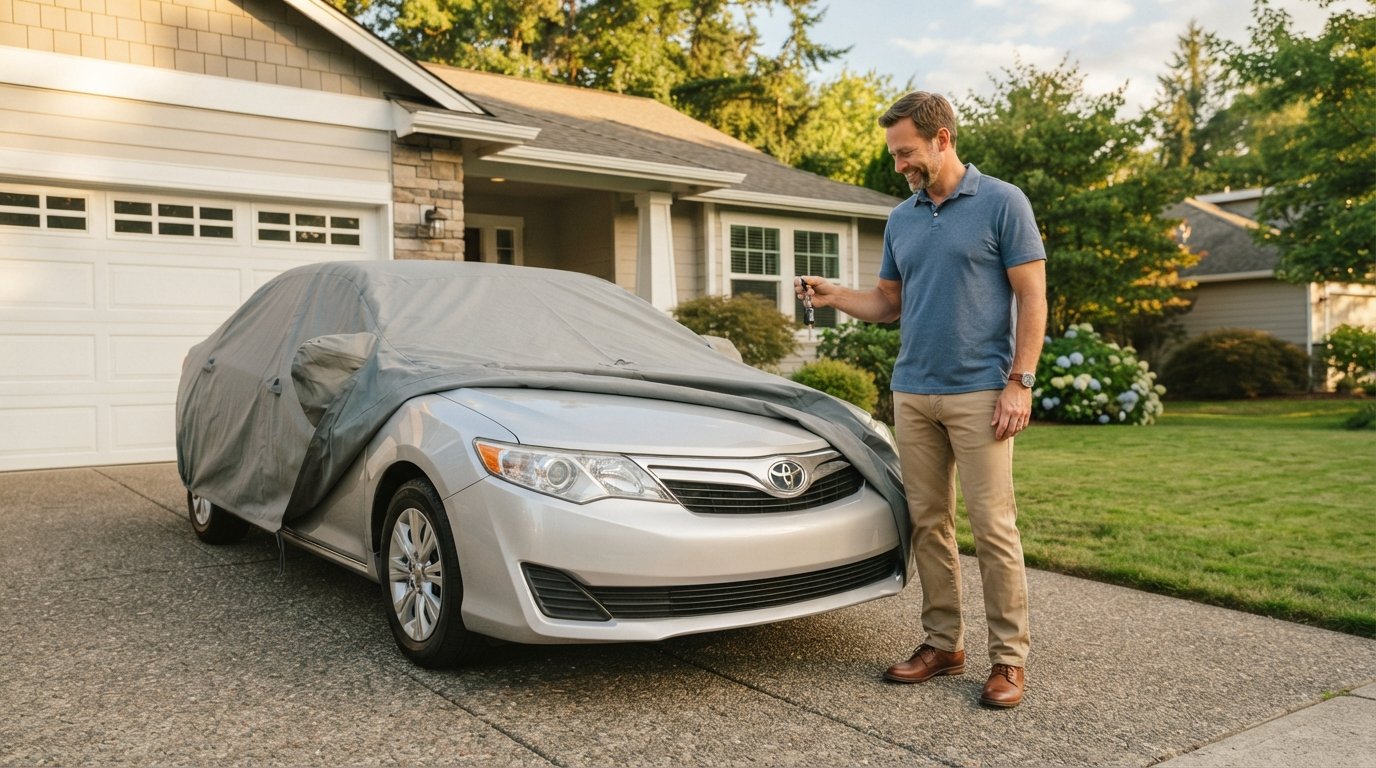
Your car sits in the driveway six days out of seven. You drive it to the grocery store on Saturdays, maybe to a doctor's appointment once a month, and it spends the rest of its life under a car cover. Yet the insurance bill arrives every month like clockwork, charging you as if you were commuting forty miles a day. If that sounds familiar, you are overpaying for coverage you barely use, and the good news is that insurers have specific programs designed for exactly your situation. Learning how to insure a car you rarely drive is not about dropping coverage entirely. It is about matching your premium to your actual risk profile, which for a low-mileage driver is dramatically lower than what a standard policy assumes.
The stakes are higher than most people realize. Insurers price policies based on annual mileage estimates, and the difference between 15,000 miles and 3,000 miles can translate into hundreds of dollars per year in savings. However, the wrong approach (canceling coverage, dropping to state minimums without thinking it through, or lying about mileage) can leave you financially exposed or even trigger a claim denial. This guide walks through the legitimate strategies that low-mileage drivers use to cut costs while keeping meaningful protection in place.
Why Low-Mileage Drivers Overpay and What Insurers Actually Think
Auto insurance pricing is fundamentally an actuarial exercise. Insurers calculate how likely you are to file a claim based on how much time you spend on the road, where you drive, and how other drivers behave around you. A driver who logs 2,000 miles per year in a suburban area presents a fraction of the risk of someone who commutes 60 miles daily through dense highway traffic. The problem is that most standard policies are not automatically priced for that reality. They use broad rating tiers that assume a typical driving pattern, and unless you actively tell your insurer that your habits have changed, you keep paying the standard rate.
There is also a psychological trap at work. Many rare drivers assume that because they drive so little, they can simply let coverage lapse or cancel it altogether. That thinking ignores two critical facts. First, most states require continuous insurance coverage as long as the vehicle is registered, even if it never moves. Second, a lapse in coverage follows you for years and can raise future premiums significantly. Even if you drive once a month, an uninsured accident during that one trip could result in tens of thousands of dollars in personal liability.
The smarter path is to work within the insurance system rather than around it. Insurers offer specific programs, discounts, and policy structures for low-mileage drivers because they want to retain customers who pose low risk. You just have to know which levers to pull and how to document your driving habits in a way that satisfies underwriting requirements.
The Core Options for Insuring a Car You Barely Use
There are several legitimate coverage structures available to rare drivers, and the right one depends on your state, your vehicle's value, whether you have a loan or lease, and how the car is stored. Understanding these options before you call an insurer puts you in a much stronger negotiating position.
Here is a breakdown of the most common approaches:
- Low-mileage discounts: Many major insurers offer discounts if you drive under a certain threshold, typically 5,000 to 7,500 miles per year. You usually need to provide an odometer reading at policy inception and sometimes at renewal.
- Usage-based or telematics programs: These programs use a smartphone app or plug-in device to track your actual driving. If you drive infrequently and safely, you can earn significant discounts, sometimes 30 percent or more.
- Pay-per-mile insurance: A handful of carriers offer policies where you pay a low base rate plus a few cents per mile driven. This can be ideal for someone who drives under 5,000 miles annually.
- Storage or lay-up coverage: If you plan to not drive the car at all for an extended period (for example, winter months or a deployment), some insurers let you suspend most coverage except comprehensive, which protects against theft, fire, and weather damage.
Each of these options has trade-offs. Pay-per-mile policies can be very cheap if you truly drive very little, but they may not be available in every state and often come with mileage caps. Telematics programs require you to share driving data, which some people find intrusive. Storage coverage is excellent for seasonal vehicles but does not protect you if you decide to take the car out for a quick trip and get into an accident. The key is to match the option to your actual usage pattern, not to chase the absolute lowest premium at the expense of real protection.
How to Get the Right Policy: A Step-by-Step Approach
Getting the right coverage for a rarely driven car requires a deliberate process. You cannot simply call your current insurer and ask for a lower rate without understanding what you are asking for. The following steps will help you navigate the process efficiently and avoid common mistakes.
Start by documenting your actual mileage. Check your odometer today and compare it to your last oil change or inspection record. If you have been with the same insurer for a year, calculate exactly how many miles you drove in the past twelve months. This number is your strongest negotiation tool. Insurers will ask for it, and you should have it ready.
Next, evaluate whether your current coverage still makes sense. If your car is older and paid off, you might consider dropping collision and comprehensive coverage, but only if you can afford to replace the vehicle out of pocket. If the car is financed or leased, you are almost certainly required to carry those coverages. For rare drivers with older vehicles, liability-only coverage combined with a low-mileage discount can be extremely affordable.
Then, compare quotes from multiple carriers. This is where a service like FreeAutoInsuranceQuotesOnline becomes useful. You can enter your details once and receive quotes from several insurers that offer low-mileage programs, saving you the hassle of visiting each carrier's website individually. When comparing quotes, make sure you are comparing identical coverage limits and deductibles. A lower premium with lower liability limits is not necessarily a better deal.
One important consideration that many rare drivers overlook is registration status. If your car's registration has expired, you may face additional hurdles when trying to insure it. Our guide on insuring a car with expired registration explains the specific steps and limitations you may encounter in that situation.
Understanding State Requirements and Minimum Coverage
Every state except New Hampshire and Virginia (which have alternative requirements) mandates some form of auto liability insurance for registered vehicles. These laws do not care how often you drive. If the car has a license plate, it generally needs insurance. The minimum requirements vary widely. Some states require only bodily injury and property damage liability, while others mandate personal injury protection or uninsured motorist coverage.
For rare drivers, there is a temptation to purchase only the state minimum. That strategy reduces premiums but leaves you exposed if you cause an accident. If you injure someone and the damages exceed your liability limits, you are personally responsible for the difference. Even a single at-fault accident in a parking lot can result in a claim that exceeds minimum limits, especially in a state with low thresholds like California or Florida.
A more balanced approach is to carry liability limits that are at least moderately above the state minimum, combined with a low-mileage discount. The premium difference between minimum coverage and, say, 50/100/50 limits is often smaller than people expect, especially when the low-mileage discount is applied. You can also consider adding uninsured motorist coverage, which protects you if you are hit by a driver with no insurance. This is particularly relevant for rare drivers because you have less control over the driving environment when you do venture out.
Special Situations: Seasonal Vehicles, Deployments, and Long-Term Parking
Not all rare drivers are the same. Some people have a convertible they only drive in summer. Others are military members deployed overseas for months at a time. Still others have a second car that sits in a garage while they use public transit for daily commuting. Each situation calls for a slightly different insurance strategy.
For seasonal vehicles, storage coverage is often the best solution. You can reduce your policy to comprehensive-only during the months the car is parked, which protects against theft, vandalism, and weather damage but does not cover liability or collision. When you are ready to drive again, you call your insurer and restore full coverage. The savings can be substantial, often 50 to 70 percent during storage months. Just be sure to confirm the exact terms with your insurer, as some require you to specify a storage location and may have restrictions on how long the vehicle can be in storage mode.
For military deployments, many insurers offer special provisions under the Servicemembers Civil Relief Act. You may be able to suspend coverage entirely or reduce it to comprehensive-only while you are deployed. You will need to provide deployment orders as documentation. This is a well-established process, and most major carriers have dedicated military support lines to handle these requests.
For long-term parking situations (for example, a car left at a relative's house while you work abroad), the key issue is whether the vehicle remains registered and where it is physically located. Insurance rates are partly based on where the car is garaged. If you move the car to a different state or zip code, you need to update your policy. Failing to do so can result in a claim denial if the insurer determines that the vehicle was not where you said it was.
Common Mistakes That Cost Rare Drivers Money
Even well-intentioned rare drivers make mistakes that undermine their savings or put their coverage at risk. One of the most common is underreporting mileage to get a lower rate. This is technically insurance fraud in most states. If you file a claim and the insurer discovers that you drove significantly more miles than you reported, they can deny the claim or rescind the policy entirely. It is not worth the risk.
Another mistake is canceling insurance altogether because the car is not being driven. As mentioned earlier, this creates a coverage lapse that can follow you for years. If you are not driving the car at all and it is not financed, you might be able to surrender the plates and cancel registration, which would allow you to cancel insurance legally. But if you keep the plates, you almost certainly need to keep insurance.
A third mistake is failing to shop around after your initial low-mileage policy is set. Insurers change their rates frequently, and a carrier that offered the best low-mileage discount last year may not be competitive this year. Make it a habit to compare quotes at every renewal, or at least every other renewal. The process takes less than an hour and can save you hundreds of dollars.
Finally, many rare drivers forget to ask about additional discounts they may qualify for. Low mileage is just one factor. You might also qualify for a defensive driving discount, a good student discount (if you are in school), a multi-policy discount if you bundle with renters or homeowners insurance, or a loyalty discount if you have been with the same insurer for several years. These discounts stack, and together they can reduce your premium by 40 percent or more.
When to Reassess Your Coverage
Your insurance needs are not static. A policy that made sense when you were driving 3,000 miles per year may no longer be appropriate if your circumstances change. You should reassess your coverage whenever you experience a major life event: buying a new car, moving to a new state, changing jobs, retiring, or having a teenager get their license and join your policy.
You should also reassess if your mileage changes significantly. If you start a new job that requires a longer commute, your low-mileage discount may no longer apply. Failing to report the change could result in an adjusted premium at renewal or, in worst-case scenarios, a disputed claim. Insurers generally require you to notify them of material changes to your driving habits.
For rare drivers, the sweet spot is a policy that accurately reflects low usage while maintaining enough liability coverage to protect your assets. That balance looks different for everyone. A retired couple with a paid-off sedan and substantial savings might carry higher liability limits and skip collision coverage. A young professional with a financed car and limited savings might keep full coverage but use a telematics program to reduce the premium. The common thread is intentionality. Do not let your insurance happen to you. Choose it deliberately based on your actual risk and financial situation.
If you are unsure where to start, the simplest first step is to gather your mileage data and request quotes from multiple carriers that specialize in low-mileage drivers. The difference between a standard policy and a properly structured low-mileage policy can be substantial, and the process of finding out takes less time than you might think.