
Hit by an Uninsured Driver: What Happens Next?
What happens if uninsured driver hits you depends on your UM/UIM coverage. Learn how to file a claim and avoid surprise bills after the crash.

By Elowen Parker
The screech of tires, the crunch of metal, and then the sinking realization that the other driver has no insurance. It is a scenario that tens of thousands of American drivers face every year, and it can turn a simple fender bender into a financial nightmare. If you are wondering what happens if uninsured driver hits you, the answer depends on your own policy, your state's laws, and how quickly you act. The good news is that you are not without options, and with the right coverage in place, you can protect yourself from paying out of pocket for someone else's mistake.
Your Own Policy Becomes the First Line of Defense
When an uninsured driver causes a collision, the at-fault driver's liability coverage, which would normally pay for your injuries and property damage, simply does not exist. That means your own insurance policy steps in as the primary source of compensation. The specific coverage that responds depends on what you purchased before the crash. Uninsured motorist coverage (UM) and underinsured motorist coverage (UIM) are the two most important protections in this situation. UM pays for your medical bills, lost wages, and pain and suffering when the other driver has no insurance at all. UIM kicks in when the other driver has some insurance but not enough to cover your total losses.
If you did not purchase UM or UIM, you may still have options through your collision coverage for vehicle damage and your personal injury protection (PIP) or medical payments (MedPay) coverage for injuries. Collision coverage pays to repair or replace your car regardless of who was at fault, though you will typically need to pay your deductible first. MedPay and PIP cover medical expenses for you and your passengers, often without a deductible, depending on your state and policy. The critical point is that your own policy becomes the safety net, and the coverage you chose months or years ago now determines how smooth or stressful the claims process will be.
It is also worth noting that filing a claim under your own UM or collision coverage may not raise your premium in the same way an at-fault accident would. Many insurers treat uninsured motorist claims as not-at-fault incidents, which means your rates may stay stable. However, this varies by carrier and state, so it is always wise to confirm with your agent before assuming your rates will not change. The bottom line is that your own coverage is the most reliable path to reimbursement when the at-fault driver has none.
Steps to Take Immediately After the Accident
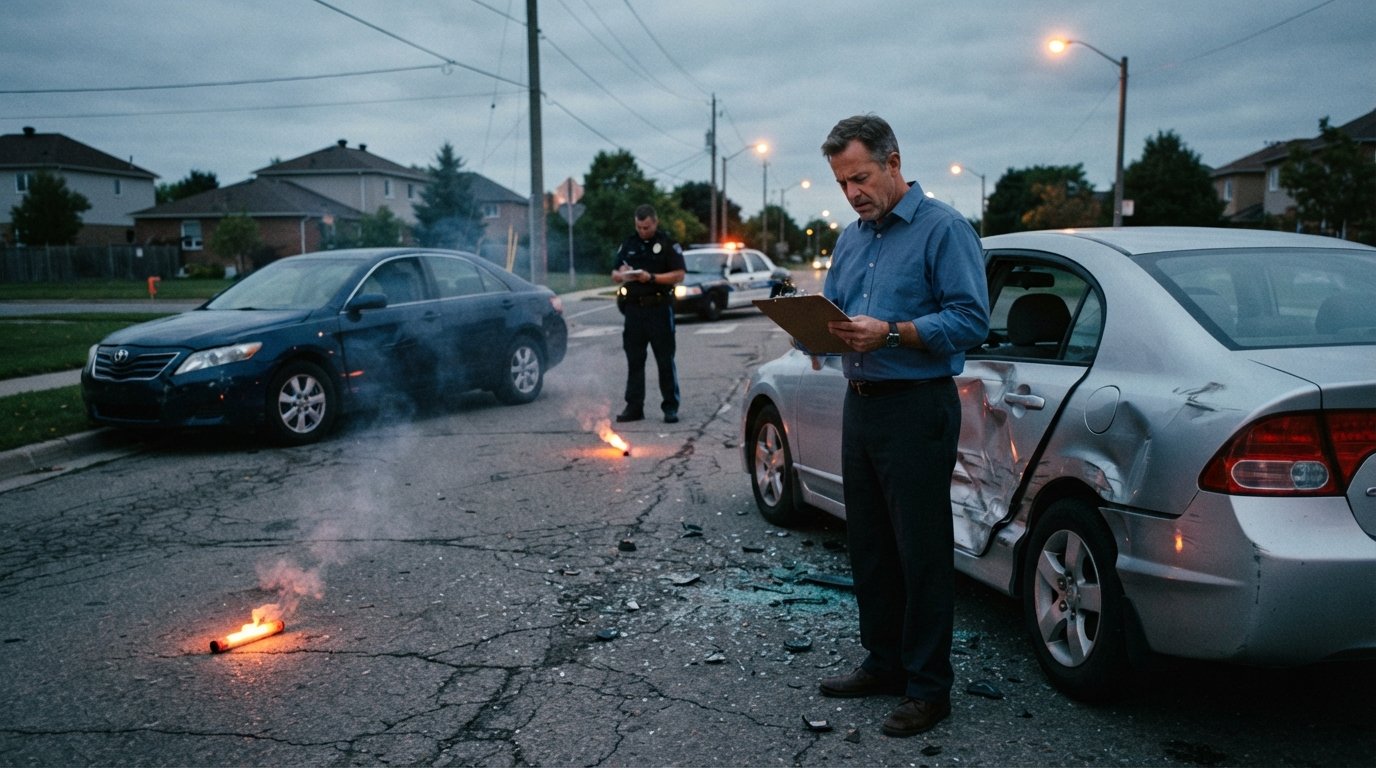
The moments and days following a crash with an uninsured driver are critical. What you do, and what you document, can significantly affect your ability to recover compensation. Even if the other driver admits fault on the spot, you need evidence to support your claim with your own insurer. Start by calling the police and requesting an official accident report. This report will document the other driver's lack of insurance, which is essential for your UM or collision claim. Without a police report, your insurer may question the circumstances of the accident, and the other driver could later change their story.
Next, gather as much information as possible. Exchange contact details with the other driver, but also collect witness statements and take photos of the damage, the scene, and any visible injuries. If the other driver flees the scene, you are dealing with a hit-and-run, which is treated similarly to an uninsured motorist claim in most states. In that case, the police report and any witness information become even more important. Once you have documented everything, notify your own insurance company promptly. Most policies require you to report an accident within a reasonable timeframe, and delays can give your insurer grounds to deny or reduce your claim.
Here is a quick checklist to follow in the immediate aftermath:
- Call 911 and request a police report, even if the other driver asks you not to.
- Photograph all vehicles, the scene, and any injuries, and collect witness contact information.
- Obtain the other driver's name, contact details, license plate, and insurance status (or lack thereof).
- Notify your own insurer as soon as possible and open a claim under your UM, UIM, or collision coverage.
- Seek medical attention promptly, even if you feel fine, because some injuries appear days later.
Following these steps protects your health and your financial interests. It also creates a clear record that your insurer can use to process your claim efficiently. Remember that your goal is not to punish the uninsured driver, it is to secure the compensation you are owed under your own policy.
How Uninsured Motorist Coverage Works in Practice
Uninsured motorist coverage is not a single benefit, it typically has two components: uninsured motorist bodily injury (UMBI) and uninsured motorist property damage (UMPD). UMBI covers medical expenses, lost income, and other injury-related damages for you and your passengers. UMPD covers damage to your vehicle, though some states allow UMPD to also cover a rental car or other related costs. In many states, UMBI is mandatory or must be offered by law, while UMPD is optional. Understanding which components you have, and their limits, is essential before you file a claim.
Suppose you are hit by an uninsured driver who runs a red light. You suffer a broken arm and your car needs $8,000 in repairs. If you have UMBI with a $50,000 limit and UMPD with a $10,000 limit, your insurer would pay up to those amounts for your medical bills and vehicle damage, minus any deductible that applies to UMPD. If your injuries exceed your UMBI limit, you may need to explore other options, such as a personal injury lawsuit against the uninsured driver. However, suing someone without insurance often yields little, because they may not have the assets to pay a judgment. That is why having adequate UM and UIM limits is so important.
One common misconception is that UM coverage only applies when the other driver has no insurance at all. In reality, it also applies in hit-and-run accidents and in some cases where the at-fault driver cannot be identified. Additionally, UIM coverage applies when the other driver has insurance but their liability limits are too low to cover your damages. For example, if the other driver has a $25,000 liability limit but your injuries total $60,000, your UIM coverage can make up the difference, up to your policy's limit. This distinction between UM and UIM is crucial, and many drivers do not realize they need both until it is too late.
Legal Options and the Role of State Laws
Every state has its own rules about uninsured motorist coverage and what you can do when an uninsured driver hits you. Some states, like California and New York, require insurers to offer UM coverage, though you can reject it in writing. Other states, like Florida, have different requirements and may not mandate UM at all. In a few states, uninsured motorist coverage is entirely optional, meaning many drivers on the road may not have it. Knowing your state's laws is the first step toward understanding your rights and responsibilities after an accident.
If you decide to pursue a legal claim against the uninsured driver, you can file a lawsuit for negligence. However, as mentioned earlier, collecting a judgment from someone without insurance or assets is often difficult. In some cases, you may be able to garnish their wages or place a lien on their property, but these processes are time-consuming and not guaranteed to succeed. For most people, the more practical route is to rely on their own UM, UIM, or collision coverage and let their insurer handle the recovery process. Your insurer may also pursue subrogation against the uninsured driver to recoup what it paid you, but that is between the insurer and the at-fault party, not something you need to manage.
It is also important to be aware of deadlines. Every state has a statute of limitations for personal injury and property damage claims, and these deadlines can be as short as one year or as long as six years. If you miss the deadline, you may lose your right to sue. Even if you are filing a claim with your own insurer, you should report the accident promptly, as most policies have notification requirements. When in doubt, consult a personal injury attorney who can advise you on your specific situation and help you navigate the legal landscape. Many attorneys offer free consultations for accident cases, so it costs nothing to explore your options.
Protecting Yourself Before the Crash Happens
The best time to prepare for an uninsured driver accident is long before it happens. Review your auto insurance policy today and check whether you have uninsured motorist coverage and underinsured motorist coverage. If you do not, consider adding them. The cost is often surprisingly affordable, sometimes just a few dollars per month, and the financial protection is invaluable. In our guide on low premium car insurance for young drivers, we explain how to balance affordability with adequate coverage, a principle that applies to drivers of all ages. You can also explore free auto insurance quotes online to compare carriers and find competitive rates for UM and UIM coverage.
Another smart move is to increase your UM and UIM limits. Many drivers carry only the state minimum, which may be far too low to cover serious injuries or extensive vehicle damage. If you have significant assets or a family to protect, higher limits are worth the extra premium. You should also consider whether your health insurance or disability insurance can fill gaps, but do not rely on them as a substitute for UM coverage. Health insurance may cover medical bills, but it will not pay for lost wages, pain and suffering, or vehicle damage. UM and UIM are designed specifically to address those losses.
Finally, keep good records of your policy and review it annually. Life changes, such as moving to a new state, buying a new car, or adding a teenage driver, can affect your coverage needs. A quick annual review with your insurance agent can ensure you are not caught off guard if an uninsured driver hits you. It is also a good idea to keep a copy of your insurance card and a list of emergency contacts in your glove compartment. Being prepared means you can focus on your recovery and your family, rather than worrying about how to pay for repairs and medical bills.
The aftermath of a crash with an uninsured driver is stressful, but it is manageable when you understand your coverage and act quickly. Your own policy is your strongest ally, and with the right UM, UIM, or collision coverage, you can avoid paying out of pocket for someone else's mistake. Take the time now to review your policy, compare quotes, and make sure you are protected. It is a small step that can make a world of difference when you least expect it.