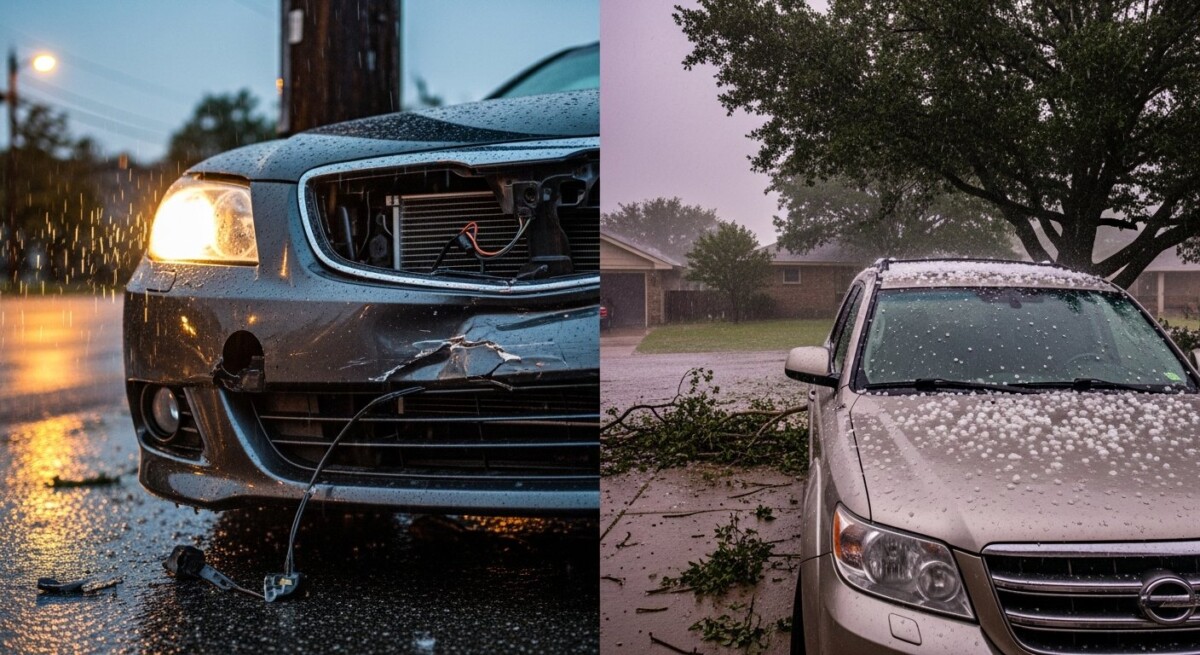
You’re reviewing your auto insurance policy, and two terms keep popping up: collision and comprehensive. They sound similar, and both are optional coverages, but they protect your vehicle from entirely different perils. Choosing the right coverage isn’t just about checking boxes, it’s about building a financial safety net tailored to the specific risks your car faces. Understanding the fundamental difference between collision and comprehensive coverage is the key to making an informed, cost-effective decision that protects your investment without overpaying for protection you may not need.
Defining the Core Coverages
At its simplest, collision and comprehensive insurance are the two primary physical damage coverages you can add to your auto policy to protect your own vehicle. They are almost always sold together, often referred to as “full coverage” by lenders when you have a car loan or lease. However, they are separate coverages with separate deductibles, and they respond to different types of loss events. Liability insurance, which is typically mandatory, covers damage you cause to other people and their property. In contrast, collision and comprehensive are first-party coverages, meaning they pay for damage to your own car, regardless of who is at fault. This distinction is crucial for protecting your financial stake in your vehicle.
What Is Collision Insurance?
Collision insurance covers damage to your car resulting from a physical impact with another vehicle or object. The key concept here is “collision,” an event involving a crash or forceful contact. It does not matter if you hit another car, a telephone pole, a guardrail, or a parked vehicle. It also covers you if another car hits you, even if that driver is uninsured (though Uninsured Motorist Property Damage may also apply in some states). If your car rolls over, that is also typically covered under collision. The coverage is straightforward: your insurer pays for the repairs to your vehicle, minus your chosen deductible, up to the car’s actual cash value. This coverage is particularly vital in at-fault accidents where you would otherwise bear the full repair cost, and it provides a direct path to getting your car fixed quickly without relying on another party’s insurance.
What Is Comprehensive Insurance?
Comprehensive insurance, sometimes called “other than collision” coverage, protects your vehicle from damage caused by events that are largely outside of your control and do not involve a collision with another car or object. Think of it as coverage for the unpredictable and the unavoidable forces of nature and misfortune. It is a broad coverage designed for incidents where no other driver is typically involved. For example, if a tree branch falls on your car during a storm, that’s a comprehensive claim. If your car is stolen, vandalized, or catches fire, comprehensive coverage applies. It also covers damage from falling objects, contact with animals (like hitting a deer), and certain natural disasters such as hail, flood, or earthquake. Like collision, you pay a deductible, and the insurer covers the rest up to the vehicle’s value. This coverage is essential for guarding against the wide array of non-collision hazards that can severely damage or total your vehicle.
Key Differences in Coverage Scope
The difference between collision and comprehensive is best understood by examining what each one covers and, just as importantly, what they exclude. Their names are literal guides to their purpose. Collision is for crashes. Comprehensive is for almost everything else that can happen to your car while it’s stationary or in motion, excluding a collision. A helpful way to visualize this is to consider the cause of the damage. If the cause is your car making contact with another vehicle, the ground, or a fixed object like a fence or tree (from driving into it), it’s collision. If the cause is an external actor or event, like weather, theft, an animal, or a malicious person, it’s comprehensive. This division means you need both coverages to be fully protected from the vast majority of physical damage risks. Our detailed guide on comprehensive and collision insurance breaks down specific scenarios in greater detail.
To clarify the practical application, consider these common scenarios and which coverage would respond:
- Hitting a deer: This is a comprehensive claim. While it involves impact, the deer is considered a falling object or animal, not a fixed object or vehicle.
- Backing into a lamppost in a parking lot: This is a collision claim, as you made impact with a fixed object.
- Hail damage denting your hood and roof: This is a comprehensive claim, caused by a weather event.
- Another driver sideswipes your parked car and flees: This is a collision claim (hit-and-run). Some policies may require you to pay the collision deductible first, which could be reimbursed if the driver is found.
- A rock from a passing truck cracks your windshield: This is usually a comprehensive claim. Many insurers offer full glass coverage with a zero deductible for windshield repairs under comprehensive.
Cost, Deductibles, and When to Drop Coverage
The cost of collision and comprehensive coverage is influenced by several factors, including your vehicle’s make, model, year, your driving history, your location, and, critically, the deductibles you choose. A deductible is the amount you agree to pay out-of-pocket toward a repair before your insurance kicks in. Common deductible amounts are $250, $500, or $1,000. Choosing a higher deductible lowers your premium (the amount you pay periodically for the policy) but increases your financial responsibility if you file a claim. It is vital to select deductibles you can comfortably afford to pay at a moment’s notice. Generally, comprehensive coverage is less expensive than collision because the claims are less frequent and often for lower amounts, though this can vary based on risk factors like local theft rates or hail frequency.
Determining when to carry or drop these coverages is a financial calculation based on your car’s value and your personal risk tolerance. A standard rule of thumb is the “10% rule”: if the combined annual premium for collision and comprehensive exceeds 10% of your car’s current market value, it may be time to consider dropping them. For example, if your car is worth $4,000 and you’re paying $800 a year for these coverages, you might decide to self-insure. However, you must be prepared to pay for any repairs or replacement entirely on your own. If you have a loan or lease, the lender will require you to carry both coverages to protect their financial interest. For newer or more valuable vehicles, maintaining both is almost always advisable. As your car ages and depreciates, the decision becomes more nuanced. For strategies on evaluating your overall insurance costs, our resource on shopping for auto insurance online can be a valuable tool.
The Claims Process for Each Coverage Type
Filing a claim under collision versus comprehensive follows a similar initial path but involves different considerations. For both, you should immediately document the scene with photos, gather any relevant information (like a police report for theft or vandalism, or the other driver’s details for a collision), and contact your insurance company to start the claim. The insurer will assign an adjuster to assess the damage. The primary difference in the process often lies in fault determination. In a collision claim, especially a multi-vehicle accident, the insurance companies will investigate to determine which driver was negligent. This can affect your rates at renewal. With comprehensive claims, fault is rarely an issue, as the events are considered beyond your control. Consequently, a single comprehensive claim is less likely to increase your premium than an at-fault collision claim, though multiple claims of any type can affect your risk profile.
After the adjuster’s assessment, you will pay your deductible directly to the repair shop when you pick up your car. Your insurer pays the shop the remaining balance. If your car is deemed a total loss (meaning repair costs exceed a certain percentage of the car’s value, often 70-80%), both collision and comprehensive will pay you the car’s actual cash value (ACV) at the time of the loss, minus your deductible. It is important to understand that ACV is not the same as replacement cost or the amount you owe on a loan. This can leave you with a gap if you owe more than the car is worth, which is where optional Guaranteed Auto Protection (GAP) insurance becomes relevant. Navigating claims can be complex, and having clear guidance is essential, as discussed in our broader auto insurance coverage overview.
Frequently Asked Questions
Is hitting a deer collision or comprehensive?
Hitting a deer is almost always covered under comprehensive insurance, as it is classified as contact with an animal. This is a key example where the event feels like a collision but is categorized differently by insurers.
Do I need both coverages?
If your vehicle is financed or leased, the lender will require both. If you own your car outright, the decision is based on its value and your ability to absorb a significant repair or replacement cost. For newer or valuable cars, both are recommended. For older, low-value cars, you may choose to forego them.
Which coverage is more important?
This depends on your driving environment. If you have a long commute in heavy traffic, collision may be a higher priority. If you live in an area prone to hail, flooding, or high theft rates, comprehensive becomes critically important. For most drivers, carrying both provides the most complete protection.
Will a comprehensive claim raise my rates?
While not as impactful as an at-fault collision claim, a comprehensive claim can still affect your premium, especially if you file multiple claims. Insurers view you as a higher risk. However, some states prohibit rate increases for specific comprehensive claims, like windshield repair or acts of nature.
What’s not covered by either?
Neither collision nor comprehensive covers mechanical breakdowns, normal wear and tear, or damage from intentional acts. They also do not cover personal items stolen from your car (those may be covered by renters or homeowners insurance). For a complete picture of available protections, including those for specialized situations, exploring a guide on which coverage you need is highly recommended.
Understanding the distinct roles of collision and comprehensive insurance empowers you to structure your auto policy with confidence. By aligning your coverage choices with your vehicle’s value, your financial situation, and the specific risks you face, you can ensure you are neither underinsured nor overpaying for unnecessary protection. Regularly review your policy, especially after major life changes or as your car ages, to ensure your coverage continues to meet your needs effectively.