
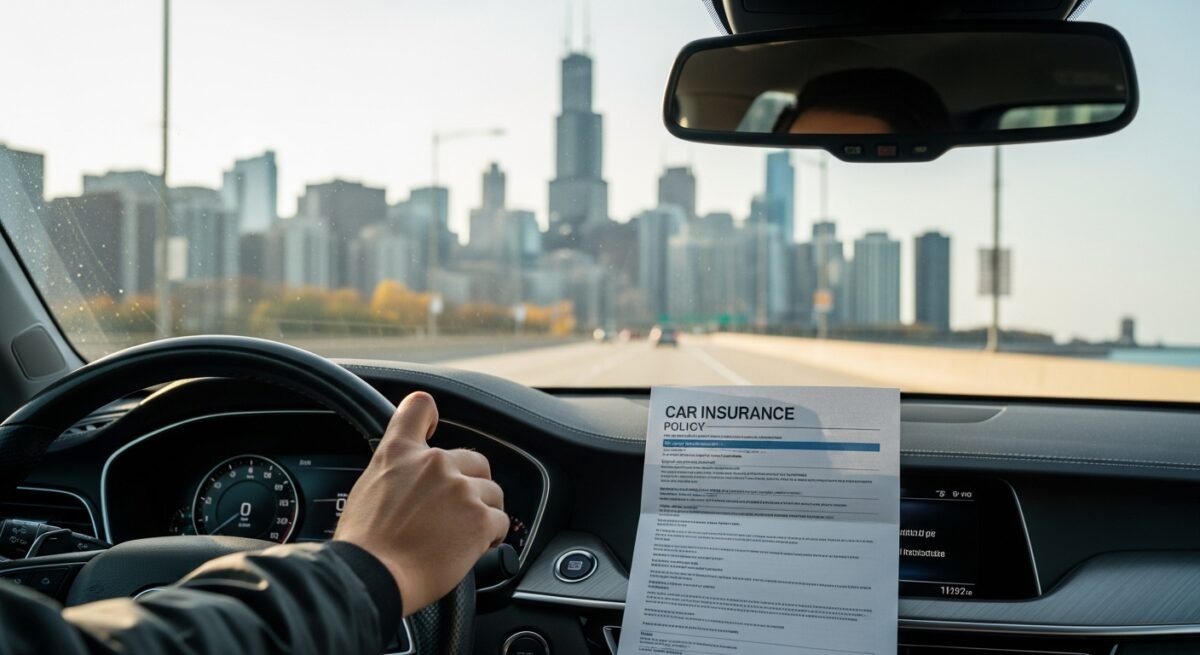
Chicago Auto Insurance Guide: Costs, Laws, and Top Choices
This guide explains Chicago’s unique insurance costs, required coverage, and strategies to find affordable, robust protection for city driving. Secure the right chicago auto insurance policy for your needs.

By Emma Bennett
Driving in Chicago is not for the faint of heart. From the bustling Dan Ryan Expressway to navigating downtown’s dense grid, Windy City drivers face unique challenges that directly impact their auto insurance needs and premiums. Understanding the specific factors that influence chicago auto insurance, from mandatory state laws to local risk variables, is the first step to securing adequate protection without overpaying. This comprehensive guide breaks down everything you need to know to make an informed decision and find the right policy for your Chicago commute.
Illinois and Chicago Auto Insurance Requirements
Illinois law mandates that all drivers carry a minimum amount of liability insurance. This is non-negotiable. The state requires what is known as 25/50/20 coverage. This translates to $25,000 for bodily injury per person, $50,000 total for bodily injury per accident, and $20,000 for property damage. While this is the legal baseline, it is widely considered insufficient, especially in a major metropolitan area like Chicago. The costs associated with a serious accident, particularly one involving multiple vehicles or injuries, can quickly exceed these minimums, leaving you personally responsible for the difference. Furthermore, Illinois is a tort state, meaning the driver found at fault in an accident is liable for the resulting damages. Carrying only minimum coverage is a significant financial risk.
Beyond state law, Chicago and Cook County have specific enforcement mechanisms. Failure to provide proof of insurance during a traffic stop or after an accident can result in fines, license suspension, and vehicle impoundment. The city also utilizes a digital insurance verification system, making it easier for authorities to identify uninsured motorists. It is crucial to maintain continuous coverage and keep your insurance card, either physical or digital, accessible at all times. For a deeper look at navigating insurance requirements in another state with its own complex regulations, consider our guide on Getting Auto Insurance Quotes in New Jersey.
Why Chicago Auto Insurance Rates Are High
Chicago drivers consistently pay some of the highest premiums in Illinois, and often the nation. This is not arbitrary, insurance companies use complex algorithms to assess risk, and several Chicago-specific factors drive costs upward. Understanding these can help you find ways to mitigate your own premium.
First, population density and traffic congestion are major contributors. More cars in a concentrated area statistically leads to a higher frequency of accidents. The sheer volume of vehicles on Lake Shore Drive or the Eisenhower Expressway during rush hour increases collision risk. Second, urban areas like Chicago have higher rates of vehicle theft, vandalism, and break-ins compared to suburban or rural locales. Comprehensive coverage, which protects against these perils, will be priced accordingly. Third, the cost of claims is higher in cities. Repair labor rates, medical costs, and even legal fees are elevated in the Chicago metropolitan area. When an insurer pays more for claims, they adjust premiums to reflect that cost.
Other critical factors include your personal driving record, credit-based insurance score (which is a legal rating factor in Illinois), the make and model of your vehicle, and your exact ZIP code. Premiums can vary dramatically from neighborhood to neighborhood within the city based on historical claim data. A driver in Lincoln Park may see a different rate than one in Englewood for an otherwise identical profile.
Recommended Coverage Levels for Chicago Drivers
Given the risks and high costs associated with driving in Chicago, simply meeting the state minimums is ill-advised. Financial experts and insurance agents strongly recommend increasing your liability limits. A common and more responsible recommendation is to carry 100/300/100 coverage, or even higher. This provides a much more substantial financial safety net if you are at fault in a serious accident. Furthermore, consider these essential coverages beyond liability.
Uninsured/Underinsured Motorist (UM/UIM) coverage is vital. Despite laws, many Chicago drivers operate without insurance or with minimal limits. If one of these drivers hits you, your UM/UIM coverage steps in to pay for your injuries and damages. Collision coverage pays to repair your vehicle after an accident, regardless of fault. Comprehensive coverage handles non-collision events like theft, fire, hail, or hitting an animal. Given Chicago’s weather and theft rates, this is highly recommended. Medical Payments or Personal Injury Protection (PIP) can help cover medical expenses for you and your passengers, which is a useful supplement to health insurance.
To understand how different coverages interact and how to build a robust policy, the principles outlined in our guide to finding the best auto insurance apply universally, though specific requirements vary by state. For Chicagoans, a strong policy is your primary financial defense against the city’s driving hazards.
How to Find Affordable Chicago Auto Insurance
While rates are high, you are not powerless. Strategic shopping and leveraging discounts can lead to significant savings. The most important step is to compare quotes from multiple insurers. Rates can vary by hundreds of dollars for the same driver and coverage, so get at least three to five quotes. When requesting quotes, be precise and consistent with your information to ensure you are comparing apples to apples.
Next, inquire aggressively about every discount for which you may qualify. Common discounts include:
- Multi-policy (Bundling): Combining your auto and renters or homeowners insurance with the same company.
- Safe Driver: For maintaining a clean driving record over a period of years.
- Good Student: For young drivers who maintain a high GPA.
- Pay-in-Full: Paying your six-month or annual premium upfront instead of monthly.
- Paperless/ Auto-Pay: Enrolling in electronic billing and automatic payments.
- Defensive Driving Course: Completing an approved driver safety course.
- Low Mileage: If you drive significantly less than the average annual mileage.
You can also adjust your coverage to lower costs, but do so wisely. Consider raising your deductible (the amount you pay out-of-pocket before insurance kicks in) for collision and comprehensive coverage. A move from a $500 to a $1,000 deductible can lower your premium, but ensure you have the savings to cover the higher deductible if needed. You might also evaluate whether it’s cost-effective to carry collision and comprehensive on an older, low-value vehicle. The process of gathering and comparing these quotes mirrors the steps detailed in our resource for getting New Jersey auto insurance quotes, emphasizing the universal importance of comparison shopping.
The Unique Challenges of Chicago Driving
Chicago’s environment presents specific scenarios that should inform your insurance decisions. The harsh winters bring potholes, which can cause tire and alignment damage. While hitting a pothole is typically covered under collision insurance (if you can prove it was the direct cause), it’s a frequent claim source. Winter also increases the risk of sliding on ice and colliding with another vehicle or object. The dense urban parking, both street and garage, leads to a high incidence of fender-benders, door dings, and hit-and-run incidents. Having collision coverage and uninsured motorist property damage coverage can be crucial here.
Furthermore, Chicago’s high rate of vehicle-related crimes makes comprehensive coverage a smart investment. Break-ins for belongings, catalytic converter theft, and outright vehicle theft are realities of city living. For more insights on navigating complex insurance markets and specific coverage considerations, you can Read full article on specialized insurance topics. Finally, the prevalence of ride-sharing services like Uber and Lyft creates a coverage gap if you drive for these platforms. Personal auto policies typically exclude commercial activities. If you are a rideshare driver, you must inform your insurer and secure a rideshare endorsement or a commercial policy to ensure you are covered during all phases of a trip.
Frequently Asked Questions
Is auto insurance more expensive in Chicago than in the suburbs?
Yes, almost always. Premiums are primarily based on risk factors associated with your garaging address. The higher population density, traffic, and crime rates in the city core lead to higher premiums compared to most suburban ZIP codes.
What is the penalty for driving without insurance in Chicago?
Penalties can include a minimum $500 fine, a driver’s license suspension, and vehicle impoundment. For a first offense, you may receive a court supervision and a requirement to file proof of insurance (SR-22) with the state, which itself leads to higher premiums.
How does my credit score affect my chicago auto insurance rate?
In Illinois, insurers are permitted to use credit-based insurance scores as a rating factor. Statistical data suggests a correlation between credit history and the likelihood of filing a claim. Maintaining good credit can help you secure lower rates.
Should I report minor scratches and dings to my insurer?
Generally, no. For minor damage that you can afford to pay out-of-pocket, it’s advisable not to file a claim. Multiple small claims can label you as a high-risk driver and lead to premium increases or non-renewal. Use insurance for significant losses.
What should I do immediately after a car accident in Chicago?
Ensure safety, call 911 if there are injuries, move vehicles to a safe location if possible, exchange information (license, insurance, contact) with the other driver, take photos of the scene and damage, and file a police report. Notify your insurance company promptly to start the claims process.
Navigating chicago auto insurance requires a balance between meeting legal mandates, protecting your assets from the city’s unique risks, and managing cost. By understanding the factors that influence your premium, choosing robust coverage limits, and shopping strategically for discounts, you can secure the protection you need for Chicago’s streets. Remember, the cheapest policy is rarely the best value if it leaves you exposed to financial ruin in the event of a major accident. Invest the time to research and choose a policy that provides real peace of mind as you navigate the Windy City.