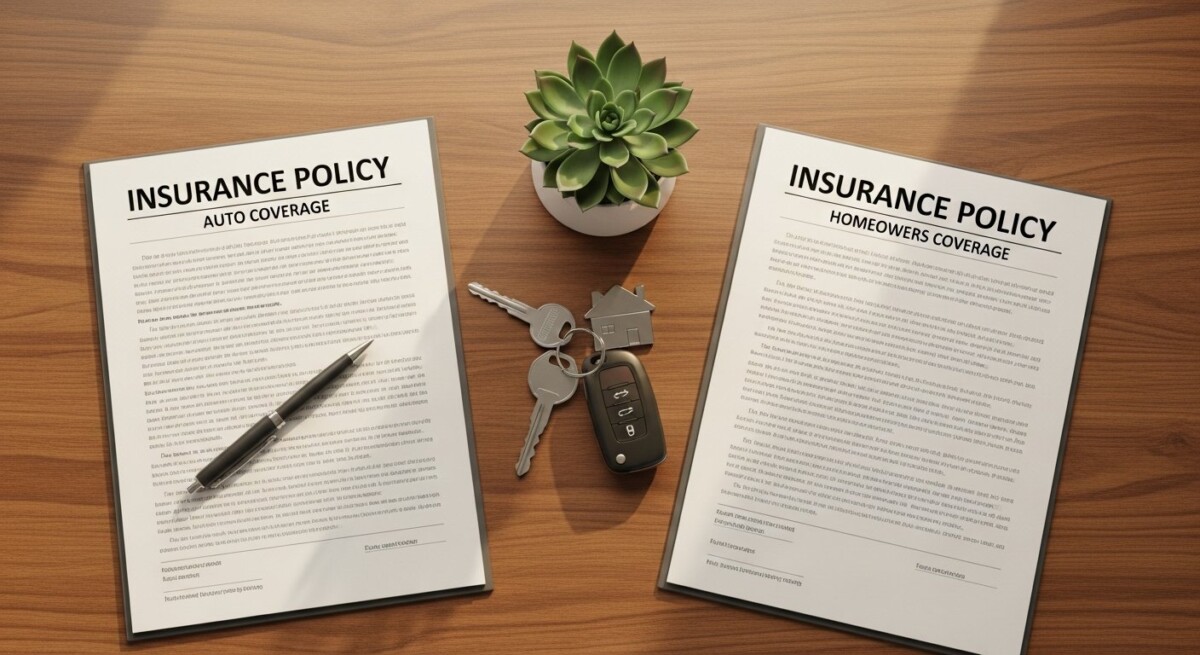
Imagine paying less for two essential policies while simplifying your monthly bills. That is the promise of bundling auto insurance with renters or homeowners coverage. For many Americans, this strategy delivers genuine savings and convenience. But is it always the right move? Understanding how these policies interact can help you decide if bundling fits your life.
Auto insurance protects your vehicle against accidents, theft, and liability. Renters insurance covers your personal belongings inside an apartment or rented home, plus liability for incidents that occur there. Homeowners insurance does the same for owned property, including the structure itself. When you purchase both policies from the same company, insurers typically offer a discount. This article explores how bundling works, when it pays off, and what to watch for.
How Bundling Auto and Property Insurance Works
Insurance companies reward customer loyalty. When you hold multiple policies with one carrier, you become a more valuable customer. The company saves on administrative costs, billing, and customer acquisition. They pass some of those savings to you through a multi-policy discount. This discount usually ranges from 5% to 25% depending on the insurer, your location, and your claims history.
For renters, bundling auto insurance with renters insurance is straightforward. You add a renters policy to your existing auto policy. The two policies share the same billing cycle and online account. For homeowners, the process is similar, though the premiums are higher because homeowners insurance covers the building structure itself. In both cases, you gain one point of contact if you need to file a claim.
Bundling also simplifies renewals. Instead of tracking separate due dates and login credentials, you manage everything in one place. This reduces the chance of accidental lapses in coverage. If you move or buy a new car, updating both policies at once is easier.
Common Discounts and Savings Opportunities
Multi-policy discounts are just one way to save. Many insurers offer additional reductions when you bundle. These may include:
- Loyalty discounts for staying with the same company for multiple years
- Claim-free discounts if you have no recent claims on either policy
- Paperless billing and automatic payment discounts
- Safety feature discounts for anti-theft devices or smart home systems
Stacking these discounts can lower your combined premium significantly. However, it is important to compare the bundled price against the total of two separate policies from different companies. Sometimes a standalone auto policy from one carrier and a renters policy from another may cost less, especially if each specializes in that line. Always shop around before committing.
Key Differences Between Renters and Homeowners Bundles
While the bundling concept is the same, renters and homeowners face different considerations. Renters insurance covers personal property, additional living expenses if your rental becomes uninhabitable, and liability. It does not cover the building itself. Homeowners insurance covers the structure, other structures on the property, personal property, liability, and additional living expenses. Because homeowners insurance has higher limits and more coverage components, its premium is larger. The multi-policy discount on a homeowners bundle may yield a higher dollar savings than on a renters bundle.
Renters often have lower insurance needs overall. A typical renters policy costs $15 to $30 per month. Bundling it with auto insurance might save $5 to $15 per month on the auto side. For homeowners, the savings can be $50 to $150 per year or more. But the auto policy itself may also be more expensive if you live in a high-risk area. The key is to evaluate the net effect on your total insurance spending.
Another difference is liability exposure. If a guest is injured in your rental unit, renters insurance covers your liability. Homeowners insurance covers similar scenarios but also includes liability for injuries on your property, such as a slip on your walkway. Bundling ensures your liability limits across auto and property are consistent, which can prevent coverage gaps.
When Bundling Makes Sense (and When It Does Not)
Bundling is ideal for people who value convenience and want a single relationship with an insurer. If you have a clean driving record and low claims history, you will likely qualify for the best multi-policy discounts. Families with a home and two cars often benefit greatly. Our bundling guide for renters and homeowners explains how to compare quotes effectively.
However, bundling is not always the cheapest option. If you have a poor credit score or recent claims, the discount may not overcome higher base rates from one insurer. Independent agents can help you compare bundled vs. unbundled options. Also, if you have specialized coverage needs like an antique car or a high-value home, a niche insurer might offer better rates for one policy but not both. In that case, keeping policies separate could save money.
Another scenario where bundling may fall short is if you move frequently. Renters who relocate every year might find that their auto insurer does not offer renters insurance in every state. Switching insurers each time you move can disrupt your bundling discount. In such cases, a standalone renters policy from a national provider might be more flexible.
How to Evaluate Your Current Coverage
Before bundling, review your existing auto insurance and property insurance policies. Check your liability limits, deductibles, and coverage exclusions. A bundle should not force you to accept lower coverage than you need. For example, if your auto policy has $300,000 liability but the bundled renters policy only offers $100,000, you may be underinsured. Adjust limits to match your risk profile.
Also consider deductibles. Some insurers require you to use the same deductible for both policies. If you prefer a low deductible for auto but a high deductible for property to save money, bundling may not accommodate that. Ask the agent about flexibility. This detailed bundling guide walks through the comparison process step by step.
Finally, check for overlapping coverage. For instance, if your auto policy includes roadside assistance, you do not need to pay for it again in a renters or homeowners policy. Similarly, if your homeowners policy covers identity theft, you can skip that add-on on your auto policy. Eliminating duplicate coverage reduces your premium further.
The Claims Advantage of Bundling
One practical benefit of bundling is simpler claims handling. If a storm damages your car and your home, you file one claim with one adjuster. This can speed up the process and reduce paperwork. However, there is a potential downside. If you have a claim on one policy, it may affect the discount or premium on the other policy. Some insurers apply claim surcharges across all policies. Ask your agent whether a claim on your auto policy will raise your property rate.
Bundling also gives you a single customer service team. If you have a question about billing or coverage, one phone call covers both policies. This can be especially helpful during stressful times like after an accident or a burglary. Our key tips for renters and homeowners include strategies for maximizing claims efficiency.
Frequently Asked Questions
Can I bundle auto insurance with renters insurance if I have a roommate?
Yes, but only your personal belongings and liability are covered. Your roommate needs their own renters policy. Some insurers offer shared policies for unrelated roommates, but this is less common. Bundling your auto with your own renters policy is straightforward.
Does bundling affect my credit score?
No, bundling itself does not impact your credit score. However, insurers may use credit-based insurance scores when calculating premiums. Maintaining good credit helps you qualify for the best bundled rates.
How much can I save by bundling auto and homeowners insurance?
Savings vary widely. Typical multi-policy discounts range from 10% to 25% on each policy. For a homeowner, the combined annual savings might be $200 to $500 or more. For a renter, savings are usually smaller, often $50 to $150 per year. Always compare quotes from multiple insurers.
Should I bundle if I have an older car?
It depends. If your car has low value, you may only need liability coverage. Bundling might still offer a discount on your renters or homeowners policy, even if the auto discount is small. Run the numbers to see if bundling saves overall.
Can I cancel one policy without losing the discount on the other?
Typically, no. The multi-policy discount applies only while both policies are active. If you cancel one, the discount on the other will be removed, and your premium may increase. Plan ahead if you expect to change policies.
Final Thoughts on Bundling
Bundling auto insurance with renters or homeowners coverage is a proven way to save money and simplify your insurance life. It works best for people who have good credit, clean claims histories, and a preference for managing fewer accounts. But it is not a one-size-fits-all solution. Always compare bundled quotes against standalone policies from different carriers. These key tips on auto insurance for renters and homeowners can help you make an informed decision. Take time to review your coverage needs and shop around. The right bundle can protect your assets and your peace of mind without breaking the bank.