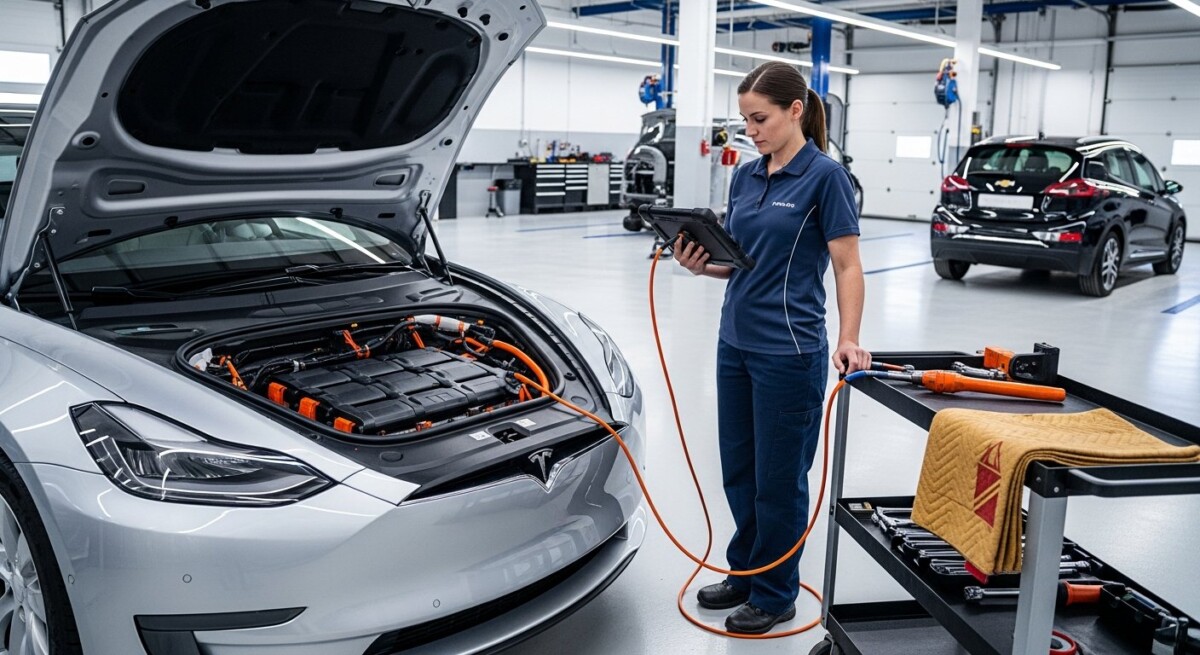
Electric vehicles (EVs) are no longer a niche market. With more drivers making the switch to models from Tesla, Ford, Chevrolet, Hyundai, and Rivian, a new question has emerged: does standard auto insurance cover an EV properly, or do you need a specialized policy? The truth is that insuring an electric vehicle involves different cost factors, repair complexities, and coverage gaps than a traditional gas-powered car. Finding the best auto insurance for electric vehicles means understanding how insurers calculate premiums for high-voltage battery systems, specialized parts, and unique safety features. This guide breaks down everything you need to know to secure the right policy without overpaying or leaving yourself exposed.
Why Electric Vehicles Require a Different Insurance Approach
EVs are fundamentally different from internal combustion engine vehicles in several ways that directly affect insurance. The most obvious difference is the battery pack, which can cost between $5,000 and $20,000 to replace. A standard auto policy might not cover battery degradation or complete failure unless you have comprehensive coverage. Additionally, EVs are often heavier, which can cause more damage in collisions, and they accelerate faster, which some insurers view as higher risk.
Another factor is repair availability. Many independent shops lack the training or equipment to service EVs safely. That forces you to use dealership-certified repair centers, which charge higher labor rates. Insurers that specialize in EV coverage often include provisions for OEM (original equipment manufacturer) parts and certified repair networks. Without these features, you could face long delays or out-of-pocket costs after an accident.
Key Coverage Gaps in Standard Policies
When you buy a generic auto insurance policy, you typically get liability, collision, and comprehensive coverage. For an EV, these may not be sufficient. For example, standard comprehensive policies often exclude coverage for charging equipment damage or theft of charging cables. Some policies also limit rental car reimbursement to a gas-powered equivalent, which may not meet your needs if you rely on an EV.
You should also consider gap insurance. EVs depreciate faster than many gas cars, especially in the first two years. If your EV is totaled, your insurer will pay the actual cash value, which could be thousands less than what you owe on your loan. Gap insurance covers that difference. In our guide on securing the best auto insurance after bankruptcy, we explain how gap coverage can protect your finances even if your credit history is not perfect.
What to Look for in the Best Auto Insurance for Electric Vehicles
Not all insurers treat EVs the same way. Some have dedicated EV policies or endorsements, while others simply add an EV surcharge to a standard policy. To find the best auto insurance for electric vehicles, you need to evaluate insurers on several specific criteria.
- Battery coverage: Does the policy cover the battery as a separate component? Some insurers exclude battery damage unless it is caused by a collision. Look for policies that cover battery failure, fire, and theft.
- Charging equipment coverage: Home charging stations and portable chargers can cost over $1,000. A good policy includes coverage for these items, both on and off your property.
- Roadside assistance for EVs: Standard towing may not handle an EV safely. Look for roadside assistance that includes flatbed towing, battery jump-starting, and mobile charging.
- OEM parts guarantee: Aftermarket parts can compromise EV performance and safety. Policies that guarantee OEM parts ensure your vehicle is repaired to manufacturer standards.
- Rental car with EV option: If your EV is in the shop, you should get a comparable EV rental, not a gas car. This is especially important if you rely on EV-specific features like one-pedal driving or a home charging routine.
These five criteria form the foundation of a strong EV insurance policy. Without them, you may face unexpected costs or inconvenience after a claim. It is worth comparing at least three insurers that offer these features to find the right balance of coverage and price.
Top Insurers for Electric Vehicle Coverage
While individual rates vary by location, driving history, and vehicle model, several insurers have established themselves as leaders in EV insurance. Here is a breakdown of what each offers and who they are best for.
Progressive
Progressive offers a dedicated EV insurance endorsement that covers charging equipment, battery damage, and includes a rental car with an EV option. Their rates are competitive for drivers with good credit, and they provide generous discounts for bundling home and auto policies. Progressive also offers usage-based insurance through Snapshot, which can lower premiums for low-mileage EV drivers.
Geico
Geico does not have a separate EV policy, but it covers EVs under its standard auto insurance with competitive rates. Geico excels at mechanical breakdown insurance, which can cover battery and electric motor repairs after the manufacturer warranty expires. Their roadside assistance includes flatbed towing, which is essential for EVs. However, Geico does not automatically include charging equipment coverage, so you may need to add it as an endorsement.
State Farm
State Farm is one of the largest insurers of Tesla vehicles in the United States. They offer a rideshare endorsement that is popular with EV drivers who use services like Uber or Lyft. State Farm also has a strong network of certified repair shops that are trained to work on EVs. Their rates are generally higher than Progressive or Geico for standard coverage, but they offer excellent customer service and claims handling.
Nationwide
Nationwide offers a SmartRide program that rewards safe driving with discounts. They also provide a disappearing deductible feature that reduces your deductible by $100 for every year without an accident. For EV owners, Nationwide includes coverage for charging equipment and offers OEM parts as a standard feature on newer vehicles. Their rates are moderate, making them a good option for drivers who want predictable costs.
How to Lower Your EV Insurance Premiums
EV insurance can be 10 to 30 percent more expensive than insuring a comparable gas vehicle, but there are several ways to bring those costs down. The first step is to shop around. Rates vary significantly between insurers for the same EV model. For example, insuring a Tesla Model 3 with Progressive might cost $1,800 per year, while the same driver with Geico might pay $2,400. Getting at least three quotes is essential.
Another strategy is to increase your deductible. If you can afford to pay $1,000 or $2,000 out of pocket for a claim, raising your deductible can lower your premium by 15 to 25 percent. Just make sure you have that amount set aside in an emergency fund. Additionally, take advantage of EV-specific discounts. Some insurers offer discounts for vehicles with advanced safety features like automatic emergency braking, lane-keeping assist, and adaptive cruise control. Almost all modern EVs include these features.
You should also consider your annual mileage. Many EV owners drive fewer miles than the average person, especially if they use the car for commuting only. Usage-based insurance programs can reward low-mileage drivers with significant discounts. Finally, bundling your EV insurance with your homeowners or renters insurance can save you up to 20 percent. If you have had credit challenges in the past, check out our article on 5 best auto insurance for bad credit drivers in 2026 for strategies to still find affordable coverage.
Common Mistakes EV Owners Make When Buying Insurance
Even savvy buyers can make errors when insuring an electric vehicle. One of the most common mistakes is assuming that the minimum liability coverage required by your state is enough. EVs are expensive to repair, and if you cause an accident, the other party’s medical bills and vehicle damage could easily exceed your policy limits. It is wise to carry at least $100,000 in bodily injury liability per person and $300,000 per accident, plus $100,000 in property damage liability.
Another mistake is skipping comprehensive coverage. Some EV owners try to save money by dropping comprehensive, thinking that the car’s safety features will prevent theft or damage. However, comprehensive covers non-collision events like vandalism, animal strikes, and weather damage. EV batteries are a target for thieves, and comprehensive coverage protects you in those situations. If you need to cancel your existing policy for any reason, read our guide on how to cancel auto insurance without penalty to avoid fees and lapses in coverage.
Finally, do not assume that your insurer automatically knows how to handle an EV claim. When you purchase a policy, ask specifically how they handle EV repairs, battery diagnostics, and total loss valuation. If the insurer cannot give you clear answers, consider switching to one that specializes in EVs. After a claim, you may also need to file a diminished value claim if your EV loses resale value after being repaired. Our article on how to file a diminished value auto insurance claim walks you through the process step by step.
Frequently Asked Questions
Is EV insurance more expensive than gas car insurance?
Yes, on average, EV insurance costs about 20 percent more than insuring a comparable gas-powered vehicle. The higher cost is due to expensive battery replacements, specialized repair requirements, and higher vehicle values. However, shopping around and taking advantage of discounts can reduce the difference.
Does insurance cover the EV battery?
Most comprehensive and collision policies cover the battery if it is damaged in an accident, fire, or theft. However, battery degradation over time is generally not covered. Some insurers offer separate battery coverage endorsements that cover failure or capacity loss. Check your policy details carefully.
Can I insure a used EV the same as a new one?
Yes, but the coverage options may differ. Used EVs often have lower actual cash value, so gap insurance may be less important. However, you still need comprehensive and collision coverage if you have a loan or lease. Some insurers also offer reduced rates for used EVs because the replacement cost is lower.
Do I need special insurance for a home charging station?
Standard homeowners or renters insurance usually covers the charging station as part of your personal property, but with limits. A dedicated EV insurance endorsement can provide broader coverage for the charging station against damage, theft, or power surges. It is worth asking your auto insurer about adding this coverage.
Final Thoughts on Choosing the Best Auto Insurance for Electric Vehicles
Switching to an electric vehicle is an exciting step toward lower fuel costs and a smaller carbon footprint, but it also requires a fresh look at your auto insurance. The best auto insurance for electric vehicles combines battery coverage, charging equipment protection, OEM parts guarantees, and EV-specific roadside assistance. By comparing at least three insurers and asking the right questions, you can find a policy that fits your budget and gives you peace of mind. Remember to review your coverage annually, especially as your EV ages and its value changes. With the right policy, you can enjoy the benefits of electric driving without worrying about unexpected insurance gaps.