
Auto Collision Insurance: What’s Covered and Why It Matters
Auto collision insurance covers repairs to your car after an accident, regardless of fault. Learn how it works with deductibles, when it’s required, and how to decide if you need it.

By Emily Roberts
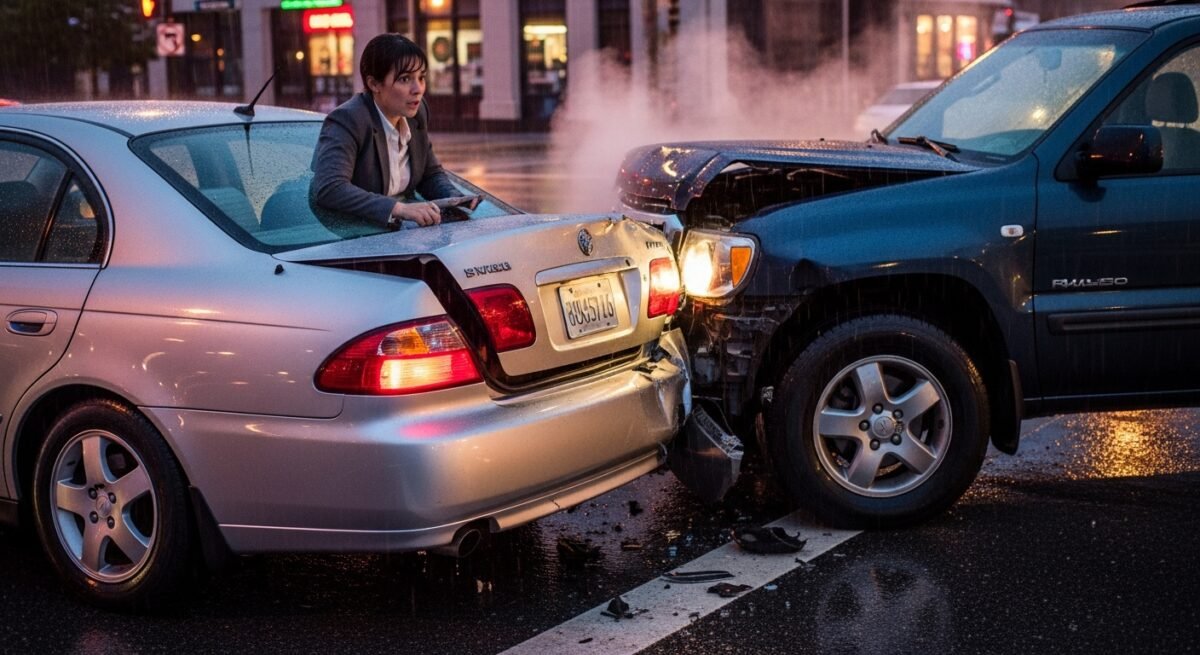
You’re stopped at a red light when, without warning, the sound of crunching metal fills your ears. In the rearview mirror, you see the grill of another car far too close. Your heart sinks, and your first thought isn’t about fault or frustration—it’s about the thousands of dollars your vehicle might need to get back on the road. This is the exact scenario auto collision insurance is designed for. Unlike the liability coverage required by law, which pays for the other driver’s damages if you’re at fault, collision coverage is about protecting your own financial investment in your vehicle. It’s the safety net that catches you when your car hits another vehicle, a tree, a pothole, or even a curb. Understanding this specific coverage, how it fits within your broader policy, and when it’s a smart financial decision is crucial for every driver who wants to avoid devastating out-of-pocket repair bills.
The Core Mechanics of Collision Coverage
Auto collision insurance is an optional coverage that pays to repair or replace your vehicle after an accident, regardless of who is at fault. Its primary function is straightforward: if your car is damaged in a collision with another object, your policy will cover the costs, minus your chosen deductible. This is a key distinction from liability insurance. For instance, if you slide on ice and hit a guardrail, your liability insurance does nothing for your own car. Collision coverage is what you would use to file that claim. The process typically begins with you reporting the accident to your insurer, paying your deductible, and then the insurance company covers the remaining repair costs up to the actual cash value of your vehicle at the time of the loss.
It’s vital to understand what “actual cash value” means. This is not the same as the price you paid for the car or the cost to buy a brand-new equivalent. It’s the market value of your specific vehicle, considering its age, mileage, condition, and depreciation, at the moment before the accident. If repair costs exceed this actual cash value, your insurer will declare the car a total loss. They will then pay you that cash value, minus your deductible. This is why knowing your car’s current worth is essential when deciding on coverage levels and evaluating whether a claim is worth filing after considering the potential impact on your future premiums. For a deeper understanding of how different coverages interact, our guide on auto insurance coverage breaks down each component in detail.
When Collision Insurance Is a Financial Necessity
While optional, collision coverage transitions from a consideration to a necessity in several common situations. The most prominent is if you have a loan or lease on your vehicle. Lenders and leasing companies almost universally require it because they have a financial interest in the car until you’ve paid it off. They need the assurance that their asset is protected. Dropping collision coverage before the loan is satisfied would violate your contract and could lead to the lender force-placing expensive coverage on your behalf.
Beyond lender requirements, the decision is largely a personal financial calculation. Ask yourself: could you afford to write a check today for the current market value of your car if it was totaled? For newer vehicles, or any car with a value over a few thousand dollars, most people cannot absorb that loss without significant hardship. In this case, collision insurance acts as critical risk management. However, if you drive an older car with a low market value, the annual premium plus the deductible might approach or even exceed the car’s worth. In such cases, self-insuring—setting aside savings equivalent to the car’s value—might be a more cost-effective strategy. To make an informed choice, you need an accurate idea of your car’s value and a clear comparison of premium quotes, which you can start by learning how to find the best auto insurance quote easily.
Navigating Deductibles and Premium Costs
The deductible is the cornerstone of your collision coverage cost structure. It’s the amount you agree to pay out-of-pocket when you file a claim before your insurance kicks in. Deductibles typically range from $250 to $2,500. Choosing a higher deductible will lower your annual or monthly premium because you’re assuming more of the initial financial risk. Conversely, a lower deductible means you pay less at the time of a claim, but your regular premium will be higher.
Selecting the right deductible requires balancing your cash flow and risk tolerance. If you have $1,000 readily available in an emergency fund, opting for a $1,000 deductible can lead to substantial premium savings over time. But if coming up with $500 would be a struggle, a lower deductible, despite the higher premium, provides more predictable financial protection. Remember, the deductible applies per claim. It’s also important to note that collision claims can affect your future rates, as insurers may view you as a higher risk. A minor fender-bender where the repair cost is only slightly above your deductible might be better handled without filing a claim to avoid a potential rate increase. Comparing how different companies handle claims and pricing is key, which is why reviewing the best auto insurance companies can provide insight into insurer reliability.
What Collision Insurance Does Not Cover
Understanding the limits of collision coverage is as important as knowing its benefits. It is not a catch-all for any damage to your car. Its scope is specifically for collisions. For example, if a hailstorm dents your roof or a tree branch falls on your hood, that damage is not covered by collision insurance. Those events fall under comprehensive coverage, a separate optional coverage that handles non-collision incidents like theft, vandalism, fire, and weather-related damage. Together, collision and comprehensive are often referred to as “physical damage” coverage.
Other common exclusions from a standard collision policy include normal wear and tear, mechanical breakdowns, and damage from intentionally causing an accident. It also does not cover personal items inside the car that are damaged in a crash; that may fall under renters or homeowners insurance. Furthermore, collision insurance does not cover injuries to you or your passengers; that is the role of medical payments or personal injury protection (PIP) coverage. To have complete protection for your vehicle from all common perils, you typically need both collision and comprehensive, which together with high liability limits form what is commonly marketed as full coverage auto insurance.
Frequently Asked Questions
Is collision insurance required by law?
No, collision insurance is not mandated by state law. The only coverage required by law is liability insurance. However, if you have a car loan or lease, your lender will require it as part of your financing agreement.
Will my rates go up if I use my collision insurance?
It is possible. Filing a claim, especially if you are found at fault for the accident, is a factor insurers use to assess risk. A single not-at-fault claim might not increase your rate with some companies, but multiple claims likely will. Always consider the cost of repairs versus your deductible and potential premium increases before filing for minor damage.
Does collision insurance cover a hit-and-run?
Yes, if you are the victim of a hit-and-run, your collision coverage would apply. You would be responsible for paying your deductible. Some states and policies offer uninsured motorist property damage (UMPD) coverage, which might also apply to hit-and-runs and sometimes has a lower deductible.
Should I drop collision coverage on an old car?
This is a common financial crossroad. A good rule of thumb is to consider dropping collision (and possibly comprehensive) when the annual premium for these coverages exceeds 10% of your car’s current market value. If your car is worth $2,000 and you’re paying $400 a year for collision, it may be time to self-insure.
How does collision insurance work if I’m not at fault?
You have two main options. You can file a claim with your own insurer using your collision coverage, pay your deductible, and let your company handle the process of seeking reimbursement from the at-fault driver’s insurer (subrogation). They will typically recover your deductible for you if successful. Alternatively, you can file a claim directly against the at-fault driver’s property damage liability insurance, which may allow you to avoid paying your deductible at all.
Ultimately, auto collision insurance is a powerful tool for financial stability on the road. It transforms a potentially catastrophic, unpredictable expense—major vehicle repairs—into a manageable, predictable cost: your premium and deductible. By carefully evaluating the value of your vehicle, your personal financial resilience, and the terms of any loan agreement, you can make a confident decision about whether this coverage is a prudent investment for your driving life. The peace of mind that comes from knowing you can repair or replace your car after an accident, no matter who caused it, is the true value this optional protection provides.