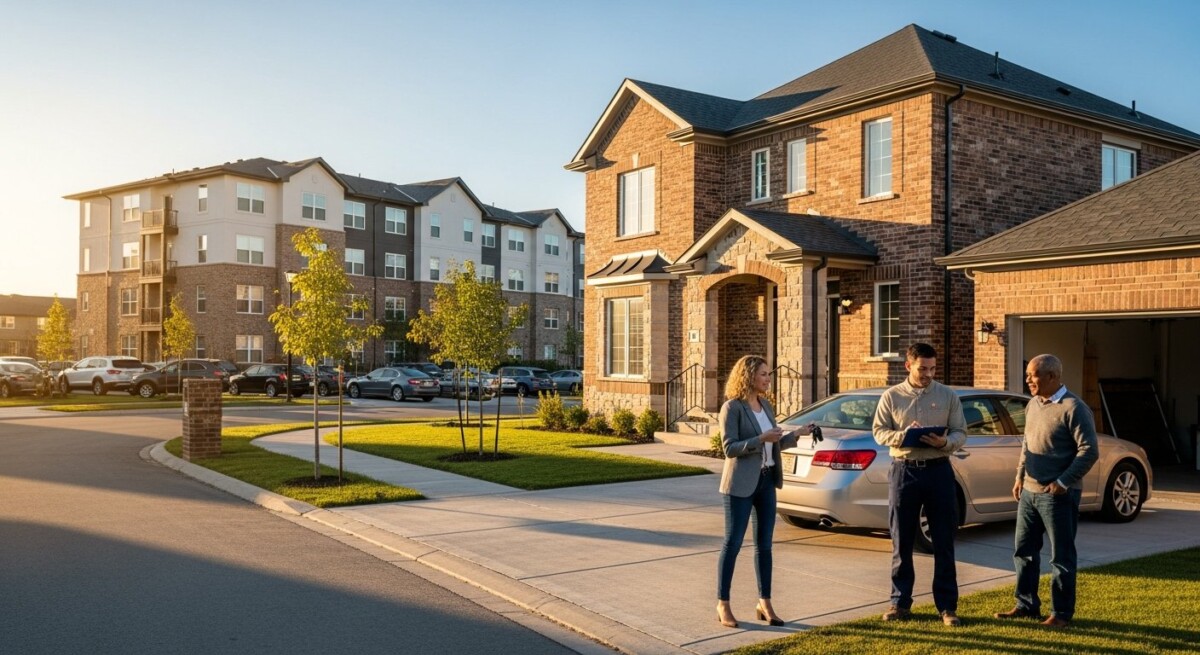
When you rent an apartment or own a house, your auto insurance policy is often the last thing on your mind. You focus on the property itself: the security deposit, the mortgage rate, the appliances, the curb appeal. Yet the type of dwelling you live in can quietly shape your car insurance costs and coverage needs in ways that many drivers overlook. Whether you park on a crowded city street or in a private driveway, your housing situation influences risk, and insurers price that risk accordingly. Understanding this connection can save you hundreds of dollars a year and prevent nasty surprises after an accident or theft.
How Your Housing Type Affects Your Auto Insurance Rates
Insurance companies evaluate where you live as a proxy for risk. Zip code, population density, crime statistics, and even local weather patterns all feed into your premium. Renters in urban areas often face higher rates because street parking increases the chance of vandalism, hit-and-runs, or theft. Homeowners in suburban or rural areas typically pay less, but that is not a universal rule. A homeowner in a flood-prone zone or a neighborhood with high vehicle crime can see rates that rival those of city renters.
Beyond location, your housing type signals stability to insurers. Homeowners tend to stay put longer, which correlates with fewer claims and more responsible driving. Renters move more frequently, and each move can introduce new variables, such as a different commute or a new parking situation. Insurers do not penalize you for moving per se, but they do adjust your rate based on the new address. This is why a simple move from a house to an apartment can change your premium by 10 percent or more, even if your driving record stays spotless.
In our guide on auto insurance for renters and homeowners, we explain how these factors interact. The key takeaway is that you should always update your insurer after a move, because failing to do so can lead to denied claims or higher rates later.
Coverage Gaps That Renters and Homeowners Face
Both renters and homeowners assume that their auto policy covers everything related to their vehicle. That is not true. Standard auto insurance covers damage to your car and liability for accidents, but it does not protect your personal belongings inside the car. If someone breaks into your vehicle and steals a laptop or a gym bag, your auto policy will not pay for that loss. Renters insurance and homeowners insurance fill that gap, covering personal property even when it is outside your home, including in your car.
Another common gap involves liability when you drive occasionally for work or use your car for ridesharing. A standard personal auto policy excludes commercial activities. If you deliver food or drive for a ride-hailing service, you need special coverage, often called rideshare endorsement. Renters and homeowners who use their vehicles for side gigs frequently overlook this. They assume their personal policy protects them, but a claim during a delivery can be denied entirely.
For a deeper look at how coverage fits your situation, see our article on renters and homeowners auto insurance coverage fit. That guide highlights specific policy options that address these gaps.
Bundling Auto and Property Insurance: A Smart Move
One of the simplest ways to save money is to buy auto insurance and renters or homeowners insurance from the same company. Bundling typically earns you a discount of 5 to 25 percent on both policies. For a homeowner paying $1,200 a year for auto and $800 for home, that could mean $200 or more in annual savings. Even renters, who usually pay less for property insurance, can benefit from a meaningful discount.
Bundling also simplifies your life. You have one agent, one renewal date, and one bill. If you need to file a claim, you deal with a single company, which can reduce confusion and paperwork. However, bundling is not always the best deal. Sometimes separate carriers offer lower individual rates that beat a bundled discount. You should always compare quotes, both bundled and unbundled, before committing.
When you bundle, review the coverage limits carefully. Insurers may automatically align your deductibles, but you can choose different ones. A higher auto deductible can lower your premium, but if you also raise your home deductible, you increase your out-of-pocket risk. Balance your savings with what you can afford to pay out of pocket.
What Changes When You Move From Renting to Owning
Moving from a rented apartment to a purchased home triggers several changes in your auto insurance considerations. First, your parking situation may improve, which can lower your rates. A garage or a private driveway reduces exposure to theft and vandalism compared to street parking. Second, your commute may change. If you move closer to work, you might drive fewer miles annually, which can reduce your premium. Conversely, a longer commute increases your risk and your rate.
Another change is the need for higher liability limits. As a homeowner, you have more assets to protect. If you cause a serious accident, the injured party could sue you for damages beyond your auto liability limits. A homeowners policy provides some liability protection, but it does not extend to auto accidents. To shield your home and savings, you may need to increase your auto liability coverage to $250,000 or even $500,000. This is a smart move for anyone with significant assets.
In our article about auto insurance for renters and homeowners: what changes, we detail these shifts and offer a checklist for updating your policy after a move.
Key Differences in Policy Requirements
Most states require liability insurance, but the minimums vary widely. Renters and homeowners face the same legal minimums, but their practical needs differ. A renter with few assets may be comfortable with state minimums, but that is risky. If you cause a crash and the damages exceed your limits, you are personally responsible for the difference. A judgment could garnish your wages for years.
Homeowners, on the other hand, have equity in their property, which makes them an attractive target for lawsuits. Even if your state allows low minimums, you should carry higher limits to protect your home. Umbrella insurance is another option. An umbrella policy provides extra liability coverage above your auto and home policies, often for $1 million or more, at a relatively low cost.
For a detailed comparison of these needs, check out our piece on auto insurance for renters and homeowners: key differences. It breaks down scenarios where one group needs more coverage than the other.
How to Save on Auto Insurance as a Renter or Homeowner
Regardless of your housing type, there are proven strategies to lower your auto insurance costs without sacrificing protection. Start by shopping around at least once a year. Rates change, and your loyalty to one insurer may cost you. Compare quotes from at least three carriers, and make sure you are comparing identical coverage limits and deductibles.
Next, ask about discounts. Many insurers offer savings for safe driving, low mileage, anti-theft devices, and even good grades for student drivers. If you work from home, you may qualify for a low-mileage discount. If you have a clean record, a defensive driving course can cut your premium by 5 to 10 percent.
- Bundle your auto and property policies with the same carrier.
- Raise your deductible from $500 to $1,000, if you can afford the higher out-of-pocket cost.
- Pay your premium annually instead of monthly to avoid installment fees.
- Check for affinity discounts through your employer, alumni association, or professional group.
- Maintain a good credit score, as most insurers use credit-based insurance scores.
These tactics are not one-size-fits-all. A renter in a dense city might see the biggest savings from dropping comprehensive coverage on an older car, while a homeowner with a new SUV might benefit most from raising liability limits. Evaluate your specific situation and prioritize accordingly.
Frequently Asked Questions
Do I need renters insurance if I have auto insurance?
Yes, auto insurance does not cover your personal belongings inside your car or inside your home. Renters insurance protects your possessions and provides liability coverage if someone is injured in your rental unit. It is usually inexpensive, often less than $20 a month, and can save you from significant out-of-pocket losses.
Can I use my homeowners insurance to cover my car?
No, homeowners insurance is designed for your property and personal liability, not for motor vehicles. Your car is covered under a separate auto insurance policy. However, your homeowners policy may cover small items like a lawnmower or a bicycle, but not your car itself.
Does moving from a house to an apartment affect my auto insurance?
Yes, your address is a major rating factor. Moving to an apartment in a denser area with more traffic and parking risks can raise your premium. Conversely, moving to a safer area can lower it. Always notify your insurer of your new address to keep your policy accurate.
What is the best deductible for auto insurance?
The best deductible depends on your financial situation. A higher deductible lowers your premium but increases your out-of-pocket cost after a claim. A good rule is to choose a deductible you can comfortably afford in an emergency, such as $500 or $1,000. Avoid setting it so high that you would struggle to pay it after an accident.
Final Thoughts
Your housing situation is more than a line on a form; it is a direct influence on your auto insurance rates and coverage needs. Renters and homeowners both face unique challenges, from parking risks to asset protection. By understanding how your dwelling type affects your policy, you can make informed choices that save money and provide better protection. Review your coverage at least once a year, update your insurer after any move, and compare quotes regularly. This simple habit keeps your policy aligned with your life and your budget.
If you are unsure about your current coverage or want to explore options, consider speaking with a licensed insurance agent. They can help you evaluate your needs and find the best coverage for your situation. Call us at 833-214-7506 for a free consultation.