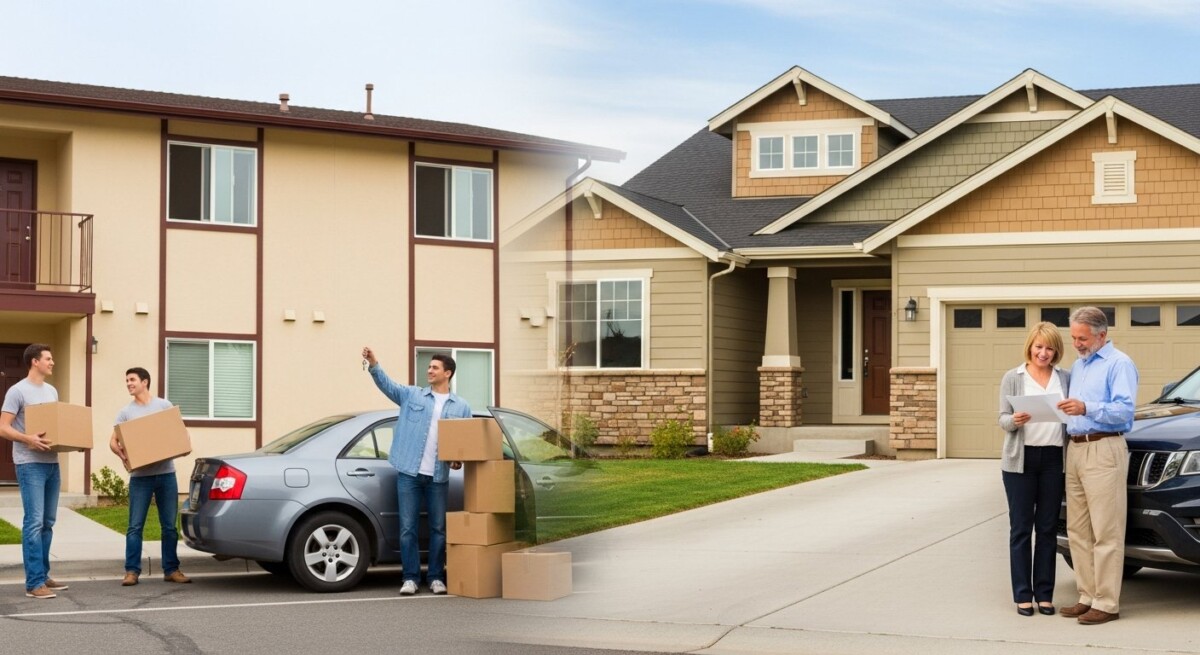
When you move from renting an apartment to buying a home, or even when you switch between rental properties, your auto insurance needs can shift in ways that are easy to overlook. Many drivers assume their car policy stays the same regardless of where they live, but your housing situation actually influences your coverage requirements, your premiums, and the discounts you can access. Understanding how auto insurance for renters and homeowners differs is not just a matter of curiosity; it is a practical step toward avoiding gaps in protection and overpaying for coverage you do not need.
Consider this scenario: you have rented for years and carried the minimum liability limits required by your state. After buying a house, you suddenly own more assets, which means your financial exposure in a car accident increases dramatically. A standard policy that was fine for a renter may leave you vulnerable to lawsuits that could wipe out your savings or put your new property at risk. On the other hand, homeowners often have access to bundling discounts and higher coverage limits that make comprehensive protection more affordable than they expect.
This article breaks down the practical differences between auto insurance for renters and homeowners, explains why your living situation matters to insurers, and offers actionable tips to optimize your coverage. Whether you are a renter looking to save money or a homeowner seeking to protect your growing assets, the information below will help you make an informed decision. For personalized guidance, you can always call 833-214-7506 to speak with a licensed agent who can compare quotes for your specific situation.
Why Your Housing Status Affects Auto Insurance
Auto insurance companies use a variety of factors to calculate your risk profile, and your housing status is one of the most influential. Insurers have decades of data showing that homeowners tend to file fewer claims and drive more cautiously than renters. While this is a generalization, it leads to tangible differences in pricing. Homeowners are often seen as more financially stable, which correlates with lower risk of missed payments and fewer lapses in coverage.
For renters, the absence of property ownership does not automatically mean higher rates, but it does mean you lack certain advantages. Many insurers offer a homeownership discount, even if you do not bundle your auto and home policies. This discount typically ranges from 5% to 10% off your auto premium, simply because you own a home. Renters can sometimes access a similar discount by having a renter’s insurance policy, but it is not always as generous.
Another critical factor is your credit score, which insurers often use as a proxy for responsibility. Homeowners generally have higher credit scores on average, leading to better rates. If you are a renter with excellent credit, you can still secure competitive pricing, but you may need to shop around more aggressively. The key takeaway is that your housing status is a signal to insurers, but it is not the only signal. By understanding how it works, you can take steps to minimize any negative impact.
Coverage Needs for Renters vs. Homeowners
The most significant difference in coverage needs lies in liability protection. When you rent, your personal assets are typically limited to your vehicle, personal belongings, and savings. If you cause an accident, the other party can sue you for damages beyond your policy limits, but there is less to take compared to a homeowner. Homeowners, by contrast, have equity in their property, which is a substantial asset that can be targeted in a lawsuit.
This is why auto insurance for renters and homeowners often diverges on the recommended liability limits. Renters may feel comfortable with state minimums, but that is rarely enough for homeowners. Financial advisors generally suggest carrying at least $100,000 per person and $300,000 per accident in bodily injury liability, plus $50,000 in property damage. Homeowners should consider even higher limits, such as $250,000/$500,000, or add an umbrella policy for extra protection.
Another area of difference is comprehensive and collision coverage. If you finance or lease a vehicle, your lender will require these coverages regardless of where you live. However, homeowners who own their cars outright may be tempted to drop comprehensive and collision on older vehicles to save money. Renters with newer cars may also consider this, but they often face a different tradeoff: they have less savings to absorb a total loss, so keeping these coverages can be a financial safety net.
Umbrella Insurance: A Smart Add-On for Homeowners
Umbrella insurance is an extra layer of liability protection that kicks in when your auto or home policy limits are exhausted. It is particularly valuable for homeowners because it protects your home equity and future earnings in the event of a catastrophic lawsuit. A $1 million umbrella policy typically costs between $150 and $300 per year, which is a small price for significant peace of mind.
Renters can also benefit from umbrella coverage, especially if they have substantial savings or a high-income profession that makes them a target for lawsuits. However, insurers often require you to carry higher underlying limits on your auto and renters policies before they will issue an umbrella, so it is not always the first step for budget-conscious renters.
Bundling Auto and Home or Renters Insurance
One of the most effective ways to save money is to bundle your auto insurance with your homeowners or renters policy from the same company. This strategy can yield discounts of 10% to 25% on both policies, depending on the insurer and your state. For homeowners, bundling is a no-brainer because the combined savings often exceed any discount you could get by purchasing separately.
For renters, bundling auto and renters insurance is equally advantageous. Renters insurance is relatively inexpensive, averaging around $15 to $30 per month, and adding it to your auto policy can reduce your total cost. Many companies offer a multi-policy discount that makes the renters insurance nearly free after the auto discount is applied. This is a prime example of how auto insurance for renters and homeowners can be optimized through strategic bundling.
However, bundling is not always the best choice. If you have a less-than-stellar driving record, bundling with a subpar insurer may lock you into high rates. It is always wise to compare standalone quotes with bundled quotes to ensure you are truly saving. Our guide on smart coverage strategies provides a detailed breakdown of when bundling makes sense and when it does not.
Discounts and Savings Opportunities
Both renters and homeowners can access a variety of discounts, but the availability and size of these discounts differ. Homeowners often qualify for a homeownership discount on their auto policy, even if they do not bundle. This discount is applied because homeowners are statistically less likely to file claims. Renters can sometimes get a similar discount by having a renters insurance policy, but it is not always as substantial.
Other common discounts include:
- Multi-policy discount: Bundling auto with home or renters insurance.
- Safe driver discount: Maintaining a clean driving record for three to five years.
- Vehicle safety features: Anti-lock brakes, airbags, and anti-theft devices.
- Low mileage discount: Driving fewer than 10,000 miles per year.
- Professional or affinity discounts: Through employers, alumni associations, or military service.
Renters should also ask about discounts for having a security system or deadbolt locks in their apartment, as these reduce the risk of theft claims on their renters policy, which can indirectly influence their auto rate if bundled. Homeowners can explore discounts for new roofs, impact-resistant windows, and smart home devices that reduce risk.
The key is to never accept the first quote you receive. Insurers price policies differently, and a discount that one company offers may not be available at another. By comparing multiple quotes, you can identify the best combination of coverage and price for your specific housing situation.
How to Switch Policies When You Move
Moving from a rental to a home, or vice versa, is the perfect time to review your auto insurance. Your insurer should be notified of your address change within a few weeks, as moving to a new zip code can affect your rates. For example, moving from a dense urban area with high traffic and theft rates to a suburban neighborhood with lower risk can reduce your premium. Conversely, moving from a safe rural area to a city may increase costs.
When you buy a home, you will likely need to add homeowners insurance before closing, and this is an ideal moment to bundle with your auto policy. Many lenders require proof of homeowners insurance, so you will be shopping for it anyway. Take advantage of this by requesting a bundled quote from your current auto insurer and compare it with quotes from other companies. You might find that switching both policies to a new carrier saves you more money than staying put.
If you are moving from a home to a rental, perhaps due to downsizing or a job change, remember that your auto coverage needs may decrease. You may no longer need as high liability limits if your assets are reduced, but do not drop coverage without careful consideration. Selling a home often results in a cash windfall that you will want to protect, so consult with an agent before making changes. Our article on what changes when you switch offers a step-by-step approach.
Common Mistakes to Avoid
One of the biggest mistakes renters make is assuming that their landlord’s insurance covers their personal belongings and liability in the building. It does not. Your landlord’s policy covers the structure, not your possessions or your legal exposure if someone is injured in your apartment. Without renters insurance, you are personally responsible for replacing your belongings after a fire or theft, and you could be sued if a guest slips and falls.
Homeowners often make the opposite mistake: they assume their homeowners insurance covers everything, including their vehicles. It does not. Auto insurance is a separate policy that requires its own liability, collision, and comprehensive coverages. Failing to maintain adequate auto insurance can leave you personally liable for damages, and your home equity could be at risk in a lawsuit.
Another common error is underestimating the value of your personal property when purchasing renters or homeowners insurance. Renters often buy only $20,000 in personal property coverage, which is insufficient if you own expensive electronics, jewelry, or furniture. Homeowners often forget to add scheduled endorsements for high-value items like artwork or engagement rings. Reviewing your coverage limits annually is essential to avoid being underinsured.
Finally, do not wait until after an accident to think about coverage gaps. The time to increase your liability limits or add an umbrella policy is before you need it. A single serious accident can result in damages exceeding $1 million, and if your policy limits are too low, you will be paying out of pocket for the rest. This is especially critical for homeowners who have significant assets to protect.
Frequently Asked Questions
Do renters need auto insurance?
Yes, auto insurance is required in almost every state, regardless of whether you rent or own a home. The minimum liability coverage mandated by your state applies to all drivers. However, renters may choose to carry lower limits because they have fewer assets to protect, but that is a risky decision. A serious accident can lead to wage garnishment and years of financial hardship, so it is wise to carry more than the minimum.
Can homeowners get a discount on auto insurance?
Yes, many insurers offer a homeownership discount on auto policies, typically ranging from 5% to 10%. This discount is applied because homeowners are statistically less likely to file claims. Renters can sometimes receive a similar discount if they have a renters insurance policy, but it is not always as generous. Bundling your auto and home policies usually yields the largest savings.
How does renting affect my auto insurance rate?
Renting can affect your auto insurance rate in several ways. First, you may not qualify for a homeownership discount, which can make your rates slightly higher. Second, your address (zip code) influences your premium; if you live in a high-crime urban area, your rates may be higher regardless of your housing status. Third, renters often have lower credit scores on average, which can increase premiums. However, maintaining a good credit score and a clean driving record can mitigate these effects.
Should I bundle auto and renters insurance?
Yes, bundling auto and renters insurance is almost always a smart financial move. The multi-policy discount typically ranges from 10% to 25%, and renters insurance itself is inexpensive. By bundling, you can often get renters insurance for only a few dollars per month after the discount. This provides protection for your personal belongings and liability coverage, which is essential for renters.
Making the Right Choice for Your Situation
Ultimately, auto insurance for renters and homeowners is about aligning your coverage with your financial reality. Renters should prioritize protecting their personal belongings and liability exposure, while homeowners must safeguard their home equity and future earnings. Both groups can benefit from shopping around, bundling policies, and taking advantage of discounts.
If you are unsure whether your current policy adequately protects you, consider requesting a coverage review from a licensed agent. Many insurers offer this service for free, and it can reveal gaps you did not know existed. For example, you might discover that your liability limits are too low, or that you are paying for collision coverage on an old car that is not worth repairing. Our guide on what to know before you buy can help you prepare for these conversations.
Remember that your auto insurance is not a set-it-and-forget-it product. Life changes, such as buying a home, moving, or even getting married, should trigger a policy review. By staying proactive, you can ensure that your coverage evolves with your needs and that you never pay for more insurance than necessary.
For those who want to dive deeper into the mechanics of how housing status impacts premiums, our article on how auto insurance for renters and homeowners works offers additional examples and data points. Understanding the underlying logic can help you negotiate better rates and make more informed decisions.
In the end, the goal is not just to save money, but to achieve peace of mind. Whether you are a renter in a small apartment or a homeowner with a sprawling estate, the right auto insurance policy provides a safety net that allows you to drive with confidence. Take the time to compare quotes, ask questions, and adjust your coverage as your life evolves. A few hours of research today can save you thousands of dollars and protect your financial future for years to come.