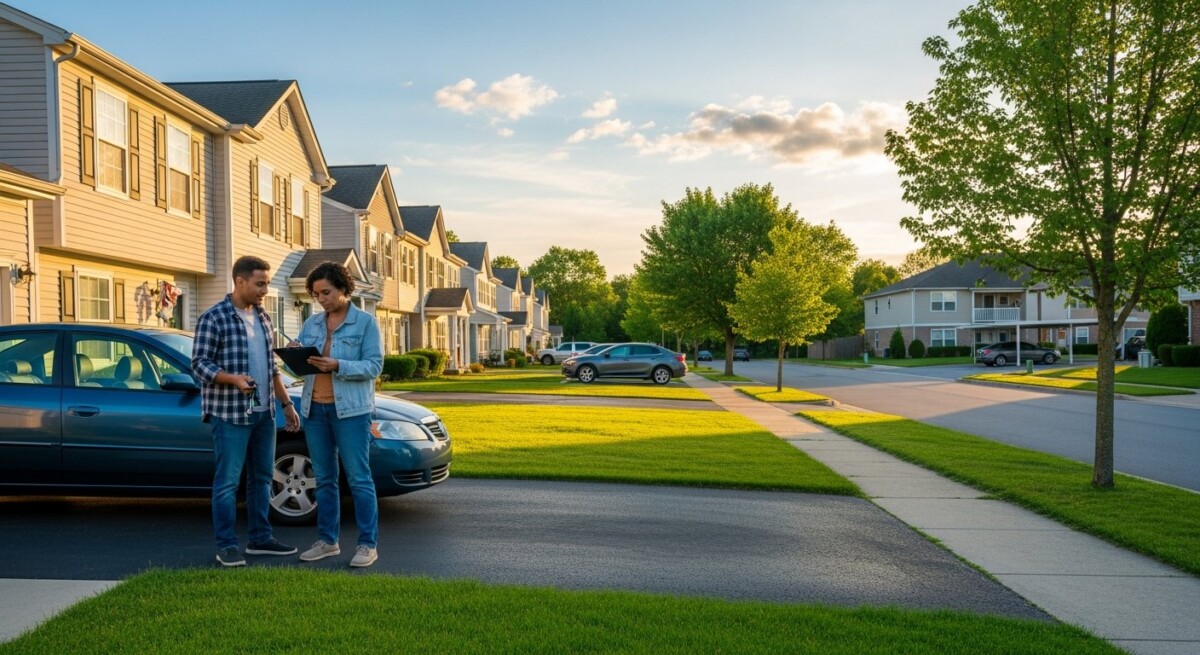
When you rent an apartment or own a house, your auto insurance might not be the first policy you think about. But here is the truth: the type of home you live in can directly affect the cost and the quality of your car coverage. Insurance companies look at your address, your parking situation, and your local risk factors when they calculate your premium. For renters, who often move every few years, and for homeowners, who may have a mortgage and a driveway, the differences matter more than you might expect.
This article breaks down how your housing situation influences your auto policy, what discounts are available, and how to avoid costly gaps. We will also cover how bundling your auto insurance with renters or homeowners insurance can save you money and simplify your life. By the end, you will know exactly what to ask your agent and how to structure your coverage for maximum protection and savings.
Why Your Housing Situation Affects Your Auto Insurance Rate
Your location is one of the biggest factors in auto insurance pricing. If you live in a dense urban area with high traffic and theft rates, your premium will be higher than if you live in a quiet suburb. Renters often move between cities and even states, which means your rate can change dramatically with each move. Homeowners, on the other hand, usually stay in one place longer, which can lead to stable rates and stronger local discounts.
Another factor is parking. Renters in apartment complexes often park in shared lots or on the street, which increases the risk of vandalism, theft, and collision. Homeowners with a garage or a private driveway can secure lower rates because their vehicle is safer. If you are a renter, you might not have control over parking, but you can still adjust your coverage to match your risk.
Finally, your credit score and claims history are tied to your address. Insurers use credit-based insurance scores, and moving frequently can sometimes affect your score if you have unpaid bills or late payments. Homeowners with a mortgage often have more financial stability, which can lead to lower rates. But renters can also maintain good credit and get competitive quotes.
Bundling Auto and Home Policies: A Smart Financial Move
One of the easiest ways to save on auto insurance is to bundle it with your renters or homeowners policy. Insurance companies reward loyalty and multiple policies with discounts that can range from 5% to 25%. For example, if you pay $1,200 a year for auto insurance and $300 for renters insurance, a 15% bundling discount could save you $225 annually. That is real money, and it does not require any change in coverage quality.
Bundling also simplifies your life. You deal with one insurer, one bill, and one customer service line. If you have a claim, whether it is for your car or your apartment, you call the same company. This convenience is especially valuable for renters who move often and need to update their address quickly. For homeowners, bundling can also help you manage your property and auto policies together, reducing paperwork and potential confusion.
In our guide on auto insurance bundling for renters and homeowners, we explain how to compare bundled quotes and avoid common pitfalls. The key is to compare the total cost of separate policies versus the bundled price, and to check that the coverage limits are identical.
Key Differences in Coverage Needs: Renters vs. Homeowners
Renters and homeowners have different assets and risks, which means their auto insurance needs can diverge. Renters typically do not own a home, so they have less property to protect. However, they still need liability coverage to protect their savings if they cause an accident. Homeowners have equity in their property and often have more assets, so they need higher liability limits to shield their home and investments.
Here are some specific coverage considerations for each group:
- Liability limits: Homeowners should consider at least $250,000 per person and $500,000 per accident, while renters can often start with $100,000/$300,000, but increasing limits is still recommended.
- Uninsured/underinsured motorist coverage: Both groups need this, but it is especially critical for renters who may have less savings to absorb medical bills.
- Comprehensive and collision: If you have a newer car, this coverage is a must. Renters with an older car might consider dropping collision if the car is not worth much.
- Medical payments or personal injury protection: This varies by state, but it can be more important for renters who do not have health insurance through their employer.
For homeowners, an umbrella policy is often a smart addition. It provides extra liability coverage beyond your auto and home policies, typically starting at $1 million. Renters can also benefit from a renters insurance policy that includes liability coverage, which protects you if someone is injured in your apartment.
When you compare options, remember that auto insurance for renters and homeowners is not one-size-fits-all. Your coverage should reflect your assets, your driving habits, and your risk tolerance. A good agent can help you tailor a policy that fits your life.
How to Save Money on Auto Insurance as a Renter or Homeowner
There are several strategies to reduce your auto insurance premium, regardless of your housing type. Start by shopping around at least once a year. Rates change, and your current insurer may not offer the best deal anymore. Use online comparison tools to get quotes from multiple carriers, and consider working with an independent agent who can access several insurers at once.
Another effective method is to raise your deductible. A higher deductible, such as $1,000 instead of $500, can lower your premium by 10% to 20%. Just make sure you have that amount in savings in case of a claim. Also, ask about discounts for safe driving, low mileage, anti-theft devices, and defensive driving courses. Many insurers offer discounts for being a loyal customer, but you have to ask.
If you are a renter, you might also qualify for a discount if you have renters insurance with the same company. This is the bundling discount we mentioned earlier. Homeowners can also get discounts for having a home security system, a new roof, or a fire-resistant home. These home features reduce the risk of theft and damage, which can indirectly lower your auto rate if you bundle.
Finally, consider usage-based insurance. If you drive fewer than 10,000 miles a year, a telematics program that tracks your driving could save you up to 30%. This is especially useful for renters who work from home and for retirees who no longer commute. Just be aware that these programs may raise your rate if you have hard braking or rapid acceleration.
Common Mistakes to Avoid When Insuring Your Car and Home
Many drivers make errors that cost them money or leave them underinsured. One mistake is not updating your policy after a move. If you move from a low-crime suburb to a busy city and forget to update your address, you could be paying the wrong rate or even have a claim denied. Always notify your insurer within a few weeks of moving.
Another mistake is choosing the state minimum liability limits to save money. This can be catastrophic if you cause a serious accident. For example, if your state minimum is $25,000 and you cause $100,000 in injuries, you are personally responsible for the $75,000 difference. That could wipe out your savings or even force you into bankruptcy. Both renters and homeowners should carry higher liability limits, especially if they have assets to protect.
A third mistake is ignoring umbrella insurance. Homeowners with a mortgage and a car loan might think their auto and home policies are enough, but they are often not. An umbrella policy provides an extra layer of protection that kicks in when your underlying limits are exhausted. It is relatively inexpensive, usually $150 to $300 per year for $1 million in coverage, and it is worth it for anyone with significant assets.
Finally, do not forget to review your policy annually. Life changes, such as getting married, having a child, or buying a new car, can affect your coverage needs. A quick review with your agent ensures you are not overpaying or underinsured.
Frequently Asked Questions
Can I bundle auto insurance with renters insurance?
Yes, most major insurers offer a multi-policy discount when you bundle auto and renters insurance. This discount typically ranges from 5% to 25%. You can often get a quote online or by calling your agent. The savings can be significant, especially if you are a renter with a good driving record.
Does home ownership lower my auto insurance rate?
Not directly, but homeowners often have better credit and more stable addresses, which can lead to lower rates. Additionally, if you bundle your auto and home policies, you will receive a discount. Some insurers also offer lower rates to homeowners because they are seen as more financially responsible, but this is not a universal rule.
What happens if I move from a rental to a house?
You should contact your insurer immediately to update your address and your coverage. Your auto rate may change based on the new location, and you will need to add homeowners insurance. This is a perfect time to compare bundled quotes and possibly switch insurers if you find a better deal. In our auto insurance for renters and homeowners: a bundling guide, we walk through the steps to make a smooth transition.
Is it better to have separate policies or bundle?
In most cases, bundling is cheaper and more convenient. You get a discount, and you only have one company to deal with. However, there are situations where separate policies might be better, such as if you have a unique high-value home or a classic car that requires a specialty insurer. Compare quotes for both scenarios before making a decision.
Final Thoughts: Protect Your Car and Your Home with the Right Policies
Your auto insurance is not just about your car. It is tied to your housing situation, your financial health, and your peace of mind. Whether you rent a studio apartment or own a sprawling suburban house, you need coverage that fits your lifestyle and your budget. The good news is that with a little research, you can find affordable policies that protect you from the unexpected.
Start by getting quotes from multiple insurers, and always ask about bundling discounts. If you are a renter, do not skip renters insurance; it is cheap and can cover your belongings if disaster strikes. If you are a homeowner, review your liability limits and consider an umbrella policy. And remember, the cheapest policy is not always the best. Value comes from adequate coverage, reliable customer service, and fair claims handling.
For more detailed comparisons, check out our other resources on auto insurance for renters and homeowners: bundling guide and the complete bundling guide. These guides offer step-by-step advice and real-world examples to help you make the best choice.
At NewAutoInsurance.com, we are here to help you navigate the complex world of car insurance. Our goal is to give you unbiased information so you can make confident decisions. Whether you are a first-time renter or a seasoned homeowner, take control of your insurance today and start saving.