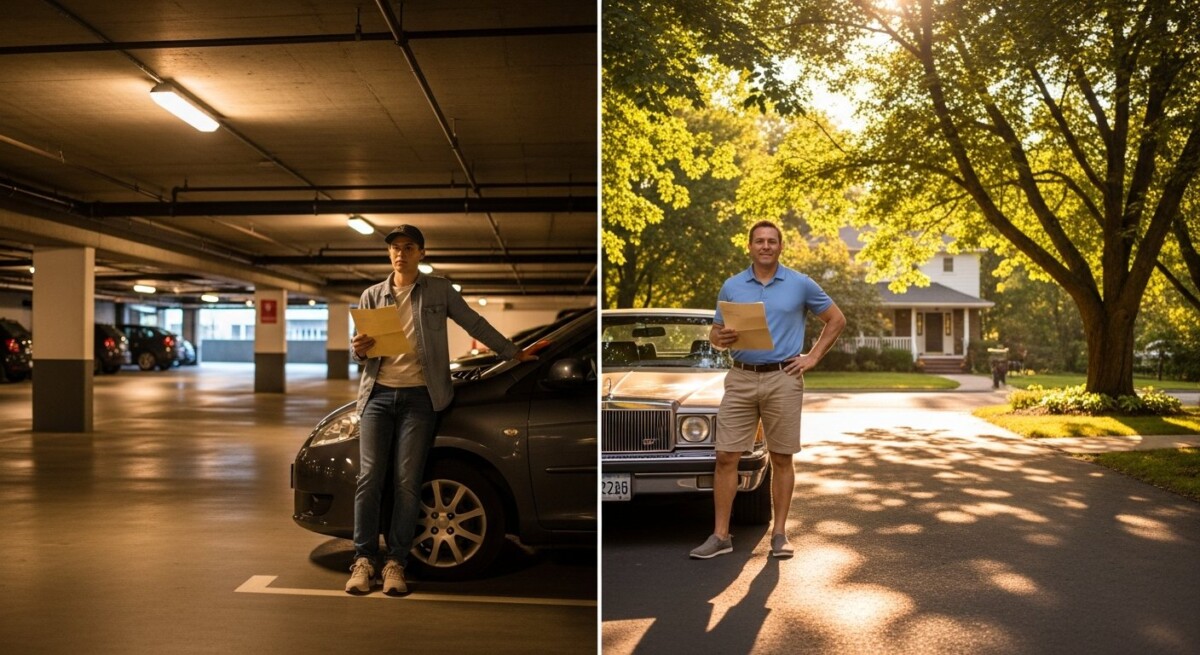
Think your auto insurance stands alone? Many drivers assume their car policy operates independently of their housing situation. That assumption can cost you. Whether you rent a downtown apartment or own a suburban house, your living arrangement directly impacts your auto insurance rates, coverage needs, and potential discounts. Understanding this connection helps you avoid overpaying and ensures you have the right protection when life throws a curveball.
Insurance companies evaluate risk holistically. They look at your driving history, your vehicle, and surprisingly, your housing status. Renters and homeowners face different risk profiles, and insurers adjust premiums accordingly. For example, homeowners often qualify for lower rates because they are statistically more stable and less likely to move frequently. Renters, on the other hand, may see slightly higher premiums due to perceived mobility. But there is more to the story than just rates. Coverage gaps, bundling opportunities, and liability considerations all hinge on whether you rent or own.
In this guide, we break down the nuances of auto insurance for renters and homeowners. We compare typical policy structures, highlight cost-saving bundles, and reveal how your housing choice influences your coverage strategy. By the end, you will know exactly what to ask your agent and how to tailor your policy for maximum protection and savings.
How Your Housing Status Affects Auto Insurance Premiums
Insurance carriers use credit-based insurance scores, claims history, and geographic data to set rates. Your housing status is a secondary but meaningful factor. Homeowners generally enjoy lower auto insurance premiums than renters, and the gap can reach 5 to 10 percent. Why? Homeowners tend to stay put longer, reducing the risk of lapsed policies or undisclosed garaging addresses. They also typically have higher credit scores and greater financial assets, which correlates with fewer claims.
Renters, especially those who move annually, present a higher administrative burden for insurers. Frequent address changes increase the chance of policy errors, missed payments, or coverage lapses. Additionally, renters often have less financial cushion, which can lead to smaller policy limits and higher risk of underinsurance. However, not all renters are penalized. Long-term renters with stable jobs and excellent credit can negotiate rates comparable to homeowners.
If you are a renter, you can offset this premium difference by bundling your auto policy with renters insurance. Many carriers offer multi-policy discounts that bring your combined cost below what a homeowner pays for auto insurance alone. In our guide on finding affordable auto insurance for renters in Orlando, Florida, we explain how location-specific factors like traffic density and weather risks also play a role.
Coverage Gaps You Might Miss Without Homeowners Insurance
Homeowners insurance and auto insurance share a critical overlap: liability protection. If a guest slips on your icy driveway, your homeowners liability coverage may respond. But what if that guest is injured by your car while it is parked in your driveway? That is where your auto insurance takes over. Without both policies, you could face a coverage gap that leaves you paying out of pocket.
Consider a scenario where a delivery driver trips over your garden hose and then your dog runs into the street causing a car accident. Your homeowners policy covers the trip and fall, but the dog-related car accident falls under your auto liability. Without adequate limits on both policies, you could exhaust coverage and lose assets. Homeowners typically carry higher liability limits, which can complement lower auto liability limits. Renters, who often skip renters insurance altogether, miss this safety net entirely.
Another hidden gap involves personal property coverage. If your car is broken into and your laptop is stolen, your auto policy covers damage to the vehicle but not the laptop. Your homeowners or renters policy would cover the laptop. Many renters assume their auto policy covers everything inside the car. It does not. That misunderstanding can lead to a costly surprise after a theft.
For a deeper comparison of how these coverages work together, read our article on auto insurance for renters and homeowners: key differences.
Bundling Auto and Home Policies for Maximum Savings
Bundling your auto insurance with a homeowners or renters policy is one of the most effective ways to reduce your overall insurance costs. Most major carriers offer a multi-policy discount ranging from 10 to 25 percent. For a homeowner paying $1,200 annually for auto insurance and $800 for homeowners insurance, a 15 percent bundle discount saves $300 per year. Renters see similar savings when they add renters insurance to their auto policy.
Beyond the discount, bundling simplifies your insurance life. One company handles both policies, one bill arrives each month, and you have a single point of contact for claims. This convenience reduces the chance of a coverage gap when you update your address or add a vehicle. However, bundling is not always the cheapest option. Sometimes the best auto insurance rate comes from a company that does not offer homeowners coverage, or vice versa. You must compare standalone quotes against bundled quotes to ensure you are not overpaying for the sake of convenience.
Renters should especially consider bundling because renters insurance is inexpensive, often costing $15 to $30 per month. Adding it to your auto policy can unlock a discount that more than covers the renters premium itself. In effect, you get renters insurance for free or nearly free while reducing your auto rate. That is a win-win for protection and budget.
If you are a homeowner, bundling also protects your most valuable asset: your house. A single claim can drain your savings, but combined coverage limits on a bundled policy often provide higher total protection. For specific strategies to optimize your coverage, check out auto insurance for renters and homeowners: key coverage tips.
Liability Risks Unique to Renters and Homeowners
Liability exposure differs significantly between renters and homeowners. Homeowners face higher risk because they own the property. If a visitor is injured on your property, you are legally responsible. Your homeowners liability coverage typically starts at $100,000 and can go up to $500,000 or more. Auto liability covers incidents involving your vehicle, but if an accident occurs on your property involving your car, both policies may apply. Coordinating these limits is essential to avoid a lawsuit that exceeds your coverage.
Renters, by contrast, have less property liability exposure because they do not own the building. However, they still face liability for injuries that occur inside their rented unit or due to their negligence (e.g., a dog bite or a fire caused by a space heater). Renters insurance includes personal liability coverage, but many renters decline it. Without it, a lawsuit could target your wages and personal assets. Your auto insurance will not cover a dog bite that happens inside your apartment.
Both groups should consider an umbrella policy for additional liability protection. An umbrella policy sits on top of your auto and homeowners or renters policies, providing an extra $1 million or more in liability coverage. It is surprisingly affordable, often costing $150 to $300 per year for $1 million in coverage. This is especially important for homeowners with significant equity or renters with high incomes and savings.
Special Considerations for Families and High-Value Assets
Families face unique challenges when balancing auto and housing insurance. Adding a teenage driver to your policy can double your auto premium, but bundling with a homeowners policy may soften the blow. Some carriers offer good student discounts, driver training discounts, and multi-car discounts that stack with the bundle discount. Homeowners with teen drivers should shop aggressively for the best combination of rates.
Renters with families also need to consider the value of their personal property. A family of four may have $50,000 or more in furniture, electronics, clothing, and sports equipment. Standard renters insurance covers personal property at actual cash value unless you purchase replacement cost coverage. That upgrade costs little but can make a huge difference after a fire or theft. Pairing this with comprehensive and collision coverage on your auto ensures you can replace both your home goods and your vehicle after a covered loss.
If you own a classic car, a boat, or an RV, your standard auto and homeowners policies may not provide adequate coverage. Specialized policies exist for these assets, and bundling them with your primary auto and home policies can yield significant discounts. For example, insuring a classic car through the same carrier as your daily driver and homeowners policy often unlocks a collector car discount. For budget-conscious families, we recommend reviewing best budget auto insurance plans for families in 2026 to find affordable options that include these specialty coverages.
Frequently Asked Questions
Does my auto insurance cover my belongings if they are stolen from my car?
No. Your auto insurance covers damage to the vehicle itself, but personal property inside the car is covered by your renters or homeowners insurance. If you do not have renters insurance, you have no coverage for stolen items.
Can I get a discount on auto insurance if I have homeowners insurance?
Yes. Most insurers offer a multi-policy discount of 10 to 25 percent when you bundle auto and homeowners or renters insurance. You must hold both policies with the same company to qualify.
Is renters insurance required to drive a car?
No, renters insurance is not required to drive or insure a car. However, having it can lower your auto insurance premium through bundling and protect your personal property and liability.
What happens to my auto insurance if I move from a house to an apartment?
Your auto insurance rates may change because your garaging address affects risk factors like crime rates, traffic density, and weather risks. You should notify your insurer immediately to update your address and review your coverage needs.
Do homeowners pay less for auto insurance than renters?
On average, homeowners pay slightly less for auto insurance than renters due to higher stability and credit scores. However, the difference is small and can be offset by bundling renters insurance with your auto policy.
Understanding the interplay between auto insurance and your housing situation empowers you to make smarter coverage decisions. Whether you rent or own, the key is to coordinate your policies, leverage bundling discounts, and fill coverage gaps before a claim occurs. Start by comparing quotes from multiple carriers to see how your housing status affects your rates. Then, consider adding renters or homeowners insurance to your auto policy to unlock savings and strengthen your safety net. With the right strategy, you can protect your car, your home, and your finances without overpaying.