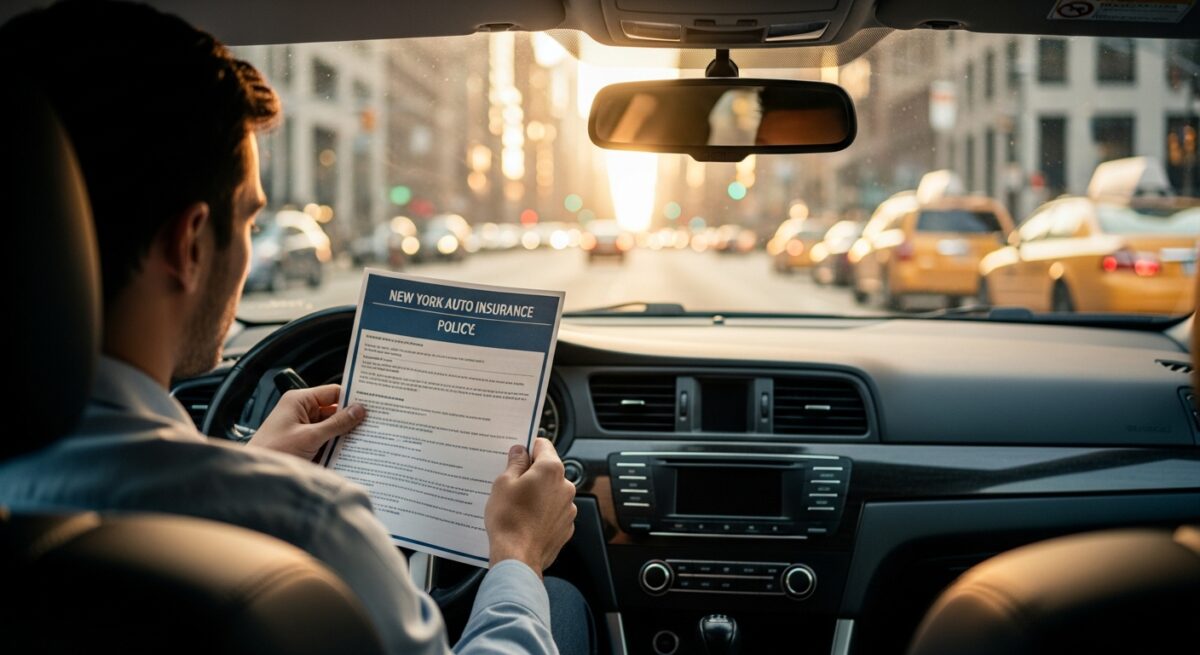
Navigating the world of auto insurance ny is about more than just finding a policy; it’s about understanding a unique set of stringent laws, coverage mandates, and urban driving challenges that directly impact your wallet and legal standing. As a no-fault state with some of the highest coverage requirements in the nation, New York demands that drivers make informed decisions. Whether you’re cruising through Manhattan, commuting on the Long Island Expressway, or exploring the Adirondacks, the right New York auto insurance policy is your first line of defense against financial ruin. This guide will demystify the essentials, from minimum liability limits to navigating surcharges after an accident, empowering you to secure compliant and cost-effective protection.
Understanding New York’s Auto Insurance Requirements
New York State law mandates that all registered vehicles carry a continuous auto insurance policy. Driving without insurance can result in severe penalties, including fines, license suspension, and vehicle registration revocation. The state’s minimum coverage requirements are notably higher than those in many other states, reflecting its no-fault insurance system designed to streamline claims after an accident. This system means that regardless of who caused a collision, each driver turns to their own insurance company first to cover medical expenses and lost earnings, up to the policy’s limits. The foundational coverage you must carry is often referred to as liability insurance, which protects you if you are found legally responsible for injuring someone or damaging their property.
The specific minimum amounts required by New York are non-negotiable. For bodily injury liability, you must have at least $25,000 per person and $50,000 per accident. For property damage liability, the minimum is $10,000 per accident. Crucially, New York also requires two types of no-fault coverage: Personal Injury Protection (PIP) and additional mandatory uninsured motorist coverage. PIP covers medical expenses, lost wages, and essential services for you and your passengers, regardless of fault, with a minimum of $50,000. Uninsured motorist coverage must match your bodily injury liability limits, providing protection if you’re hit by a driver with no insurance. It’s vital to understand that these are merely the legal minimums; given the high costs associated with accidents, especially in metropolitan areas, carrying only the minimum can leave you dangerously exposed to out-of-pocket expenses.
Strategies for Finding Affordable NY Auto Insurance
While New York is known for high insurance premiums, driven by dense traffic, high repair costs, and a higher likelihood of claims, numerous strategies can lead to significant savings. The first and most powerful step is to comparison shop. Premiums can vary dramatically between companies for the same driver profile, so obtaining quotes from multiple insurers is non-negotiable. When shopping, look beyond just the premium. Assess the company’s financial strength, customer service ratings, and claims handling reputation. A slightly higher premium with a company known for fair and efficient claims processing can be more valuable than a rock-bottom price with a difficult insurer.
Beyond shopping, take advantage of every discount for which you qualify. New York insurers offer a wide array, including multi-policy discounts for bundling auto with homeowners or renters insurance, good student discounts, safe driver discounts, and discounts for completing a defensive driving course. Installing anti-theft devices or opting for telematics programs that monitor your driving habits can also reduce your rate. Perhaps the most impactful long-term strategy is maintaining a clean driving record. A single moving violation or at-fault accident can cause your premiums to spike for several years. For a deeper dive into finding competitive rates, our analysis of the top auto insurance companies includes insights into which carriers are often most competitive in different New York driver segments.
Choosing the Right Level of Protection: Beyond the Minimum
Deciding whether to purchase only the state-mandated minimum coverage or to enhance your policy is one of the most critical financial decisions a New York driver can make. The minimums, particularly the $10,000 property damage liability limit, are often woefully inadequate. A minor fender-bender with a luxury vehicle in New York City can easily result in repair costs exceeding that limit, leaving you personally liable for the difference. Similarly, the $25,000/$50,000 bodily injury limits can be exhausted quickly in a serious accident, leading to potential lawsuits against your personal assets.
Upgrading to higher liability limits, such as 100/300/100, is a prudent and often surprisingly affordable step. Furthermore, consider adding collision and comprehensive coverage if your vehicle is financed or leased, as lenders require it. Even if you own your car outright, these coverages protect your investment against theft, vandalism, fire, falling objects, and collisions with animals. For a complete breakdown of what enhanced protection entails, our guide on auto insurance full coverage explains the components and helps you determine if it’s a worthwhile investment for your situation. Remember, the goal is to transfer risk you cannot afford to bear from your personal finances to the insurance company.
Special Considerations for New York Drivers
New York’s unique driving environment necessitates special insurance considerations. For drivers in New York City and other densely populated areas, the risk of hit-and-run accidents, theft, and vandalism is elevated. This makes comprehensive coverage and uninsured motorist property damage coverage particularly valuable. Additionally, New York is one of the few states that requires insurers to offer, and drivers to explicitly reject in writing, Supplementary Uninsured/Underinsured Motorist (SUM) coverage. SUM coverage is critical, as it protects you if you’re injured by a driver whose liability limits are lower than your own or who flees the scene. Rejecting this coverage without careful consideration can be a major mistake.
Another key consideration is the state’s stance on cancellations and non-renewals. New York has strict rules protecting policyholders. An insurer generally cannot cancel a policy that has been in force for more than 60 days unless you fail to pay the premium, your license is suspended or revoked, or you committed fraud on your application. For non-renewal, the company must provide a specific reason and advance notice. Understanding these rights can provide peace of mind. Finally, if you are involved in an accident, you must file an accident report with the DMV within 10 days if the damage exceeds $1,000 or if there is any injury, no matter how minor.
Frequently Asked Questions
What is the penalty for driving without insurance in New York?
Penalties are severe. For a first offense, you face a minimum $150-$1500 fine, a mandatory surcharge, and potential revocation of your driver’s license and vehicle registration for at least one year. Your vehicle may be impounded. Subsequent offenses carry heavier fines and longer revocation periods.
How does New York’s no-fault system affect my claim after an accident?
Injured parties first seek compensation from their own insurance policy’s Personal Injury Protection (PIP) coverage for medical bills and lost wages, regardless of who was at fault. You can only step outside the no-fault system and sue the other driver for pain and suffering if your injuries meet a “serious injury” threshold as defined by New York law, such as significant disfigurement, fracture, or permanent limitation of use of a body organ or member.
Will my rates go up if I file a not-at-fault claim in NY?
New York law prohibits insurers from raising your premium solely because you filed a first-party no-fault (PIP) claim or a comprehensive claim (e.g., for hail damage or theft). However, if you file a liability claim where you are found to be at fault, or if you have multiple claims within a short period, your rates will likely increase at renewal.
What is an Insurance Identification Card, and why do I need it?
Your insurer provides two forms of proof of insurance: a digital or paper ID card and an electronic notification to the DMV. You must carry your ID card (or electronic version on your phone) whenever you drive. You must also present it when registering your vehicle, getting it inspected, and if a law enforcement officer requests it during a traffic stop.
Securing the right auto insurance in New York is a balance of legal compliance, financial prudence, and personal risk management. By moving beyond the bare minimums, leveraging discounts, and understanding the specific protections needed for New York roads, you can build a policy that offers robust protection without unnecessary expense. Regularly review your coverage, especially after major life events or changes in your vehicle’s value, to ensure your policy continues to meet your needs as you navigate the Empire State’s diverse and demanding driving landscapes.