
What to Do If Your Car Is Totaled in an Accident
Totaled car? Call 8332147506 for guidance on claims and fair payouts. We explain what to do if your car is totaled in an accident.

By Isobel Crane
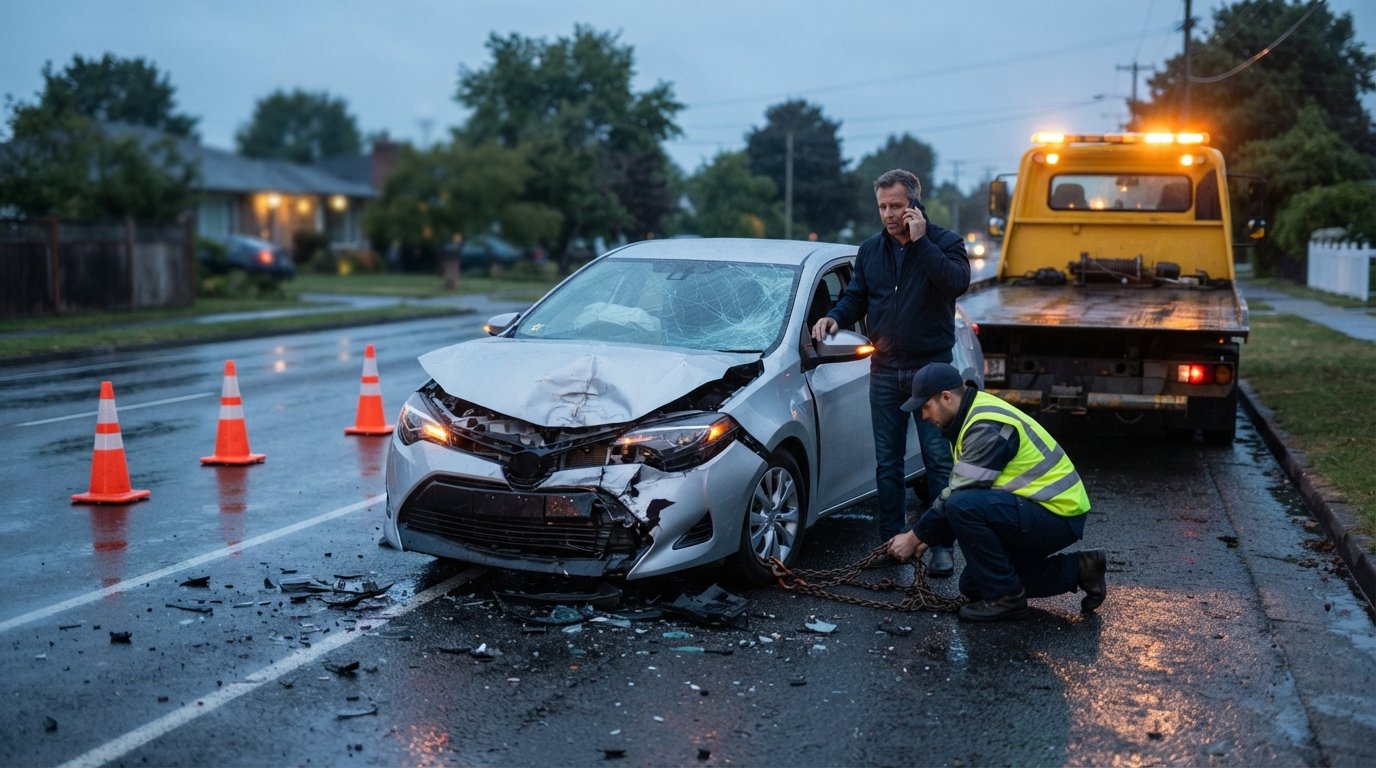
The screech of tires, the crunch of metal, and then the sickening realization that your vehicle is undriveable. A serious car accident is traumatic enough on its own, but when the damage is so severe that your insurer declares your car a total loss, the stress multiplies. You are suddenly faced with a confusing maze of phone calls, paperwork, and financial decisions, all while trying to recover from the physical and emotional shock. Knowing exactly what to do if your car is totaled in an accident can mean the difference between a smooth claims process and a financial nightmare.
This guide walks you through every critical step, from the moment the tow truck arrives to the moment you deposit your settlement check. You will learn how insurers determine a total loss, how to negotiate a fair payout, and how to protect yourself when you still owe money on the vehicle.
Understanding What Totaled Actually Means
Many drivers assume a car is totaled only when it is a mangled heap of metal. In reality, the definition is purely financial. An insurance company declares a vehicle a total loss when the cost to repair it exceeds a certain percentage of its actual cash value (ACV). That threshold varies by state and insurer, but it typically ranges from 70 percent to 80 percent of the car's pre-accident market value.
For example, if your car is worth 10,000 dollars and the body shop estimates 8,500 dollars in repairs, the insurer will likely total it rather than pay for the fixes. This is because the company would rather pay you the ACV than risk additional hidden damage discovered mid-repair. Once the car is deemed a total loss, the insurer takes possession of the vehicle (unless you buy it back as salvage) and issues a payout based on its market value, minus your deductible.
It is important to understand that the adjuster's initial valuation is not always the final word. Insurers use proprietary valuation software that pulls data from recent sales, dealership listings, and auction records. Sometimes these valuations are accurate, and sometimes they are low. Your job is to verify the numbers before accepting any offer.
Immediate Steps to Take at the Scene and Afterward
The hours immediately following a serious accident are chaotic. Your safety and the safety of your passengers come first. Call 911 if anyone is injured, and move to a safe location away from traffic. Once everyone is out of harm's way, call the police to file an official accident report. That report is a critical piece of documentation that your insurer will request, and it can protect you if the other driver later disputes the facts.
Exchange information with the other driver, including name, phone number, insurance carrier, policy number, and license plate. Take photos of all vehicles involved, the road conditions, and any visible injuries. If there are witnesses, collect their contact information as well. When the tow truck arrives, note where your car is being taken. You will need to know its location so the adjuster can inspect it.
Here are the essential tasks to complete within the first 24 to 48 hours after the accident:
- Notify your insurance company. Report the accident as soon as possible, even if you were not at fault. Most policies require prompt notification.
- Notify the other driver's insurer. If the other driver was at fault, file a claim with their company as well. This can sometimes lead to a faster settlement.
- Retrieve your personal belongings. Before the car is moved to a salvage yard, remove your registration, insurance card, garage door opener, toll transponder, and any personal items.
- Start a claim file. Keep a folder (physical or digital) with the police report number, claim numbers, names of adjusters, and dates of every conversation.
- Do not sign anything from the other driver's insurer without consulting your own company first. A quick release can waive your rights to additional compensation.
Once the claim is filed, the insurer will assign an adjuster to inspect the vehicle. The adjuster will confirm whether the car is a total loss and begin the valuation process. This is where your preparation pays off.
How to Negotiate a Fair Settlement for Your Totaled Car
The initial settlement offer from an insurer is just that: an offer. It is not a final judgment, and you are not obligated to accept it if it does not reflect the true market value of your vehicle. Many policyholders accept the first number because they are exhausted or intimidated, but doing so can cost you thousands of dollars.
To negotiate effectively, you need evidence. Gather listings for comparable vehicles (same make, model, year, mileage, and condition) within a 100-mile radius of your home. Print or screenshot these listings from reputable sources like Kelley Blue Book, Edmunds, and local dealership websites. If your car had recent upgrades, such as new tires, a rebuilt transmission, or a premium sound system, gather receipts for those as well. These additions can increase the ACV.
When you speak with the adjuster, be polite but firm. Present your research and explain why you believe the valuation is low. For instance, you might say, 'I found three identical vehicles with similar mileage listed at 14,500 dollars, 15,200 dollars, and 14,800 dollars. Your offer of 12,000 dollars does not reflect the local market.' Adjusters have some flexibility, especially when presented with concrete data.
If the insurer refuses to budge, you can request a reappraisal or invoke the appraisal clause in your policy. This clause allows you and the insurer to hire independent appraisers to determine the actual cash value. If the two appraisers cannot agree, a neutral umpire makes the final decision. This process costs time but can result in a significantly higher payout.
What Happens When You Still Owe Money on the Car
One of the most painful scenarios is having a totaled car that you are still financing. If your settlement is less than your loan balance, you are left with a financial gap. This is where gap insurance becomes invaluable. Gap insurance covers the difference between the ACV settlement and the remaining loan or lease balance. If you did not purchase gap insurance at the dealership or through your insurer, you are personally responsible for that difference.
If you find yourself in this situation, you can read our detailed guide on what happens if your car is totaled but you still owe money to understand your options for managing the shortfall. In some cases, you may be able to negotiate with the lender to set up a payment plan, or you may need to pay the balance in a lump sum to close the loan.
It is also worth noting that if the accident was caused by another driver, you may be able to pursue a third-party claim against their liability coverage to recover the difference. However, this depends on the other driver's policy limits and the specifics of the accident.
Alternatives to a Total Loss Payout
Not every totaled car results in a straightforward cash settlement. Depending on your situation, you may have other options. Understanding these alternatives can help you make a more informed decision.
If you want to keep the vehicle, you can ask your insurer about a owner-retained salvage option. In this scenario, the insurer deducts the salvage value from your settlement and lets you keep the car. You can then repair it at your own expense, but the vehicle will likely have a salvage title, which affects its resale value and may make it difficult to insure in the future.
Another option is to use the settlement to purchase a replacement vehicle. If you have rental reimbursement coverage, your policy may pay for a rental car while you shop for a new vehicle. Be sure to check your policy limits, as rental coverage typically has a daily cap and a maximum number of days.
If you are not satisfied with your current insurer's offer or service, you can also shop for a new policy. FreeAutoInsuranceQuotesOnline is a consumer education platform that lets you compare quotes from multiple carriers in one place, which can help you find better coverage at a lower rate after a total loss claim.
Protecting Yourself from Lowball Offers and Delays
Insurance companies are businesses, and their goal is to settle claims for as little as possible. While most adjusters are fair, some may try to take advantage of policyholders who do not know their rights. To protect yourself, keep detailed records of every interaction. Note the date, time, name of the person you spoke with, and a summary of what was discussed. If you receive a verbal offer, ask for it in writing.
If the insurer delays payment without a valid reason, you can file a complaint with your state's department of insurance. State regulators take these complaints seriously and can pressure the insurer to act. In some cases, you may also have grounds for a bad faith claim if the insurer unreasonably denies or delays your rightful payout.
Finally, do not rush. You have the right to take your time reviewing the settlement offer and gathering evidence. Do not let an adjuster pressure you into accepting a low offer by claiming it is the best they can do. In our experience, patience and preparation almost always lead to a better outcome.
A totaled car is never a pleasant experience, but you do not have to navigate it alone. By understanding the process, knowing your rights, and advocating for yourself, you can turn a stressful situation into a manageable one. Whether you are dealing with a straightforward payout or a complicated loan gap, the steps outlined here will help you move forward with confidence.