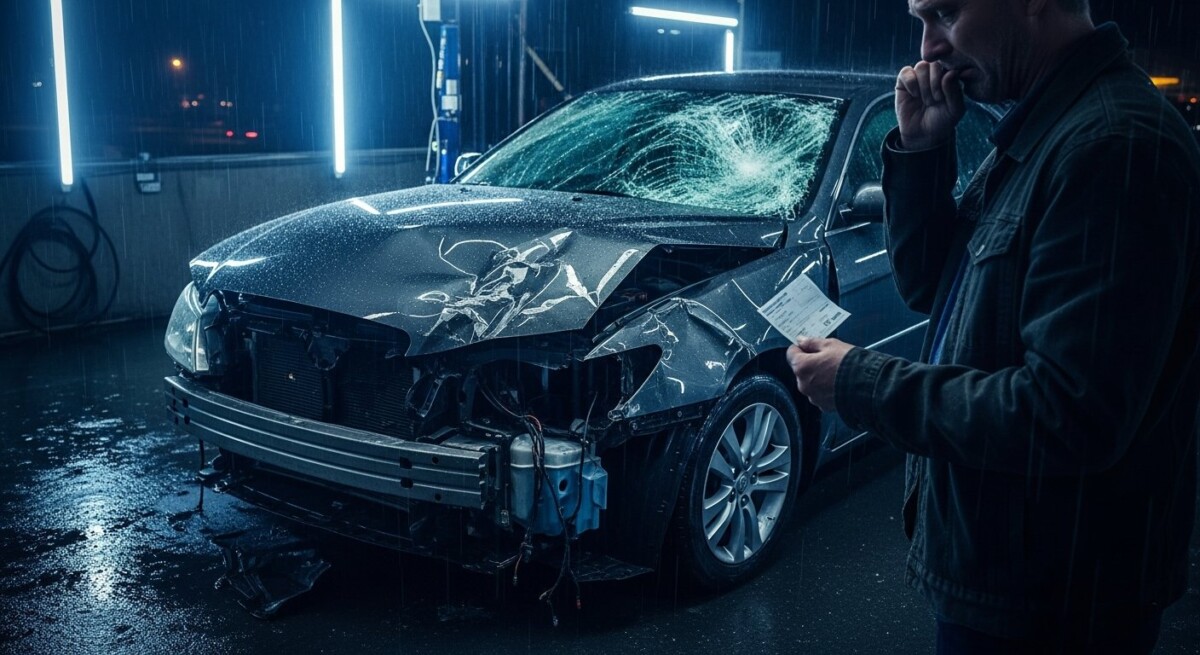
Your car is declared a total loss, a stressful event on its own. But the situation becomes significantly more complicated, and financially perilous, when you realize you still owe money on the loan or lease. The insurance check may not cover the full amount you owe, leaving you with a debt for a vehicle you can no longer drive. This scenario, known as being “upside-down” or having negative equity, is a common and daunting financial challenge for many drivers. Understanding the process, your rights, and your options is crucial to navigating this difficult situation without long-term financial harm.
Understanding the Total Loss Process and Insurance Valuation
When your vehicle is damaged in an accident, theft, or other covered event, your insurance company will conduct an assessment to determine if it is a total loss. This decision is not solely based on whether the car is drivable. Instead, insurers use a threshold, often set by state law or company policy, comparing the estimated cost of repairs to the car’s actual cash value (ACV). If the repair costs exceed a certain percentage of the ACV (commonly 70% to 80%), the insurer will declare it a total loss. The ACV is the critical figure here. It represents the fair market value of your car immediately before the accident, factoring in its age, mileage, condition, and comparable sales in your area. It is not the replacement cost for a new car, nor the amount you originally paid, nor the remaining balance on your loan. This distinction is the root of the potential financial gap.
Once the total loss is declared, your insurer will calculate the ACV and issue a settlement offer. This offer is first sent to your lienholder (the bank or finance company) because they have a financial interest in the vehicle. The lienholder will cash the check and apply it to your loan balance. At this point, one of two things happens. If the settlement amount is greater than or equal to your loan balance, the lien is satisfied, and any leftover funds (if applicable) are sent to you. However, if the settlement is less than your loan balance, you are responsible for paying the difference, known as a deficiency balance. This is the core of the problem: you must continue making payments on a loan for a car that no longer exists.
Bridging the Gap: Dealing with Negative Equity
Finding yourself with a loan balance after a total loss settlement is a serious financial burden. You cannot simply walk away from this debt. The lienholder will expect payment, and failure to pay can lead to collections activity, damage to your credit score, and even legal action. Therefore, you must proactively address the shortfall. Your first step should be to carefully review the insurer’s valuation report. Insurers are not infallible, and their initial ACV offer may be negotiable. Scrutinize the report for errors in listed options, mileage, or condition. Gather evidence of your vehicle’s pre-accident value, such as listings for similar cars for sale in your area, receipts for recent major maintenance or upgrades, and a copy of your original purchase agreement. Present this documentation to your claims adjuster to argue for a higher settlement. A successful negotiation, even for a few hundred dollars more, can reduce your financial gap.
If the settlement is final and a gap remains, you have several potential avenues to address it, though none are ideal. The most straightforward, yet often difficult, method is to pay the deficiency balance out of pocket. If you have savings, this resolves the debt immediately. For many, this isn’t feasible. You could attempt to refinance the remaining balance into a new loan, but this adds debt and may come with a high interest rate. Some lenders may offer a short-term payment plan for the deficiency. Crucially, you should understand the role of your insurance coverage in this situation. While standard auto policies do not cover negative equity, you may have purchased an optional coverage specifically for this purpose.
The Critical Role of GAP Insurance
Guaranteed Asset Protection (GAP) insurance is the most effective financial tool for protecting against the scenario of owing money on a totaled car. GAP coverage is designed to pay the difference between your car’s ACV settlement and the remaining balance on your loan or lease. For example, if you owe $18,000 on your loan and the insurer’s ACV settlement is $15,000, your standard collision coverage pays the $15,000, and your GAP insurance would cover the remaining $3,000 deficiency. This coverage is especially valuable for new cars, which depreciate rapidly in the first few years, and for buyers who made a small down payment or financed a vehicle for a long term. GAP insurance can often be purchased through your auto insurer, your car dealership at the time of financing, or through some banks and credit unions.
If you have GAP insurance, the claims process typically runs in parallel with your main collision claim. You must file a claim with your GAP provider, who will coordinate with your primary insurer and lienholder. It is vital to confirm you have this coverage before an accident occurs. Review your insurance policy documents or call your agent. If you don’t have GAP insurance and are currently financing a car, especially with a high loan-to-value ratio, it is worth seriously considering, as it provides essential financial security. Understanding all your policy details, from GAP coverage to your collision deductible, is key. For a deeper dive into other critical policy components, our article on car insurance deductibles explains how your out-of-pocket costs are calculated in a claim.
Steps to Take Immediately After a Total Loss
Acting methodically after an accident can protect your interests and potentially improve your financial outcome. First, ensure everyone’s safety and report the accident to the police and your insurance company as required. When the insurer declares a total loss, request a copy of their detailed valuation report. Do not accept the first offer without reviewing it. As mentioned, gather your own documentation on your car’s value and condition. Simultaneously, contact your lienholder to inform them of the situation and understand their specific process for handling a total loss settlement. Remove all personal belongings from the vehicle before it is taken to the salvage yard. Throughout this process, keep detailed records of all communications, including the names of adjusters and representatives you speak with, and the dates and summaries of conversations.
If you disagree with the insurer’s valuation and cannot reach a resolution through negotiation, you may have recourse through your policy’s appraisal clause. This provision allows for a neutral third-party appraiser to help determine the vehicle’s value. Additionally, be aware of state-specific regulations that govern total loss thresholds and settlement procedures, as these can impact your claim. Managing your insurance effectively is a long-term strategy. To keep your policy affordable while maintaining good coverage, explore proven techniques to reduce car insurance premiums without sacrificing protection.
Special Considerations for Leased Vehicles
Total loss situations with a leased vehicle follow a similar pattern but with added layers. The leasing company is the lienholder, and the lease agreement will have specific terms regarding total loss. Typically, your collision coverage will pay the ACV to the leasing company. However, most lease contracts include a “gap waiver” or similar provision that functions like GAP insurance, covering any shortfall between the ACV and the lease payoff amount. It is imperative to verify this by reviewing your lease agreement. Be aware that the lease payoff amount may include not only the remaining lease payments but also a predetermined purchase option fee or other charges outlined in the contract. Contact your leasing company immediately to understand their exact process and your obligations.
Frequently Asked Questions
Can I keep my totaled car if I still owe money on it? In some cases, you can opt for a “retention” or “owner-retained salvage” settlement. The insurer deducts the car’s estimated salvage value from your ACV settlement and pays you the difference. You then keep the damaged car and are responsible for repairing it and getting a rebuilt title. However, you must still pay off the entire loan balance to the lienholder, who will not release the title until paid in full. This is a complex path that often involves significant repair costs and a severely diminished vehicle value.
What if the accident was not my fault? If another driver is at fault, you would file a claim against their property damage liability insurance. Their insurer should cover the ACV of your vehicle. However, you may still face a gap if their policy limits are insufficient or if your loan balance exceeds the ACV. In such cases, you may need to use your own GAP coverage or pursue the difference from the at-fault driver personally, which can be difficult.
Does my credit score get affected if my car is totaled? The total loss itself does not directly impact your credit score. However, how you handle the resulting loan obligation does. If the insurance settlement pays off the loan completely, your account will be closed as paid, which is neutral or slightly positive. If a deficiency balance remains and you fail to pay it, the lender may report the delinquency or charge-off to credit bureaus, which will significantly damage your credit score.
What happens if I don’t have insurance and my car is totaled? This is a severely high-risk situation. If you are at fault, you will receive no insurance settlement and remain fully responsible for the entire loan balance. The lender will likely demand immediate full payment and may repossess the salvage (the wrecked car) and still sue you for the remaining debt. If another driver is at fault, you can claim against their insurance, but you are still personally liable to your lender for the loan during the claims process. Driving without insurance is illegal in most states and exposes you to catastrophic financial liability. To better understand the protections you are purchasing, familiarize yourself with common car insurance terminologies that define your policy.
Can I add GAP insurance after my car is totaled? No. You cannot purchase insurance to cover a loss that has already occurred. GAP insurance must be in place at the time of the incident to provide coverage.
Navigating a total loss when you owe money requires calm, informed action. Start by thoroughly understanding your insurance settlement and loan balance. Explore every option, from negotiating the valuation to arranging payment for any shortfall. Most importantly, let this experience inform your future financial decisions. When purchasing your next vehicle, consider a larger down payment, a shorter loan term, and always evaluate the value of GAP insurance relative to your financial risk. Being proactive in managing your auto loan and insurance coverage is the best defense against the financial shock of a total loss. For instance, if you need to add a driver to your car insurance policy, doing so correctly ensures continuous coverage for all operators of your vehicle.