
Telematics Insurance Programs Save Money for Safe Drivers
Telematics insurance programs save money by rewarding safe, low-mileage driving with discounts of 10 to 30 percent. Here is how to qualify and maximize savings.

By Rowan Hale
Your driving habits might be worth more than you think. Every time you brake smoothly, stay within the speed limit, or avoid rush hour traffic, you are building a record that some insurers are willing to reward. Telematics insurance programs turn that everyday behavior into measurable savings, and for millions of drivers, the results are substantial. Instead of paying a flat rate based on broad statistics about drivers who share your age, zip code, or vehicle type, usage-based insurance looks at how you actually drive. That shift from group averages to personal performance is why telematics insurance programs save money for careful drivers, low-mileage commuters, and families looking to trim monthly expenses without sacrificing coverage.
The concept is straightforward, but the details matter. Not every program calculates savings the same way, and not every driver benefits equally. Understanding how telematics works, what data gets collected, and where the real discounts hide will help you decide whether opting in makes sense for your household. This guide breaks down the mechanics, the potential savings, the privacy trade-offs, and the practical steps to maximize your return.
How Telematics Insurance Programs Actually Work
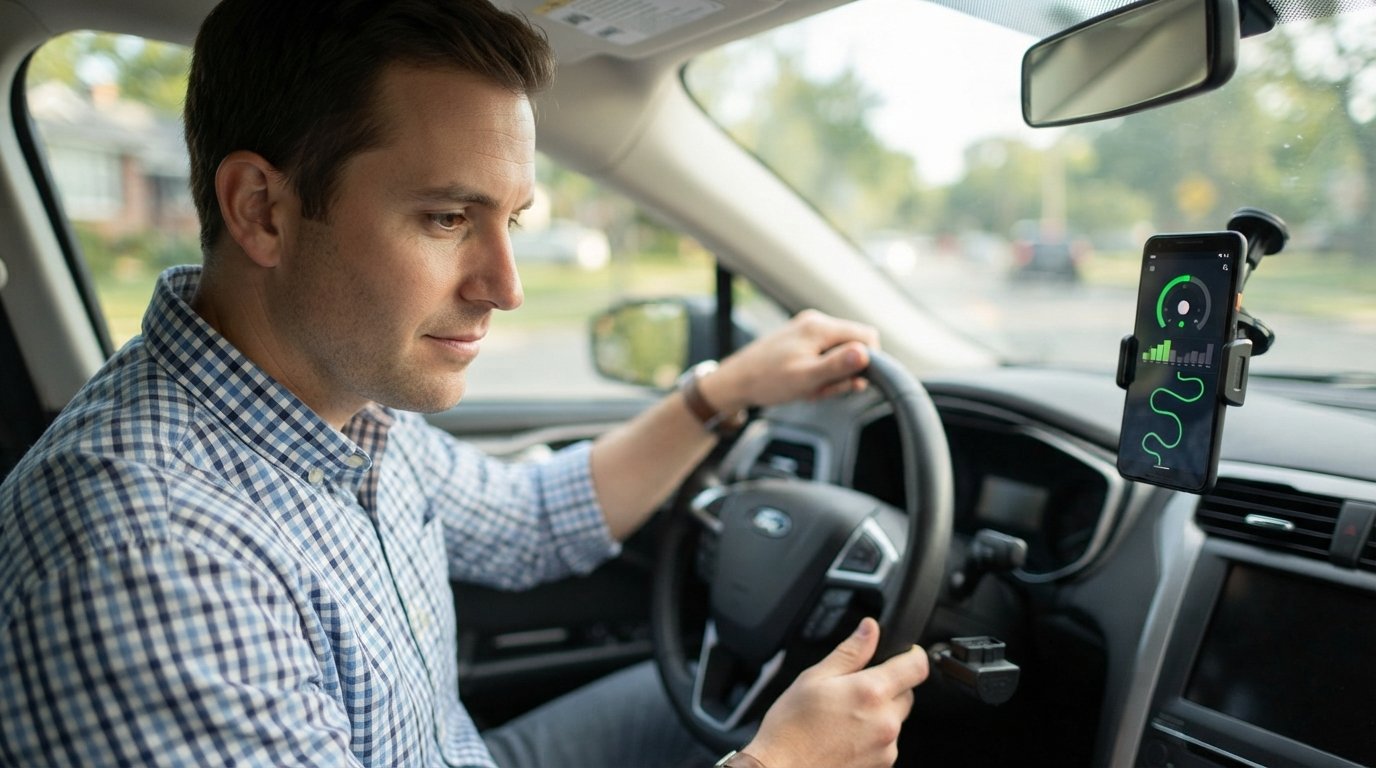
Telematics combines telecommunications and informatics, which is a technical way of saying it collects data from your vehicle and transmits it to your insurer. Most programs use one of three methods: a small device you plug into your car's onboard diagnostics port, a mobile app that uses your phone's sensors and GPS, or a factory-installed system already built into newer vehicles. Once connected, the system tracks a range of driving behaviors that actuaries have linked to accident risk.
The specific metrics vary by insurer, but most programs monitor a common set of variables. These typically include:
- Mileage driven, often measured annually or per policy term
- Hard braking events and rapid acceleration patterns
- Cornering speed and smoothness
- Time of day, with late-night driving often flagged as higher risk
- Phone handling while the vehicle is in motion
After a set period, usually 90 to 180 days, the insurer calculates a driving score. That score translates into a discount percentage, which can range from 5 percent to more than 30 percent depending on the program and your performance. Some insurers apply the discount at renewal, while others offer an immediate participation discount just for signing up, then adjust based on your actual driving.
The key distinction is between telematics programs that are strictly usage-based and those that are behavior-based. Usage-based insurance focuses primarily on how many miles you drive. Behavior-based insurance weighs how you drive those miles. Many modern programs blend both, giving you credit for low mileage and safe habits simultaneously. That combination is where telematics insurance programs save money most effectively, because it captures two separate risk factors that traditional policies lump together.
Why Telematics Insurance Programs Save Money
The savings from telematics come from a simple actuarial reality: insurers price policies based on the average risk of a group, not the actual risk of an individual. When you volunteer to share your driving data, you allow the insurer to replace assumptions with evidence. If the evidence shows you are safer than the average driver in your demographic, the insurer can justify charging you less.
There are several distinct ways this translates into lower premiums. First, there is the participation discount, which many insurers offer simply for enrolling. This is often a flat 5 to 10 percent reduction that applies regardless of your driving score, at least for the first term. Second, there is the performance discount, which rewards safe driving with larger reductions at renewal. Third, there is the low-mileage discount, which benefits drivers who work from home, commute short distances, or use public transit for most trips.
Consider a driver who commutes 12 miles each way, avoids highways during peak hours, and has not had an accident in a decade. Under a traditional policy, that driver might pay the same rate as a neighbor with a 40-mile commute and a recent fender bender, simply because both fall into the same broad rating tier. Under a telematics program, the first driver could see a discount of 20 percent or more, while the second driver might see a smaller discount or none at all. The program does not punish the second driver with a surcharge in most cases, but it does reward the first driver more generously.
Another savings channel is the renewal adjustment. If your driving score improves over time, perhaps because you changed jobs and now avoid rush hour, your discount can increase at each renewal. This creates a feedback loop where safer habits produce measurable financial rewards. For households with multiple vehicles, some programs allow you to apply telematics to each car and stack discounts, though the exact rules vary.
Who Benefits Most from Usage-Based Insurance
Telematics is not a universal win. The drivers who see the largest savings tend to share certain characteristics, and understanding where you fit helps set realistic expectations. Low-mileage drivers are the most obvious beneficiaries. If you drive fewer than 10,000 miles per year, and especially fewer than 7,500, a usage-based program can cut your premium significantly because you are simply on the road less often, which reduces exposure to accidents.
Safe drivers with clean records also do well. If you have no at-fault accidents, no moving violations, and a history of smooth driving, telematics gives you a way to prove it. Traditional insurers can see your record, but they cannot see how you brake or whether you tailgate. Telematics fills that gap. Younger drivers, who often face the highest premiums because of statistical risk, can use telematics to demonstrate responsibility and earn discounts that would otherwise take years to qualify for through traditional safe-driver programs.
On the other hand, some drivers may find that telematics offers little benefit or even a modest downside. If you drive many miles annually, commute during high-risk hours, or have a history of accidents, your driving score may not qualify for a large discount. In most programs, you will still receive the participation discount, but the performance component may be small. It is also worth noting that some insurers may use telematics data to adjust your rate upward if your driving is consistently risky, though this practice varies by state and program. Reading the fine print before enrolling is essential.
For renters and homeowners, there is an additional layer of savings to consider. Bundling auto insurance with renters or homeowners coverage is a separate discount that can stack with telematics savings. If you are exploring how to combine those strategies, our guide on auto insurance for renters and homeowners explains how bundling works and where the biggest discounts hide.
What Data Gets Collected and How It Is Used
Privacy is a legitimate concern with any telematics program, and the industry has responded with varying levels of transparency. Most insurers disclose exactly what data they collect and how long they retain it. The typical dataset includes location, speed, acceleration, braking, cornering, and time of day. Some programs also collect phone usage data to detect distracted driving, though this is more common with app-based programs than plug-in devices.
What insurers do with that data is where things get nuanced. In most cases, the data is used solely to calculate your discount and is not sold to third parties. However, some programs share aggregated, anonymized data with research partners or use it to improve their pricing models. A smaller number of insurers may use the data in claims investigations, though this is rare and usually disclosed in the terms of service.
If privacy is a top concern, look for programs that offer a clear opt-out process and specify a data retention period. Some insurers delete raw data after the discount is calculated, keeping only the score. Others retain data for the life of the policy. The best approach is to read the privacy policy before enrolling and choose a program whose data practices align with your comfort level. The savings are real, but they should not come at the cost of your peace of mind.
How to Maximize Your Telematics Savings
Getting the most out of a telematics program requires more than just signing up. The way you drive during the monitoring period directly affects your score, and small changes can make a meaningful difference. Here are practical steps to improve your results:
- Drive less during high-risk hours. Late-night and early-morning driving is statistically more dangerous, so shifting trips to daytime hours can improve your score.
- Practice smooth braking and acceleration. Anticipate stops, leave more following distance, and avoid jackrabbit starts.
- Keep your phone out of reach. Even hands-free use can be flagged if the app detects movement, so minimize phone handling while driving.
- Consolidate trips. Combining errands into one outing reduces total mileage and exposure.
- Review your score regularly. Many apps show your driving score in real time, which helps you adjust habits before the discount is finalized.
Beyond driving behavior, it also pays to compare programs before committing. Different insurers weight factors differently. One might emphasize mileage, while another focuses on braking events. If you know your strengths, you can choose a program that rewards them. For example, a low-mileage driver might prefer a program with a strong mileage discount, while a high-mileage but safe driver might look for one with a generous behavior-based component.
It is also worth checking whether your state offers any additional incentives for telematics participation. A few states have pilot programs or regulatory allowances that make telematics discounts more attractive. Finally, do not overlook the value of comparing quotes from multiple insurers. A telematics discount from one carrier might still leave you paying more than a traditional policy from another. The only way to know is to compare. You can start by requesting free auto insurance quotes online to see how telematics discounts stack up against standard rates in your area.
Potential Drawbacks and How to Avoid Them
Telematics is not without trade-offs, and being aware of them helps you make a smarter decision. The most common concern is privacy, which we covered earlier. Another is the possibility of a rate increase if your driving score is poor. While many programs guarantee that your rate will not go up as a result of telematics data, some do not. Always check whether the program is "discount only" or whether it can also produce a surcharge.
There is also the issue of data accuracy. GPS and sensor errors can occasionally flag events that did not happen, such as a hard braking event caused by a pothole rather than aggressive driving. Most insurers have a dispute process, but it requires time and effort. If you notice anomalies in your score, contact the insurer promptly and ask for a review.
Finally, consider the hassle factor. Plug-in devices are easy, but app-based programs can drain your phone battery or require you to remember to start the app before each trip. If you are not willing to engage with the program consistently, the savings may not materialize. The best program is one that fits your lifestyle and requires minimal effort while still delivering a meaningful discount.
The Bottom Line on Telematics and Your Premium
Telematics insurance programs save money by replacing broad assumptions with actual driving data. For safe drivers, low-mileage commuters, and households looking to reduce fixed costs, the savings can be substantial, often ranging from 10 to 30 percent or more. The key is to understand how the program measures performance, choose one that aligns with your driving habits, and take steps to optimize your score during the monitoring period.
As usage-based insurance becomes more common, the gap between drivers who share their data and those who do not may widen. Early adopters often see the best discounts because insurers are eager to attract participants. If you are curious about your potential savings, the smartest first step is to gather quotes. Comparing telematics and traditional policies side by side gives you a clear picture of which option puts more money back in your pocket. With the right program and a few adjustments to your daily driving, you can turn your good habits into real financial rewards.