
Roadside Assistance Insurance: A 2026 Guide to Coverage
Secure peace of mind with modern auto insurance with roadside assistance coverage. For expert guidance on 2026 plans, call 833-214-7506.

By Maribel Quinn
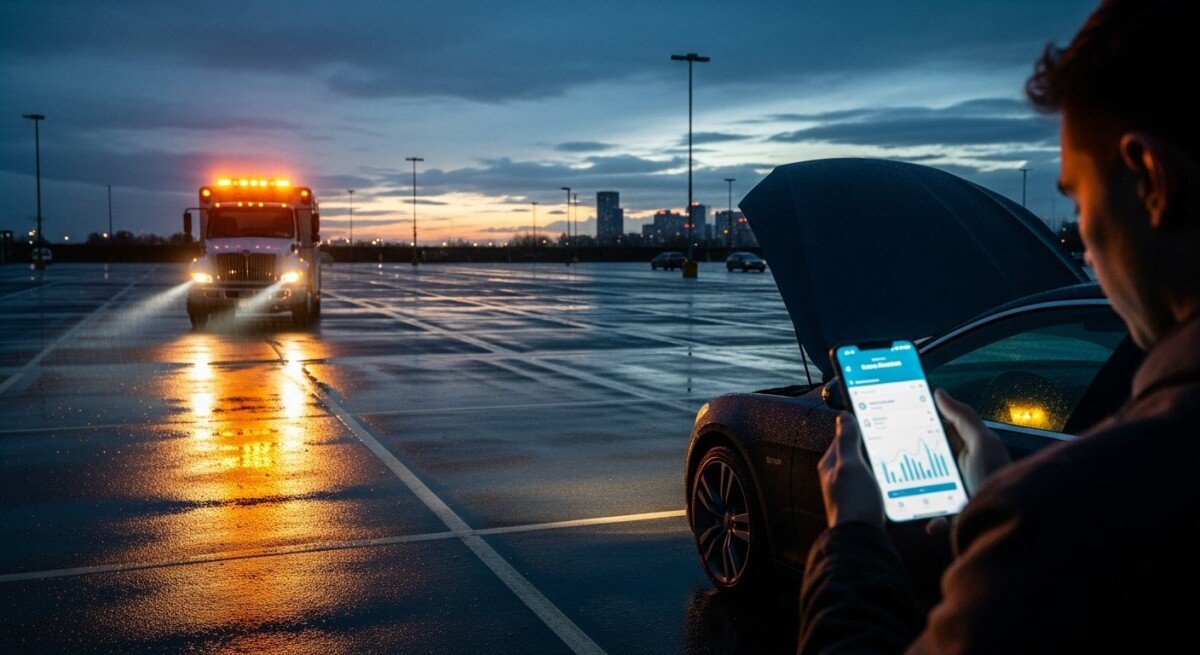
Imagine your car battery dies in a dark, empty parking lot. Your phone has a sliver of charge, and the temperature is dropping. In that moment, the value of your auto insurance policy isn’t measured in premiums or deductibles, but in the speed and reliability of a single service: roadside assistance. As we look toward 2026, this coverage is evolving from a convenient add-on to a core component of modern vehicle ownership, integrating technology and predictive analytics to keep drivers safe. Understanding how to select, use, and maximize auto insurance with roadside assistance coverage in 2026 is essential for every driver, from daily commuters to gig economy workers.
The Evolving Landscape of Roadside Assistance
The traditional model of roadside assistance, often a simple toll-free number for towing, is undergoing a significant transformation. By 2026, insurers are leveraging telematics, real-time data, and app-based platforms to offer a more proactive and seamless experience. This shift is driven by consumer demand for convenience and the increasing complexity of modern vehicles, which are less amenable to quick fixes by the roadside. For new drivers, especially, navigating this landscape can be daunting. Our resource on affordable auto insurance for new drivers in 2026 explains how bundling such coverage can be both protective and cost-effective.
This evolution means that the baseline of what constitutes “good” coverage is rising. It’s no longer just about towing to the nearest garage. Modern programs may include benefits like digital dispatch that shows your service provider’s live location, integration with in-car diagnostic systems to pre-emptively identify issues, and partnerships with a wider network of service providers, from locksmiths to mobile electric vehicle (EV) charging units. The goal is to resolve your situation quickly, minimizing danger and disruption.
What Comprehensive Roadside Assistance Covers
When evaluating auto insurance with roadside assistance coverage for 2026, you need to look beyond the marketing and examine the specific services included. A robust plan acts as a multi-tool for automotive emergencies. The core services typically encompass several critical areas. First, towing is fundamental, but pay close attention to the distance. Standard coverage might be 5-10 miles, while premium plans often offer 100 miles or more, which is crucial if you break down far from home. Second, flat tire service provides installation of your spare tire. However, if your vehicle uses run-flat tires or lacks a spare, verify what alternative service, such as a tow, is provided.
Third, battery jump-start service is a common need, especially in extreme weather. Fourth, lockout service assists if your keys are locked inside the vehicle. Fifth, fuel delivery brings you a small amount of gasoline or diesel if you run out, though you typically pay for the fuel itself. Sixth, extraction or winching service can pull your vehicle out of a ditch, snowbank, or other minor immobilization, though it’s not for off-road recovery. It’s vital to understand that coverage details, like the number of service calls allowed per year and any associated fees per call, vary drastically between insurers. For a foundational understanding of how different coverages work together, our overview of affordable auto insurance for automobiles provides a useful starting point.
Cost-Benefit Analysis: Add-On vs. Standalone Service
A key decision for drivers is whether to purchase roadside assistance as an endorsement (rider) on their auto insurance policy or to subscribe to a standalone service from an auto club or other provider. Each option has distinct advantages and trade-offs that will remain relevant in 2026. Adding it to your insurance policy is often administratively simple. It appears on one bill, and the cost is usually modest, often between $10 and $30 per year per vehicle. The coverage typically follows the vehicle, so anyone driving your car with permission is usually covered. However, a potential downside is that using the towing service could be counted as a claim by some insurers, which might affect your future premiums, though this practice is not universal and you should always ask.
Standalone services, like those from AAA or other motor clubs, usually cost more annually but may offer broader benefits beyond pure roadside assistance. These can include travel discounts, trip interruption insurance, passport photo services, and DMV assistance. Their service networks are often extensive and dedicated solely to member assistance. For veterans and military families exploring all available options, our dedicated guide on auto insurance discounts and benefits for veterans in 2026 highlights specific programs that may include enhanced roadside benefits. To make an informed choice, consider your specific driving habits, the age and reliability of your vehicle, and whether you value the ancillary perks of a motor club.
Critical Questions to Ask Before You Buy
Not all roadside assistance programs are created equal. Before you commit to a policy for 2026, asking the right questions can prevent frustrating surprises during an emergency. Use this checklist when speaking with insurance agents or reviewing policy documents:
- What is the annual or per-incident cost, and are there any fees per service call (e.g., a $50 service fee)?
- How many service calls are permitted per policy period (e.g., year)?
- What is the maximum towing distance per incident? Is there a different limit for different coverage tiers?
- Are there any vehicle type restrictions (e.g., RVs, large trucks, motorcycles)? Does it cover rental cars or trailers?
- What is the average response time in your area, and is there a guaranteed maximum wait time?
- Does the provider use a proprietary network or a contracted third-party network? Can you choose your own repair shop for the tow destination?
- Is there a mobile app for one-touch service requests and real-time tracking?
After reviewing this list, contact your provider for clarification on any ambiguous points. For instance, knowing the towing distance is useless if you don’t also know if you can direct the tow to your preferred mechanic 30 miles away, or if you must go to the “nearest” facility. Furthermore, understanding state-specific insurance contexts can be important. For example, drivers in Alabama reviewing auto insurance costs and requirements should verify that any added roadside assistance complies with local regulations and insurer practices. This due diligence ensures the coverage you pay for will deliver when you need it most.
The Future: Integration with Telematics and EVs
Looking ahead to 2026 and beyond, the integration of roadside assistance with vehicle technology will deepen. Telematics programs, where a device or app monitors your driving, will likely offer dynamic roadside benefits. Safe drivers might earn free service calls or longer towing distances. More immediately, the rise of electric vehicles presents new challenges and opportunities for roadside assistance providers. Traditional fuel delivery is irrelevant, but the need for mobile battery charging or specialized towing for disabled EVs (due to their weight and battery placement) is critical. Forward-thinking insurers are already developing protocols for handling high-voltage battery incidents and partnering with charging networks.
The future model may be predictive. Connected car data could alert your insurer to a weakening battery or a tire losing pressure before it strands you, prompting a pre-emptive maintenance alert or even dispatching assistance before a total failure occurs. This shift from reactive to proactive protection represents the true next generation of auto insurance with roadside assistance coverage, transforming it from an emergency fix to a holistic vehicle wellness and safety system.
Frequently Asked Questions
Does using roadside assistance affect my insurance premium? This depends entirely on your insurer. For most, using a roadside assistance benefit is considered a service call, not an at-fault accident claim, and does not impact your premium. However, you must confirm this with your specific provider, as some may treat frequent use as an indicator of risk.
Is roadside assistance worth it if I have a new car? Yes, absolutely. New cars can still get flat tires, suffer dead batteries from interior lights left on, or have electronic key fob malfunctions that cause lockouts. Manufacturer warranties often include roadside assistance, but it’s wise to compare its limits and duration with what your insurance offers.
What should I do while waiting for roadside assistance? Ensure your safety first. Pull as far off the road as possible, turn on your hazard lights, and if possible, exit the vehicle from the side away from traffic and stand behind a guardrail. Call the service provider from inside your locked vehicle if it’s safer to stay put. Have your policy number, location (mile marker, cross streets), and vehicle description ready.
Can I get roadside assistance if I don’t own a car? Yes. Some standalone motor clubs offer membership to individuals, not vehicles, which can provide coverage when you are a passenger in someone else’s car or even driving a rental car. Some credit cards also offer it as a benefit.
Does roadside assistance cover accidents? Typically, yes. If your vehicle is disabled due to a collision, roadside assistance can arrange the tow from the scene to a repair shop. However, the actual repair costs are covered by your collision insurance, not the roadside assistance benefit.
Securing robust auto insurance with roadside assistance coverage is a strategic decision for 2026. It provides not just a solution for mechanical failure, but also a critical layer of safety and peace of mind in an unpredictable world. By carefully evaluating your needs, asking detailed questions, and understanding the evolving technological landscape, you can select a plan that transforms a potential crisis into a manageable inconvenience. In the end, its value is realized in the moments when you are most vulnerable, offering a direct line to help and a quicker path back to the road.