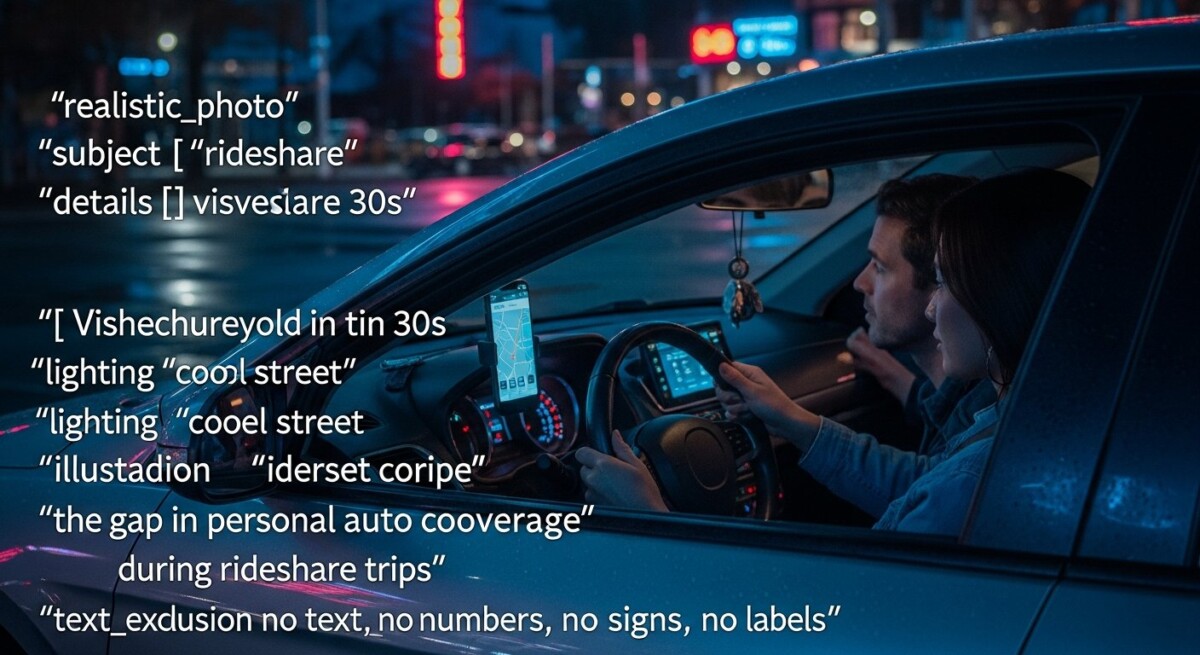
If you drive for Uber, Lyft, or another rideshare service, your personal auto insurance policy likely will not cover you when you are working. This gap in coverage can leave you financially exposed if an accident occurs while you have a passenger in the car or are en route to pick one up. Understanding insurance for cars used for ridesharing is essential for anyone who wants to earn income from driving without risking their personal assets.
Why Personal Auto Insurance Falls Short
Standard personal auto insurance policies are designed for personal use only. When you use your vehicle for commercial purposes, such as transporting passengers for a fee, insurers consider this a higher risk activity. Most personal policies explicitly exclude coverage for any business use, including rideshare driving. If you file a claim while logged into a rideshare app, your insurer may deny coverage entirely, leaving you to pay for damages, medical bills, and legal costs out of pocket.
Some drivers assume that because they have comprehensive and collision coverage, they are protected. However, the exclusion for commercial activity typically overrides other policy provisions. Even if your policy does not have a specific rideshare exclusion, the insurer may still deny a claim based on the business use of the vehicle. In our guide on 10 car insurance terminologies everyone should know, we explain how policy language can affect your coverage in different driving scenarios.
How Rideshare Companies Provide Coverage
Uber and Lyft both offer liability coverage for their drivers, but the coverage is not always active. It depends on which phase of the ride you are in:
- Phase 1 (App on, waiting for a ride request): Limited liability coverage applies (typically $50,000 per person for bodily injury, $100,000 per accident, and $25,000 for property damage). No coverage for damage to your own vehicle.
- Phase 2 (En route to pick up a passenger): Higher liability limits apply (usually $1 million). No coverage for your own vehicle.
- Phase 3 (Passenger in the car): Same as Phase 2: $1 million liability coverage, but still no coverage for your own vehicle damage.
As you can see, the company’s policy does not cover physical damage to your car in any phase. If you are at fault in an accident, you would need your own collision coverage to repair your vehicle. That is where rideshare gap insurance comes in.
What Is Rideshare Gap Insurance?
Rideshare gap insurance is an endorsement that you can add to your personal auto policy. It fills the coverage gaps left by both your personal policy and the rideshare company’s policy. This endorsement typically provides:
- Liability coverage that matches your personal policy limits during Phase 1
- Comprehensive and collision coverage during all phases, subject to your deductible
- Coverage for medical payments or personal injury protection (PIP) while you are driving for the app
Without this endorsement, you risk being uninsured for damage to your own vehicle during Phase 1 and for any damage to your vehicle during all phases. Many major insurers now offer rideshare endorsements, though they may not advertise them widely. It is worth asking your agent specifically about adding this coverage.
Comparing Rideshare Insurance Options
Not all rideshare insurance policies are the same. Some insurers offer a standalone rideshare policy, while others provide an endorsement that modifies your existing personal policy. Both can work, but the key differences include cost, coverage limits, and how they interact with the rideshare company’s policy.
For example, a standalone policy may offer higher liability limits than a standard endorsement, but it could also cost more. An endorsement is usually more affordable because it builds on your existing coverage. However, the endorsement may not cover you if you are driving for multiple platforms at the same time. Before choosing a policy, compare quotes from several insurers and ask about specific scenarios, such as driving during Phase 1 or carrying a passenger from a different app.
If you are a veteran or a college student, you may qualify for discounts that reduce the cost of adding rideshare coverage. Our article on auto insurance discounts and benefits for veterans in 2026 highlights savings opportunities that can apply to rideshare policies as well.
Steps to Get Proper Coverage
Getting the right insurance for cars used for ridesharing does not have to be complicated. Follow these steps to protect yourself:
- Check your current policy. Review your declarations page to see if there is a rideshare exclusion or any mention of business use.
- Contact your insurer. Ask specifically about a rideshare endorsement or a hybrid policy that covers both personal and commercial use.
- Compare quotes. Get at least three quotes from different insurers that offer rideshare coverage. Some may require you to have a clean driving record.
- Understand the deductible. In Phase 1, the rideshare company may apply a deductible (e.g., $1,000 or $2,500) if you have collision coverage through your personal policy. Know how this works before you need to file a claim.
- Review periodically. As your driving habits change or as new insurance products become available, revisit your coverage to ensure it still meets your needs.
Taking these steps can help you avoid the financial shock of an uncovered accident. Remember that rideshare companies require drivers to maintain their own insurance, but they do not verify that the policy covers rideshare activity. It is your responsibility to close the gap.
Common Misconceptions About Rideshare Insurance
Many drivers believe that because Uber or Lyft provides liability coverage, they do not need their own additional insurance. This is a dangerous misconception. The company’s coverage protects you from liability claims made by third parties, but it does not protect your vehicle or your personal medical expenses. If you are injured in an accident while driving for a rideshare company, you may have to rely on your own health insurance or personal injury protection coverage.
Another myth is that adding a rideshare endorsement will skyrocket your premium. In reality, the cost is often modest, ranging from $10 to $30 per month depending on your insurer and location. Compared to the potential cost of an uncovered accident, this is a small price for peace of mind. If you are unsure about your eligibility for coverage, check our guide on are you eligible for car insurance to understand the factors insurers consider.
Special Considerations for New Drivers
College students and young drivers who use their car for rideshare work face unique challenges. Many young drivers are on their parents’ policy, which may not allow business use. Additionally, young drivers often have higher premiums due to limited driving history. Adding rideshare coverage could increase the cost further, but it is still necessary to avoid a coverage gap.
If you are a college student driving for a rideshare company, talk to your parents and their insurer about adding a rideshare endorsement. Some insurers offer discounts for students with good grades, which can help offset the additional cost. For more details, read our article on 3 essential aspects to know about car insurance for college students.
Frequently Asked Questions
Do I need rideshare insurance if I only drive occasionally?
Yes. Even occasional driving creates exposure. An accident during a single trip could result in a denied claim if your policy excludes business use. It is better to have coverage in place for every trip you take.
Can I use commercial auto insurance instead of a rideshare endorsement?
Commercial auto insurance is designed for full-time commercial drivers, such as taxi drivers or delivery drivers. It is usually more expensive than a rideshare endorsement. However, if you drive for multiple rideshare platforms or also make deliveries, a commercial policy may be more appropriate. Discuss your specific situation with an insurance agent.
Will a rideshare endorsement raise my personal insurance rate?
It may increase your premium slightly, but the increase is typically small. However, if you file a claim while driving for a rideshare company, that claim could affect your personal insurance rates. Some insurers treat rideshare claims differently than personal claims, so ask your agent how a claim would impact your premium.
What happens if I get into an accident during Phase 1?
During Phase 1 (waiting for a ride request), the rideshare company provides limited liability coverage. If you have a rideshare endorsement on your personal policy, your comprehensive and collision coverage will apply. Without the endorsement, you have no coverage for damage to your own car.
Now that you understand the importance of proper coverage, take action to protect yourself and your vehicle. Call us at 833-214-7506 to discuss your options with a licensed agent who can help you find the right policy for your needs.