
North Dakota Car Insurance Requirements and Average Costs
Understand North Dakota car insurance requirements and average costs. Call (833)-214-7506 to compare personalized quotes from licensed agents.

By Callum Rivers
North Dakota drivers face a distinct insurance landscape shaped by wide-open rural highways, harsh winter weather, and a state minimum coverage structure that differs from most of the country. Whether you are renewing a policy in Fargo, moving to Bismarck for work, or registering a vehicle in a small town along the Red River, understanding what the state legally requires and what you should realistically expect to pay can save you hundreds of dollars and prevent costly coverage gaps. This guide breaks down the North Dakota car insurance requirements, average costs by driver profile, and the coverage decisions that matter most in a rural, weather-heavy state.
North Dakota Minimum Coverage Requirements Explained
North Dakota law requires every registered vehicle to carry liability insurance that meets specific minimum limits. The state follows a 25/50/25 structure, which means drivers must carry at least $25,000 for bodily injury per person, $50,000 for bodily injury per accident, and $25,000 for property damage per accident. These minimums are relatively low compared to states that require 50/100/50 or higher, but they are the legal floor, not a recommendation. Drivers who finance or lease a vehicle will almost always face higher requirements from their lender, including collision and comprehensive coverage.
Beyond standard liability, North Dakota has a specific rule for uninsured and underinsured motorist coverage. Insurers must offer UM/UIM coverage, and drivers must sign a written waiver if they choose to reject it. This is a critical detail because North Dakota has a significant share of uninsured drivers, and rural accidents often involve higher-speed collisions where medical costs can quickly exceed the other driver's minimum liability limits. Rejecting UM/UIM may lower your premium, but it leaves you exposed to costs that the at-fault driver cannot pay.
North Dakota also enforces an electronic proof of insurance requirement. Drivers must be able to show proof of coverage during a traffic stop or after an accident, and the state uses an online verification system that insurers report to directly. If your policy lapses, the state may require an SR-22 filing to reinstate your driving privileges. Understanding how SR-22 filings work is essential for any driver with a lapse or violation, and our guide on SR-22 insurance requirements explains the process in detail.
How Rural Roads and Winter Weather Shape North Dakota Claims
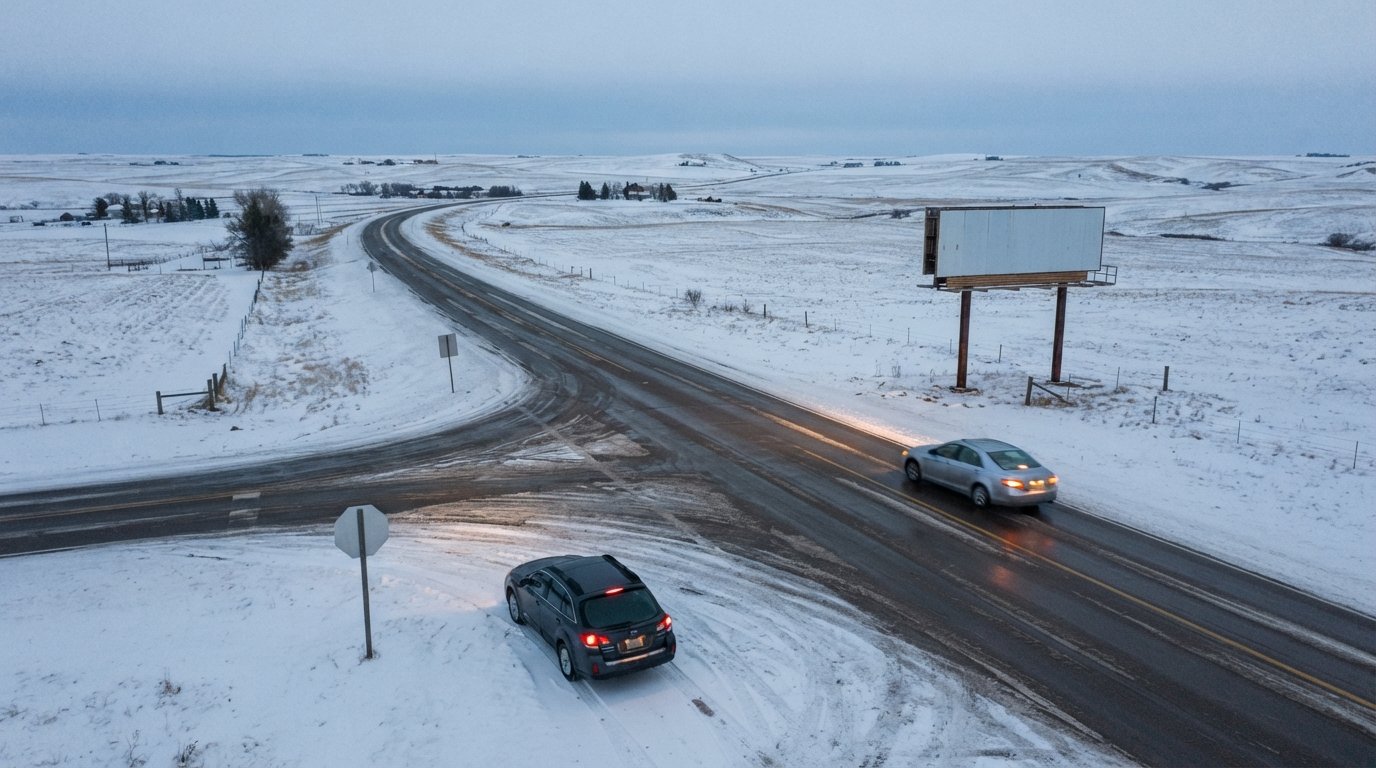
North Dakota's geography and climate directly influence what coverage makes sense for local drivers. The state has a low population density, long stretches of two-lane highway, and winter conditions that include ice, blowing snow, and extreme cold. These factors create claim patterns that differ from urban states. Comprehensive claims from hail, deer strikes, and winter storm damage are common, and collision claims often involve single-vehicle accidents on rural roads where help may take longer to arrive.
Because many North Dakota drivers travel long distances for work, school, and medical care, annual mileage can be higher than in compact urban states. Higher mileage generally increases exposure to accidents, which is one reason North Dakota premiums are not as low as some rural-state stereotypes suggest. At the same time, traffic congestion is minimal outside of a few corridors, and theft rates are relatively low, which helps keep comprehensive premiums moderate. The result is a market where liability and collision coverage do most of the heavy lifting, while add-ons like roadside assistance and rental reimbursement can be genuinely useful for drivers who live far from major service centers.
Weather also affects how insurers evaluate risk by ZIP code. A driver in Minot may face different comprehensive rates than a driver in Grand Forks because of hail frequency and storm patterns. When comparing North Dakota car insurance quotes, it pays to ask how each insurer weights weather-related claims in your specific area rather than assuming a statewide average applies to you.
Average North Dakota Car Insurance Costs by Driver Profile
North Dakota car insurance costs are generally below the national average, but the range is wide depending on driving record, age, vehicle, and coverage level. A clean-record adult driver carrying state minimum liability typically pays less than a driver with a recent accident or ticket, and full coverage can cost two to three times more than minimum coverage. The table below summarizes typical annual premium ranges based on common driver profiles, using statewide averages as a baseline.
- Clean record, minimum liability: roughly $500 to $800 per year
- Clean record, full coverage: roughly $1,300 to $1,900 per year
- One at-fault accident or ticket: roughly $900 to $1,400 per year for minimum coverage
- Teen driver added to a family policy: roughly $1,200 to $2,200 per year additional
- SR-22 filing required: roughly $900 to $1,600 per year for minimum coverage
These figures are estimates, not quotes. Insurers price policies using dozens of variables, including credit-based insurance scores where permitted, vehicle safety ratings, annual mileage, and prior claims history. A driver with a clean record in a low-theft ZIP code may land at the low end of these ranges, while a driver with multiple violations or a financed vehicle requiring full coverage will land higher. The most reliable way to know your actual cost is to compare personalized quotes from multiple licensed agents.
North Dakota's average costs also vary by coverage choice. Raising liability limits from 25/50/25 to 100/300/100 often adds only a modest amount to the annual premium, especially for clean-record drivers. That is one reason consumer advocates encourage drivers to price higher limits before assuming they cannot afford them. The gap between minimum and robust liability coverage is frequently smaller than drivers expect, and the financial protection is substantially greater.
Coverage Options to Compare Before Choosing a North Dakota Policy
Choosing a North Dakota policy is not just about meeting the legal minimum. The right mix of coverage depends on your vehicle's value, your assets, your commute, and your tolerance for financial risk. Before you buy, compare the following coverage types side by side across at least three quotes.
- Bodily injury and property damage liability: set limits above the state minimum if you have assets to protect.
- Uninsured and underinsured motorist coverage: strongly consider keeping it, especially given rural accident risks.
- Collision coverage: essential for financed vehicles and worth pricing for older vehicles with high repair costs.
- Comprehensive coverage: valuable in North Dakota for hail, deer strikes, and winter storm damage.
- Medical payments or personal injury protection: useful for covering immediate medical costs regardless of fault.
After you have compared the core coverage types, look at deductible levels and optional add-ons. A higher deductible lowers your premium but increases your out-of-pocket cost after a claim, so choose an amount you could comfortably pay on short notice. Roadside assistance and rental reimbursement are worth considering if you live in a rural area where towing distances are long and repair shops may be far away. Gap coverage is worth discussing if you finance a vehicle and owe more than it is worth.
Drivers who are struggling with credit or have been rejected by traditional lenders may also need to think about how they finance a vehicle before they shop for insurance. Platforms such as AutoTitleLoan connect consumers with auto loan financing options, which can be relevant for first-time buyers or drivers rebuilding credit. Insurance and financing decisions often intersect, and understanding both helps you avoid surprises at the dealership and at renewal.
Finally, ask each insurer about discounts before you finalize a policy. North Dakota drivers commonly qualify for multi-policy bundling with homeowners or renters insurance, safe driver discounts, good student discounts, and paid-in-full discounts. Bundling auto and home or renters coverage is often the single largest discount available, and it can also simplify your billing. If you rent your home, bundling renters and auto policies may deliver savings on both lines without reducing coverage.
Ways to Lower Your North Dakota Premium Without Cutting Coverage
Price is important, but cutting coverage to lower a premium can backfire after a single accident. A better approach is to reduce cost while preserving protection. North Dakota drivers have several practical levers to pull. Shopping multiple quotes at each renewal is the most reliable, because insurers adjust rates frequently and loyalty does not always pay. Raising your deductible modestly, improving your credit profile where applicable, and asking about every discount you qualify for can also move the number without weakening your policy.
Another effective strategy is to review your coverage annually rather than automatically renewing. Vehicles age, commutes change, and teen drivers move off your policy, all of which affect what you need. An annual review with a licensed agent can catch overpayments and coverage gaps before they become expensive problems. North Dakota's rural market rewards drivers who plan for weather and distance, so make sure your policy reflects how you actually use your vehicle rather than how you used it three years ago.
If you want to compare personalized North Dakota car insurance quotes from licensed agents, start by gathering your vehicle details, driving history, and current coverage information. A short conversation can reveal savings that are not obvious from a generic online estimate, and it gives you a clear picture of how North Dakota car insurance requirements and average costs apply to your specific situation.