
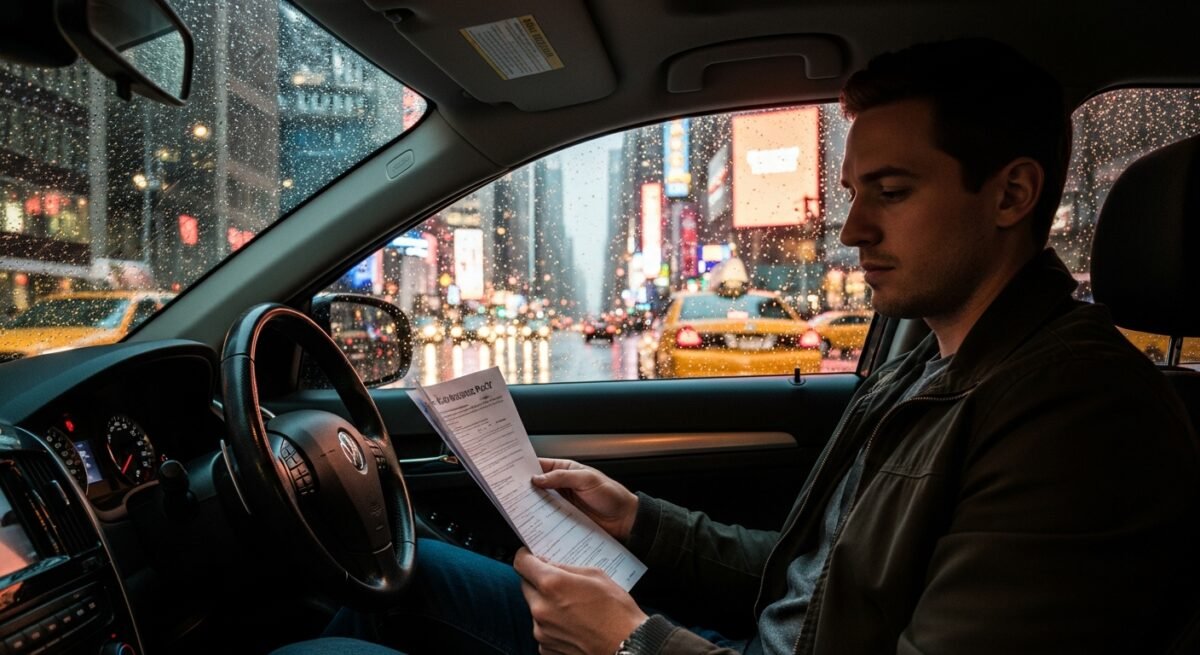
Navigating New York City Auto Insurance: A Driver’s Essential Guide
Get a clear understanding of New York City auto insurance requirements and strategies to save. For personalized guidance, call 833-214-7506.

By Olivia Martin
Driving in New York City is a unique challenge, from navigating congested streets to finding affordable parking. Securing the right auto insurance policy is not just a legal requirement, it is a critical financial shield in one of the most demanding driving environments in the world. The dense traffic, high accident rates, and complex state laws make understanding your coverage more than just a formality, it is a necessity for protecting your wallet and your peace of mind. This guide will help you decode the specifics of New York City auto insurance, from mandatory minimums to strategic coverage additions that make sense for urban drivers.
Understanding New York State’s Mandatory Insurance Requirements
New York is a no-fault insurance state, which fundamentally shapes how claims are handled after an accident. This system requires your own insurance company to pay for your medical expenses and lost earnings, regardless of who caused the crash. This is designed to reduce lawsuits and expedite medical payments. To legally drive in NYC, you must carry a policy that meets or exceeds the state’s minimum liability and no-fault coverage limits. These minimums are often insufficient for the high costs associated with city driving, but they form the baseline of your financial responsibility.
The state mandates the following minimum coverage: $25,000 for bodily injury per person, $50,000 for bodily injury per accident, $10,000 for property damage (often abbreviated as 25/50/10), and $50,000 in No-Fault coverage, also known as Personal Injury Protection (PIP). PIP covers medical expenses, lost wages (up to 80% of your earnings, with a cap), and essential services for you and your passengers. You must also carry uninsured motorist coverage with the same 25/50 limits. It is crucial to understand that these are merely the legal minimums. In a city with expensive medical care, luxury vehicles, and high litigation rates, carrying only minimum liability can leave you dangerously exposed to out-of-pocket costs if you are found at fault in a serious accident.
Why Auto Insurance Costs More in New York City
New York City consistently ranks among the most expensive places in the nation for auto insurance. Several interconnected factors drive these premium costs higher than state or national averages. The primary driver is the sheer density of vehicles, pedestrians, and cyclists, which leads to a statistically higher frequency of accidents, from major collisions to minor fender-benders. This increased risk is directly factored into premiums by insurers.
Other significant cost factors include the high rate of auto theft and vandalism in certain neighborhoods, the exorbitant cost of vehicle repairs and medical care in the metropolitan area, and the prevalence of insurance fraud. Furthermore, the high concentration of luxury, high-performance, and expensive-to-repair vehicles means that the average cost of a property damage claim is substantially higher. Parking on the street, as many NYC residents do, also increases the risk of hit-and-run incidents and damage, which insurers account for in their pricing models. For a deeper look at how local factors influence rates in another major metro, our guide on Navigating Auto Insurance in Dallas explores similar urban dynamics.
Essential Coverage Additions for NYC Drivers
While meeting the state minimum keeps you legal, building a robust policy is what truly protects you. Urban drivers should strongly consider several key coverage enhancements. Collision and comprehensive coverage are vital, even for older vehicles. Collision pays for damage to your car from an accident, while comprehensive covers non-collision events like theft, fire, falling objects, or flooding, all relevant risks in the city.
Given the frequency of hit-and-run accidents and the number of underinsured drivers, increasing your uninsured/underinsured motorist (UM/UIM) coverage is one of the most important steps you can take. This protects you if you are injured by a driver with little or no insurance. Similarly, increasing your liability limits far above the 25/50/10 minimum is a wise investment. A serious accident involving multiple vehicles or injuries can easily result in damages exceeding $100,000, and you would be personally responsible for any amount over your policy limit. Other valuable add-ons include rental car reimbursement (for when your car is in the shop) and roadside assistance, which is invaluable if you break down on a busy highway or bridge.
Strategies to Lower Your New York City Auto Insurance Premiums
Despite the high baseline costs, NYC drivers have several levers to pull to find more affordable rates. The most impactful action is to shop around and compare quotes from multiple insurers. Rates can vary dramatically between companies for the same driver profile. You should obtain new quotes at least every other year to ensure you are not overpaying. When comparing, look beyond just the premium, consider the company’s financial strength, customer service ratings, and claims handling reputation.
You can also take proactive steps to qualify for discounts and reduce your risk profile in the eyes of insurers. Common discounts include those for bundling auto with renters or homeowners insurance, maintaining a clean driving record, taking a defensive driving course (which can also reduce license points), installing an anti-theft device, and opting for paperless billing. Furthermore, adjusting your deductible, the amount you pay out-of-pocket before insurance kicks in, can lower your premium. Just ensure you choose a deductible you can comfortably afford in an emergency. For a detailed breakdown of comparison tactics, our resource on Finding the Best Auto Insurance in San Antonio offers a proven framework that applies in any market.
Navigating Claims and Disputes in the Five Boroughs
Filing an auto insurance claim in New York City follows the state’s no-fault procedures but requires careful attention to detail. Immediately after an accident, ensure safety, call the police to file an official report (especially in NYC), and exchange information with the other driver. Document the scene thoroughly with photos and gather contact information from any witnesses. Notify your insurance company as soon as possible to initiate the claims process. Your PIP coverage will handle your initial medical costs, and your collision coverage (if you have it) will handle repairs to your vehicle, minus your deductible.
Disputes can arise over fault determination, repair estimates, or the severity of injuries. New York uses a “comparative negligence” rule, meaning fault can be shared. If you disagree with an insurer’s decision, you can file an appeal with the company, seek mediation, or file a complaint with the New York State Department of Financial Services (DFS). In complex cases, particularly those involving serious injuries that exceed your PIP limits, consulting with a qualified attorney may be necessary to navigate the transition from a no-fault claim to a potential liability lawsuit against the at-fault driver.
Frequently Asked Questions for NYC Drivers
What is the penalty for driving without insurance in New York?
Penalties are severe and include fines of $150 to $1,500, a mandatory surcharge, license and registration suspension for at least one year, and potential jail time. You may also be required to file an SR-22 certificate as proof of future insurance.
Does my credit score affect my auto insurance rate in NYC?
Yes, New York State allows insurers to use credit-based insurance scores as one factor in determining premiums, as statistically there is a correlation between credit history and claim likelihood. However, its weight is regulated.
I rarely drive my car in the city. Can I get a lower rate?
Potentially. If you drive significantly fewer miles than the average driver, ask about low-mileage discounts. Some insurers also offer usage-based programs where a telematics device monitors your driving habits for potential savings.
Is rental car insurance necessary if I have my own policy?
Your personal auto policy typically extends to rental cars for liability and may extend collision/comprehensive if you have those coverages. However, check your policy for exclusions and consider the rental company’s collision damage waiver (CDW) to avoid administrative fees and loss-of-use charges they may bill you for.
How does a parking lot accident get handled?
Parking lot accidents are generally treated like any other collision. New York’s no-fault rules still apply. Determining fault can be tricky, so a police report and witness statements are especially important. Your collision coverage would pay for your repairs (minus deductible) regardless of fault.
Securing the right auto insurance in New York City requires a balance between legal compliance, financial protection, and cost management. By moving beyond the bare minimums, understanding the unique urban risk factors, and actively shopping for the best value, you can obtain a policy that provides real security. In a city where the unexpected is commonplace, a well-considered insurance plan is not an optional expense, it is an essential component of responsible vehicle ownership and personal financial stability.