
Navigating Commercial Auto Insurance for 2026 and Beyond
Prepare your business for the future of fleet coverage and risk management. For a personalized consultation on your commercial auto insurance needs, call 833-214-7506.

By Liora Bennett
The landscape of commercial auto insurance is shifting beneath the wheels of businesses everywhere. As we approach 2026, a confluence of technological innovation, regulatory changes, and evolving risk profiles is fundamentally reshaping how companies protect their fleets. For business owners, fleet managers, and financial controllers, understanding these trends is no longer a forward-looking exercise, it is a critical component of contemporary risk management and financial planning. Staying ahead means more than just renewing a policy, it requires a proactive strategy to leverage new coverage options, manage emerging liabilities, and control costs in an increasingly complex environment.
The Driving Forces of Change in Commercial Coverage
Several powerful trends are converging to redefine commercial auto insurance. The most significant is the accelerated integration of advanced technology into vehicles and fleet operations. Telematics, once a novelty for monitoring driver behavior, is becoming a standard tool for insurers to assess risk with unprecedented granularity. This data-driven approach allows for more personalized premiums, rewarding safe driving practices with lower costs. Furthermore, the gradual introduction of autonomous and semi-autonomous driving features presents new questions about liability. When an accident involves a vehicle with advanced driver-assistance systems (ADAS), determining fault becomes a complex interplay between human error and software performance, a challenge insurers are actively grappling with as policies for 2026 are developed.
Simultaneously, economic pressures such as inflation impact vehicle repair costs, parts availability, and medical expenses, all of which directly influence insurance premiums. Regulatory bodies are also responding to these changes, potentially updating minimum coverage requirements and rules for new vehicle technologies. For businesses, this means the policy that adequately protected a fleet in 2023 may have critical gaps by 2026. A thorough review of coverage limits, especially for liability and physical damage, is essential. Businesses should also scrutinize how their policy addresses non-owned and hired auto exposure, as the use of rental vehicles or employee-owned cars for work purposes continues to be a common point of vulnerability.
Strategic Cost Management and Risk Mitigation
While premiums are influenced by macro trends, businesses have significant leverage to control their insurance expenses through deliberate risk management. The cornerstone of this strategy is a formal, documented driver safety program. Insurers heavily favor businesses that demonstrate a commitment to safety, often offering substantial discounts for proven protocols. Beyond safety, strategic decisions about deductibles, coverage bundling, and vehicle selection play a major role. Opting for a higher deductible can lower your premium, but it requires having the cash reserves to cover that deductible in the event of a claim.
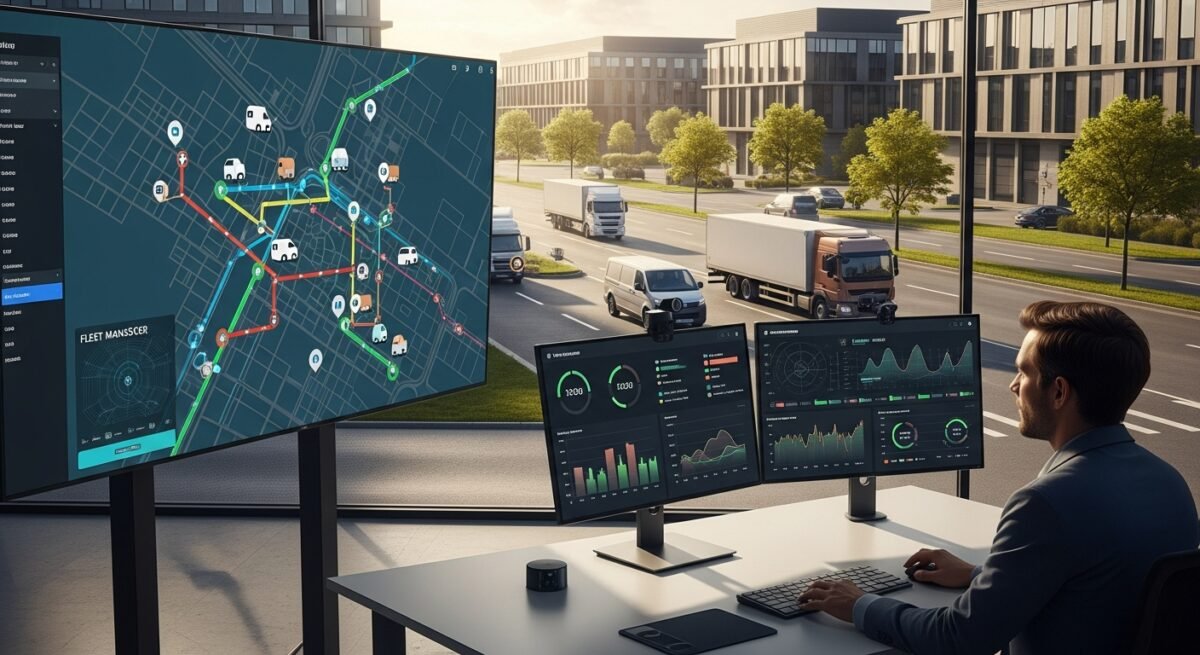
Another powerful tool is the use of telematics and fleet management software. These systems provide actionable data that goes beyond securing an insurance discount. They help identify risky driving behaviors like hard braking and rapid acceleration, allowing for targeted coaching. They optimize routing to reduce mileage and idle time, and they provide crucial data for incident reconstruction. Implementing these technologies signals to insurers that your business is a sophisticated, lower-risk operation. For a deeper dive into bundling strategies that can apply to both personal and commercial lines, consider reviewing our resource on finding the best home and auto insurance bundles for 2026, as the principles of combining policies for value are similar.
To build an effective cost-management framework, businesses should focus on several key areas:
- Formal Driver Safety Programs: Implement mandatory training, regular MVR checks, and clear policies on mobile device use and hours of service.
- Telematics Adoption: Use data to coach drivers, optimize routes, and provide evidence for fair claim resolution.
- Strategic Deductibles: Balance premium savings with financial capacity to handle out-of-pocket costs after an incident.
- Regular Fleet Maintenance: Keep detailed logs of all vehicle servicing to prevent accidents caused by mechanical failure and demonstrate operational diligence.
- Proactive Policy Review: Annually reassess coverage needs with your agent, especially when adding new vehicles or changing business operations.
Emerging Coverage Needs and Policy Evolution
The policies of tomorrow will look different from today’s standard forms. As electric vehicles (EVs) become more prevalent in commercial fleets, specialized coverage considerations arise. Repair costs for EVs can be higher due to specialized parts and technician requirements, and battery replacement is a significant expense. Some insurers are developing endorsements or standalone products that address these unique risks. Similarly, the rise of the gig economy and last-mile delivery has created a new class of commercial auto users. Drivers using personal vehicles for business purposes often find themselves in a coverage gray area, as personal auto policies typically exclude commercial delivery. This gap is driving demand for hybrid or on-demand commercial policies, a trend that will accelerate into 2026.
Cyber risk is also becoming intertwined with auto insurance. Modern commercial vehicles are essentially connected computers on wheels. A hack that disables a fleet or a ransomware attack on a fleet management system could lead to substantial business interruption losses. While traditionally covered under a cyber insurance policy, some commercial auto insurers are beginning to explore how to address these converging liabilities. Furthermore, environmental liability from spills or cargo contamination during a commercial auto accident is an area where standard policies may have limits, necessitating additional pollution coverage for certain industries.
Preparing for the 2026 Insurance Renewal Process
Approaching your commercial auto insurance renewal with a passive mindset is a recipe for overpaying and underinsuring. The process should start at least 90 days before your renewal date. This gives you ample time to gather necessary documentation, solicit competitive quotes, and negotiate terms. Essential documentation includes updated vehicle schedules, driver lists with license information, loss runs from your current insurer, and details of your safety and telematics programs. Presenting an organized, professional package to insurers positions your business as a desirable client.
When comparing quotes, look beyond the bottom-line premium. Scrutinize the coverage terms, exclusions, and the financial strength and claims service reputation of the carrier. A slightly higher premium from a carrier known for fair and fast claims handling can provide far greater value than the cheapest option. Understanding local regulations is also crucial, as minimum requirements vary significantly. For instance, businesses operating in New York must navigate specific state laws, detailed in our guide on navigating auto insurance in New York. Similarly, those in Arizona can explore specific strategies in our article on how to get the best auto insurance quotes in Arizona.
Building a strong relationship with a knowledgeable insurance agent or broker who specializes in commercial auto is invaluable. They can act as a guide through market complexities, advocate on your behalf, and help you interpret how new trends like autonomous vehicle clauses or EV endorsements apply to your specific operation. For a foundational understanding of state-specific frameworks that influence commercial policies, our resource on understanding auto insurance in New York State laws and savings offers relevant insights.
Frequently Asked Questions
How will electric commercial vehicles affect my insurance costs in 2026?
EVs may lead to higher physical damage coverage costs due to expensive batteries and specialized repair. However, their simpler mechanics can reduce certain maintenance risks. Overall cost will depend on your fleet’s safety record, repair network access, and available insurer discounts for EVs.
Is telematics data mandatory for getting commercial auto insurance?
While not yet universally mandatory, it is increasingly expected for competitive pricing. Many insurers offer significant premium discounts for businesses that install telematics devices, as the data provides proof of safe driving habits and fleet management.
What is the biggest coverage gap businesses should address before 2026?
A major gap is non-owned auto liability for employees using personal vehicles for work tasks. Most personal auto policies exclude commercial use, leaving the business exposed. A hired and non-owned auto liability endorsement is a critical, often overlooked addition.
Will my policy automatically cover autonomous driving features?
Not necessarily. As vehicle automation levels increase, policy language is evolving. You must review your policy and discuss with your agent to ensure coverage for accidents involving advanced driver-assistance systems (ADAS) and to understand how liability is assigned between the driver and the technology.
How can I prove my safety program to get better insurance rates?
Document everything. Provide insurers with written safety policies, driver training completion certificates, records of regular vehicle maintenance, and results from your telematics program that show improvements in driver behavior over time.
The road to 2026 requires businesses to shift from viewing commercial auto insurance as a simple compliance cost to treating it as a dynamic element of strategic risk management. By embracing technology, formalizing safety protocols, understanding emerging exposures, and engaging proactively in the renewal process, companies can secure not only financial protection but also a competitive advantage. The goal is to build a resilient framework that protects assets, supports drivers, and ensures the business can continue moving forward, no matter what lies around the next bend.