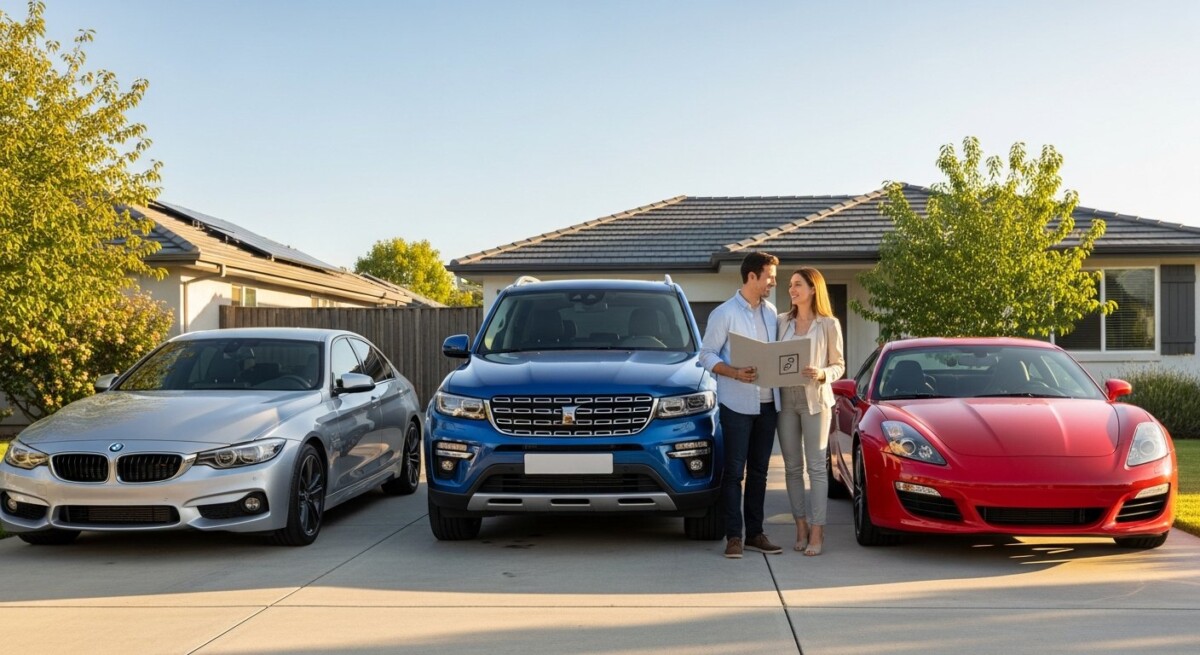
Managing two or more vehicles in a household comes with its own set of challenges: coordinating maintenance, juggling schedules, and ensuring every driver has the right protection. One of the most effective ways to simplify this process and reduce costs is by bundling all your cars under a single policy. Car insurance for people with multiple cars is not just a convenience; it is a strategic financial move that can unlock significant discounts, streamline billing, and eliminate gaps in coverage. Whether you have a sedan for commuting, an SUV for family trips, and a sports car for weekends, understanding how multi-car policies work can save you hundreds of dollars each year.
Many drivers assume that insuring three cars separately with different companies is the best way to find cheap rates. In reality, most insurers offer substantial discounts when you combine vehicles on one policy. These discounts often range from 10% to 25% per vehicle, depending on the carrier and your claims history. Beyond the savings, a single policy means one renewal date, one monthly payment, and one point of contact for claims. If you have ever had to manage multiple policies with different expiration dates, you know how easy it is to let one lapse accidentally. With a multi-car policy, that risk nearly disappears.
This article will walk you through everything you need to know about multi-car insurance: how discounts work, which drivers and vehicles qualify, common pitfalls to avoid, and how to compare quotes effectively. By the end, you will have a clear roadmap for maximizing protection while minimizing premiums. For a deeper dive into the best carriers and family-oriented plans, refer to our Best Multi-Car Insurance Policies for Families in 2026 guide, which breaks down top-rated insurers by customer satisfaction and discount programs.
How Multi-Car Insurance Discounts Work
Insurance companies reward loyalty and volume. When you insure two or more vehicles on the same policy, you become a more valuable customer, and the carrier reduces its administrative costs by processing one policy instead of several. These savings are passed back to you in the form of a multi-car discount. The discount typically applies to the liability, collision, and comprehensive portions of your premium, though the exact percentage varies by insurer and state.
For example, if you have a 2018 Honda Civic and a 2022 Toyota RAV4, insuring them together under one policy might give you a 15% discount on the total premium. If your separate premiums were $1,200 and $1,400 respectively, bundling could lower the combined cost to around $2,210 instead of $2,600. That is a saving of $390 per year simply for combining policies. Some insurers also offer additional discounts for insuring multiple drivers, such as a spouse or teenage child, on the same policy.
It is important to note that the multi-car discount is not automatic. You must explicitly request it when getting a quote or ask your current agent to apply it. If you currently have separate policies with the same company, they may already be eligible for consolidation. Always ask your agent: “Do I qualify for a multi-car discount if I combine my two policies?” You might be surprised at how much you can save with a simple phone call.
Who Qualifies for Multi-Car Insurance?
Qualification rules vary, but most insurers require that all vehicles be registered at the same address and be used primarily by household members. You do not necessarily need to own all the vehicles outright. Leased vehicles, financed cars, and even vehicles titled in different family members’ names can usually be combined as long as they are garaged at the same location.
Here are the typical requirements for a multi-car policy:
- Same primary residence: All vehicles must be kept at the same home address. A car that is garaged at a separate property, like a vacation home or college dorm, may not qualify.
- Household members only: Drivers listed on the policy should be immediate family members, roommates, or domestic partners who live in the same household.
- At least two vehicles: Most insurers require a minimum of two cars to qualify for the discount. Some companies offer a small discount for two cars and a larger discount for three or more.
- Valid driver’s licenses: Each listed driver must have a valid license. Insurers may check driving records for all household members before issuing the discount.
If you have a teenage driver who just got their license, adding them to a multi-car policy is often cheaper than buying a separate policy for them. Teenagers are expensive to insure on their own, but adding them to an existing multi-car policy can reduce their rate significantly because they benefit from the household discount. For more guidance on finding affordable coverage for families, check our Best Multi-Car Insurance Quotes for Atlanta Families in 2026 article, which includes regional tips and carrier comparisons.
Coverage Options and Customization
One of the biggest advantages of a multi-car policy is the ability to customize coverage for each vehicle. You are not forced to apply the same deductibles or liability limits to every car. For instance, you might want full coverage with a $500 deductible on your newer SUV, but only liability coverage on an older sedan that is worth less than $3,000. Multi-car policies allow this flexibility while still keeping all vehicles on a single policy.
When you customize per vehicle, keep these factors in mind:
- Vehicle value: Comprehensive and collision coverage is generally worthwhile for cars worth more than $5,000. For older vehicles with a low market value, dropping these coverages can save money.
- Usage patterns: A car driven 50 miles daily for work may need higher liability limits than a car used only for weekend errands.
- Driver history: If one household member has a poor driving record, you may want higher liability limits on the car they drive most often to protect against lawsuits.
Customization does not end with coverage types. You can also choose different deductibles for each vehicle. A higher deductible lowers your premium, but it also means you pay more out of pocket if you have a claim. A common strategy is to set a $1,000 deductible on older cars (to keep premiums low) and a $500 deductible on newer, more expensive vehicles. This balance helps you manage risk without overpaying.
For a complete breakdown of insurance terms that will help you understand your policy documents, read our 10 Car Insurance Terminologies Everyone Should Know guide. Knowing terms like “declarations page,” “endorsement,” and “gap insurance” empowers you to make informed decisions when customizing your multi-car plan.
Common Mistakes to Avoid
While multi-car insurance is generally straightforward, there are a few traps that can cost you money or leave you underinsured. The most common mistake is assuming that all vehicles on the policy share the same coverage limits. As mentioned above, you can (and should) tailor limits per vehicle. Another frequent error is failing to list all household drivers. If an unlisted driver who lives with you causes an accident, the insurer may deny the claim or charge a penalty.
Here are additional pitfalls to watch for:
- Not shopping around: Multi-car discounts vary widely. One insurer might offer 10% while another offers 25%. Always compare at least three quotes before renewing.
- Ignoring bundling opportunities: Many insurers offer additional discounts if you bundle your auto policy with homeowners or renters insurance. Combining multi-car and bundling discounts can lead to savings of 30% or more.
- Forgetting to update the policy: If you buy a new car or sell an existing one, notify your insurer immediately. Delaying can cause coverage gaps or overpayment.
- Assuming the discount is permanent: If a household member moves out or sells their car, your multi-car discount may decrease. Review your policy at each renewal to ensure you are still getting the best rate.
To avoid these mistakes, set a reminder to review your policy every six months. Life changes like marriage, divorce, a teenager moving away to college, or a new job with a different commute can all affect your insurance needs. Proactive reviews help you maintain optimal coverage and pricing.
How to Compare Multi-Car Quotes Effectively
Comparing quotes for multi-car insurance is slightly different from comparing single-car quotes. You need to ensure that each quote includes the same vehicles, drivers, and coverage limits so you can make an apples-to-apples comparison. Start by gathering the VINs, mileage, and estimated annual usage for each vehicle. Also collect the names, birth dates, and driver’s license numbers for all household members who will be listed on the policy.
When you receive quotes, check the following elements:
- Multi-car discount percentage: Some insurers advertise a flat discount, while others apply it as a percentage of the total premium. Ask the agent to show the discount on the quote.
- Per-vehicle premium breakdown: A good quote will show how much each vehicle costs to insure. This transparency helps you see if one car is driving up the total cost.
- Deductible options: Confirm that the quote allows different deductibles per vehicle if that is what you want.
- Add-on coverages: Some policies include roadside assistance or rental car reimbursement automatically. Others charge extra. Decide what you need before comparing prices.
Once you have three or more quotes, compare them side by side. Do not automatically choose the cheapest option. Check the insurer’s financial strength rating (look for an A rating or higher from AM Best) and read customer reviews about claims handling. A cheap policy from a company with poor customer service can cost you more in the long run if they deny a legitimate claim or delay payment. For tips on reducing your premium further, see our 6 Techniques to Reduce Car Insurance Premiums article, which covers strategies like increasing deductibles and taking advantage of usage-based programs.
Frequently Asked Questions
Can I insure two cars with different insurance companies?
Yes, you can insure each vehicle under a separate policy with different insurers. However, you will lose the multi-car discount that most companies offer for bundling vehicles. In most cases, combining them under one policy with the same carrier results in lower total premiums and simpler management.
Does a multi-car policy cover drivers who are not listed?
Generally, permissive use allows someone else to drive your car occasionally if they have your permission. However, if an unlisted household member regularly drives one of the vehicles, you should add them to the policy to avoid claim denial. Most insurers require all household members of driving age to be listed.
What happens if I sell one of the cars on my multi-car policy?
You can remove the vehicle from the policy, and the multi-car discount will adjust based on the remaining number of cars. If you replace the sold car with a new one, you can usually add the new vehicle to the same policy within a grace period (typically 14 to 30 days) without losing the discount.
Is a multi-car policy cheaper than separate policies?
In almost every case, yes. The multi-car discount combined with reduced administrative costs makes a single policy cheaper than two or more separate policies. However, it is always wise to compare quotes from at least three insurers to confirm you are getting the best deal.
Final Thoughts
Car insurance for people with multiple cars is one of the simplest ways to lower your overall insurance costs while keeping all your vehicles protected under one roof. By understanding how discounts work, customizing coverage per vehicle, and avoiding common mistakes, you can create a policy that fits your family’s unique needs without overpaying. The key is to shop around every six to twelve months, ask the right questions, and always review your policy details before signing. Whether you have two cars or five, a well-structured multi-car policy provides peace of mind and significant savings. Call us at 833-214-7506 to speak with a licensed agent who can help you compare quotes from top carriers and find the best multi-car plan for your household.