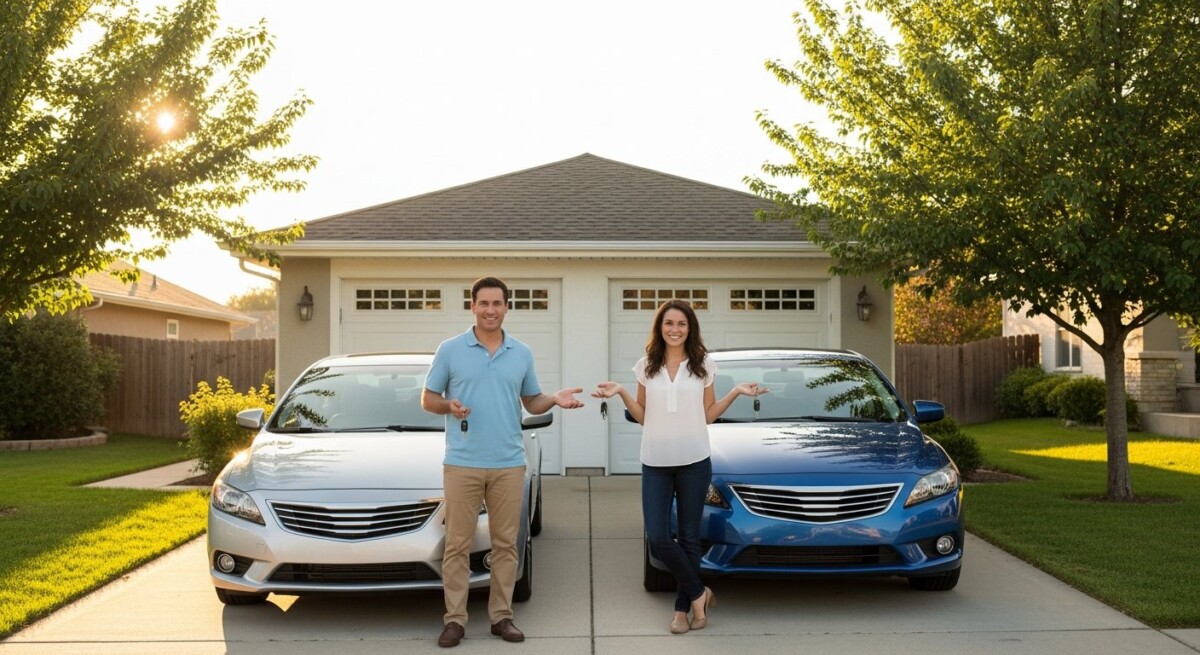
If you own more than one vehicle or share a household with other drivers, you may be leaving money on the table. Insuring multiple cars under one policy is one of the easiest ways to lower your total premium. Insurers reward loyalty and consolidated risk, which is why multi-vehicle discounts for car insurance can save families, couples, and even roommates hundreds of dollars per year. In this article, we will break down how these discounts work, who qualifies, and how you can maximize your savings without sacrificing coverage.
How Multi-Vehicle Discounts Actually Work
Multi-vehicle discounts are not a fixed percentage across all insurers. Each company calculates the discount based on its own underwriting rules. Typically, the discount applies when you insure two or more vehicles on the same policy. The logic is simple: a single household with multiple cars is less risky to insure than two separate households with one car each. Insurers see lower claim frequency per vehicle and lower administrative costs when they bundle policies.
For example, if you and your spouse each have a car, adding both to one policy often triggers a discount of 10% to 25% on the total premium. Some insurers apply the discount to the second vehicle only, while others apply it proportionally to all vehicles. The exact amount depends on factors like your driving record, the types of vehicles, and the state you live in.
In our guide on 6 Techniques to Reduce Car Insurance Premiums, we discuss additional ways to lower costs beyond bundling vehicles. That article complements the multi-vehicle approach by covering defensive driving courses, usage-based insurance, and annual payment discounts.
Who Qualifies for a Multi-Vehicle Discount?
Eligibility is broader than many people assume. You do not need to be married or own all the vehicles outright. Here are the most common qualifying scenarios:
- Spouses or domestic partners living at the same address with separate cars.
- Parents and teen drivers who insure the teen’s car along with their own.
- Roommates who co-own vehicles or list each other as additional drivers.
- Business owners with personal and commercial vehicles on the same policy.
- Retirees with a primary car and a seasonal or recreational vehicle.
It is important to note that all vehicles must be registered at the same address and the drivers must be listed on the policy. If a vehicle is owned by someone outside the household, it usually cannot be included. Also, the discount applies only to liability, collision, and comprehensive coverages, not to add-ons like roadside assistance or rental reimbursement. For more clarity on policy setup, read our article on Add a Driver to Car Insurance Easily to understand how adding household members affects your rates.
How Much Can You Save? Real-World Examples
To give you a concrete sense of savings, consider a typical family in Texas with two sedans. If each car were insured separately, the combined premium might be $2,400 per year. By combining them under one policy with a multi-vehicle discount of 15%, the total drops to $2,040, saving $360 annually. In states with higher average premiums like California or New York, the savings can exceed $500 per year.
The discount often stacks with other savings. Many insurers allow you to combine multi-vehicle discounts with bundling home and auto insurance, good driver discounts, and paperless billing credits. This stacking effect can reduce your premium by 30% or more. However, do not assume the discount is automatic. You must specifically ask for it when getting a quote or reviewing your policy.
When Multi-Vehicle Discounts Might Not Apply
There are exceptions. If one of the vehicles is a high-performance sports car or a classic car with limited mileage, the insurer may apply a different rating structure. Likewise, if one driver has a poor record with accidents or violations, the discount may be reduced or eliminated. Always compare the bundled premium against two separate policies to ensure you are truly saving. In some cases, separate policies with different insurers can be cheaper if one driver has a stellar record and the other is high-risk.
For specialized vehicles like antiques or classics, the discount structure varies. Our article on Are You Eligible for Car Insurance? Here’s All You Need To Know covers eligibility nuances that can affect multi-vehicle discounts for classic or seasonal vehicles.
Tips to Maximize Your Multi-Vehicle Discount
Getting the discount is one thing, but maximizing it requires a strategic approach. Follow these steps to ensure you are getting the best rate:
- Shop around every renewal period. Discount percentages vary widely. One insurer may offer 10%, while another offers 25% for the same profile. Get at least three quotes.
- Bundle other policies. Adding homeowners or renters insurance to the same carrier often increases the multi-vehicle discount or unlocks a separate loyalty discount.
- Maintain clean driving records. Accidents and tickets affect the entire policy, not just the at-fault driver. A single violation can reduce or nullify the discount.
- Review coverage limits consistently. If one vehicle is older and has low value, consider dropping collision and comprehensive on that car to lower the overall premium.
- Ask about usage-based discounts. Some insurers offer a telematics program that monitors driving habits. If all drivers are low-mileage and safe, the combined discount can be substantial.
After implementing these tips, review your policy details annually. Life changes like a teen moving out or selling a vehicle can affect eligibility. If you add a new car mid-policy, ask the insurer to recalculate the discount. Many companies will prorate the savings from the date of addition.
Common Myths About Multi-Vehicle Discounts
There is plenty of misinformation about how these discounts work. Let us clear up a few persistent myths:
Myth 1: All vehicles must be owned by the same person. Not true. As long as all vehicles are garaged at the same address and all drivers are listed on the policy, ownership can be split among household members. For instance, a car titled in your name and another titled in your spouse’s name can be on one policy.
Myth 2: The discount applies to every vehicle equally. Some insurers apply the full discount to the most expensive vehicle and a smaller discount to subsequent vehicles. Always ask how the discount is distributed.
Myth 3: You cannot get the discount if you have an RV or motorcycle on the same policy. Many insurers offer multi-vehicle discounts that include motorcycles, RVs, and even boats. Check with your agent, as these specialty vehicles sometimes have separate discount rules.
Myth 4: The discount is the same for two cars and five cars. In most cases, the discount increases with each additional vehicle up to a cap. Insuring three cars often yields a higher percentage than insuring two. However, the marginal savings per additional car diminish after the third or fourth vehicle.
How to Compare Multi-Vehicle Quotes Effectively
Comparison shopping is essential because discount percentages and base rates vary. When you request quotes, ensure you provide identical coverage limits, deductibles, and policy terms across all insurers. Otherwise, you are comparing apples to oranges. Use the same liability limits, comprehensive and collision deductibles, and add-ons like rental car coverage.
Work with an independent agent or use an online comparison tool that aggregates multiple carriers. This saves time and reveals which insurer values multi-vehicle households the most. Pay attention to the total premium, not just the discount percentage. A higher discount on a higher base rate may still cost more than a lower discount on a lower base rate. For a deeper dive into comparing policies, check our article on 10 Car Insurance Terminologies Everyone Should Know to understand key terms like premium, deductible, and limit.
Frequently Asked Questions
Can I get a multi-vehicle discount if I insure my car and my motorcycle together?
Yes, many insurers include motorcycles under their multi-vehicle discount policy. However, some carriers treat motorcycles as a separate line and may offer a smaller discount. Always confirm with the insurer before assuming the discount applies.
Does the multi-vehicle discount apply if I have a teen driver on the policy?
Yes, but the teen’s driving record and experience will affect the overall premium. The discount still applies, but the teen’s high-risk status may reduce the net savings. Consider adding the teen as an occasional driver on the cheaper vehicle to minimize the impact.
Will my discount change if I add a third vehicle?
Typically, adding a third vehicle increases the total discount, but the incremental savings may be smaller than the first additional vehicle. Some insurers cap the discount at three or four vehicles. Ask for a revised quote before finalizing the addition.
Can I combine multi-vehicle discounts with other discounts?
Absolutely. Most insurers allow stacking. Common combinations include multi-vehicle plus good driver, multi-vehicle plus bundling home and auto, and multi-vehicle plus paperless billing. Stacking can reduce your total premium by 30% or more.
What happens to my discount if I sell one of the vehicles?
The discount will be recalculated based on the remaining vehicles. If you drop from two cars to one, the multi-vehicle discount disappears entirely. You should shop for a new single-car policy at that point to ensure you are not overpaying.
Putting It All Together
Multi-vehicle discounts for car insurance are a straightforward way to lower your annual premiums without reducing coverage. By understanding eligibility rules, comparing quotes, and stacking complementary discounts, you can save hundreds of dollars each year. The key is to review your policy at every renewal and after any life change that affects your household vehicles. Whether you are adding a teen driver, buying a second car, or moving in with a partner, always ask your insurer how the multi-vehicle discount applies. If your current carrier does not offer competitive savings, do not hesitate to switch. The savings are too significant to ignore.