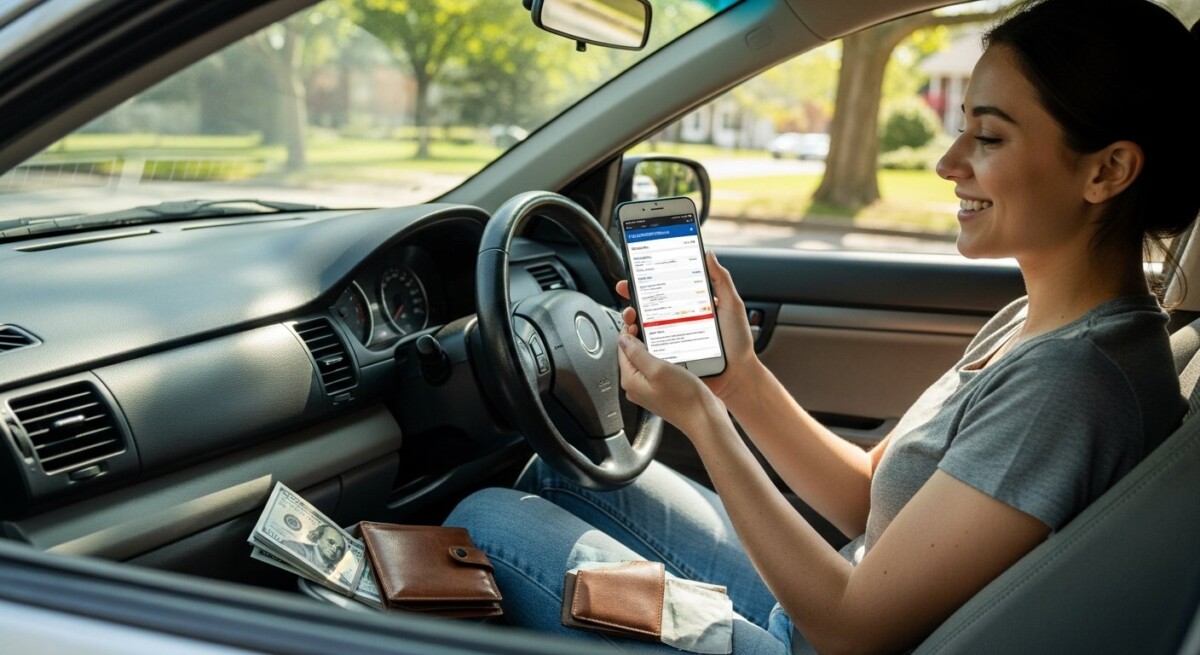
You want financial protection for your car, but you also need to keep your monthly budget intact. Finding cheap auto insurance with collision coverage often feels like a contradiction: how can you get robust protection without paying a premium that strains your wallet? The good news is that collision coverage does not have to be expensive. With the right strategy, you can secure a policy that repairs or replaces your vehicle after an accident without draining your savings. This article breaks down exactly how to balance cost and coverage, so you can drive with confidence and peace of mind.
Understanding Collision Coverage and Why It Matters
Collision coverage pays for damage to your vehicle when you hit another car, a tree, a guardrail, or any other object. It also covers single-car accidents like rollovers. This is different from liability insurance, which only pays for damage you cause to others. Without collision coverage, you would have to pay out of pocket for your own repairs after an at-fault accident. For many drivers, that risk is too high.
However, collision coverage is not required by state law. Lenders and lessors typically require it if you finance or lease a vehicle. Once you pay off the car, you can choose to drop it. But even for older cars, the cost of a major repair can easily exceed the annual premium. In our guide on 10 expert tips for getting the best deal on auto insurance, we explain how to evaluate whether collision coverage is worth keeping based on your vehicle’s actual cash value.
Key Factors That Influence the Cost of Collision Coverage
Insurance companies use several variables to calculate your collision premium. Understanding these factors helps you target the areas where you can save the most. Here are the primary elements that affect your rate:
- Vehicle make, model, and age: Expensive cars cost more to repair, so they have higher collision premiums. Older vehicles with low market value may not need collision coverage at all.
- Deductible amount: Choosing a higher deductible lowers your premium. A common trade-off is moving from a $500 deductible to a $1,000 deductible, which can reduce your rate by 15 to 30 percent.
- Driving history: Accidents and tickets on your record signal higher risk, leading to higher premiums. A clean record earns you lower rates.
- Location: Urban areas with dense traffic and higher theft rates typically have higher collision premiums than rural areas.
- Annual mileage: The more you drive, the greater your chance of an accident. Low-mileage drivers often qualify for discounts.
Each of these factors interacts with the others. For example, a driver with a clean record who drives a modest sedan and selects a $1,000 deductible will pay far less than a driver with a recent accident who drives a luxury SUV with a $250 deductible. By focusing on the variables you can control, you can significantly lower your premium.
Practical Strategies for Lowering Your Collision Premium
Finding cheap auto insurance with collision coverage requires a systematic approach. Start by shopping around and comparing quotes from multiple insurers. Rates can vary by hundreds of dollars for the same coverage. Online comparison tools make this easy, but you should also contact local independent agents who can access carriers you might not find on your own.
Next, look for discounts that apply to collision coverage. Many insurers offer a multi-policy discount if you bundle auto insurance with homeowners or renters insurance. Safe driver discounts, good student discounts, and discounts for completing a defensive driving course can also reduce your premium. Some companies even offer a discount for paying your annual premium upfront instead of monthly. In our article about 1st auto insurance and lowering your monthly payments now, we detail specific discount strategies that work for most drivers.
Another powerful tactic is to adjust your deductible. Increasing your deductible from $500 to $1,000 can lower your collision premium significantly. If you have an emergency fund that can cover the higher deductible, this is a smart way to save. Just make sure you can actually afford the out-of-pocket amount if you need to file a claim. A $2,000 deductible might save you even more, but only choose it if you have the cash readily available.
When Dropping Collision Coverage Makes Sense
There are situations where paying for collision coverage is not cost-effective. A general rule of thumb is that if your annual collision premium exceeds 10 percent of your vehicle’s actual cash value, you should consider dropping it. For example, if your car is worth $5,000 and your collision premium is $600 per year, the coverage is borderline. If the premium is $800 or more, you are better off self-insuring by saving that money in an emergency fund.
Another scenario is when your car is old and has high mileage. Even a minor collision could result in the insurance company declaring the car a total loss. In that case, the payout would be limited to the car’s depreciated value, which might be only a few thousand dollars. Weighing the potential payout against the annual premium helps you make a rational decision. For drivers with poor credit, the impact on rates can be even more pronounced. Our guide on the 5 best auto insurance for bad credit drivers in 2026 offers tailored advice for those facing higher premiums due to credit history.
How Your Deductible Choice Affects Total Cost
Your deductible is the amount you pay before insurance kicks in. Choosing the right deductible is one of the most impactful decisions you can make when trying to find cheap auto insurance with collision coverage. Lower deductibles mean higher premiums, and vice versa. Here is a realistic comparison for a typical driver:
- $250 deductible: Highest premium, but lowest out-of-pocket cost at claim time. Best for drivers who cannot afford a large unexpected expense.
- $500 deductible: Moderate premium and moderate out-of-pocket cost. This is the most common choice among drivers.
- $1,000 deductible: Lower premium, higher out-of-pocket cost. Ideal for drivers with an emergency fund who want to save on monthly payments.
- $2,000 deductible: Lowest premium, highest out-of-pocket cost. Only suitable for drivers with significant savings who rarely file claims.
The difference between a $500 and $1,000 deductible can save you $150 to $300 per year on collision coverage alone. Over three years, that is $450 to $900 in savings. If you go three years without an accident, you come out ahead even if you have to pay the higher deductible once. This kind of analysis helps you choose a deductible that balances risk and reward.
Comparing Insurers and Reading Policy Details
Not all insurance companies treat collision coverage the same way. Some have more generous claims processes, while others are stricter about repair shops and parts. When you compare quotes, look beyond the premium. Check each insurer’s financial strength rating (A.M. Best, Moody’s, or Standard & Poor’s) to ensure they can pay claims. Also, read reviews about their claims handling and customer service.
Pay attention to the policy language regarding actual cash value versus replacement cost. Collision coverage typically pays actual cash value, which means depreciation is deducted. If you have a newer car, you might want to consider gap insurance or new car replacement coverage. Our resource on 5 factors that directly affect your auto insurance rates explains how vehicle depreciation and other elements interact with your premium.
Another detail to check is whether the policy includes a diminishing deductible feature. Some insurers reduce your deductible by a set amount for every year you go without an accident. This can turn a $500 deductible into $0 over time, giving you an incentive to drive safely. Not all companies offer this, but it is worth asking about when you shop.
Leveraging Technology and Usage-Based Programs
Many insurers now offer usage-based insurance (UBI) programs that track your driving habits through a smartphone app or a device plugged into your car. If you are a safe driver, these programs can significantly lower your collision premium. The insurer monitors factors like hard braking, rapid acceleration, speed, and time of day. Drivers who demonstrate safe habits can earn discounts of 10 to 30 percent on their total premium, including collision coverage.
Before enrolling, consider your privacy comfort level. Most programs give you a baseline discount just for signing up, and the tracking data is used only for rating purposes. If you tend to drive late at night or have a heavy foot, UBI might increase your rate instead of lowering it. But for cautious drivers, it is one of the best ways to secure cheap auto insurance with collision coverage.
Frequently Asked Questions
Is collision coverage required by law?
No, collision coverage is not required by any state. However, if you finance or lease your vehicle, the lender or lessor will almost certainly require it as part of your loan agreement.
Can I get collision coverage on an old car?
Yes, you can buy collision coverage for any vehicle, regardless of age. But if the car’s value is very low, the premium may not be worth it. Many drivers drop collision once a car is worth less than $3,000 to $4,000.
Does collision coverage cover theft or vandalism?
No, theft and vandalism are covered under comprehensive coverage, not collision. Comprehensive and collision are often bundled together, but they are separate coverages.
How much does collision coverage add to a policy?
On average, collision coverage adds 30 to 50 percent to your total premium, but this varies widely by vehicle, driver, and location. Shopping around can help you find a lower rate.
Your Next Steps Toward Affordable Protection
Securing cheap auto insurance with collision coverage is achievable when you take a strategic approach. Start by evaluating your vehicle’s value and your personal risk tolerance. Then, shop multiple insurers, compare deductibles, and ask about every available discount. Consider usage-based programs if you are a safe driver, and do not hesitate to adjust your coverage as your car ages. The key is to stay informed and review your policy annually. With the right plan, you can protect your vehicle without overpaying. If you are ready to compare rates and find a policy that fits your budget, call 833-214-7506 to speak with a licensed agent who can help you navigate your options.