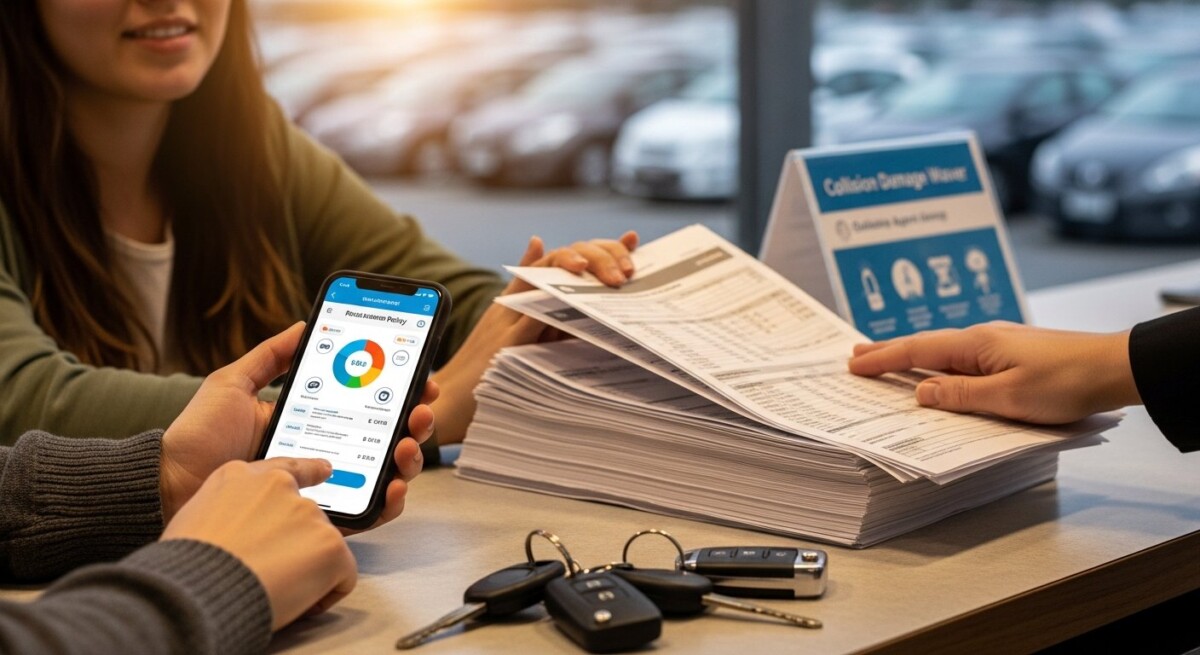
Renting a car often comes with a confusing array of insurance options at the counter. You are asked if you want the collision damage waiver, liability coverage, or personal accident insurance, all while a line forms behind you. Many drivers either pay for redundant coverage or skip everything and hope for the best. Temporary car insurance for rentals offers a middle ground that can protect your wallet and your peace of mind. Instead of relying on expensive rental agency policies or risking a gap in coverage, you can secure short-term protection tailored to your trip. This approach works well for weekend getaways, business trips, or even a few days while your own vehicle is in the shop.
Understanding how this type of insurance works and when to use it can help you avoid common pitfalls. Many drivers overpay at the rental counter because they do not realize that their existing auto policy or credit card benefits already provide some coverage. Others assume they are fully covered when they are not. Temporary car insurance for rentals fills these gaps without requiring a long-term commitment. In this article, we break down the key scenarios where short-term rental insurance makes sense, how to compare costs, and what to watch for when reading the fine print.
What Is Temporary Car Insurance for Rentals?
Temporary car insurance for rentals is a short-term policy that covers a rental vehicle for a specific period, usually from one day up to 28 days. Unlike standard annual auto insurance, which bundles coverage for a single vehicle you own, this product is designed for non-owned vehicles you drive temporarily. It typically includes liability coverage, collision coverage, and comprehensive coverage, though the exact terms vary by provider. Some policies also offer roadside assistance or personal effects coverage.
The main advantage is flexibility. If you only need a rental car for a weekend road trip or while your car is being repaired, you do not have to pay for a full year of insurance you will not use. Instead, you pay only for the days you drive. This can be significantly cheaper than buying coverage from the rental agency, which often charges a daily rate that adds up quickly. For example, a rental agency might charge $25 per day for a collision damage waiver. Over a seven-day trip, that is $175. A temporary policy from an independent insurer might cost $40 to $80 for the same period, depending on your driving record and coverage limits.
It is important to note that temporary car insurance for rentals is not the same as a non-owner car insurance policy. Non-owner policies are annual policies for people who do not own a car but drive occasionally, such as those who use car-sharing services. Temporary rental insurance is a short-term product for a specific rental event. Both have their place, but for a single rental, the temporary option is usually more cost-effective.
When Should You Consider Temporary Rental Insurance?
Not every rental situation calls for a separate temporary policy. In some cases, your existing auto insurance or credit card benefits already provide sufficient coverage. However, there are several scenarios where buying temporary car insurance for rentals is a smart financial move.
- You have minimal liability coverage on your personal policy. If you carry state-minimum liability limits, a rental accident could leave you personally responsible for damages above those limits. A temporary policy can add an extra layer of protection.
- Your credit card does not offer primary rental coverage. Many credit cards offer secondary coverage, which only kicks in after your personal insurance pays. Primary coverage, which pays first, is less common. If your card provides secondary coverage, you still face a deductible and potential premium increase on your personal policy. Temporary insurance can act as primary coverage.
- You are renting a luxury or expensive vehicle. The cost to repair or replace a high-end rental car can be substantial. Even if your personal policy covers rental cars, the payout limits might not be enough. A temporary policy with higher limits can protect you from a large out-of-pocket expense.
- You are traveling internationally. Your U.S. auto insurance policy typically does not cover you in other countries, except sometimes in Canada and Mexico. Temporary car insurance for rentals can provide coverage abroad, especially in countries where rental agencies require proof of insurance.
- You do not own a car and have no personal auto insurance. If you do not drive regularly but need a rental for a few days, temporary insurance is the most practical option. You avoid buying a full non-owner policy for a single trip.
Each of these scenarios carries different risks. For instance, if you have a robust personal policy with high liability limits and comprehensive and collision coverage, you may already be covered for rental cars. But if you are trying to keep your premium low and chose a high-deductible plan, the gap in coverage could be significant. Evaluating your current policy is the first step. In our guide on choosing the best affordable auto insurance, we explain how to assess your coverage needs and find a policy that balances cost and protection.
How to Compare Temporary Rental Insurance Options
When shopping for temporary car insurance for rentals, you need to compare more than just the price. Coverage limits, deductibles, and exclusions vary widely. Here is a framework to evaluate your options.
Step 1: Check your existing coverage first. Before buying anything, review your current auto insurance policy. Look for language about rental vehicle coverage. Many standard policies extend liability, collision, and comprehensive coverage to rental cars, but the limits and deductibles are the same as on your own car. If you have a $1,000 deductible, you will pay that amount if the rental is damaged. Also check if your policy covers loss of use fees charged by the rental agency while the car is being repaired. Some temporary policies include this, but many personal policies exclude it.
Step 2: Compare the daily rate versus the total trip cost. Temporary insurers often quote a daily rate, but some have a minimum number of days. Always calculate the total cost for your entire rental period. For example, a policy that costs $12 per day with a 5-day minimum will cost you $60 even if you only need the car for 3 days. Also watch for administrative fees or cancellation penalties.
Step 3: Understand what is covered and what is not. Most temporary rental policies cover collision damage to the rental vehicle and liability for injury or damage to others. However, they may exclude certain vehicle types like moving trucks, luxury cars, or off-road vehicles. They may also exclude coverage if the rental is used for business purposes or if additional drivers are not listed on the policy. Read the policy documents carefully.
Step 4: Verify the claims process. In the event of an accident, you need to know how to file a claim. Some temporary insurers have a 24/7 claims line and will handle the rental agency directly. Others require you to pay out of pocket and submit receipts for reimbursement. The latter can be a hassle, especially if you are traveling. Look for a provider with a straightforward claims process and good customer reviews.
For first-time renters who are also new to buying insurance, understanding these details is critical. Our first-time driver’s guide to affordable auto insurance offers practical advice on navigating coverage options and avoiding common mistakes.
Common Myths About Temporary Rental Insurance
Several misconceptions can lead drivers to either skip needed coverage or pay for unnecessary protection. Let us address the most common ones.
Myth 1: Your credit card always covers rental cars. While many credit cards offer rental car insurance, the coverage is often secondary and may only apply to collision damage. Liability coverage is rarely included. Additionally, some cards exclude certain vehicle types or countries. Always read your card’s benefits guide before relying on it.
Myth 2: Rental agency insurance is always a rip-off. Rental agencies charge high daily rates, but their coverage is convenient and often includes loss of use and towing. For a very short rental (one day), the agency’s insurance might be cheaper than buying a separate temporary policy. However, for longer rentals, the temporary policy usually wins on price.
Myth 3: Temporary insurance is only for people without their own car. As discussed earlier, even if you own a car, your personal policy might not provide adequate coverage for a rental, especially if you have low limits or a high deductible. Temporary insurance can supplement your existing coverage without raising your premium permanently.
Myth 4: You can buy temporary insurance at the rental counter. Some rental agencies offer their own short-term insurance, but it is not the same as a standalone temporary policy. The agency’s product is typically a waiver or damage protection plan, not a full insurance policy. It may not cover liability or medical payments. If you want true insurance, you need to buy it from an insurance company before you pick up the car.
How to Purchase Temporary Car Insurance for Rentals
Buying temporary car insurance for rentals is straightforward if you know where to look. Start by contacting your current auto insurer. Many major carriers offer short-term add-ons or endorsements that extend your coverage to a rental car. This is often the cheapest option because you are not buying a separate policy. However, it may not be available in all states or for all rental situations.
If your insurer does not offer this, consider specialty insurers that focus on temporary coverage. Companies like Allstate, Progressive, and GEICO have programs for rental cars, but you may need to call and ask specifically. Independent online brokers also sell temporary policies from multiple carriers, allowing you to compare quotes side by side. When you get a quote, you will need to provide the rental dates, the type of vehicle, your driving history, and your ZIP code. Some providers require you to purchase the policy before you pick up the rental, so plan ahead.
Another option is to use a membership benefit. Organizations like AAA, AARP, and some credit unions offer discounted rental insurance to their members. If you belong to such an organization, check their benefits page. You might already have access to temporary coverage at a reduced rate.
For college students who rent cars occasionally, the cost of temporary insurance can be a concern. Many students are on a budget and might be tempted to skip coverage. However, the financial risk of an accident without insurance is far greater than the premium. Our article on car insurance for college students covers three essential aspects that can help students find affordable options without sacrificing protection.
Frequently Asked Questions
Does temporary car insurance for rentals cover multiple drivers?
Some policies allow you to add additional drivers for an extra fee. Others cover anyone who drives the rental with your permission. Check the policy terms before the rental period begins. If you plan to share driving duties, make sure all drivers are listed on the policy to avoid a claim denial.
Can I buy temporary insurance after I have already rented the car?
Most insurers require you to purchase the policy before the rental period starts. A few may allow you to buy coverage retroactively within 24 hours, but this is rare. It is best to arrange coverage in advance.
Will a claim on a temporary policy raise my regular insurance rates?
No, because a temporary policy is a separate contract. Claims filed under a temporary policy do not affect your personal auto insurance premium. However, if the claim involves your personal insurance as secondary coverage, that claim could impact your rates.
Is temporary rental insurance valid in all 50 states?
Coverage varies by state. Some insurers offer temporary policies only in certain states. If you are renting a car in a state different from your home state, confirm that the policy covers you in that location. International rentals require a separate international policy.
How much does temporary car insurance for rentals typically cost?
Prices range from $5 to $30 per day, depending on your age, driving record, coverage limits, and the rental vehicle’s value. A middle-aged driver with a clean record might pay $10 per day for a standard sedan. Younger drivers or those with accidents on their record may pay more.
Final Thoughts on Protecting Your Rental
Choosing the right coverage for a rental car does not have to be stressful. By understanding your existing policy, evaluating the specific risks of your trip, and comparing temporary car insurance for rentals against the rental agency’s options, you can make an informed decision that saves money and provides real protection. The key is to plan ahead rather than making a snap decision at the counter. Whether you are a frequent traveler or someone who rents a car once a year, taking a few minutes to review your coverage can prevent a costly mistake. For veterans who qualify for special discounts, combining these savings with a short-term policy can be especially beneficial. Our guide on auto insurance discounts and benefits for veterans in 2026 highlights additional ways to lower your overall insurance costs. Remember, the cheapest option is not always the best, but with careful comparison, you can find coverage that fits both your budget and your needs. Call our team at 833-214-7506 for personalized assistance with your rental insurance questions.