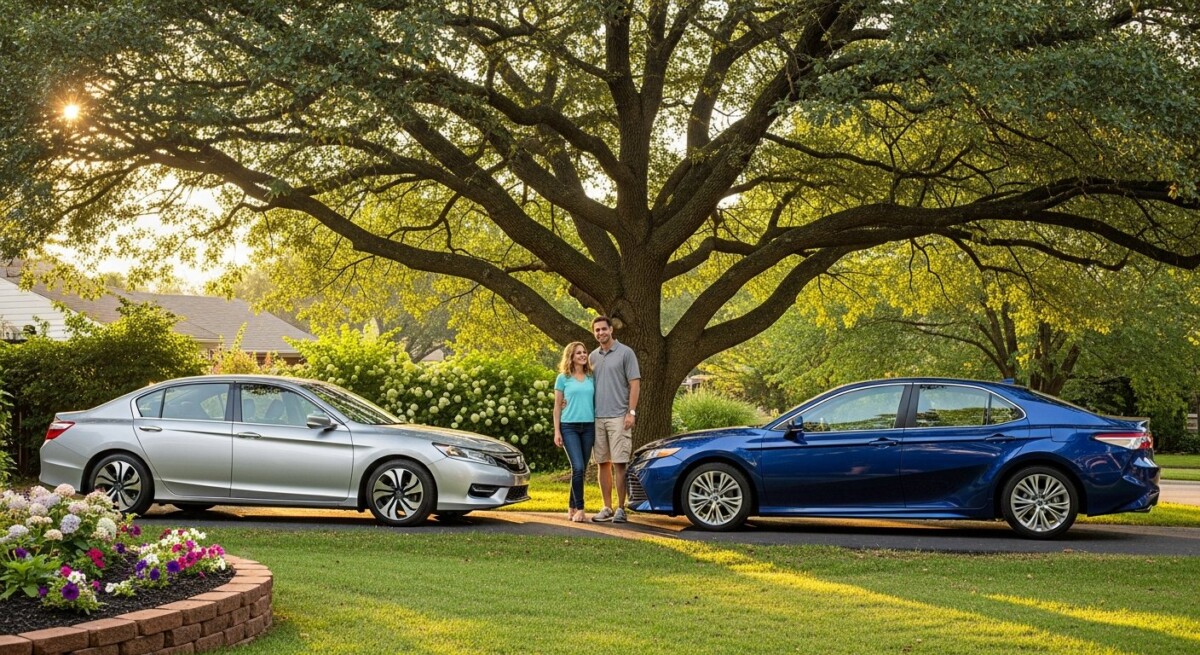
If your household has two or more vehicles, you may be overpaying for auto insurance without realizing it. Insurers reward policyholders who bundle multiple cars under a single policy with significant savings. This is known as a multi-car insurance discount. It is one of the most straightforward ways to reduce your premiums while keeping all your vehicles covered under one roof. Instead of managing separate policies with different renewal dates and varying rates, you can consolidate your coverage and unlock savings that might surprise you.
Many drivers assume that insuring each car separately is cheaper or that the discount is minimal. In reality, most major carriers offer a discount ranging from 10% to 25% for adding a second vehicle. The savings can grow as you add more cars, making it a smart strategy for families, couples, or anyone with more than one vehicle. Beyond the discount, you also gain the convenience of a single bill, one renewal date, and streamlined claims handling.
Understanding Multi-Car Insurance Discounts
A multi-car insurance discount applies when you insure two or more vehicles on the same policy with the same insurance company. The discount is typically applied to each vehicle, not just the additional ones. This means your primary car also benefits from a lower rate. The logic behind the discount is simple: insurers view multi-car households as lower risk because they tend to be more stable, have multiple licensed drivers, and spread mileage across vehicles.
For example, if you and your spouse each drive a separate car, putting both on one policy can reduce your combined premium by hundreds of dollars per year. Some insurers also waive certain fees or offer additional perks like accident forgiveness for multi-car policies. However, not all discounts are created equal. The exact percentage depends on your insurer, state regulations, and the specific vehicles involved.
Who Qualifies for This Discount?
Most drivers with two or more vehicles qualify, but there are conditions. All vehicles must be registered at the same address and titled in the names of household members. You cannot combine cars owned by different families living at separate addresses. Additionally, all drivers in the household must be listed on the policy. Teen drivers and drivers with poor records are included, though they may reduce the overall discount depending on the insurer’s risk assessment.
Some insurers also require that all vehicles be used primarily for personal use. If one car is used for business or commercial purposes, it may not qualify for the multi-car discount. In our guide on Auto Insurance Discounts and Benefits for Veterans in 2026, we explain how military families can stack this discount with other savings opportunities.
How Much Can You Save with Multi-Car Discounts?
The savings vary, but industry data shows that the average multi-car discount ranges from 10% to 25% per vehicle. For a household with two cars paying a combined annual premium of $2,500, a 20% discount saves $500 per year. With three cars, the savings can exceed $800 annually. These numbers make it one of the most impactful discounts available.
However, the discount is often calculated differently by each insurer. Some apply a flat percentage to all vehicles, while others discount only the additional cars. A few insurers offer a lower per-vehicle rate from the start, meaning the discount is built into the base premium. To get the best deal, you should compare quotes from multiple carriers using the same coverage levels. For families looking to maximize savings, our article on Best Multi-Car Insurance Policies for Families in 2026 provides a detailed breakdown of top-rated options.
Stacking Multi-Car Discounts with Other Savings
The real power of a multi-car policy comes from combining it with other discounts. Most insurers allow you to stack multiple discounts on top of each other, which can significantly reduce your overall premium. Here are common discounts that pair well with multi-car savings:
- Bundling discount: Combine your auto policy with homeowners or renters insurance for an additional 10-15% off.
- Safe driver discount: Maintain a clean driving record for three to five years to qualify for extra savings.
- Good student discount: If you have a teen driver on the policy, a B average or higher can reduce their portion of the premium.
- Low mileage discount: If your household drives fewer than the average number of miles per year, you may qualify for a lower rate.
When stacking discounts, it is important to review your policy annually. Discounts can expire or change based on your driving habits. For example, if a teen driver moves out or a vehicle is sold, your multi-car discount may decrease. Regularly comparing quotes ensures you are not losing savings unnecessarily.
Common Myths About Multi-Car Insurance
Many drivers hesitate to pursue a multi-car discount because of misconceptions. One common myth is that adding a second car will double your premium. In reality, the cost per vehicle usually drops because the insurer spreads the risk across multiple assets. Another myth is that all vehicles must be identical or that older cars cannot be added. The truth is that you can insure a new SUV, a classic sedan, and an old pickup truck on the same policy.
Some people also believe that multi-car policies are only for married couples. While married couples are a typical audience, any household with multiple vehicles can qualify. Roommates, siblings living together, and parents with adult children at home can all benefit. For Atlanta residents specifically, our guide on Best Multi-Car Insurance Quotes for Atlanta Families in 2026 highlights local carriers that offer competitive rates.
How to Get the Best Multi-Car Insurance Rate
Securing the best rate requires more than just asking for a discount. You need to compare policies, adjust coverage levels, and review your drivers. Follow these steps to maximize your savings:
- Gather current policy details: Note your current coverage limits, deductibles, and premium for each vehicle.
- Shop around: Get quotes from at least three insurers. Provide the same coverage limits for each vehicle to compare apples to apples.
- Ask about all discounts: When speaking with agents, specifically ask about multi-car, bundling, and safe driver discounts.
- Consider raising deductibles: Increasing your comprehensive and collision deductibles from $500 to $1,000 can lower your premium by 10-20%.
- Review your drivers: Remove any drivers who no longer live in your household or who have their own insurance.
Once you have a few quotes, pay attention to the total premium, not just the discount percentage. A lower discount with a lower base rate may be cheaper than a higher discount with a high base rate. Also, check the financial strength of the insurer using ratings from A.M. Best or Standard & Poor’s. A cheap policy is worthless if the company cannot pay claims.
When Multi-Car Insurance Doesn’t Make Sense
While multi-car policies are generally beneficial, there are situations where separate policies might be better. If one driver has a poor record, adding them to a multi-car policy could raise the rates for everyone. In such cases, it may be cheaper to insure the high-risk driver on a separate policy with a non-standard insurer. Similarly, if you have a vehicle that is rarely driven or used only for storage, you might consider dropping comprehensive and collision coverage on that car, which could lower the combined premium.
Another scenario involves classic or collector cars. Specialty insurers often offer better rates and broader coverage for antique vehicles than standard carriers. If you have a classic car, you might keep it on a separate policy with a specialty insurer while insuring your daily drivers on a multi-car policy. Understanding these nuances requires knowledge of insurance terminology. Our resource on 10 Car Insurance Terminologies Everyone Should Know can help you navigate these decisions with confidence.
Frequently Asked Questions
Can I get a multi-car discount if my cars are insured with different companies?
No. The discount only applies when all vehicles are on the same policy with the same insurer. However, you can switch all vehicles to one company to qualify.
Do multi-car discounts apply to motorcycles or RVs?
Some insurers extend the discount to motorcycles, RVs, and boats if they are added to the same policy. Check with your provider to see if they offer multi-vehicle discounts for non-car vehicles.
Will adding a teen driver increase my rate even with the discount?
Adding a teen driver will increase your premium, but the multi-car discount can offset some of that increase. The overall cost is usually lower than insuring the teen on a separate policy.
How often should I review my multi-car policy?
Review your policy at least once a year or whenever a major life event occurs, such as a child moving out, a marriage, or a vehicle purchase. This ensures you are still getting the best rate.
Can I remove a car from a multi-car policy mid-term?
Yes. If you sell a vehicle, you can remove it from the policy. Your premium will be adjusted, and you will receive a refund for the unused portion. The multi-car discount will decrease, but your remaining vehicles will still benefit from a lower rate than if they were on separate policies.
Multi-car insurance discounts are a proven way to lower your auto insurance costs without sacrificing coverage. By consolidating your vehicles under one policy, you gain convenience, potential savings of 10-25%, and the ability to stack other discounts. Whether you are a two-car family or a household with multiple drivers, taking the time to compare multi-car quotes can lead to significant annual savings. Start by reviewing your current policy, then shop around to see how much you could save. With the right approach, you can protect all your vehicles while keeping more money in your pocket.