
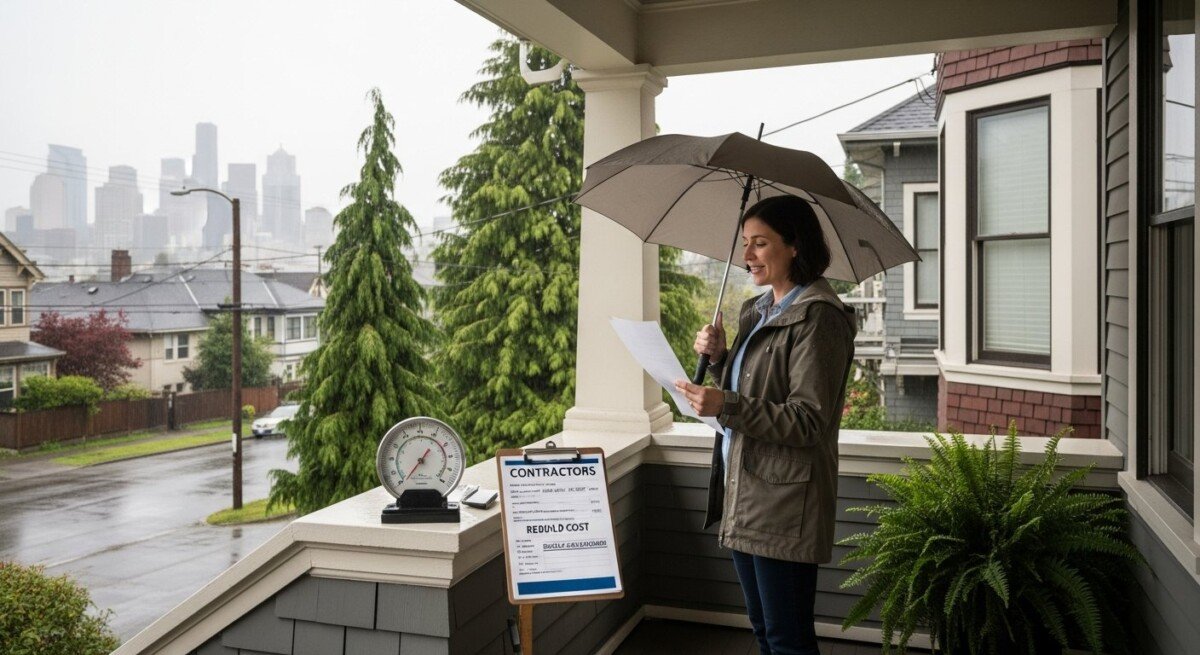
Getting a Home Insurance Quote in Seattle for 2026
Get a tailored home insurance quote in Seattle for 2026 and protect your investment. Call 833-214-7506 for expert guidance on coverage.

By Callum Rivers
As a Seattle homeowner, you know that protecting your investment is non-negotiable. The Emerald City’s unique blend of natural beauty and urban density comes with specific risks, from seismic activity and heavy rainfall to evolving urban challenges. Looking ahead to 2026, securing the right home insurance quote in Seattle requires forward-thinking. Premiums and policy details are shaped by a complex matrix of local risk factors, construction costs, and regulatory changes. This guide will help you navigate the Seattle insurance landscape for 2026, ensuring you get comprehensive coverage at a competitive price without any costly surprises.
Understanding Seattle’s Unique Insurance Landscape for 2026
Seattle is not a generic insurance market. Several localized factors will directly influence your home insurance quote in Seattle for 2026. First, the region’s seismic risk is a primary consideration for insurers. While standard policies exclude earthquake damage, the threat influences overall risk models and makes separate earthquake insurance a critical, though costly, addition. Second, the city’s famously wet climate contributes to mold, water damage, and landslide risks, particularly in neighborhoods with steep slopes or poor drainage. Third, the continued high cost of construction and labor in the Puget Sound area means your dwelling coverage limit must be adequate to rebuild your home at 2026 prices, not its market value. Finally, urban factors like proximity to fire stations and crime statistics will also play a role in your rate. Understanding these elements is the first step to getting an accurate quote.
Key Factors That Will Shape Your 2026 Quote
When you request a home insurance quote in Seattle for 2026, insurers will evaluate a detailed set of criteria. Your home’s age, construction materials (with a premium for earthquake-resistant features), and square footage are foundational. The roof’s age and condition are heavily weighted due to our rainfall. Your claims history and credit-based insurance score (where permitted) are significant personal factors. Crucially, your chosen deductible, the amount you pay out-of-pocket on a claim, has a major inverse relationship with your premium: a higher deductible typically means a lower annual cost. You must also decide on coverage amounts for personal property and liability. Underestimating these can be as dangerous as underinsuring the structure itself. For a deeper dive into balancing cost and protection, our resource on finding cheap auto and home insurance that actually protects you offers valuable strategies.
The Strategic Advantage of Bundling Policies
One of the most effective ways to optimize your home insurance quote in Seattle for 2026 is to bundle your home and auto policies with the same carrier. Insurers reward customer loyalty with multi-policy discounts, which can lead to substantial savings, often between 10% and 25% off the total premium. Beyond the financial benefit, bundling simplifies your financial life. You have one point of contact, one renewal date, and one bill to manage. In the event of a complex claim that involves both your home and auto, such as a fallen tree damaging your car and roof, dealing with a single insurer can streamline the process significantly. The benefits of bundling auto and home insurance extend beyond mere convenience to create a more cohesive safety net.
How to Accurately Prepare for a 2026 Quote
Being prepared is the key to an efficient and accurate quoting process. Gather essential information about your home before you start. This includes the year of construction, square footage, types of heating and plumbing systems, and the roof’s installation date. Create a home inventory, a detailed list of your belongings with photos or videos and receipts if possible. This not only helps determine your personal property coverage needs but is invaluable if you need to file a claim. Decide on your target deductible based on your emergency fund capacity. Finally, research potential discounts you may qualify for, such as those for new roofs, security systems, smoke alarms, or being claim-free for a certain period. Having this information at hand will make comparing quotes from different insurers much more meaningful.
A Step-by-Step Guide to Getting and Comparing Quotes
To ensure you get the best value on your home insurance quote in Seattle for 2026, follow a systematic approach. Rushing this process can lead to inadequate coverage or overpaying.
Start by identifying at least three to five reputable insurers that operate in Washington state and have strong financial stability ratings from agencies like A.M. Best. Then, request quotes from each, ensuring you provide identical coverage parameters for an apples-to-apples comparison. Do not just compare the final premium, scrutinize the policy details.
- Request Identical Coverage: Provide each insurer with the same coverage limits, deductibles, and endorsements. This is the only way to truly compare price.
- Analyze the Coverage Details: Look beyond the price. Check for exclusions, limitations on high-value items, and the specifics of replacement cost versus actual cash value for belongings.
- Evaluate the Insurer: Research customer service reviews, claims satisfaction scores (from sources like J.D. Power), and financial strength. A cheap policy is worthless if the company is difficult to work with during a claim.
- Inquire About All Discounts: Ask each agent explicitly about every discount you might be eligible for, including bundling. This step alone can dramatically alter your final quote.
- Review Annually: Mark your calendar to review your policy and get new quotes before each renewal. The market changes, and your needs evolve.
Following these steps transforms you from a passive shopper into an informed consumer. For a comprehensive look at how bundling fits into this strategy, explore our guide on bundling auto and home insurance as a smart financial strategy.
Anticipating Changes and Trends for 2026
The insurance industry is dynamic. For 2026, Seattle homeowners should be aware of several trends. Climate change models predicting more intense atmospheric rivers could influence flood and water damage risk assessments, potentially making additional water backup coverage more expensive or necessary. Cyber insurance endorsements for home policies may become more common as smart home devices proliferate. Furthermore, Washington state may see regulatory adjustments that affect how insurers calculate rates or what they are required to cover. Staying informed about these broader trends allows you to ask smarter questions when discussing your policy. For instance, understanding how insurers view risk can help you make home improvements that might lower your premium, a topic also covered in our discussion on securing affordable yet robust coverage.
Frequently Asked Questions
Is earthquake insurance included in a standard home insurance quote in Seattle?
No, earthquake damage is excluded from standard homeowners policies. It must be purchased as a separate policy or endorsement, typically with a high deductible (often 10-25% of your dwelling coverage). Given Seattle’s seismic risk, it is a crucial consideration.
How much should I expect my premium to increase by 2026?
While individual increases vary, expect rates to rise in line with inflation in construction costs, labor, and reinsurance. Annual increases of 3% to 7% are common, but a major claim or a change in your neighborhood’s risk profile could lead to a larger jump.
Does my policy cover damage from landslides?
Landslide is generally excluded from standard policies, much like earthquake. It may sometimes be covered under certain conditions if it’s a result of another covered peril, like a burst water pipe, but earth movement itself is typically not covered.
Can I lower my quote by improving my home?
Absolutely. Upgrading your roof, installing a monitored security or fire alarm system, adding seismic retrofits like bolting your home to its foundation, and modernizing plumbing and electrical systems can all lead to discounts and a more favorable risk assessment.
How does my credit score affect my home insurance quote in Washington?
Washington state allows insurers to use credit-based insurance scores as one factor in determining premiums. Maintaining good credit can result in a significantly lower insurance quote, as statistics correlate good credit with fewer claims.
Securing the right home insurance is an act of responsibility and foresight. By understanding Seattle’s specific risks, preparing thoroughly, comparing quotes methodically, and planning for trends, you can lock in a policy for 2026 that offers true peace of mind. Your home is more than an asset, it’s your sanctuary, and protecting it with a tailored, robust insurance plan is one of the smartest investments you can make.