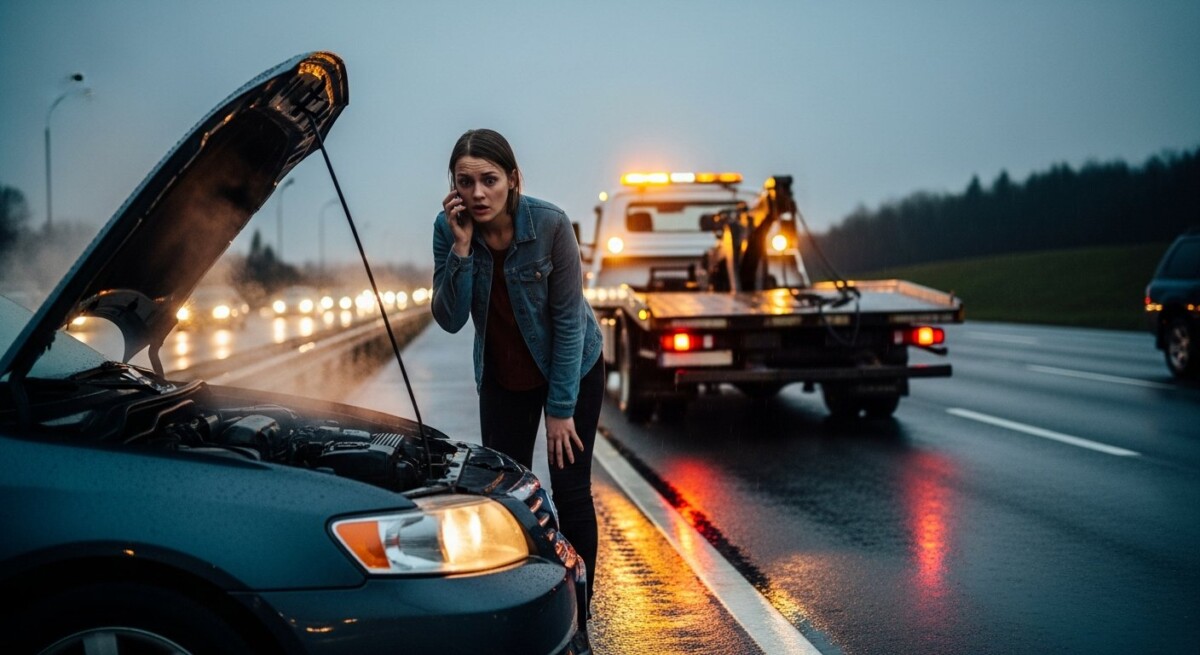
Your car sputters to a stop on a busy highway, steam billowing from the hood. In that moment of stress, your first thought is to get to safety, and your second is likely, “How do I get this car towed, and who’s paying for it?” For many drivers, the assumption is that their standard auto insurance policy will handle the bill. However, that assumption can lead to an expensive surprise. The reality is more nuanced: whether your auto insurance covers towing after a breakdown depends entirely on the specific coverages you have purchased. Understanding this distinction is crucial for financial planning and avoiding unexpected out-of-pocket costs when you’re already in a difficult situation.
Standard Auto Insurance Policies and Towing Coverage
A basic auto insurance policy, often referred to as a liability-only policy, is designed to meet state minimum requirements. It covers damages or injuries you cause to others in an at-fault accident. This foundational coverage does not include protection for your own vehicle’s mechanical failures or the costs associated with recovering it. Therefore, if you only carry state-mandated liability insurance and your car breaks down due to an engine failure, transmission issue, or a dead battery, you will be responsible for 100% of the towing costs. The insurance company views this as a mechanical maintenance issue, not a covered collision or comprehensive loss.
This is a critical point of confusion. Many drivers believe their mandatory insurance provides a broader safety net. It does not. The coverage extensions for your own vehicle’s repair and recovery are optional add-ons. This structure is why reviewing your policy declarations page is so important. If you see only terms like “Bodily Injury Liability,” “Property Damage Liability,” and possibly “Uninsured Motorist” coverage, you do not have towing assistance included. For a complete breakdown of what a standard policy entails, our resource on what an auto insurance policy covers provides a detailed overview.
How to Get Towing Coverage: Roadside Assistance and Towing
To ensure you are protected from towing expenses after a breakdown, you must proactively add specific coverage to your policy. Insurers typically offer this as “Roadside Assistance” or “Towing and Labor” coverage. It is an inexpensive endorsement, usually costing between $5 and $20 per year per vehicle, which makes it one of the most cost-effective additions you can make. This coverage is designed explicitly for incidents like breakdowns, not just accidents.
When you have this endorsement, your insurer will typically contract with a network of service providers. After a breakdown, you would call your insurance company’s dedicated roadside assistance number or use their mobile app to request service. The insurer then dispatches a tow truck or service vehicle to your location. The key benefit is that you pay nothing out-of-pocket at the scene, up to your policy’s limit. Common services under this coverage include towing to the nearest repair facility, jump-starts, flat tire changes, lockout service, and fuel delivery. It’s a comprehensive solution for common roadside emergencies.
Coverage Limits and Important Policy Details
Adding towing coverage is not a blank check. Policies come with specific limits and conditions that you must understand to avoid gaps. The most common limit is a maximum dollar amount per service call, such as $50, $75, or $100. Some policies may offer a certain number of free towing miles instead, like 10, 15, or 25 miles. If the tow exceeds that distance, you are responsible for the per-mile charge beyond the limit.
Other critical details are often buried in the fine print. There is usually a per-occurrence limit and an annual aggregate limit. For example, your policy might cover up to $100 per breakdown, but only for a maximum of four events per policy term. Furthermore, the cause of the breakdown matters. Coverage is generally for sudden mechanical failures, not for towing due to neglect. If your car breaks down because you failed to change the oil for 50,000 miles, the insurer may deny the claim. The tow destination is also specified: usually to the nearest qualified repair facility. Requesting a tow to your home or a specialist shop 50 miles away may not be fully covered.
Towing Coverage in Accident Scenarios
The coverage scenario changes significantly if your vehicle needs a tow after a covered accident. If you have collision coverage on your policy and you are in an accident, the towing cost to a repair shop or salvage yard is typically covered as part of the claim. In this case, it’s not the roadside assistance endorsement at work, but rather a necessary expense to facilitate the repair process for a covered loss. The tow cost is usually included in the overall claim settlement.
However, this integration is not always seamless. Some policies may still apply your separate towing coverage limits first, even for accident-related tows. The best practice is to notify your insurer immediately after an accident. They will guide you on the approved towing process, often directing you to a network provider to manage costs and ensure the vehicle goes to a preferred shop for an estimate. This coordination can prevent you from using a costly tow service that may not be fully reimbursed. Understanding the full scope of your protections is key to finding the best auto insurance for your specific needs and risk profile.
Practical Steps at the Scene of a Breakdown
Knowing what to do when your car breaks down can save you money and stress. Your first action should always be to ensure your safety: pull as far off the road as possible, turn on your hazard lights, and exit the vehicle on the side away from traffic if it’s safe to do so. Then, consult your insurance documents, either the physical card in your glove box or your insurer’s mobile app. Look for the specific roadside assistance phone number. Do not just call the main claims number, as that may lead to longer wait times.
When you call, be prepared to provide your policy number, your exact location (using highway markers, mile posts, or cross streets), a description of your vehicle, and the nature of the problem. The dispatcher will tell you the expected wait time and the name of the service company. It is wise to ask about your coverage limits on the call: “What is my maximum tow coverage for this call?” and “How many miles are included?” Get a reference number for the service request. If you are in a remote area or the wait is exceptionally long, the insurer may authorize you to use a local tow service and seek reimbursement. In that case, get prior approval if possible, and always keep the receipt.
Alternatives to Insurance for Towing Coverage
Auto insurance is not the only source for towing protection. Several other common memberships and services offer similar benefits, sometimes with more generous terms. Automobile club memberships, like AAA, are the most well-known alternative. These often provide more robust benefits, such as longer towing distances (often 100+ miles), a higher number of service calls per year, and additional perks like trip interruption benefits or travel discounts. However, they come at a higher annual cost than an insurance endorsement.
Other potential sources include:
- New Vehicle Warranties: Many new cars come with a manufacturer’s roadside assistance program for the first few years or miles.
- Extended Warranties/Service Contracts: These often bundle 24/7 roadside assistance.
- Credit Card Benefits: Some premium credit cards offer roadside dispatch as a cardholder perk, though you usually pay the service provider directly and may seek reimbursement.
- Cellular Phone Carriers: Services like Verizon’s roadside assistance offer pay-per-use or subscription plans.
It is essential to avoid double-paying for the same service. If you have a strong AAA membership, you likely do not need the towing endorsement on your auto insurance policy. Review all your existing benefits before adding overlapping coverage. For drivers managing their budget, exploring all options is part of sound personal finance and insurance planning.
Frequently Asked Questions
Does towing coverage affect my insurance premium if I use it? Generally, no. Using your roadside assistance coverage for a breakdown is typically not considered a claim in the same way an accident claim is. It is a service benefit you’ve paid for with your endorsement premium. However, excessive use (e.g., 10 calls a year) might prompt the insurer to non-renew the endorsement or, in rare cases, review your overall policy. It will not directly cause a surcharge on your auto insurance premium like an at-fault accident would.
What if I need a tow but don’t have coverage? You will need to pay the tow truck driver directly. Rates can vary widely but often start at a $75 hook-up fee plus $3 to $10 per mile. In an urban area, a short tow can easily cost $150-$300. It is almost always more economical to have the coverage in place.
Does towing coverage work if I’m driving someone else’s car? Usually, coverage follows the vehicle listed on your policy, not you as the driver. If you are driving a friend’s car that breaks down, your insurance towing coverage likely does not apply. The coverage would need to be on the owner’s policy, or you would need a membership like AAA that covers you as the member in any vehicle you are driving.
Is there a waiting period after adding towing coverage? Typically, no. Coverage is usually effective as soon as your policy is updated and you pay the additional premium. You can often add it over the phone or via your online account and use it immediately.
What’s the difference between “towing” and “roadside assistance” on my policy? They are often used interchangeably, but “towing and labor” may strictly cover towing and on-scene labor (like changing a tire). “Roadside assistance” is usually a broader package that includes those services plus extras like lockout service, fuel delivery, and winching. Check your policy wording.
Securing towing coverage is a simple, low-cost step that provides immense peace of mind. It transforms a potentially expensive and stressful breakdown into a managed event. The small annual fee is a predictable cost that protects you from unpredictable and steep towing bills. Before your next trip, take five minutes to review your policy declarations page or call your agent to confirm your level of protection. Ensuring you have this safety net in place is a fundamental part of responsible car ownership and financial preparedness.