
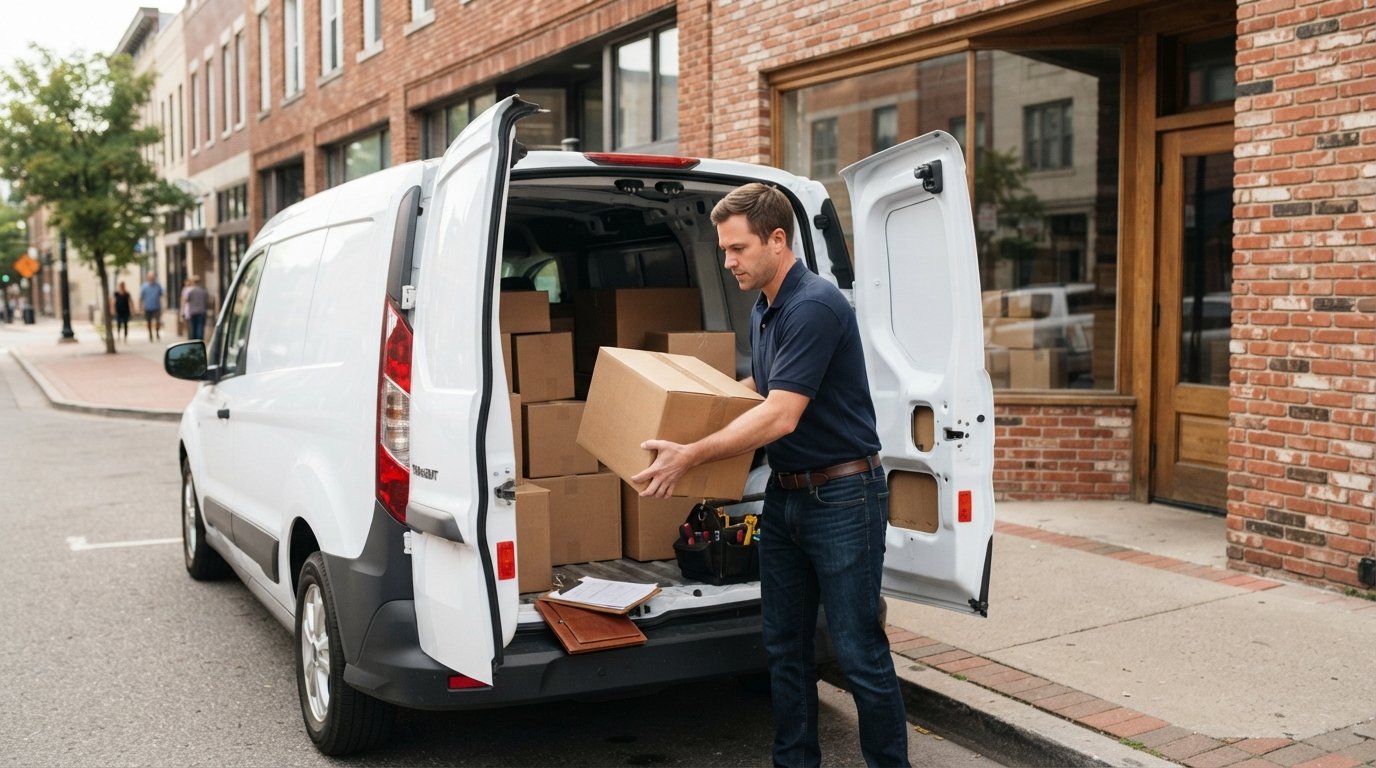
Commercial Auto Insurance for Small Business: A 2026 Guide
Commercial auto insurance for small business protects work vehicles and limits liability. Compare quotes to avoid surprise bills and keep premiums manageable.

By Maribel Quinn
If you run a small business that depends on a vehicle, your personal auto policy will not protect you when something goes wrong on the job. A plumber's van, a bakery's delivery car, or a landscaper's truck all carry risks that personal coverage was never designed to handle. Commercial auto insurance for small business owners fills that gap, and getting it right can mean the difference between a minor claim and a financial crisis. This guide explains what commercial auto coverage includes, how it differs from personal policies, what it typically costs, and how to find the right policy without overpaying.
Why Personal Auto Insurance Falls Short for Business Vehicles
Many small business owners assume their personal auto policy will cover them if they use their car for work. That assumption is risky. Personal policies routinely exclude claims that arise from business use, and insurers can deny a claim if they discover the vehicle was being used for commercial purposes at the time of an accident. A flower shop owner making a delivery, a real estate agent driving clients to showings, or a contractor hauling tools to a job site may all find themselves without coverage when they need it most.
The distinction comes down to how the vehicle is used. Personal policies are priced for commuting, errands, and personal travel. Commercial use introduces higher mileage, heavier loads, multiple drivers, and greater liability exposure. Insurers price for that risk, and they expect business owners to carry a policy that reflects it. If you are unsure whether your vehicle qualifies as commercial, a good rule of thumb is to ask whether the vehicle is used to generate income or to perform services for customers. If the answer is yes, you likely need commercial coverage.
Another factor is ownership. If the vehicle is titled to your business rather than to you personally, a personal policy may not even be an option. Even when a vehicle is personally owned, regular business use can void coverage. This is why so many small businesses end up needing a dedicated commercial auto policy, even if they only have one or two vehicles.
What Commercial Auto Insurance for Small Business Typically Covers
A commercial auto policy is built around the same core coverages as a personal policy, but the limits and terms are designed for business risk. Most policies include liability coverage, which pays for injuries or property damage you cause to others, and physical damage coverage, which pays to repair or replace your own vehicle. Many policies also include medical payments, uninsured motorist coverage, and hired and non-owned auto coverage, which protects you when employees drive rental cars or their own vehicles for work.
Understanding the individual components helps you choose limits that match your exposure. Here are the coverages you will typically see in a commercial auto policy:
- Commercial auto liability: Pays for bodily injury and property damage you cause to others, up to your policy limits.
- Collision coverage: Pays to repair or replace your vehicle after a collision, regardless of fault.
- Comprehensive coverage: Pays for damage from theft, fire, hail, vandalism, and other non-collision events.
- Hired and non-owned auto (HNOA): Protects your business when employees drive rented vehicles or their own cars for work.
- Medical payments or PIP: Pays medical expenses for you and your passengers after an accident, regardless of fault.
Some businesses also add coverage for cargo, towing and labor, or rental reimbursement. A florist might want cargo coverage to protect a delivery load, while a contractor might need higher liability limits to satisfy a client's contract requirements. The right combination depends on your industry, your vehicles, and the contracts you sign. Working with a licensed agent who understands your specific trade can help you avoid gaps that only become obvious after a claim.
It is also worth noting that commercial auto policies often have higher liability limits than personal policies. A serious accident involving a work vehicle can lead to lawsuits that far exceed the minimum coverage required by your state. Choosing limits that reflect your business assets and income is one of the most important decisions you will make when buying a policy.
How Insurers Set Commercial Auto Rates for Small Businesses
Commercial auto insurance rates are not one-size-fits-all. Insurers look at a range of factors to estimate how likely your business is to file a claim and how much that claim might cost. The type of vehicle matters, as does the industry you operate in. A catering company that logs thousands of miles per year in heavy traffic will generally pay more than a consultant who drives a sedan to occasional meetings.
Several variables carry the most weight when insurers calculate your premium. These include:
- Vehicle type and value: Trucks, vans, and specialty vehicles cost more to repair or replace than standard cars.
- Annual mileage: Higher mileage means more time on the road and greater accident exposure.
- Driving records of all drivers: Tickets, accidents, and DUI convictions raise rates significantly.
- Industry classification: Some industries, such as construction and delivery, are considered higher risk than others.
- Coverage limits and deductibles: Higher limits and lower deductibles increase your premium.
Because these factors vary so much from one business to the next, comparing quotes from multiple insurers is essential. Two carriers can look at the same business and arrive at very different prices based on their appetite for your industry, their claims history in your region, and their underwriting guidelines. This is where an independent comparison resource can save you time and money. Instead of calling carrier after carrier, you can compare free auto insurance quotes online and see how different insurers rate your business. The goal is not just the lowest price, but the best combination of price, coverage, and service for your specific operation.
It is also smart to review your policy every year. As your business grows, adds vehicles, or changes the type of work you do, your coverage needs will shift. A policy that fit your business two years ago may leave you underinsured today. An annual review with your agent keeps your coverage aligned with your actual risk.
The Cost of Commercial Auto Insurance and How to Lower It
There is no single average price for commercial auto insurance because the range is so wide. A single-vehicle policy for a low-risk service business might cost less than a personal policy in some cases, while a fleet of heavy trucks in a high-risk industry can run into thousands of dollars per vehicle per year. The best way to know what you will pay is to get quotes based on your actual vehicles, drivers, and coverage needs.
That said, there are proven strategies that small business owners can use to keep premiums manageable without sacrificing protection. The most effective approach is to combine several of these tactics:
- Maintain a clean driving record: Screen employees before hiring and review motor vehicle records annually.
- Raise your deductible: A higher deductible lowers your premium, as long as you can cover the out-of-pocket cost after a claim.
- Bundle with other policies: Combining commercial auto with general liability or a business owner's policy can unlock discounts. If you also have personal coverage, our guide to auto insurance for renters and homeowners explains how bundling can reduce costs across multiple policies.
- Install safety and tracking devices: Telematics, dash cams, and anti-theft systems can earn discounts and improve driver behavior.
- Pay annually instead of monthly: Many insurers charge installment fees that add up over the year.
Beyond these steps, it helps to shop your policy every couple of years. The insurance market changes, and a carrier that was not competitive when you last bought coverage may now offer a better rate. Conversely, your current insurer may have introduced new discounts or programs for businesses like yours. A quick comparison can reveal savings without any reduction in coverage.
It is also important to distinguish between price and value. The cheapest policy is not always the best one if it leaves you exposed to a large claim or if the insurer is difficult to deal with after an accident. Look at the financial strength of the carrier, the clarity of the policy language, and the quality of the claims service. A slightly higher premium can be well worth it if it means your claim is paid quickly and fairly.
Common Mistakes Small Businesses Make with Commercial Auto Coverage
One of the most frequent mistakes is failing to list all drivers on the policy. If an employee drives a company vehicle and is not listed, the insurer may deny a claim or charge additional premium after the fact. Another common error is relying on a personal policy for a vehicle that is clearly used for business. Even if your insurer does not ask questions at the time of purchase, they will ask them after an accident.
Underinsuring is another trap. State minimum liability limits are often far too low to cover the damages from a serious accident. If your business owns assets or generates significant revenue, you need limits that reflect what you could lose in a lawsuit. Umbrella policies can provide an extra layer of protection at a relatively low cost, and many commercial auto policies can be paired with one.
Finally, many business owners forget to update their policy when circumstances change. Adding a new vehicle, hiring a new driver, or expanding into a new state all affect your coverage. Failing to report these changes can lead to gaps or denied claims. A simple annual review, or a call to your agent whenever something changes, keeps your policy accurate and your business protected.
Commercial auto insurance for small business is not just a legal formality. It is a core part of your risk management strategy. The right policy protects your vehicles, your employees, your customers, and your bottom line. By understanding what coverage you need, comparing quotes from multiple insurers, and reviewing your policy regularly, you can secure protection that fits your business without paying more than necessary. Start by gathering quotes based on your actual operation, and work with a licensed agent to fine-tune the details. Your future self, and your business, will thank you.