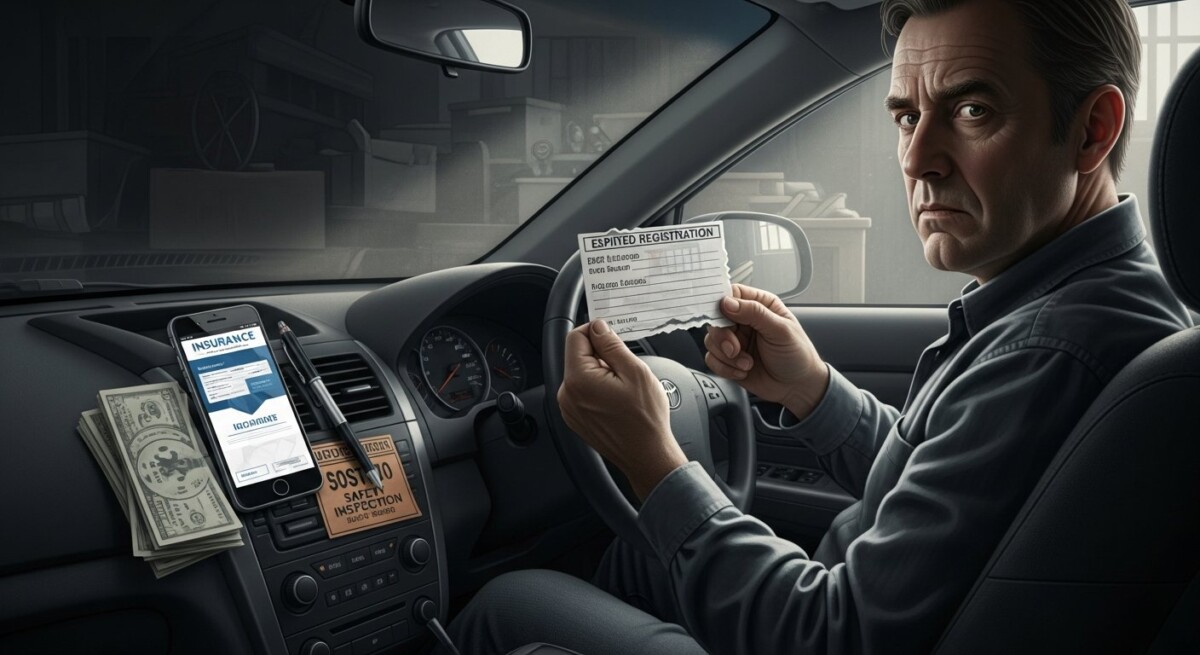
Driving without valid registration is a serious violation in most states, but what happens when you need to insure a vehicle with an expired registration? This question traps many drivers who let their registration lapse during a busy period or financial hardship. The short answer is that you can often secure auto insurance with expired registration, but the process comes with specific requirements and potential pitfalls. Understanding how insurers view expired tags, what documents you need, and how to resolve the registration lapse quickly can save you from fines, coverage gaps, and legal trouble.
Insurance companies primarily care about risk, not the sticker on your license plate. However, an expired registration can signal to an insurer that you might be a higher-risk driver or that the vehicle is not being maintained properly. This does not mean you will be denied coverage outright. Many standard insurers will still write a policy, especially if you explain your situation and have a plan to renew the registration promptly. The key is knowing which companies to approach and what steps to take before you apply.
In this article, we will walk through the relationship between registration status and insurance eligibility, the risks of driving with expired tags, and a step-by-step plan to get properly insured and back on the road legally. We will also cover common myths and answer frequent questions so you can make an informed decision without wasting time or money.
Why Registration Status Matters to Insurers
Auto insurance is a contract based on risk assessment. When you apply for a policy, the insurer evaluates factors such as your driving record, vehicle condition, and where you live. Registration status is not a primary rating factor like your age or accident history, but it does play a supporting role. Most insurance companies require that a vehicle be registered in the state where it is primarily operated. If your registration has expired, the insurer may question whether the vehicle is being driven legally or if it is even roadworthy.
From a practical standpoint, an expired registration often means the vehicle has not passed a recent smog check or safety inspection, depending on your state. This can raise red flags about the car’s condition. Additionally, an unregistered vehicle is more likely to be cited by law enforcement, which increases the insurer’s administrative costs and potential liability. Some insurers will still issue a policy, but they may require proof that you have an appointment to renew the registration or that the vehicle is parked and not being driven until the tags are current.
In our guide on how to get auto insurance for new drivers, we explain that insurers evaluate risk holistically. The same principle applies here. A single lapse in registration does not automatically disqualify you, but it is a factor the underwriter will consider. Being upfront about the situation and having a clear plan to resolve it will improve your chances of getting covered without a massive rate increase.
Can You Legally Drive With Expired Registration and Insurance?
The legality of driving with expired registration varies by state, but in every jurisdiction, operating a vehicle with expired tags is a traffic violation. The penalties range from a fix-it ticket with a small fine to impoundment of the vehicle and even suspension of your driver’s license. Having active auto insurance does not make it legal to drive with expired registration. The two requirements are separate and independent. You must have both valid registration and valid insurance to drive legally.
That said, having insurance while your registration is expired can work in your favor if you are pulled over. The officer will see that you are at least insured, which may lead to a warning or a lesser citation. In some states, proof of insurance can reduce the fine or help you avoid having the car towed. However, do not assume that insurance alone will protect you. The safest approach is to keep the vehicle parked until you renew the registration, especially if you live in a state with strict enforcement like California, New York, or Texas.
If you need to drive the car to a smog check station or the DMV for an inspection, check your state’s rules. Many states allow limited movement for the purpose of completing registration requirements, but you should carry proof of your appointment and your current insurance card. Even then, you are taking a risk. A better plan is to have a friend drive you or use a rideshare service for those errands.
How to Get Auto Insurance With Expired Registration
Securing a policy when your registration is expired requires a slightly different approach than a standard application. Here is a step-by-step process that will increase your chances of success and help you avoid unnecessary delays.
Step 1: Gather Your Vehicle Information. Before you call an insurer or start an online quote, have your vehicle identification number (VIN), current mileage, and the name of the registered owner ready. You will also need your driver’s license number and details about any recent claims. The insurer will use the VIN to pull a vehicle history report, so having this information ready speeds up the process.
Step 2: Check With Your Current Insurer First. If you already have an auto insurance policy on another vehicle, call your agent and ask if they can add the unregistered vehicle to your existing policy. Many insurers will allow this, especially if you explain that the car is parked and not being driven. This is often the fastest and cheapest option because you are already a known customer.
Step 3: Shop With Insurers That Specialize in High-Risk or Non-Standard Coverage. Not all insurance companies are willing to write a policy for a vehicle with expired registration. Standard carriers like State Farm or Geico may decline or require the registration to be renewed first. Non-standard insurers, such as The General or Dairyland, are more accustomed to handling drivers with imperfect records or vehicles in less-than-ideal status. These companies tend to be more flexible, though their rates may be higher.
Step 4: Be Honest About the Registration Status. When you fill out the application, answer the question about registration truthfully. If you lie and the insurer later discovers the lapse, they could deny a claim or cancel your policy retroactively. Instead, explain that the registration is expired but that you have an appointment to renew it within the next week or two. Some insurers will issue a binder that covers you immediately, with the condition that you provide proof of renewed registration within 30 days.
Step 5: Use an Independent Agent. Independent agents have access to multiple carriers and can match you with a company that accepts expired registration. They do the legwork of comparing policies and can often find a solution that a direct online search would miss. This is especially helpful if you have a poor driving record or other complicating factors. For more on evaluating your options, see our article on top 5 auto insurance companies in the US.
What to Do After You Get Insured
Once you have an active policy, your next priority is renewing the vehicle registration. Do not delay, because every day you drive with expired tags increases your risk of a ticket or an accident that could complicate your claim. Here is a checklist to get your registration current.
- Complete any required smog check or safety inspection. Most states require a passing emissions test before they will renew registration. Schedule this appointment as soon as possible.
- Pay all outstanding fees and penalties. Many states add late fees for expired registration, and you must settle those before the DMV will process your renewal.
- Bring your new insurance ID card to the DMV or upload it online if your state offers digital renewal. The DMV will verify that you have active coverage before issuing new tags.
- If your vehicle is financed, confirm that your lender is listed as a lienholder on the insurance policy. This is a requirement of most auto loans and can affect your registration in some states.
After you renew the registration, send a copy of the new registration card to your insurance company. This keeps your file accurate and may even lower your premium, because the insurer will see that the vehicle is now fully compliant. Some insurers offer a small discount for vehicles with clean registration status, so it pays to update your records promptly.
Risks of Driving With Expired Registration and Insurance
Driving without valid registration is risky enough, but doing so without insurance multiplies the consequences. If you are involved in an accident while your registration is expired, the police may cite you for multiple violations. The other driver’s insurance company could argue that the vehicle was not legally operable, which might complicate liability determinations. In the worst case, your own insurer could deny coverage if they determine that driving an unregistered vehicle violates the policy’s terms.
Many insurance policies include a clause that requires the vehicle to be in a roadworthy and legal condition. While expired registration alone does not automatically void coverage, it can create a gray area. If you are in an accident and the insurer investigates, they may use the expired registration as a reason to delay or reduce a payout. This is why it is critical to resolve the registration issue as quickly as possible, even if you have to keep the car parked in the meantime.
Another risk is that a lapse in registration can lead to a lapse in insurance. If the DMV suspends your registration, some states automatically notify your insurer, who may then cancel your policy for non-compliance. This creates a vicious cycle where you lose both your registration and your insurance, making it much harder and more expensive to get back on the road. Breaking that cycle early is the smartest move.
Common Myths About Auto Insurance and Expired Registration
There is a lot of misinformation floating around about whether insurance companies can or will cover a vehicle with expired tags. Let us clear up a few of the most persistent myths.
Myth 1: You cannot get insurance if your registration is expired. This is false. While some insurers will decline, many others will write a policy. The key is to shop with the right companies and be transparent about your situation. As mentioned earlier, non-standard insurers and independent agents are your best bet.
Myth 2: Your insurance is automatically void if your registration lapses. Not true. Your insurance contract remains in effect until you cancel it or fail to pay the premium. However, if you are in an accident, the insurer may investigate whether the expired registration contributed to the loss. As long as you were not driving illegally at the time of the accident (i.e., you had a good-faith plan to renew), most standard policies will still cover the claim.
Myth 3: You need to renew registration before you can get insurance. Many people think this is the correct order, but it is actually the opposite. In most states, you must have active insurance before the DMV will renew your registration. So if your tags are expired, getting insurance first is the right sequence. The DMV will ask for your policy number and insurance company name when you submit your renewal application.
For drivers with leased vehicles, the rules can be even stricter. Leasing companies typically require continuous comprehensive and collision coverage, and they monitor your registration status closely. If you lease a car and let the registration lapse, you could be in breach of your lease agreement. Our article on auto insurance for leased vehicles covers these requirements in detail.
How Expired Registration Affects Your Premium
Having an expired registration on your record does not directly increase your insurance premium the way a speeding ticket or at-fault accident does. However, it can trigger indirect rate increases. For example, if you receive a citation for expired tags, that moving violation may appear on your driving record and could raise your rates for three to five years. Additionally, if your registration lapse leads to a gap in insurance coverage, that gap can result in significantly higher premiums when you shop for a new policy.
Insurance companies view continuous coverage as a sign of responsibility. A gap of even 30 days can cause your rate to jump by 10 to 30 percent, depending on the state and the insurer. If your registration expired because you were not driving the car, you might be able to avoid a coverage gap by keeping a comprehensive-only policy on the parked vehicle. This type of policy covers theft, vandalism, and weather damage but not liability, so it is much cheaper. Once you renew the registration, you can switch back to a full policy.
Another factor to consider is that some insurers offer a multi-policy discount if you bundle auto and homeowners or renters insurance. If your registration lapse leads you to switch carriers, you might lose that discount on other policies. To avoid this, talk to your current agent before making any changes. They can often find a way to keep your coverage intact while you sort out the registration issue.
Frequently Asked Questions
Can I get a temporary insurance policy for a car with expired registration?
Yes, some insurers offer short-term or temporary policies that cover a vehicle for a specific period, such as 30 days. These are useful if you need to drive the car to a mechanic or inspection station. However, temporary policies are not available in every state and may be more expensive per day than a standard annual policy. Check with an independent agent to see if this option exists in your area.
Will my insurance cover me if I get into an accident with expired registration?
In most cases, yes, your insurance will cover the accident as long as the policy was active at the time of the crash. However, the insurer may investigate whether the expired registration contributed to the accident. For example, if your car failed a safety inspection and the brakes were faulty, the insurer might deny a claim related to brake failure. To be safe, avoid driving the car until the registration is renewed.
Do I need insurance to renew my registration?
Yes, in nearly every state, you must provide proof of active auto insurance when you renew your vehicle registration. The DMV will check your insurance status through an electronic database. If your insurance has lapsed, your renewal will be denied. This is why getting insurance first is essential.
How long can my registration be expired before it becomes a problem for insurance?
There is no universal rule, but the longer your registration is expired, the more likely an insurer will view it as a red flag. A lapse of a few days or weeks is usually manageable. A lapse of several months or more may lead to higher rates or difficulty finding coverage. Some states also impose escalating fines the longer you wait, so it is best to renew as soon as possible.
Can I insure a car that is not registered in my name?
Yes, you can, but you will need to have an insurable interest in the vehicle. For example, if you are buying a car from a private seller and have not yet transferred the title, you can still get insurance using the VIN. The policy will list you as the named insured and the seller as the owner until the title is transferred. Once the registration is in your name, update the policy with the new details.
Final Thoughts
Getting auto insurance with expired registration is not as difficult as many drivers assume. The process requires clear communication with your insurer, a willingness to shop around, and a commitment to resolving the registration issue quickly. By following the steps outlined above, you can secure coverage, avoid a ticket, and get your vehicle back in full compliance with state law. Remember that insurance and registration are two sides of the same coin: you need both to drive legally. If you let one lapse, fix it immediately before the other is affected. For more tips on saving money on your policy, check out our guide on 10 expert tips for getting the best deal on auto insurance. Stay insured, stay registered, and stay safe on the road.