
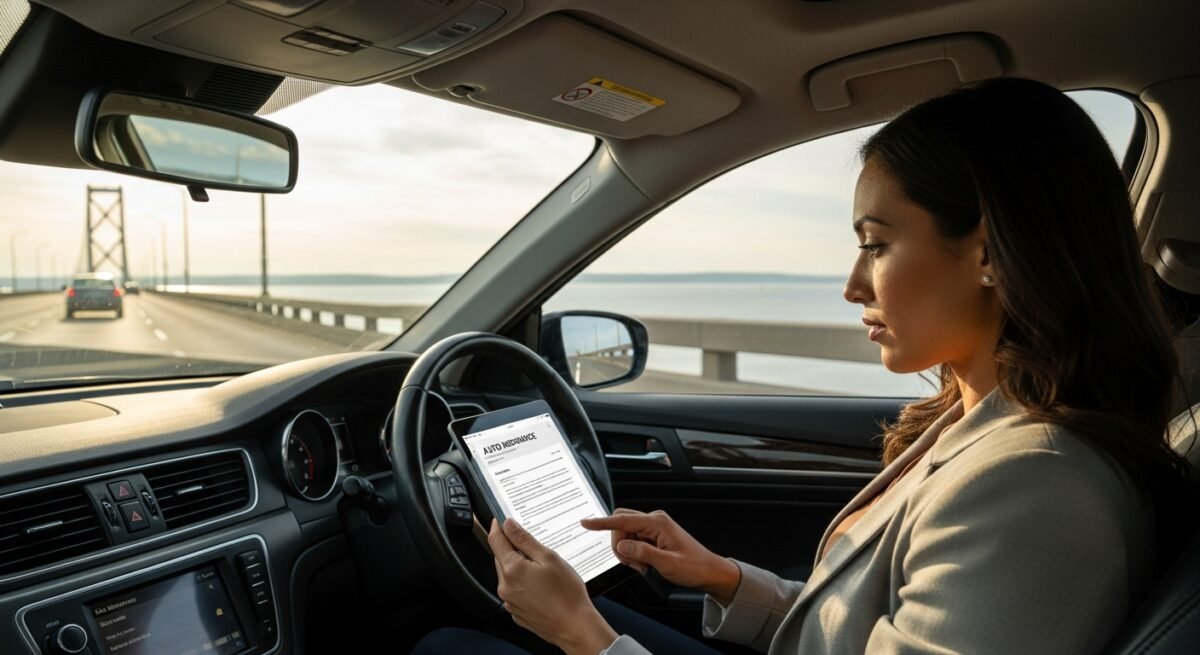
Auto Insurance Maryland: Reliable Coverage for Every Driver
Learn how to navigate Maryland’s auto insurance laws to find affordable, comprehensive coverage. This guide breaks down state requirements, cost factors, and strategies for maximum protection.

By Robert Anderson
Navigating the world of auto insurance Maryland can feel like a complex journey. With its unique blend of urban centers like Baltimore, extensive suburban sprawl, and rural countryside, Maryland presents a varied landscape of risks and insurance rates. Understanding the state’s specific laws, coverage requirements, and the factors that influence your premium is not just about legal compliance; it’s about securing financial peace of mind on the road. Whether you’re a new resident in Baltimore, a commuter on the Capital Beltway, or a driver in the Eastern Shore, having the right coverage protects you from unexpected financial hardship after an accident. This guide demystifies Maryland’s auto insurance landscape, providing you with the knowledge to make informed decisions, find competitive rates, and build a policy that offers genuine security.
Maryland’s Minimum Auto Insurance Requirements
Maryland state law mandates that all registered vehicle owners carry a minimum level of liability insurance. This is non-negotiable. Driving without the required proof of insurance can result in severe penalties, including fines, license suspension, and vehicle registration revocation. The minimum liability coverage is designed to pay for injuries and property damage you cause to others in an at-fault accident. It does not cover your own injuries or vehicle repairs. The mandatory minimums are often expressed as a series of three numbers, such as 30/60/15.
These numbers break down as follows: $30,000 for bodily injury per person, $60,000 for total bodily injury per accident, and $15,000 for property damage per accident. Imagine causing an accident where two people are injured. If the first person’s medical bills total $35,000 and the second’s total $20,000, your insurance would cover $30,000 for the first person (hitting your per-person limit) and the full $20,000 for the second. However, the first victim could potentially sue you personally for the remaining $5,000. This stark example illustrates why many financial advisors and insurance experts strongly recommend purchasing coverage well above the state minimums. For more detailed explanations of different coverage types, our resource on auto insurance coverages provides a thorough breakdown.
Key Factors That Determine Your Maryland Premium
Insurance companies in Maryland use a sophisticated algorithm to assess risk, which translates into your individual premium. While some factors are within your control, others are not. Understanding these can empower you to take steps where possible to lower your costs. Your driving record is the most significant controllable factor. A clean record with no accidents or moving violations signals responsible behavior, while tickets and at-fault accidents mark you as a higher risk. Your geographic location within the state also plays a massive role. Urban areas like Baltimore and parts of Prince George’s County typically have higher rates due to greater traffic density, higher accident rates, and increased incidence of theft and vandalism compared to rural areas.
Your vehicle itself is also a major rating factor. Insurers consider the car’s make, model, year, safety features, and most importantly, its likelihood of being stolen or its cost to repair. A brand-new luxury SUV will cost far more to insure than a five-year-old sedan with top safety ratings. Demographic factors such as your age, gender (where legally permitted), and years of driving experience are also weighed. Younger drivers, especially teens, statistically have more accidents and thus face higher premiums. Your credit-based insurance score, which is legal in Maryland, is another significant component. Insurers correlate good credit with responsible financial behavior and, by extension, lower claim risk.
- Driving History: Accidents, tickets, and DUIs drastically increase premiums.
- Location: Zip code determines risk exposure to theft, accidents, and weather events.
- Vehicle Type: Sports cars and high-value vehicles cost more to insure than safe, modest cars.
- Coverage Choices: Higher limits and adding comprehensive/collision raise your premium.
- Annual Mileage: The fewer miles you drive annually, the lower your risk of an accident.
Essential Coverage Options Beyond the Minimum
While liability insurance meets the legal requirement, a robust financial protection plan requires additional coverages. The first critical addition is Uninsured/Underinsured Motorist (UM/UIM) coverage. Maryland has a relatively high rate of uninsured drivers. UM/UIM protects you if you’re hit by a driver with no insurance or insufficient coverage to pay for your injuries. This coverage is so vital that Maryland requires insurers to offer it, and you must sign a waiver to decline it. Another cornerstone is Personal Injury Protection (PIP), sometimes called “no-fault” coverage. PIP pays for medical expenses and lost wages for you and your passengers, regardless of who caused the accident. It provides immediate financial relief without waiting for fault to be determined.
To protect your own vehicle, you’ll need to add physical damage coverages: Comprehensive and Collision. Collision coverage pays for damage to your car from an accident with another vehicle or object. Comprehensive covers non-collision events like theft, fire, vandalism, falling objects, or hitting an animal. If you have a loan or lease on your vehicle, your lender will require both. Even if you own your car outright, these coverages are crucial unless you can afford to repair or replace it out-of-pocket. For drivers seeking the most basic legal and financial protection, a liability only auto insurance policy is an option, but it leaves your own assets exposed.
Strategies to Lower Your Auto Insurance Costs in Maryland
Finding affordable auto insurance in Maryland requires a proactive approach. The single most effective strategy is to shop around and compare quotes from multiple insurers. Rates can vary dramatically between companies for the exact same driver and vehicle profile. Don’t just auto-renew your policy year after year. It’s also wise to ask about every available discount. Insurers offer a myriad of discounts that can add up to significant savings. Common discounts include multi-policy (bundling auto with home or renters insurance), multi-vehicle, good driver, good student, pay-in-full, paperless billing, and discounts for completing defensive driving courses.
Raising your deductible is a direct way to lower your premium. The deductible is the amount you pay out-of-pocket before insurance kicks in for a comprehensive or collision claim. By increasing your deductible from, say, $500 to $1,000, you assume more of the initial risk, and the insurer rewards you with a lower premium. However, ensure you have the deductible amount saved and accessible in case of a claim. Maintaining a clean driving record is paramount. Even a single speeding ticket can increase your premium for years. Furthermore, consider the type of car you drive. Before purchasing a new vehicle, research its insurance group rating. Opting for a car with strong safety features and a lower theft rate can keep insurance costs manageable. For broader strategies applicable everywhere, insights on finding the most affordable auto insurance can be invaluable.
Navigating Claims and Legal Considerations
If you’re involved in an accident in Maryland, knowing the proper steps is crucial. First, ensure safety, call 911 if there are injuries, and move vehicles to a safe location if possible. Exchange information with all involved drivers and gather contact information from witnesses. Take photos of the scene, vehicle damage, and any relevant road conditions. You must report the accident to your insurance company promptly, even if you are not at fault and do not intend to file a claim. Maryland is an “at-fault” or “tort” state. This means the driver who is legally responsible for causing the accident is liable for resulting damages. The injured party can file a claim with the at-fault driver’s insurance company or pursue a personal injury lawsuit.
This system underscores the importance of carrying adequate liability limits. In severe accidents, medical bills and vehicle repair costs can easily exceed minimum coverage, leaving you personally vulnerable to lawsuits. Your insurance company has a duty to defend you in such cases, but only up to your policy limits. It’s also important to understand that Maryland uses a system of “contributory negligence.” This is one of the strictest rules in the country. If you are found to be even 1% at fault for the accident, you may be barred from recovering any compensation from the other party. This makes a strong defense from your insurer critically important.
Frequently Asked Questions
Is Personal Injury Protection (PIP) required in Maryland?
No, PIP is not mandatory, but it is highly recommended. Insurers must offer you a minimum of $2,500 in PIP coverage, and you must sign a waiver to reject it. Given its relatively low cost and the immediate benefits it provides, most experts advise accepting PIP coverage.
How can I prove I have insurance in Maryland?
You must carry a valid insurance identification card in your vehicle at all times, either in physical or electronic form. Your insurance company electronically reports your policy status to the Maryland Motor Vehicle Administration (MVA). If you are stopped by law enforcement or involved in an accident, you must present this card.
What happens if I let my auto insurance lapse in Maryland?
Letting your insurance lapse has serious consequences. Your insurer will notify the MVA. You will receive a letter requiring you to provide proof of new insurance and pay a restoration fee. Your vehicle registration will be suspended, and your license plates must be returned. Driving with suspended registration leads to further fines and penalties.
Are there low-cost auto insurance programs for Maryland drivers?
Maryland does not have a state-run low-cost insurance program like some other states. However, you can explore all available discounts, adjust your coverage and deductibles, and compare quotes from companies known for competitive rates. Some insurers specialize in serving higher-risk drivers.
Does my credit score affect my auto insurance rate in Maryland?
Yes, Maryland law permits insurers to use a credit-based insurance score as one factor in determining your premium, except when used to increase rates upon renewal following certain catastrophic events. Maintaining good credit can help you secure lower rates.
Securing the right auto insurance in Maryland is a balance of meeting legal obligations, protecting your financial assets, and fitting the cost into your budget. By moving beyond the bare minimum, comparing quotes annually, and understanding the specific rules of Maryland’s road, you can drive with confidence. The right policy isn’t just a slip of paper; it’s a fundamental component of your financial security, ensuring that an unexpected moment on the road doesn’t derail your future.