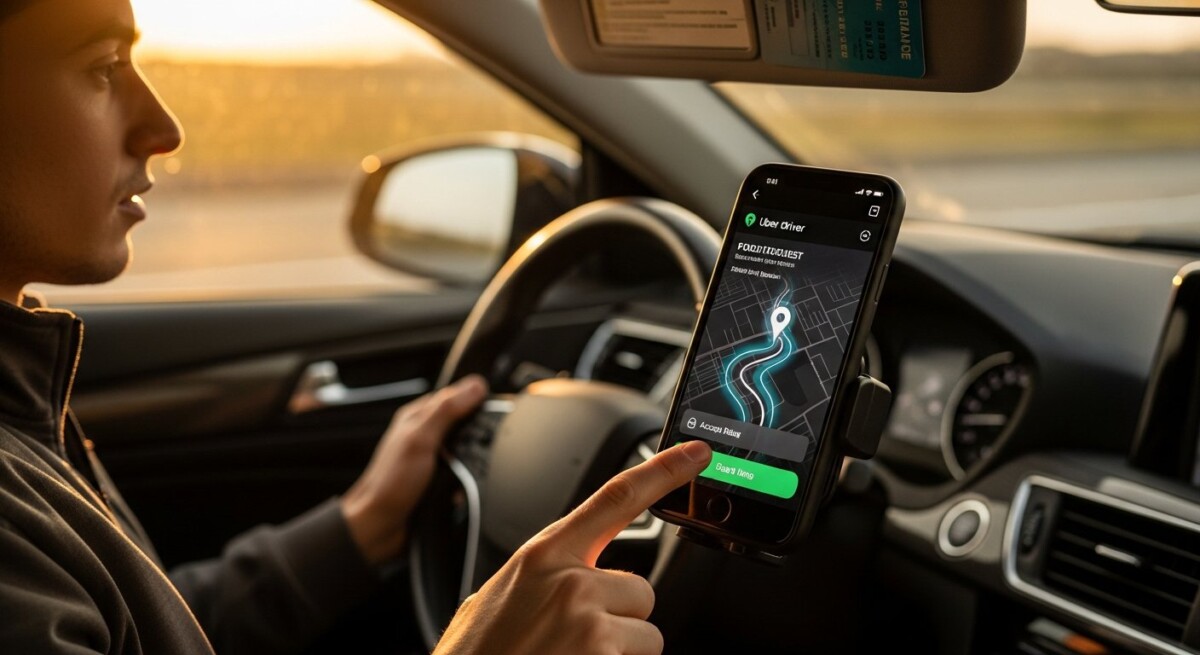
Driving for Uber offers flexibility and extra income, but it also creates a unique gap in your auto insurance coverage. Standard personal auto policies explicitly exclude coverage when you are using your vehicle for rideshare services. That means a single accident during a trip could leave you personally liable for thousands of dollars in damages. Understanding the right auto insurance for Uber drivers is not just a good idea. It is a requirement to protect your livelihood and your personal finances.
Many drivers assume their personal policy will cover them because they are still driving their own car. The reality is different. Insurance companies classify rideshare driving as a commercial activity, and most personal policies contain a specific exclusion for business use. If you get into an accident while logged into the Uber app and waiting for a ride request, your insurer may deny your claim entirely. This is where specialized rideshare coverage becomes essential.
In this article, we break down the types of coverage you need, how Uber’s own insurance works, and the steps you can take to avoid costly surprises. Whether you are a new driver or a seasoned veteran, knowing the ins and outs of auto insurance for Uber drivers will help you stay on the road with confidence.
How Uber’s Insurance Policy Works
Uber provides a commercial liability policy that covers drivers while they are actively working. However, the coverage is not continuous. It activates and deactivates depending on which stage of the ride you are in. Understanding these stages is critical because your personal policy may leave you exposed during certain periods.
Uber divides your driving time into three periods. Period 1 is when the app is on and you are waiting for a ride request. Period 2 is when you have accepted a ride and are en route to pick up the passenger. Period 3 is when the passenger is in the vehicle and you are driving to the destination. Each period has different coverage limits and rules.
During Period 1, Uber provides only limited liability coverage. In most states, this includes $50,000 in bodily injury per person, $100,000 in bodily injury per accident, and $25,000 in property damage. This is often called 50/100/25 coverage. Importantly, Uber does not provide any coverage for damage to your own vehicle during Period 1. If you hit a guardrail or another car, your personal policy would need to cover the repairs. But because you are using your car for business, your personal insurer may deny the claim.
During Periods 2 and 3, Uber increases its coverage. The company provides up to $1 million in third-party liability coverage and comprehensive and collision coverage for your vehicle, subject to a deductible. This is a significant safety net, but it still leaves you vulnerable during Period 1. That gap is the primary reason why dedicated auto insurance for Uber drivers is so important.
Why Personal Auto Insurance Is Not Enough
Standard personal auto insurance policies are designed for personal errands, commuting to work, and recreational driving. When you use your car to generate income, insurers view that as a higher risk. They have not priced the policy to account for the increased miles, the time spent in traffic, or the higher likelihood of an accident.
Most personal policies contain what is called a rideshare exclusion. This clause explicitly states that the policy will not cover any accident that occurs while you are logged into a rideshare app or transporting passengers for a fee. If you file a claim and the insurer discovers you were driving for Uber, they can deny the claim, cancel your policy, and even refuse to renew your coverage in the future.
Consider this scenario. You are driving home after dropping off a passenger. You have the Uber app turned off. You run a red light and hit another car. Your personal policy will cover the accident because you were not engaged in rideshare activity. Now consider a different scenario. You are driving to the grocery store but keep the app on in case a ride request comes in. You get into an accident. Even though you were not actively transporting a passenger, the fact that the app was on places you in Period 1. Your personal insurer may deny coverage based on the rideshare exclusion.
The only way to eliminate this risk is to purchase a policy that explicitly covers rideshare activity. Many major insurance companies now offer rideshare endorsements or specialized policies designed specifically for drivers like you. In our guide on 10 Expert Tips for Getting the Best Deal on Auto Insurance, we explain how to compare policies and find coverage that fits your driving habits.
Types of Rideshare Insurance Coverage
There are three main ways to get proper auto insurance for Uber drivers. Each option has its own advantages and trade-offs. Choosing the right one depends on your state, your insurer, and how often you drive.
Rideshare Endorsement
A rideshare endorsement is an add-on to your existing personal auto policy. It fills the coverage gap during Period 1 by providing liability, comprehensive, and collision coverage when the app is on but no passenger is in the car. The cost is usually modest, often between $15 and $40 per month. Not all insurance companies offer this endorsement, so you may need to shop around if your current insurer does not provide it.
This is the most common and cost-effective solution for part-time drivers. It keeps your personal policy intact while adding the specific protection you need. However, you must disclose your rideshare activity to your insurer when adding the endorsement. Failing to do so could be considered misrepresentation.
If you are looking for ways to lower your overall premium, you can explore options like bundling policies or increasing your deductibles. Many of the strategies discussed in 1st Auto Insurance: Lower Your Monthly Payments Now can also be applied to rideshare policies.
Commercial Auto Insurance
A commercial auto policy is designed for businesses that rely on vehicles for revenue. It provides comprehensive coverage for all stages of rideshare driving, including Period 1. The limits are typically higher than personal policies, and the policy will not contain a rideshare exclusion.
The downside is cost. Commercial auto insurance can be two to three times more expensive than a personal policy with a rideshare endorsement. It may also require you to register the vehicle under a business name, which adds administrative complexity. For most part-time Uber drivers, a commercial policy is overkill. But if you drive full-time or own multiple vehicles used for rideshare, it may be the safer option.
Your state regulations also play a role. Some states require commercial insurance for rideshare drivers, while others accept a personal policy with a rideshare endorsement. Check your local requirements before making a decision.
Personal Policy with No Exclusion
A small number of insurance companies offer personal auto policies that do not include a rideshare exclusion. These policies cover you regardless of whether you are driving for Uber or running personal errands. They are rare and often come with higher premiums, but they offer the simplest solution. You do not need to worry about periods or endorsements. The policy covers everything.
If you can find one of these policies, read the fine print carefully. Some insurers that claim to have no exclusion may still limit coverage during rideshare activity in certain states. Always confirm with an agent before purchasing.
Factors That Affect Your Rideshare Insurance Rates
Insurance companies evaluate several factors when setting your premium for auto insurance for Uber drivers. Understanding these factors can help you find ways to save money while maintaining adequate coverage.
Your driving record is the most important factor. A clean record with no accidents or tickets will result in lower rates. If you have recent violations, expect higher premiums. Your age and experience also matter. Younger drivers and those with less than three years of driving history typically pay more.
The number of miles you drive each year is another key factor. The more you drive, the higher your risk of an accident. If you drive for Uber part-time, you may pay less than a full-time driver. Your vehicle type also affects the rate. A new, expensive car costs more to insure than an older, less valuable model. Safety features like automatic braking and lane departure warnings can lower your premium.
We cover these and other variables in detail in our article on 5 Factors That Directly Affect Your Auto Insurance Rates. Understanding these factors gives you more control over what you pay.
Steps to Get the Right Coverage
Finding the right auto insurance for Uber drivers requires a systematic approach. Follow these steps to ensure you are fully protected without overpaying.
- Check your current policy. Review your declarations page to see if your policy contains a rideshare exclusion. If it does, call your insurer and ask about adding a rideshare endorsement.
- Shop around. Not all insurers offer rideshare coverage. Compare quotes from at least three companies that specialize in rideshare insurance. Look at both the premium and the coverage limits.
- Disclose your driving activity. Be honest about how often you drive for Uber. If you understate your miles or frequency, the insurer may deny a future claim.
- Understand the deductible. Uber’s insurance during Periods 2 and 3 has a deductible that applies to damage to your vehicle. Some policies allow you to choose a lower deductible, which increases your premium but reduces out-of-pocket costs after an accident.
- Review your coverage annually. Your driving habits may change over time. If you start driving more or less frequently, adjust your policy accordingly. An annual review ensures you are not paying for coverage you no longer need.
These steps may seem simple, but many drivers skip them and end up with gaps in coverage. Taking the time to review your policy now can save you from a denied claim later.
Common Mistakes Uber Drivers Make
Even experienced drivers make errors when it comes to insurance. One of the most common mistakes is assuming that Uber’s insurance covers everything. As we discussed, Uber’s policy has significant gaps during Period 1. If you rely solely on Uber’s coverage, you are unprotected during the time when you are most likely to be in an accident: while waiting for a ride request.
Another mistake is failing to update your insurer when your driving status changes. If you start driving for Uber and do not tell your insurance company, you are essentially driving without valid coverage. If you get into an accident, your insurer can deny the claim and cancel your policy. This can also make it harder to get insurance in the future, as a cancellation stays on your record for years.
Some drivers also choose the minimum liability limits to save money. This is risky because an accident involving a passenger or multiple vehicles can quickly exceed those limits. If the damages exceed your policy limit, you are personally responsible for the difference. That could mean losing your savings or even your car.
For drivers with less-than-perfect credit, finding affordable coverage can be challenging. However, there are options available. We cover these in our article on 5 Best Auto Insurance for Bad Credit Drivers in 2026, which includes tips that apply to rideshare drivers as well.
Frequently Asked Questions
Do I need special insurance to drive for Uber?
Yes. Standard personal auto insurance policies typically exclude coverage for rideshare driving. You need either a rideshare endorsement added to your personal policy or a commercial auto policy that covers rideshare activity.
Does Uber provide insurance for my car?
Uber provides limited liability coverage during Period 1 (app on, waiting for a ride) and comprehensive and collision coverage during Periods 2 and 3 (en route and transporting a passenger). However, Uber does not cover damage to your car during Period 1. Your personal policy or a rideshare endorsement must fill that gap.
How much does rideshare insurance cost?
The cost varies by insurer, state, and driving history. A rideshare endorsement typically adds $15 to $40 per month to your existing premium. A standalone commercial policy can cost significantly more.
Can I use my personal insurance if I get into an accident while driving for Uber?
In most cases, no. If your personal policy contains a rideshare exclusion, the insurer will deny the claim. You would then need to rely on Uber’s insurance, which may not cover your vehicle during Period 1.
What happens if I do not tell my insurer I drive for Uber?
Failing to disclose rideshare activity is considered misrepresentation. Your insurer can deny claims, cancel your policy, and refuse to renew coverage. It can also affect your ability to get insurance from other companies in the future.
Getting the right auto insurance for Uber drivers is not optional. It is a necessary step to protect yourself, your passengers, and your vehicle. Start by reviewing your current policy, talking to your insurer about a rideshare endorsement, and comparing quotes from multiple companies. The time you invest now will pay off if you ever need to file a claim.
For personalized assistance and to compare quotes from top-rated insurers, call us at 833-214-7506. Our team can help you find the coverage that fits your driving habits and your budget.