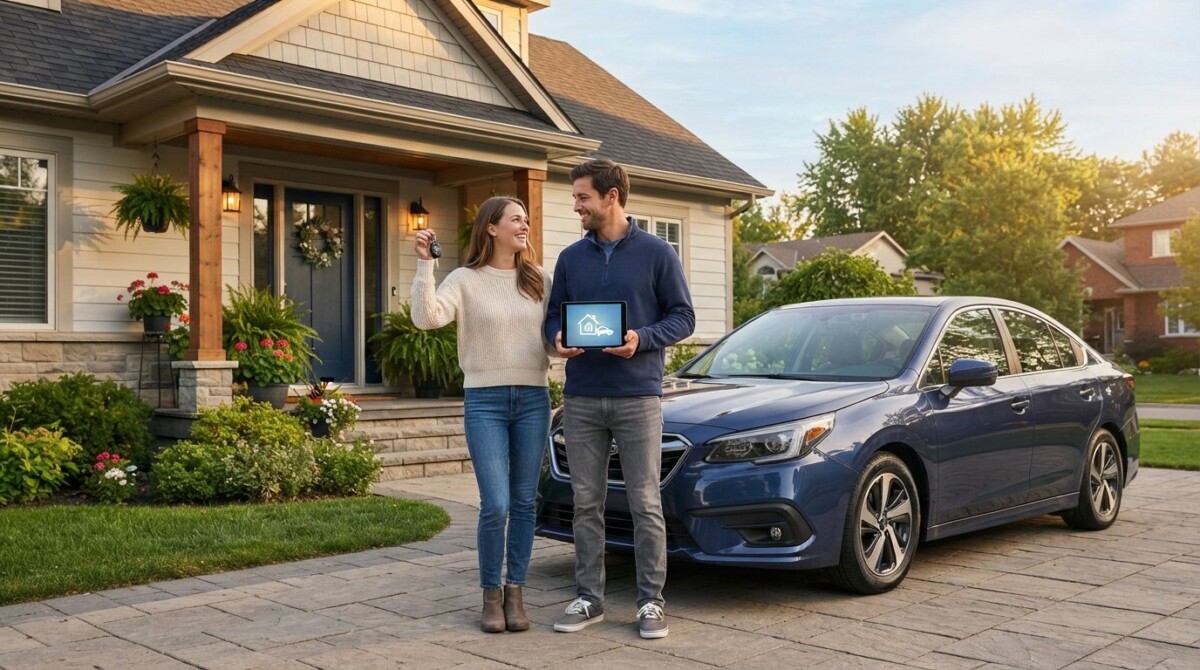
When you rent an apartment or own a house, you probably think about protecting your belongings and structure with a renters or homeowners policy. But have you considered how your auto insurance fits into that picture? Many drivers overlook the connection between their vehicle coverage and their property insurance, leaving money on the table and exposing themselves to coverage gaps. Understanding how auto insurance for renters and homeowners works together can save you hundreds of dollars each year and simplify your financial life.
Insurance companies reward loyalty and consolidated business. When you bundle your auto policy with a renters or homeowners policy from the same carrier, you unlock discounts that are rarely available when you buy policies separately. These savings can range from 10% to 25% on each policy, depending on the insurer and your state. But the benefits go beyond the premium reduction. You also gain the convenience of managing all your coverage through one portal, one billing cycle, and one customer service team. That means fewer headaches during renewals and claims.
In this guide, we will break down how bundling works, what pitfalls to avoid, and how to choose the right coverage for your situation. Whether you are a renter in a downtown studio or a homeowner with a suburban driveway, you can leverage your auto insurance to strengthen your entire protection strategy. Let us walk through the practical steps to maximize your savings and minimize your risk.
Why Auto Insurance and Property Coverage Are Connected
Your car and your home or apartment are your two largest assets after your income and savings. Yet many people treat their insurance policies as separate silos. In reality, insurers view you as a single risk profile. If you are a responsible driver, you are more likely to be a careful renter or homeowner, and vice versa. That correlation is why carriers offer multi-policy discounts. They want to keep you as a customer across multiple lines because it reduces their administrative costs and increases customer retention.
Another connection is liability. If you cause a car accident that injures someone, your auto liability coverage pays for their medical bills and lost wages. If a guest slips and falls in your home, your renters or homeowners liability coverage steps in. Bundling these policies ensures that you have consistent liability limits across both areas, so a catastrophic event in one part of your life does not drain your savings or expose you to lawsuits.
For renters, the link is even more practical. Many landlords require renters insurance as a condition of the lease, and some even ask for proof of auto insurance if you park on the property. Having both policies with the same insurer makes it easier to provide documentation and maintain compliance. For homeowners, your mortgage lender mandates homeowners insurance, and if you have a car loan, the lender requires full auto coverage. Bundling keeps both lenders satisfied while reducing your out-of-pocket costs.
How Bundling Saves You Money
Bundling is not just a marketing gimmick. It produces real, measurable savings. When you purchase auto insurance for renters and homeowners from the same company, the insurer can spread its risk across multiple products. That diversification allows them to offer a multi-policy discount. The typical discount varies by carrier and state, but it commonly falls between 10% and 20% on each policy. Some insurers even offer an additional loyalty discount after you have been a bundled customer for a few years.
Beyond the direct discount, bundling can reduce your overall insurance costs in other ways. For example, many insurers offer a claims-free discount that applies to all policies. If you have no accidents on your auto policy and no claims on your renters or homeowners policy, you qualify for a larger discount than if you had separate carriers. Additionally, some companies provide a paperless or autopay discount when you enroll in electronic billing, which is easier to manage when all policies are in one place.
To illustrate the potential savings, consider a typical scenario. A driver in a mid-sized city pays $1,200 per year for auto insurance. A renter pays $180 per year for renters insurance. If they buy these policies separately from different companies, they pay $1,380 total. If they bundle with one insurer and receive a 15% discount on both policies, they pay $1,173, saving $207 per year. Over five years, that is over $1,000 in savings. For homeowners, the premium base is higher, so the discount often results in even larger dollar savings.
What to Watch For When Bundling
While bundling is generally a smart financial move, it is not without potential downsides. One common mistake is assuming that the bundled premium is always the lowest available. You should compare the bundled quote against the cost of buying separate policies from different carriers. In rare cases, a standalone policy from a low-cost insurer might be cheaper than a bundled policy from a premium carrier, even after the discount. Always shop around and compare total costs, not just the discount percentage.
Another risk is over-insuring. When you bundle, you might be tempted to increase your coverage limits on both policies to feel more secure, but that can erase your savings. For renters, the cost of adding high-value items like jewelry or art can add up quickly. For homeowners, increasing dwelling coverage beyond your home’s replacement cost is wasteful. Stick to the coverage you actually need, based on a realistic assessment of your assets and risks.
You also need to check whether the same insurer offers the specific types of coverage you require. For example, if you have a classic car or an RV, not every insurer handles those specialty vehicles. If your auto insurer does not cover your antique car, bundling that vehicle with your renters or homeowners policy might not be possible. In that case, you may need to keep separate policies, but you can still bundle your daily driver and your home. Always ask about specialty vehicle options before committing.
How to Bundle Auto Insurance for Renters and Homeowners
If you are ready to start saving, the process is straightforward. Follow these steps to bundle your policies effectively:
- Gather your current policies. Collect your auto insurance declarations page, your renters or homeowners policy, and any other coverage like umbrella or life insurance. Note your current limits, deductibles, and premiums.
- Get quotes from multiple insurers. Use online comparison tools or contact independent agents. Ask specifically about multi-policy discounts and provide the same coverage details to each insurer for an apples-to-apples comparison.
- Evaluate the bundled quote. Compare the total cost of bundling with the sum of your separate policies. Consider the coverage quality, customer service reputation, and financial strength of each insurer, not just the price.
- Check for additional discounts. Ask about safe driver, good student, anti-theft device, and paperless discounts that can stack with your bundling discount.
- Review the policy documents. Before you switch, read the terms carefully. Ensure that the start date of your new auto policy aligns with your renters or homeowners policy renewal to avoid a lapse in coverage.
Once you have selected a bundled package, cancel your old policies only after the new ones are active. This prevents any gap in coverage that could leave you exposed. After the switch, set a calendar reminder to review your policies annually. Your insurance needs change over time, and you might qualify for new discounts or need higher limits as you acquire more assets.
For a deeper dive into the step-by-step process, you can read our detailed guide on how to bundle auto insurance for renters and homeowners. That resource walks you through the exact steps with real-world examples.
Who Should Consider Bundling?
Bundling is not for everyone, but it fits most drivers. If you are a renter who currently has no renters insurance, adding a policy and bundling it with your auto insurance can be a low-cost way to protect your belongings and gain liability coverage. The average renters insurance policy costs about $15 to $30 per month, but the bundling discount on your auto policy often offsets much of that cost. In some cases, you might pay only a few dollars more per month for renters insurance while your auto premium drops by a larger amount, resulting in a net savings.
For homeowners, bundling is almost always beneficial because your homeowners premium is substantial. A 15% discount on a $1,500 annual homeowners policy saves $225, and an additional 15% on a $1,200 auto policy saves $180, for a total annual savings of $405. Over a 30-year mortgage, that could amount to over $12,000. That kind of savings can fund a college account, home repairs, or a vacation.
However, if you have a very clean driving record and a cheap auto policy, or if your home is in a high-risk area that few insurers cover, bundling might not yield the best deal. In such cases, you should still explore bundling, but keep your options open. The key is to run the numbers every time your policies renew, because rates and discounts change frequently.
If you are a homeowner with a classic or antique vehicle, you might need a separate specialized policy. Our article on auto insurance for renters and homeowners: bundle smart explains how to handle specialty vehicles within a bundling strategy.
Common Misconceptions About Bundling
One major misconception is that bundling automatically gives you the best coverage. In reality, a discount does not mean you are underinsured. You still need to choose appropriate liability limits, deductibles, and endorsements. The discount simply reduces the cost of that coverage. Do not let a discount tempt you into buying more coverage than you need, but also do not reduce your coverage just to save a few dollars. The purpose of insurance is to protect your assets, so always prioritize adequate coverage over cost.
Another myth is that bundling requires you to use the same agent for all policies. While that is often true, some independent agents can bundle policies from different carriers under one roof. They do this by writing your auto policy with one company and your homeowners policy with another, but still giving you a multi-policy discount if the carriers have a partnership. This is less common, but it exists. Always ask your agent if they can arrange a multi-policy discount even if the policies are not with the same carrier.
Finally, some people believe that switching to a bundled policy is complicated and time-consuming. In truth, most insurers handle the transition seamlessly. They can coordinate the cancellation of your old policies and the start of your new ones. You just need to sign the documents and make the first premium payment. The entire process can take as little as a few days, and your coverage remains continuous throughout.
How to Choose the Right Coverage Limits
When you bundle auto and property insurance, you should review your liability limits on both policies to ensure they work together. A good rule of thumb is to carry enough liability to cover your net worth. If you have significant assets, consider an umbrella policy that extends beyond your auto and homeowners limits. Umbrella policies are often inexpensive when bundled, adding an extra $1 million in liability for a few hundred dollars per year.
For your auto policy, state minimums are rarely enough. If you cause a serious accident, medical bills and legal fees can easily exceed $50,000. Most experts recommend at least $100,000 per person and $300,000 per accident in bodily injury liability, plus $100,000 in property damage liability. For your renters or homeowners policy, liability limits typically start at $100,000, but you should consider $300,000 or $500,000 if you have a high net worth or frequently host guests.
Your deductible choices also affect your premium. A higher deductible lowers your cost but increases your out-of-pocket expense when you file a claim. For auto insurance, a $500 deductible is common, but you might save more with $1,000. For homeowners, a $1,000 deductible is standard, but in some states, wind or hail deductibles are separate and can be as high as 5% of your dwelling coverage. Make sure you understand all deductibles before you sign.
Frequently Asked Questions
Do I really need renters insurance if I bundle with auto?
Yes, if you rent, you absolutely need renters insurance. Your landlord’s policy only covers the building structure, not your personal belongings or your liability for accidents that happen inside your unit. Renters insurance is affordable, and when bundled with auto insurance, the cost is often negligible. It also covers additional living expenses if your apartment becomes uninhabitable due to a covered loss.
Can I bundle auto insurance with condo insurance?
Absolutely. Condo insurance is similar to homeowners insurance but tailored to the unique needs of condo owners. Your condo association’s master policy covers the building’s common areas and some interior structures, but you need your own policy to cover your personal property, interior improvements, and liability. Bundling your condo insurance with your auto policy can earn you the same multi-policy discount as homeowners insurance.
What happens if I move from a rental to a home?
If you move from a rental to a home you own, you will need to replace your renters policy with a homeowners policy. You can usually add the new homeowners policy to your existing auto policy during the same phone call. The insurer will adjust your premium and issue new documents. Your bundling discount will likely increase because homeowners policies are more expensive than renters policies, and the discount applies to a larger premium base.
Will bundling affect my auto insurance claim if I have a home claim?
Generally, no. Auto and home claims are handled separately, and a single claim on one policy should not affect the other policy’s premium or eligibility. However, multiple claims across both policies could flag you as a higher risk and lead to rate increases at renewal. It is wise to file claims only for significant losses, not for minor issues where the cost of repair is close to your deductible.
Maximize Your Savings With Strategic Bundling
Bundling is one of the most effective ways to reduce your overall insurance costs, but it requires careful planning. Start by reviewing your current policies and identifying your actual coverage needs. Then, compare bundled quotes from at least three different insurers. Pay attention to the financial strength ratings from agencies like A.M. Best or Standard & Poor’s, because you want an insurer that can pay claims decades from now.
When you compare quotes, use the same coverage limits and deductibles for every insurer. If you change the variables, you cannot make a fair comparison. Also, ask each insurer about all available discounts beyond bundling. Many companies offer discounts for safe driving, low mileage, anti-lock brakes, passive restraints, and even being a non-smoker. Stacking these discounts on top of your multi-policy discount can dramatically lower your premium.
If you are a homeowner, consider adding an umbrella policy to your bundle. An umbrella provides extra liability coverage above your auto and homeowners limits, and it is surprisingly affordable when purchased with multiple policies. A $1 million umbrella policy might cost only $200 to $300 per year, offering substantial protection for a low price. This is especially valuable if you have significant savings, rental properties, or a public presence that increases your lawsuit risk.
For renters, the savings from bundling might be smaller in absolute terms, but they are still meaningful. If you are paying $1,500 per year for auto insurance, a 15% bundling discount saves $225. That is more than the cost of many renters policies. Essentially, you get renters insurance for free and still save money. That is a compelling reason to bundle even if you were not planning to buy renters insurance.
Before you make a final decision, check the customer service reputation of the insurer. Read reviews on platforms like J.D. Power or the Better Business Bureau. You want an insurer that responds quickly to claims and treats customers fairly. A cheap policy from a company that denies claims is not a bargain. Our guide on bundle auto insurance for renters and homeowners offers more insights on evaluating insurers.
Also, remember that your insurance needs evolve. If you sell your car and rely on public transit, you might cancel your auto policy but keep your renters insurance. If you get married and add a second car, your bundling strategy might change. Review your policies at least once a year and after major life events like marriage, buying a home, or having a child. Adjust your coverage and deductibles as needed to stay aligned with your current situation.
Finally, do not forget to ask about accident forgiveness and vanishing deductibles. Some insurers offer these features as loyalty perks for bundled customers. Accident forgiveness means your premium will not increase after your first at-fault accident. A vanishing deductible reduces your deductible amount for each year you drive without a claim. These benefits add long-term value beyond the immediate discount.
For a comprehensive list of bundling tips and strategies, check out our article on auto insurance for renters and homeowners: bundling tips. It covers advanced tactics that can help you squeeze every possible dollar of savings from your policies.
Now is the time to act. Contact your current insurer to ask about bundling discounts, and also get quotes from at least two competitors. You might be surprised at how much you can save. Even a 10% reduction on a $2,000 combined premium is $200 per year, which you can put toward an emergency fund, retirement, or a family vacation. Bundling is a simple, low-effort way to improve your financial health.
Remember that insurance is about protection, not just price. The best policy is one that pays out quickly and fairly when you need it. By bundling your auto and property coverage, you build a stronger relationship with your insurer, which can lead to better service and more favorable treatment during claims. That peace of mind is worth more than the premium savings.
If you have any questions about your specific situation, reach out to a licensed insurance agent. They can help you compare options and find the best bundle for your needs. Alternatively, use online comparison tools to get instant quotes. No matter which path you choose, make sure you understand every aspect of your policy, including exclusions and limitations, so there are no surprises when you file a claim.
In summary, auto insurance for renters and homeowners is not just a pair of separate policies. It is a powerful combination that can lower your costs, simplify your life, and strengthen your financial protection. By following the strategies in this article, you can make an informed decision that serves you well for years to come.