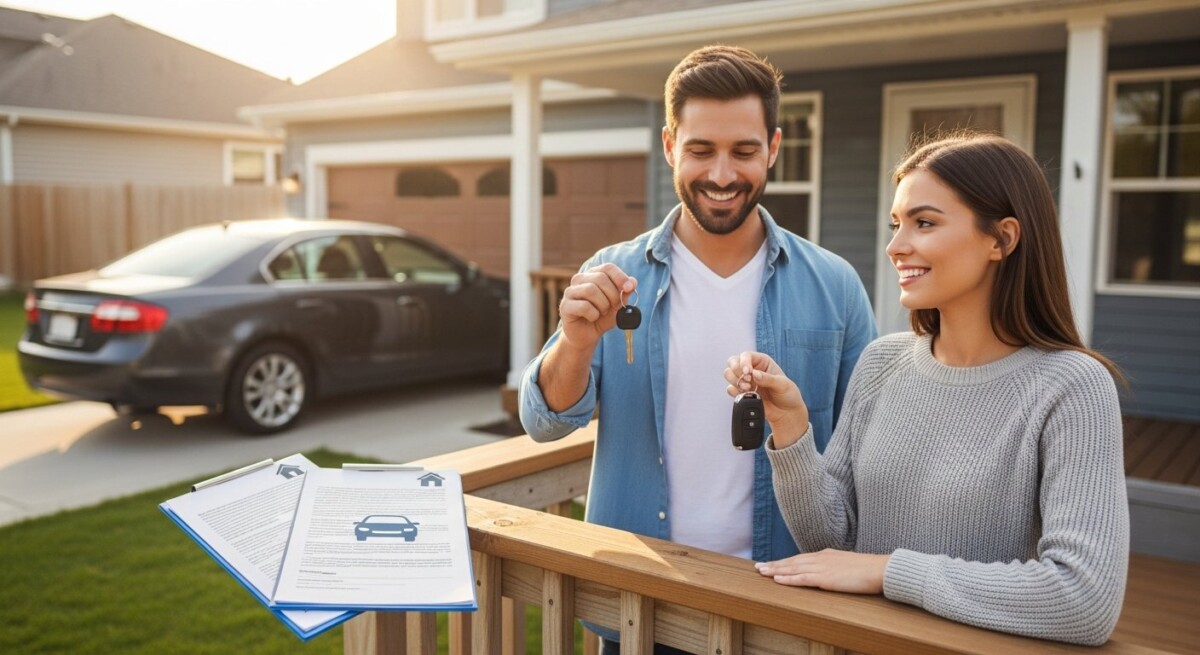
For most drivers, auto insurance feels like a fixed cost that simply must be paid each month. Yet the reality is that the price you pay for car coverage often depends on factors far beyond your driving record or the make and model of your vehicle. One of the most overlooked influences on your auto insurance premium is your housing situation. Whether you rent an apartment or own a home, the choices you make about your property coverage can create significant savings on your car insurance. In fact, auto insurance for renters and homeowners often works best when the two policies are purchased together, a strategy that can lower your overall costs while simplifying your financial life.
This guide will walk you through the many ways that renters and homeowners can use their housing status to their advantage when shopping for car insurance. From bundling discounts to credit-based scoring, we will explore the hidden connections between your home and your auto policy. You will learn practical steps to compare quotes, ask the right questions, and avoid common mistakes that lead to overpaying. By the end, you will have a clear roadmap for maximizing your savings without sacrificing the protection you need.
Why Bundling Auto and Home or Renters Insurance Works
Insurance companies reward loyalty and simplicity. When you purchase multiple policies from the same provider, you become a more valuable customer, and the insurer saves money on administrative costs, billing, and customer service. These savings are often passed back to you in the form of a multi-policy discount, which typically ranges from 5% to 25% on both your auto and property premiums. For a driver paying $1,200 per year for car insurance and a renter paying $200 per year for renters insurance, a 15% discount could save $150 annually. For a homeowner with a $1,500 annual home insurance premium, the savings can be even more substantial.
The bundling discount is not the only financial benefit. Many insurers also offer a paperless discount, a paid-in-full discount, and a loyalty discount for long-term customers. When you bundle, you may qualify for more of these discounts because the insurer sees you as a stable, long-term client. Additionally, having a single carrier for both policies means you only have one deductible to remember and one agent to call when you need to file a claim. This convenience can reduce stress during an already difficult time.
It is important to note that bundling does not always mean the cheapest overall price. You should compare the bundled quote against buying separate policies from different insurers. In some cases, the combined cost of two standalone policies may be lower than the bundled price, especially if one carrier has a particularly strong rate for one type of coverage. However, for most people, the bundling discount makes the combined approach more affordable. To see how bundling plays out in real numbers, check out our guide on how to bundle auto insurance for renters and homeowners.
How Your Housing Status Affects Your Auto Insurance Rate
Your status as a renter or homeowner can influence your auto insurance rate in several ways, some of which may surprise you. First, insurers often use your credit score as a factor in determining your premium. Homeowners tend to have higher credit scores on average, which can lead to lower auto insurance rates. Renters, especially those who are young or just starting out, may have thinner credit histories, which can result in higher premiums. However, this is not a hard rule, and many renters have excellent credit. The key is to know your credit score before shopping for insurance and to take steps to improve it if needed.
Second, your address matters. Insurers use your ZIP code to assess risk factors such as crime rates, traffic density, and weather patterns. A renter living in a dense urban area may pay more for auto insurance than a homeowner in a quiet suburb, even if they have identical driving records. This is because the cost of claims is higher in areas with more accidents, theft, or vandalism. While you cannot change your ZIP code, you can choose a car with good safety ratings and install anti-theft devices to mitigate some of the risk.
Third, owning a home often comes with additional assets that you need to protect. If you cause a serious car accident and are sued, your auto insurance liability limits may not be enough to cover the damages. Homeowners are more likely to purchase higher liability limits or an umbrella policy to protect their savings and property. Renters, who may have fewer assets, might feel comfortable with lower limits. However, this is a risky approach because a lawsuit can still garnish your wages or future earnings. For a detailed look at how these factors interact, see our savings guide for auto insurance for renters and homeowners.
Discounts You Might Be Missing as a Renter or Homeowner
Beyond the bundling discount, there are several other discounts that renters and homeowners often overlook. These can add up to significant savings, so it is worth asking your insurer about each one. Here are some of the most common discounts available:
- Multi-policy discount: Already discussed, but make sure you ask for it explicitly when you get a quote.
- Homeownership discount: Some insurers offer a small discount simply for being a homeowner, even if you do not insure your home with them. This is because homeowners statistically file fewer auto claims.
- Renters discount: Similar to the homeownership discount, some carriers give a modest discount to renters who have a renters insurance policy, even if it is with another company. You will need to provide proof of coverage.
- Mature driver discount: If you are over 50 and have completed a defensive driving course, you may qualify for a discount that applies regardless of your housing status.
- Low mileage discount: If you work from home or use public transit, you may drive fewer miles than the average motorist. Many insurers offer a discount for low annual mileage.
Not all insurers offer all of these discounts, and some have specific eligibility requirements. For example, the renters discount may only apply if the renters policy has a minimum coverage amount. It is always wise to ask your agent, “Are there any discounts I qualify for based on my housing situation?” You might be surprised by how many savings opportunities exist. To learn more about maximizing these discounts, read our article on maximizing savings with auto insurance for renters and homeowners.
Steps to Get the Best Rate on Auto Insurance for Renters and Homeowners
Getting the best rate is not about luck; it is about strategy. By following a systematic approach, you can ensure that you are not leaving money on the table. Here is a step-by-step plan to secure the most affordable coverage possible:
- Gather your documents: Have your driver’s license, vehicle registration, current insurance declarations page, and proof of homeownership or rental agreement ready. This will speed up the quoting process and ensure accuracy.
- Shop around: Get quotes from at least three different insurers. Use online comparison tools, but also call local independent agents who can access multiple carriers. Be sure to provide the same coverage limits and deductibles for each quote so you can compare apples to apples.
- Ask about discounts: When you receive a quote, ask which discounts were applied and which ones you might be missing. Mention that you are a homeowner or renter and ask if that qualifies you for any special rates.
- Consider raising your deductibles: A higher deductible (such as $1,000 instead of $500) can lower your premium by 10% to 20%. Make sure you have enough savings to cover the deductible if you need to file a claim.
- Check your credit score: If your credit is less than stellar, take steps to improve it before shopping. Pay down credit card balances and correct any errors on your credit report.
Following these steps can help you find a policy that fits your budget without compromising on coverage. Remember that the cheapest policy is not always the best value. You want a carrier with strong financial ratings and good customer service, especially when you need to file a claim. For more tips on bundling, you can refer to our detailed piece on bundling auto insurance for renters and homeowners.
Common Mistakes to Avoid When Bundling
While bundling can save you money, there are pitfalls that can erode your savings. One common mistake is not comparing the bundled quote to separate policies. As mentioned earlier, the bundled price may not always be the lowest. Another mistake is assuming that the discounts are automatic. You must explicitly ask for the multi-policy discount and ensure that your policies are linked in the insurer’s system. If you buy a renters policy and a car policy from the same company but do not mention that you want them bundled, you may not receive the discount.
Another error is neglecting to review your coverage limits when you bundle. Some insurers will try to sell you more coverage than you need, such as increasing your liability limits or adding comprehensive coverage to an older car that is not worth much. While more coverage can be beneficial, it also increases your premium. Evaluate your actual needs: if your car is worth less than $2,000, you may want to drop collision and comprehensive coverage entirely.
Finally, do not forget to reevaluate your bundle every year. Your rates can change due to factors such as claims, credit changes, or market conditions. Shopping around annually can help you stay with the most competitive carrier. If you find a cheaper option elsewhere, you can always switch, but be sure to check for any cancellation fees on your current policies.
Frequently Asked Questions
Can I bundle auto insurance with renters insurance?
Yes, most major insurance companies offer a multi-policy discount when you purchase both auto and renters insurance from them. The discount typically ranges from 5% to 20%. You will need to provide proof of your rental agreement and the renters policy details to qualify.
Does owning a home lower my car insurance?
Owning a home can indirectly lower your car insurance rate because homeowners tend to have higher credit scores and more stable financial histories, which insurers view favorably. Additionally, some insurers offer a homeownership discount even if you do not bundle. However, the discount is not automatic, so ask your agent.
What is the best way to compare bundled quotes?
The best way is to get quotes from several insurers using the same coverage limits and deductibles. You can use online tools or work with an independent agent who can provide quotes from multiple carriers. Make sure to ask each insurer what discounts apply to your bundled policies.
Final Thoughts on Auto Insurance for Renters and Homeowners
Securing the right auto insurance is not just about meeting legal requirements; it is about protecting your financial future. For renters and homeowners, the path to savings is often through bundling, which not only reduces premiums but also simplifies your life. By understanding how your housing status affects your rates, taking advantage of available discounts, and avoiding common pitfalls, you can find a policy that offers both affordability and robust protection.
Do not let the complexity of insurance overwhelm you. Start by gathering your documents, comparing quotes, and asking the right questions. If you need personalized assistance, our team is available to help you navigate your options. Call us at 833-214-7506 to speak with a licensed agent who can guide you through the process and help you find the best coverage for your unique situation.