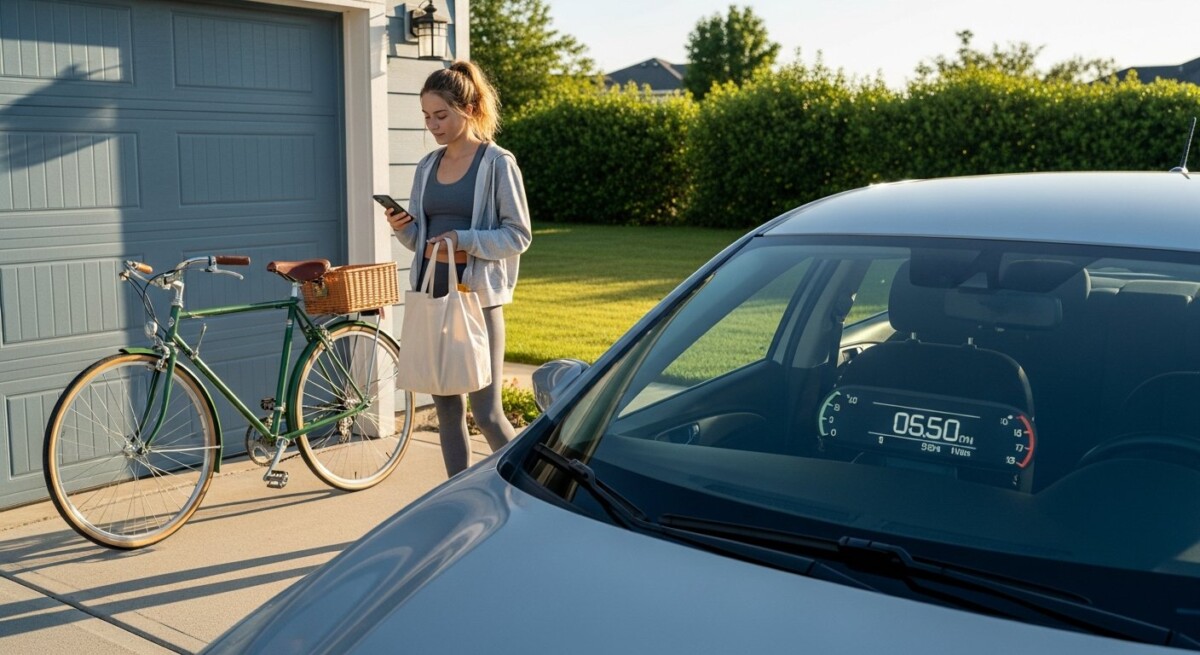
If you drive fewer miles than the average American, you might be overpaying for car insurance. Many people assume that all auto policies cost roughly the same, but insurers increasingly reward low-mileage drivers with significant discounts and specialized products. Understanding how mileage affects your premium is the first step to reducing your annual costs without sacrificing coverage.
Low-mileage drivers typically log under 7,500 miles per year, often because they work from home, use public transit, or live in walkable neighborhoods. Insurers view these drivers as lower risk because less time on the road means fewer opportunities for accidents. Yet many low-mileage drivers remain on standard policies designed for high-mileage commuters. This article explains how to find and qualify for auto insurance for low-mileage drivers, including pay-per-mile options, usage-based programs, and traditional discounts.
Why Mileage Matters to Insurers
Insurance premiums are calculated based on risk. The more you drive, the greater your exposure to collisions, theft, and weather-related incidents. Actuarial data consistently shows a direct correlation between annual mileage and claim frequency. A driver who commutes 30 miles each way daily faces far more potential hazards than someone who drives only to the grocery store and occasional appointments.
Because of this correlation, insurers ask for an estimated annual mileage when you apply for a policy. If you overestimate your mileage, you might end up in a higher risk tier and pay more. Conversely, accurately reporting low mileage can unlock discounts that lower your rate by 10 to 30 percent. In our guide on 1st Auto Insurance: Lower Your Monthly Payments Now, we explain how adjusting your mileage estimate can directly reduce your premium.
Some insurers now offer telematics programs that track actual driving behavior via a mobile app or plug-in device. These programs provide the most accurate picture of your driving habits and can lead to the largest savings for safe, low-mileage drivers. However, they also raise privacy concerns, which we will address later in this article.
Types of Low-Mileage Insurance Products
Not all low-mileage insurance is the same. Here are the three main categories you should know about when shopping for auto insurance for low-mileage drivers.
Pay-Per-Mile Insurance
Pay-per-mile insurance bases your premium partly on a daily base rate and partly on the number of miles you actually drive. You pay a small fixed amount each day to cover the time your car is parked, plus a per-mile charge for every mile driven. This model is ideal for drivers who consistently stay under 5,000 miles per year.
Typical pay-per-mile plans include a cap to prevent extreme charges if you take an unexpected long trip. Most providers also require you to install a telematics device to verify mileage, though some use smartphone GPS tracking instead. Before enrolling, check whether the device records only mileage or also collects speed and braking data, as the latter may affect privacy.
Usage-Based Insurance (UBI) Programs
Usage-based insurance programs monitor driving behavior rather than just mileage. While mileage is a factor, these programs also consider speed, braking harshness, cornering, and time of day. Drivers who demonstrate safe habits can earn discounts even if they occasionally drive longer distances.
UBI programs are offered by most major carriers under names like Progressive Snapshot, Allstate Drivewise, and State Farm Drive Safe & Save. These programs typically offer an initial discount for enrolling and additional savings after the first monitoring period. For low-mileage drivers who also drive cautiously, total discounts can exceed 30 percent. If you have a history of safe driving but a less-than-perfect credit score, you might benefit from reading our article on 5 Best Auto Insurance for Bad Credit Drivers in 2026, as some UBI programs deemphasize credit factors.
Low-Mileage Discounts on Traditional Policies
Even if you prefer a standard policy without telematics, many insurers offer a low-mileage discount. You typically need to certify that you drive under a certain threshold, often 7,500 or 5,000 miles per year. Some companies require annual odometer verification, while others take your word at policy inception.
This discount is sometimes called a "low annual mileage" or "pleasure use" discount. It works best for retirees, stay-at-home parents, and remote workers who rarely use their vehicles for commuting. To maximize this discount, ensure your policy lists the correct primary use (e.g., "pleasure" instead of "commute to work") and the accurate annual mileage. A small misstatement could invalidate a claim later, so always be honest.
How to Qualify for Low-Mileage Insurance
Qualifying for a low-mileage insurance plan requires more than just stating you drive less. Insurers want proof or at least a reasonable basis for your estimate. Follow these steps to position yourself for the best rates.
- Calculate your actual annual mileage. Review your past 12 months of odometer readings or use a mileage tracking app. Include all driving: commutes, errands, road trips, and vacation travel. Be precise rather than guessing.
- Review your current policy declarations page. Check the annual mileage estimate listed. If it is higher than your actual mileage, ask your agent to update it. This single change can lower your premium immediately.
- Adjust your primary vehicle use. If you previously listed your vehicle as "commute to work" but now work from home, change the use category to "pleasure" or "business use" only if appropriate. This can unlock additional discounts.
- Compare pay-per-mile and UBI quotes. Request quotes from at least three insurers that offer these specialized products. Use online comparison tools or work with an independent agent who can shop multiple carriers.
- Ask about bundling. Some insurers offer extra discounts when you bundle low-mileage auto insurance with renters or homeowners insurance. Bundling can save an additional 10 to 15 percent.
If you are unsure which mileage threshold applies to you, err on the side of a slightly higher estimate to avoid misrepresentation. You can always adjust your policy later if your driving patterns change. For a deeper understanding of how various factors influence your rate, see our analysis of 5 Factors That Directly Affect Your Auto Insurance Rates, which includes mileage as a key variable.
Potential Drawbacks and Considerations
While low-mileage insurance offers clear savings, it is not perfect for everyone. Before switching, consider these potential downsides.
First, pay-per-mile plans often have higher base rates than traditional policies. If you take an unexpected long trip, your monthly bill could spike. Similarly, usage-based programs may penalize you for driving at night or accelerating quickly, even if those actions are necessary for safety. Read the fine print to understand what behaviors affect your rate.
Second, privacy is a legitimate concern. Telematics devices and smartphone apps collect detailed data about your driving, including location, speed, and time of day. Some drivers are uncomfortable with this level of monitoring. If privacy is a priority, stick with traditional low-mileage discounts that require only odometer verification.
Third, not all insurers offer low-mileage products in every state. Availability varies, so you may need to shop among multiple carriers. If you live in a state with limited options, consider working with an independent agent who can identify the best available plans. To learn more about finding competitive rates in your area, check our comprehensive guide on 10 Expert Tips for Getting the Best Deal on Auto Insurance.
Frequently Asked Questions
What qualifies as low mileage for auto insurance?
Most insurers define low mileage as under 7,500 miles per year. Some specialty plans set the cap at 5,000 or even 2,500 miles. The exact threshold varies by company and policy type.
Can I get low-mileage insurance if I drive for a rideshare service?
No. Rideshare driving significantly increases your mileage and risk exposure. You need a commercial or rideshare endorsement, not a low-mileage personal policy. Some insurers offer hybrid policies that cover both personal and rideshare use, but these are not low-mileage products.
Will my rates increase if I exceed the mileage limit?
It depends on the policy. Pay-per-mile plans charge per mile, so exceeding your estimate simply means a higher bill for that period. Traditional low-mileage discounts may require you to pay back the discount if you exceed the threshold. Always ask your insurer about their specific policy.
Do I need a special policy for a car I rarely drive?
If you have a classic, antique, or seasonal vehicle, you may benefit from a specialized policy rather than a standard low-mileage plan. Classic car insurance often has mileage restrictions and lower rates for vehicles kept in storage. For standard cars driven infrequently, a low-mileage discount on a regular policy usually suffices.
How do I prove my mileage to the insurer?
Methods include odometer photos at policy start and renewal, annual mileage self-certification, or telematics device monitoring. Some insurers accept a signed statement, while others require physical verification.
Final Thoughts on Saving with Low-Mileage Coverage
Auto insurance for low-mileage drivers is not a niche product anymore. It is a mainstream option that can save hundreds of dollars per year for drivers who stay off the road. The key is to accurately assess your driving habits, compare specialized policies, and choose a plan that aligns with your comfort level regarding telematics and privacy. By taking these steps, you can stop subsidizing high-mileage drivers and start paying only for the risk you actually present.
Remember that insurance needs change over time. If you start a new job with a longer commute, update your policy immediately to avoid coverage gaps or rate surprises. Conversely, if you retire or begin working from home, revisit your policy to capture the savings you deserve. With a little effort, low-mileage insurance can be one of the simplest ways to reduce your overall transportation costs.