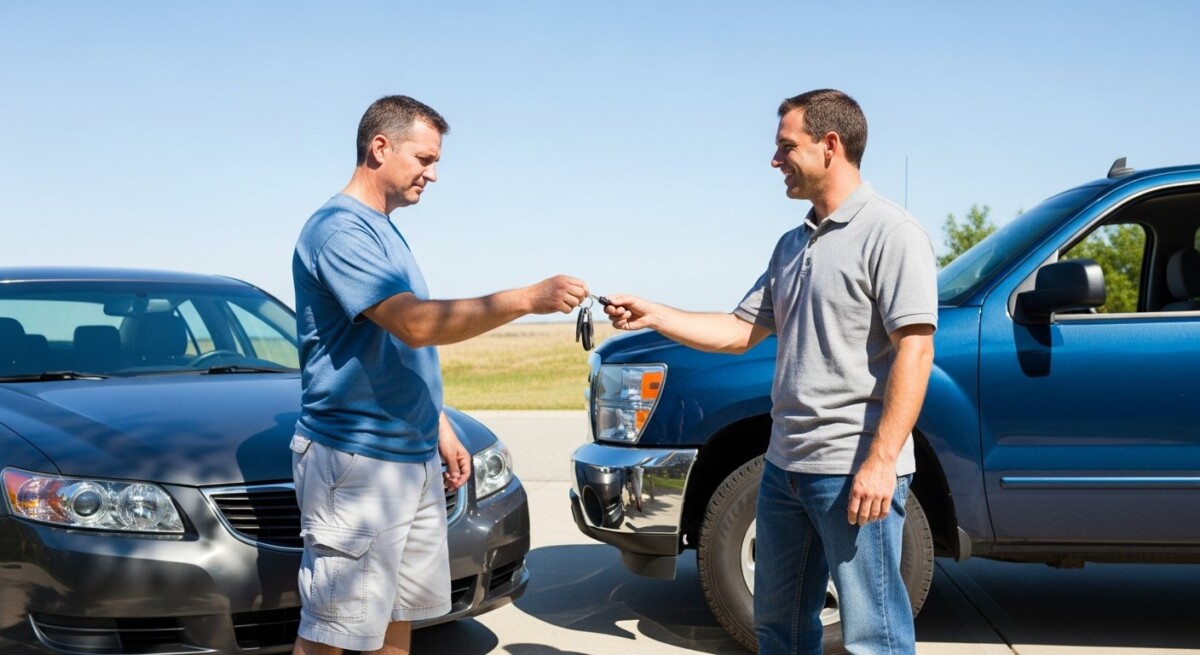
You’re running late and your spouse’s car is in the driveway. You borrow it for a quick errand. Later that week, your best friend asks to use your truck to move a couch. In both scenarios, a critical question arises: if an accident happens, whose insurance pays? The answer isn’t always straightforward and hinges on a fundamental concept in auto insurance: does coverage primarily follow the vehicle, or the person behind the wheel? Understanding this distinction is not academic, it’s essential for protecting your finances and avoiding devastating coverage gaps. The reality is that auto insurance policies interact in a hierarchy, and the rules can vary by state and situation.
The Core Principle: Insurance Primarily Follows the Car
In the vast majority of personal auto insurance scenarios, the foundational rule is that insurance follows the car. This means the vehicle’s own insurance policy is typically the primary source of coverage in the event of an accident, regardless of who is driving it, provided they have the owner’s permission. The vehicle’s policy is designed to cover the car itself and the liability arising from its operation. When you lend your car, you are also, in effect, lending your insurance. This principle provides a predictable first layer of financial responsibility tied to the vehicle.
Consider this example: You own a car insured with liability, collision, and comprehensive coverage. Your licensed cousin borrows it with your permission and causes an accident. Your insurance policy will be the primary payer for damages to the other driver’s vehicle (liability) and for repairs to your own car (collision), subject to your deductible. Your cousin’s personal auto insurance would generally act as secondary or excess coverage, potentially kicking in if the damages exceed your policy limits. This system places the initial burden on the vehicle owner’s insurer because the owner is ultimately responsible for the property they allow on the road.
When the Driver’s Insurance Becomes Primary
While the “car-first” rule is standard, there are important exceptions where the driver’s insurance can become the primary coverage. These exceptions are crucial to recognize, as they can leave a vehicle owner financially exposed if not properly planned for.
The most common exception involves drivers who are not listed on the vehicle owner’s policy and who live in the same household. If your teenage son, who lives with you, is not listed as a driver on your policy and crashes your car, your insurer may deny the claim entirely. They will argue you failed to disclose a regular household driver, which is a material misrepresentation. In this case, your son’s own insurance (if he has any) would become primary, and if he has none, you could be personally liable.
Another key exception is commercial use. If you use your personal vehicle for delivery services like Uber Eats or DoorDash, and you cause an accident during a delivery, your personal auto policy will likely deny the claim. Ride-sharing or delivery constitutes a commercial activity excluded by standard personal policies. In this gap, the driver’s commercial insurance (often provided in stages by the app company) must respond. Similarly, if an employee causes an accident in a company vehicle, the company’s commercial auto insurance is the primary policy. Understanding these commercial boundaries is vital, as explored in our resource on specialized auto insurance coverage scenarios.
Navigating Permissive Use and Excluded Drivers
The concept of “permissive use” is the linchpin of the “insurance follows the car” rule. It means you gave the driver explicit or implied permission to operate your vehicle. Most standard policies extend coverage to occasional drivers with permission. However, “occasional” is not clearly defined and can be a point of contention with insurers if the borrowing becomes frequent.
More critically, insurers allow policyholders to specifically “exclude” drivers from their policy. This is often done to lower premiums for a high-risk driver in the household. If you exclude your roommate from your policy and they drive your car anyway, even with your permission, your insurance will almost certainly deny any claim resulting from an accident. The excluded driver’s own insurance would be solely responsible, potentially leaving massive gaps if their coverage is minimal or nonexistent. This is a dangerous gamble.
To avoid surprises, you must understand your policy’s language on permissive use and excluded drivers. Key factors insurers consider include the frequency of borrowing, the driver’s relationship to you, and whether the driver has their own insurance. When in doubt, the safest practice is to add frequent drivers to your policy, even if it increases your premium. This guarantees coverage and protects your assets.
The Claims Process: How Primary and Secondary Coverage Interact
When an accident occurs involving a borrowed car, the claims process follows a defined order, often called the “order of payment.” This process determines which insurer pays first and how they coordinate.
The primary insurance is the policy that must pay first, up to its limits. As established, this is usually the insurance on the car involved in the accident. The secondary (or excess) insurance is the driver’s personal policy. It only comes into play if the damages exceed the primary policy’s limits. For example, if the accident causes $150,000 in bodily injury liability and the car’s policy limit is $100,000, the car’s insurer pays its $100,000. The driver’s insurer may then cover the remaining $50,000, subject to its own limits.
For physical damage to the borrowed car itself (collision or comprehensive claims), the car owner’s policy is again primary. The car owner files the claim with their own insurer and pays their deductible. The driver’s insurance typically does not provide coverage for damage to the vehicle they borrowed, unless the driver’s policy includes coverage for “non-owned autos,” which is rare in standard personal policies. This interplay highlights why state-mandated minimum liability limits are often insufficient. A serious accident can easily exhaust primary limits, pushing costs to the secondary insurer or, worse, to the individuals personally.
State-Specific Variations and Key Laws
While the general framework is consistent, state laws can modify these rules. Two important legal doctrines affect liability: fault (tort) states and no-fault (Personal Injury Protection, or PIP) states.
In no-fault states, each driver’s own insurance pays for their medical expenses and lost wages after an accident, regardless of who caused it, up to the PIP limit. This system can simplify claims for minor injuries but does not eliminate liability for severe crashes. The question of “which PIP policy applies” if you’re driving a borrowed car depends on state law: some states designate the driver’s policy as primary for PIP, while others use the vehicle’s policy. This complexity makes consulting local guidelines essential, similar to understanding regional differences in auto insurance plans in Columbia, South Carolina versus other regions.
Furthermore, state-mandated minimum coverage limits vary dramatically. Relying on minimal coverage when lending your car is risky. If your car’s policy has low limits and the driver causes a major accident, the damages could quickly surpass your coverage, leaving you and the driver exposed to lawsuits. Ensuring you have robust liability limits is one of the most important financial decisions you can make as a vehicle owner.
Practical Scenarios and How to Protect Yourself
Let’s apply these rules to common real-world situations to clarify your potential risk.
Scenario 1: Lending your car to a friend for a weekend trip. Your insurance is primary. Their insurance is secondary. Ensure your friend is a licensed, responsible driver and that your liability limits are adequate.
Scenario 2: Renting a car. When you rent a vehicle, the rental company’s insurance is primary only if you purchase their costly daily coverage. Typically, your personal auto policy extends to rental cars for personal use, following the “car” rule (your policy covers the temporary substitute vehicle). Your credit card may offer secondary coverage for damage to the rental car itself. Always confirm coverage before renting.
Scenario 3: Driving a friend’s car. You are operating under their insurance primarily. Your own policy acts as secondary liability coverage and likely provides no coverage for damage to your friend’s car.
To robustly protect yourself, both as an owner and a borrower, follow these steps:
- Increase Your Liability Limits: Purchase significantly more than your state’s minimum. $100,000/$300,000/$100,000 is a common recommended minimum, with $250,000/$500,000 being safer.
- Add an Umbrella Policy: For a relatively low cost, a personal umbrella policy provides an extra $1 million or more in liability coverage that kicks in after your auto (or home) insurance limits are exhausted.
- Communicate with Your Insurer: Disclose all household drivers and ask specific questions about permissive use. Never exclude a driver who might still have access to your keys.
- Verify Coverage Before Borrowing: If you frequently borrow a specific vehicle (like a parent’s car), ensure you are listed on their policy. If you rarely borrow, confirm they have adequate insurance.
- Consider Specialized Endorsements: If you regularly use your car for business (beyond a commute), inquire about a rideshare endorsement or a commercial policy to avoid claim denials.
These protective measures are as important as understanding your policy’s core mechanics, much like knowing whether your auto insurance covers specific mechanical failures.
Frequently Asked Questions
If I drive someone else’s car and crash it, will my insurance pay to fix their car?
Generally, no. Your liability coverage pays for damage you cause to other people’s property (like another vehicle). Damage to the car you were driving falls under that car owner’s collision coverage. You would be responsible for their deductible, and your insurer might reimburse you for that if you have applicable coverage.
Does my insurance cover me when I drive a rental truck (like from U-Haul)?
Maybe, but with major caveats. Personal auto policies often do not extend fully to large commercial rental trucks. The rental company’s insurance is usually primary, and it is highly advisable to purchase their coverage for the rental period. Never assume your personal policy is sufficient.
What happens if an uninsured driver borrows and crashes my car?
This is a high-risk situation. Your insurance remains primary. Your policy will pay for damages to the other driver’s car (liability) and for your car (collision), subject to your deductibles. Your insurer will then likely subrogate against the uninsured driver to recover costs, but if they have no assets, recovery is difficult. Your premiums will likely increase.
Should I add someone to my policy if they only drive my car once a month?
It depends on your insurer’s definition of “occasional.” If the person lives with you, you should almost certainly add them. If they do not live with you, frequent borrowing (like every weekend) could lead to a claim denial. The safest course is to call your insurer, describe the frequency, and get their guidance in writing.
How does coverage work for teen drivers in the household?
Teen drivers must be listed on your policy. Failing to do so is a common reason for claim denial. While adding a teen significantly increases premiums, it is non-negotiable for maintaining coverage. Some insurers offer good student discounts or telematics programs to help manage costs, similar to options detailed in guides for finding auto insurance plans in Charlotte, North Carolina and other cities.
The interplay between car and driver insurance is a cornerstone of auto liability. While the default rule that insurance follows the car provides a baseline of predictability, the exceptions are where financial peril lies. Proactively managing your coverage by raising limits, understanding exclusions, and communicating openly with your insurer is the only way to ensure that a single decision to lend your keys doesn’t lead to a lifetime of regret. Your auto insurance policy is a contract of promises, and its protection is only as sound as your understanding of its terms.