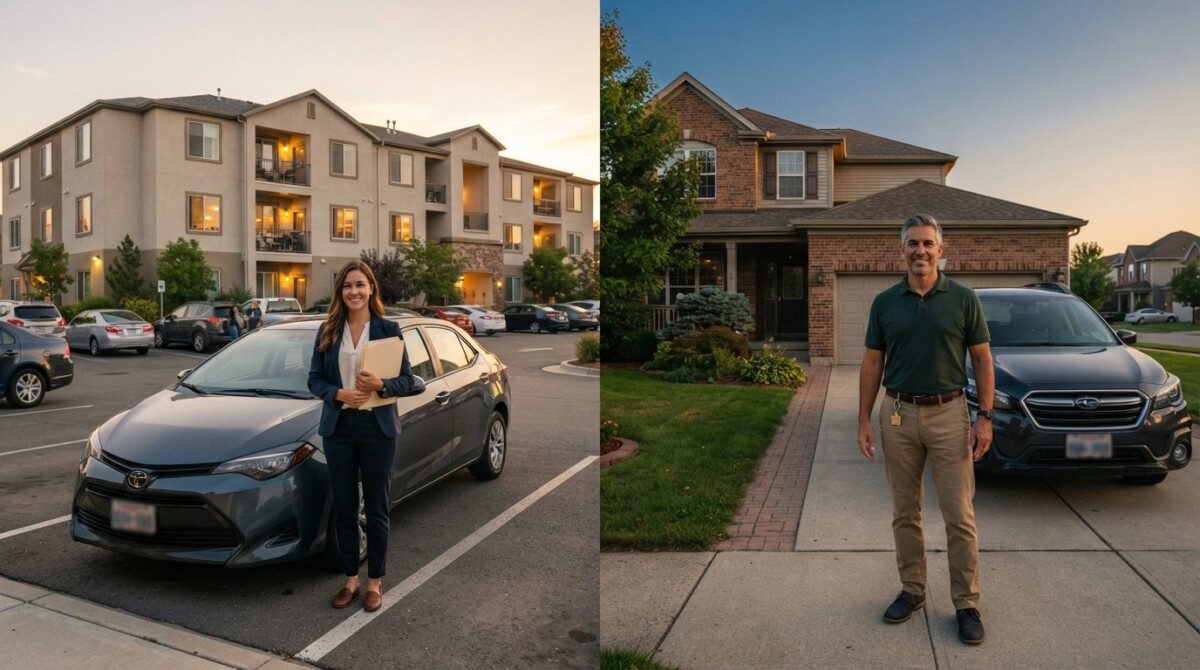
Your housing situation changes how insurers view risk, and it also changes the discounts you can unlock. If you rent an apartment, the car sitting in the parking lot is insured differently than a vehicle parked in a driveway you own. If you own a home, your property policy can often be paired with your auto policy for savings that renters sometimes miss. Understanding how auto insurance for renters and homeowners actually works, and where the savings hide, can put hundreds of dollars back in your pocket each year.
This guide walks through the differences between renters and homeowners, how bundling really functions, which discounts apply to each group, and the mistakes that quietly raise your premium. Whether you rent a studio in a city or own a house in the suburbs, the goal is the same: pay for the coverage you need without paying for coverage you do not.
Why Your Housing Status Affects Auto Insurance
Insurance companies price risk using dozens of variables, and where and how you live is one of them. A driver who owns a home is statistically more likely to file claims responsibly, maintain the property, and stay with the same insurer longer. That profile often translates into lower rates. Renters, by contrast, move more frequently and may not have the same long-term relationship with an insurer, so some carriers price them slightly higher or offer fewer loyalty perks.
That does not mean renters pay more across the board. In dense urban areas where renters are common, insurers compete aggressively for that market. A renter with a clean driving record in a low-theft neighborhood can often beat a homeowner with a ticket or two. The key is to understand your own profile and shop accordingly rather than assume one group always wins.
Another factor is where the vehicle sits overnight. A garage attached to an owned home reduces theft and weather risk. A street parking spot outside a rented building increases it. Insurers ask about overnight parking on nearly every application, and the answer directly shapes your comprehensive and collision premiums. If you rent but have access to a covered garage, say so. It can matter more than your ownership status.
How Bundling Works for Renters vs Homeowners
Bundling means buying two or more policies from the same insurer, usually auto plus home or auto plus renters. The insurer saves on administrative costs and rewards you with a multi-policy discount. For homeowners, the bundle is straightforward: home plus auto. For renters, the bundle is auto plus renters insurance, which is far cheaper than most people expect, often just $15 to $30 per month.
Here is where renters leave money on the table. Many assume renters insurance is unnecessary or too expensive, so they skip it and lose the bundle discount on their auto policy. In reality, adding a small renters policy can reduce the auto premium by 5 to 25 percent at many carriers, which can more than cover the cost of the renters policy itself. The math often works in your favor from the first month.
Homeowners have a similar opportunity but with more moving parts. If you own your home outright, you still need property coverage, and pairing it with auto remains one of the simplest discounts available. If you have a mortgage, your lender requires homeowners insurance anyway, so bundling costs you nothing extra in coverage, only in paperwork. Our guide on bundling auto and home policies breaks down exactly how much the discount typically runs by carrier.
One caution: bundling is not automatically the cheapest option. Occasionally, two separate insurers offer lower combined rates than one bundled policy. Always compare the bundled quote against separate quotes before committing. It takes fifteen extra minutes and can save real money.
Discounts Renters Should Target
Renters often qualify for more discounts than they realize, but they have to ask. Insurers rarely volunteer every available reduction. Below are the ones that consistently deliver the largest savings for renters, followed by how to claim them.
- Multi-policy discount: Add a renters policy to your auto policy, even a minimal one, and ask for the bundle rate.
- Paid-in-full discount: Paying six or twelve months upfront instead of monthly often cuts 5 to 10 percent.
- Paperless and autopay: Small but easy, usually 2 to 5 percent for going digital and automatic.
- Safety and anti-theft features: A car with airbags, electronic stability control, or a tracking device can earn additional credits.
- Good student or professional affiliation: Students with strong grades and members of certain alumni or professional groups qualify for added reductions.
To claim these, call your insurer or log into your account and review the discount section line by line. If a discount exists but is not applied, ask why. Sometimes it is a simple data entry miss. Other times the insurer requires documentation such as a transcript or proof of installation. Provide it and watch the premium drop.
Renters should also reconsider their deductible. Raising it from $500 to $1,000 can lower collision and comprehensive premiums by 15 to 30 percent. Keep the higher amount in a savings account so a claim does not become a financial shock.
Discounts Homeowners Should Target
Homeowners have access to everything renters do, plus a few extras tied to property ownership. The bundle discount is typically larger because the home policy is more expensive than a renters policy, so the percentage savings on the combined package is more meaningful.
Beyond bundling, homeowners can often earn credits for a newer roof, a security system, a fire alarm connected to a monitoring service, and even a home that is close to a fire hydrant or fire station. These property-level details reduce the insurer’s risk and translate into lower premiums on both the home and auto side when bundled.
Loyalty also pays. Many carriers reduce rates after three or five consecutive years, and some offer a diminishing deductible that shrinks each claim-free year. If you have been with the same insurer for a while, ask whether a loyalty tier exists and whether you are in it. It is a common oversight that costs homeowners real money.
One more lever: your credit-based insurance score. In most states, insurers use it to price auto policies. Paying down revolving balances and correcting errors on your credit report can lower your auto premium even if nothing else changes. Our article on saving more on combined policies covers how credit and bundling interact.
Coverage Differences That Matter
Auto insurance itself does not change based on whether you rent or own. Liability, collision, comprehensive, uninsured motorist, and medical payments coverage work the same way. What changes is the surrounding protection. Homeowners insurance covers the dwelling and personal property inside it. Renters insurance covers personal property and personal liability but not the building itself, which belongs to the landlord.
This distinction matters when a loss involves both a vehicle and a residence. If a fire starts in your rented apartment and damages your car in the lot, your renters policy may cover personal property and liability while your auto policy handles the vehicle damage, depending on the cause. Homeowners face a similar split, but their property policy may also cover detached structures and additional living expenses if the home becomes uninhabitable.
Review your deductibles across both policies. A $1,000 auto deductible paired with a $2,500 home deductible means you are self-insuring a meaningful amount. That is fine if you have the cash set aside, but it becomes a problem if a single event triggers both deductibles at once. Keep an emergency fund sized to cover the worst realistic scenario.
Common Mistakes That Raise Your Premium
Even careful drivers overpay because of avoidable errors. The most frequent ones show up again and again in claims data and policy reviews.
- Letting a policy lapse: Even a one-day gap can raise future rates and remove loyalty discounts. Set autopay.
- Ignoring annual rate changes: Insurers adjust rates quietly. Review your renewal every year instead of assuming it is fair.
- Overlooking mileage: If you now work from home and drive half as much, tell your insurer. Low-mileage discounts are real.
- Adding a high-risk driver without shopping: A teenager or a driver with violations can spike the premium. Compare carriers before adding them.
- Skipping the renters policy: As noted, this forfeits the bundle discount and leaves your belongings unprotected.
Fixing any one of these can offset a rate increase. Fixing several at once often produces a net decrease even in a hard market. The discipline is to treat your policy like a subscription you audit yearly, not a set-and-forget expense.
Step-by-Step: Shopping for the Best Combined Rate
Getting the lowest legitimate rate takes a repeatable process. Follow these steps in order and you will compare apples to apples.
- Gather your current declarations pages for auto, home or renters, and any umbrella policy.
- List your vehicles, drivers, annual mileage, and overnight parking situation accurately.
- Request quotes from at least three carriers, asking specifically for the bundled rate and the separate rate.
- Ask each carrier which discounts you qualify for and which require documentation.
- Compare total annual cost, not monthly, and check deductible levels and coverage limits match.
- Before switching, confirm the new policy starts the same day the old one ends to avoid a lapse.
If you would rather have a licensed agent do the comparison for you, that option exists and costs nothing extra because agents are paid by carriers. Our overview of smart savings strategies explains when an agent saves you time versus when direct shopping wins.
One final tip: revisit your quote every six months. Insurers change appetites constantly, and a carrier that was expensive last year may be the cheapest this year. Loyalty is worth something, but not unlimited amounts.
Frequently Asked Questions
Do renters need renters insurance to bundle with auto?
Technically no, but the bundle discount usually requires a second policy. Without renters insurance, you lose the multi-policy credit and your personal belongings remain unprotected. Most renters find the combined cost is lower than auto alone plus the risk of replacing everything out of pocket.
Is auto insurance cheaper for homeowners than renters?
On average, homeowners see slightly lower auto rates because insurers associate ownership with stability. However, driving record, location, vehicle type, and credit score matter far more than housing status. A careful renter will often beat a homeowner with violations.
Can I bundle auto with a parent’s homeowners policy?
Sometimes. If you live at home or are a student, insurers may allow you to stay on a parent’s policy or bundle your auto with their home policy. Rules vary by carrier and state, so ask directly and confirm you are listed as a rated driver.
How much does bundling actually save?
Typical multi-policy discounts range from 5 to 25 percent, with most households landing between 10 and 15 percent. The exact figure depends on the carrier, the state, and the total premium of both policies. Always compare the bundled total against separate policies.
What if I rent but own a second home?
You can often bundle auto with the homeowners policy on the second home even if you rent your primary residence. Insurers care about the policy relationship, not where you sleep most nights. Confirm the discount applies to your situation before assuming.
Auto insurance for renters and homeowners rewards people who understand how their housing situation interacts with their policy. Renters who add a small renters policy unlock bundle savings that often exceed its cost. Homeowners who pair their property and auto coverage capture the largest multi-policy discounts available. In both cases, the winning move is the same: review your coverage annually, ask about every discount, and compare at least three carriers before you renew. Do that, and you keep more of your money while staying properly protected.