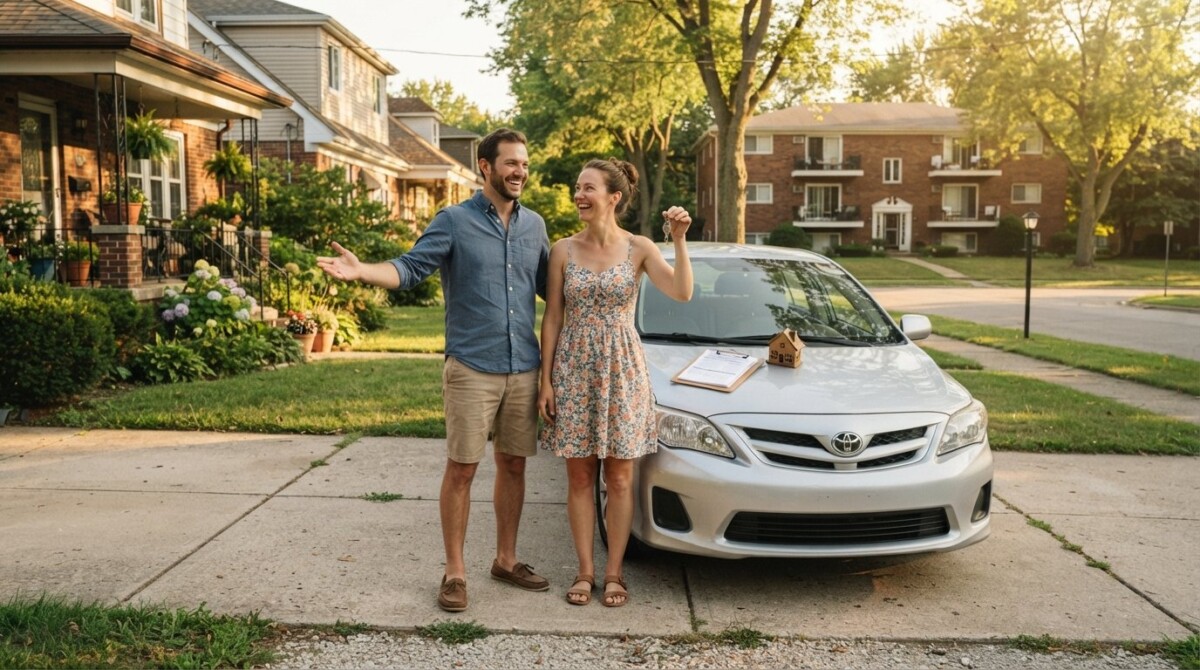
Your housing situation shapes nearly every part of your budget, and auto insurance is no exception. Whether you rent an apartment in a bustling city or own a home in the suburbs, the way you combine your auto policy with your renters or homeowners coverage can mean the difference between paying too much and keeping hundreds of dollars in your pocket each year. Many drivers never stop to consider how their living situation affects their car insurance rates, yet insurers quietly reward policyholders who bundle or align their coverage in smart ways. Understanding these connections is the first step toward meaningful savings.
At NewAutoInsurance.com, we believe that informed drivers make better decisions. This guide walks you through the ins and outs of auto insurance for renters and homeowners, from bundle discounts to coverage gaps you might not know exist. By the end, you will have a clear framework for evaluating your own policies and asking the right questions when you shop for quotes. If you have ever wondered whether your landlord’s policy protects your car, or whether your homeowners insurance covers a rental car on vacation, this article answers those questions and more.
Why Your Housing Status Matters for Auto Insurance
Insurance companies group policyholders into risk categories, and your housing status is one of the factors they consider. Statistically, homeowners tend to file fewer auto claims than renters, partly because they often have more financial stability and may drive less frequently. As a result, some insurers offer slightly lower base rates to homeowners. That does not mean renters pay exorbitant premiums, but it does explain why the same car and driving record can produce different quotes depending on whether you rent or own.
More importantly, your housing status determines which additional policies you can bundle. Homeowners can combine auto and home insurance into a single package, while renters can pair auto with renters insurance. Both bundles unlock discounts that typically range from 5% to 25% off your auto premium. The exact savings depend on the insurer, your state, and the total value of the policies involved. Even a modest discount compounds over time, so it is worth exploring.
Another factor is liability exposure. Homeowners generally have more assets to protect, which makes them targets for lawsuits after an at-fault accident. Renters, by contrast, may have fewer attachable assets, but they still need adequate liability coverage to protect future income and savings. In both cases, the right auto insurance for renters and homeowners is not just about saving money; it is about matching coverage to your actual risk profile.
Bundle Discounts: The Easiest Path to Savings
Bundling is the single most effective way to reduce your auto insurance premium when you rent or own a home. Insurers love multi-policy customers because they retain them longer and process fewer cancellations. To reward that loyalty, they offer discounts that can be applied automatically or upon request. If you are not already bundling, you may be leaving money on the table.
Here is how bundling typically works for each group:
- Homeowners: Combine your auto policy with your homeowners insurance. Discounts often apply to both policies, though the auto side usually sees the larger reduction.
- Renters: Pair your auto policy with a renters insurance policy. Renters insurance is inexpensive (often $15 to $30 per month), so the bundle discount can effectively pay for the renters policy itself.
- Condo owners: If you own a condo, you may have an HO-6 policy. Many insurers treat this similarly to homeowners insurance for bundling purposes.
The savings can be substantial. For example, a driver paying $1,200 per year for auto insurance might save 15% by bundling, which equals $180 annually. Add a renters policy for $240 per year, and the combined cost is $1,260, compared to $1,440 if purchased separately. That is a net savings of $180 while gaining valuable protection for your personal belongings.
Not all bundles are created equal, though. Some insurers offer bigger discounts for home and auto than for renters and auto, simply because the average homeowners premium is higher. Always ask for a side-by-side comparison. If you want a deeper dive into how bundling works across different scenarios, our guide on auto insurance for renters and homeowners: bundle and save breaks down the math in detail.
Coverage Gaps Renters and Homeowners Should Know
Even if you have both auto and renters or homeowners insurance, gaps can leave you exposed. One common misconception is that your auto policy covers everything that happens to your car. In reality, your auto policy handles collisions, theft, and liability, but it does not cover personal items stolen from your car unless you have specific coverage. Your renters or homeowners policy may step in for those items, but only after your auto deductible is met, and only if the items are listed or covered under personal property protection.
Another gap involves rental cars. If you rent a vehicle for a vacation, your personal auto policy often extends coverage, but the type of coverage depends on your policy. Liability, collision, and comprehensive may all transfer, but limits vary. Renters and homeowners should check whether their policy includes rental reimbursement and whether it applies to rental cars. In many cases, your credit card offers secondary coverage, but that is not a substitute for primary protection.
Finally, consider liability limits. If you cause an accident and are sued, your auto liability coverage pays up to your policy limits. If the judgment exceeds those limits, your personal assets are at risk. Homeowners and renters can add an umbrella policy for relatively little cost, which provides an extra layer of liability protection. This is especially important for homeowners with significant equity or renters with high future earning potential.
How to Compare Quotes Effectively
Comparing auto insurance quotes is not just about finding the lowest number. You need to evaluate coverage, deductibles, customer service, and the insurer’s reputation for paying claims. Start by gathering quotes from at least three insurers, including any that offer bundling discounts. Be prepared to provide details about your home or rental, your vehicles, and your driving history.
Use a consistent set of coverage limits across all quotes so you are comparing apples to apples. For example, if you choose 100/300/100 liability limits, apply those to every quote. Then look at the premium after all discounts, not the sticker price. Some insurers advertise low base rates but offer few discounts, while others have higher base rates but generous bundle savings.
Our article on auto insurance for renters and homeowners: save more provides a step-by-step comparison checklist. It walks you through questions to ask agents, such as whether the bundle discount applies to both policies and whether there are any restrictions based on your ZIP code or claims history.
Remember that quotes are snapshots. Your rate can change at renewal based on claims, credit score changes (in states that allow credit-based insurance scores), and market conditions. Re-shop your policies every 12 to 18 months to ensure you are still getting a competitive deal.
Renters Insurance and Auto: A Powerful Pair
Renters insurance is often overlooked because tenants assume their landlord’s policy covers them. It does not. Your landlord’s insurance covers the building structure, not your personal belongings or liability. If a fire destroys your apartment, your landlord rebuilds the walls, but your furniture, electronics, and clothing are gone unless you have renters insurance.
Pairing renters insurance with auto insurance creates a bundle that protects both your car and your home life. Most renters policies include personal property coverage, liability protection, and loss of use coverage, which pays for temporary housing if your rental becomes uninhabitable. When bundled with auto, you get a discount and a single point of contact for claims.
The cost of renters insurance is low relative to the protection it provides. According to industry data, the average renters policy costs less than $20 per month for $30,000 in personal property coverage and $100,000 in liability. When you bundle, that cost can drop even further. For renters who drive, this combination is a no-brainer.
One caution: do not assume your auto policy covers your personal belongings. It typically does not. If you have high-value items like jewelry, musical instruments, or collectibles, you may need to schedule them separately on your renters policy. The same applies to homeowners.
Homeowners Insurance and Auto: Maximizing Protection
For homeowners, the bundle discount is often larger because the homeowners policy premium is higher. Insurers may offer up to 25% off auto and 15% off home when you combine them. Over several years, those savings add up to thousands of dollars.
Beyond discounts, bundling simplifies your insurance life. You have one renewal date, one payment, and one agent to call when something goes wrong. If a storm damages both your car and your roof, you file one claim instead of two separate ones, which can reduce paperwork and speed up resolution.
Homeowners should also consider increasing their deductible on the homeowners policy to lower the premium, then use the savings to maintain a robust auto policy. The key is to find a balance where you can comfortably cover the deductible out of pocket if a claim occurs. Our guide on auto insurance for renters and homeowners: smart savings explores this strategy in depth.
Another tip: review your homeowners policy annually to ensure your dwelling coverage keeps pace with construction costs. If your home is underinsured, a major claim could leave you paying thousands out of pocket. Your auto insurer may offer a discount for having a recently updated home policy, so keep those records handy.
Factors That Affect Your Premium Beyond Bundling
While bundling is powerful, it is not the only lever you can pull. Several other factors influence your auto insurance rate, and understanding them helps you make informed choices.
- Driving record: Accidents, tickets, and DUI convictions raise rates. Maintaining a clean record for three to five years can significantly lower your premium.
- Credit score: In most states, insurers use credit-based insurance scores to predict risk. Improving your credit can reduce your rate.
- Vehicle type: Sports cars, luxury vehicles, and cars with high repair costs cost more to insure. Choosing a vehicle with good safety ratings and low theft rates can save money.
- Annual mileage: Low-mileage drivers often qualify for discounts. If you work from home or commute less than 10,000 miles per year, ask about telematics or low-mileage programs.
- Deductible: A higher deductible lowers your premium, but make sure you can afford it if you need to file a claim.
Addressing these factors alongside bundling can compound your savings. For instance, a homeowner with a clean record, good credit, and a $1,000 deductible may pay 40% less than a renter with a spotty record and a $250 deductible. That is why a holistic review of your insurance profile is essential.
Frequently Asked Questions
Does my renters insurance cover my car if it is stolen from my apartment parking lot?
No. Your auto insurance policy covers theft of your vehicle. Renters insurance covers personal property stolen from your apartment, but not your car itself. However, if items inside the car are stolen, your renters insurance may cover them after your auto deductible.
Can I bundle auto insurance with my parents’ homeowners policy if I live with them?
Yes, many insurers allow this. If you are a resident relative, you may be able to stay on your parents’ auto policy and benefit from their homeowners bundle. However, once you move out, you will need your own policy and may lose the discount.
Will bundling always save me money?
Not always. Sometimes an insurer with a low auto rate does not offer competitive home or renters rates, so the bundle discount is offset by a higher premium on the other policy. Always compare the total cost of the bundle against separate policies from different insurers.
Do I need renters insurance if I have auto insurance?
Yes, if you rent. Auto insurance does not cover your personal belongings or liability inside your rental. Renters insurance fills that gap and often costs less than $20 per month, making it a smart addition even without the bundle discount.
How often should I review my bundle?
Review your bundle every 12 months, or whenever your life changes (marriage, divorce, new home, new car). Insurers change discounts and rates frequently, so an annual check ensures you are not overpaying.
Take Control of Your Insurance Costs
Auto insurance for renters and homeowners does not have to be a source of confusion or overspending. By understanding how your housing status affects your rates, leveraging bundle discounts, and closing coverage gaps, you can protect your assets while keeping more money in your wallet. Start by reviewing your current policies, then gather quotes from multiple insurers to see where you can save. Small changes, like adding renters insurance or adjusting a deductible, can yield big results over time.
At NewAutoInsurance.com, we are here to help you navigate the process. Our educational guides and comparison tools are designed to give you the knowledge you need to make confident decisions. Whether you rent or own, the right auto insurance strategy is within reach.