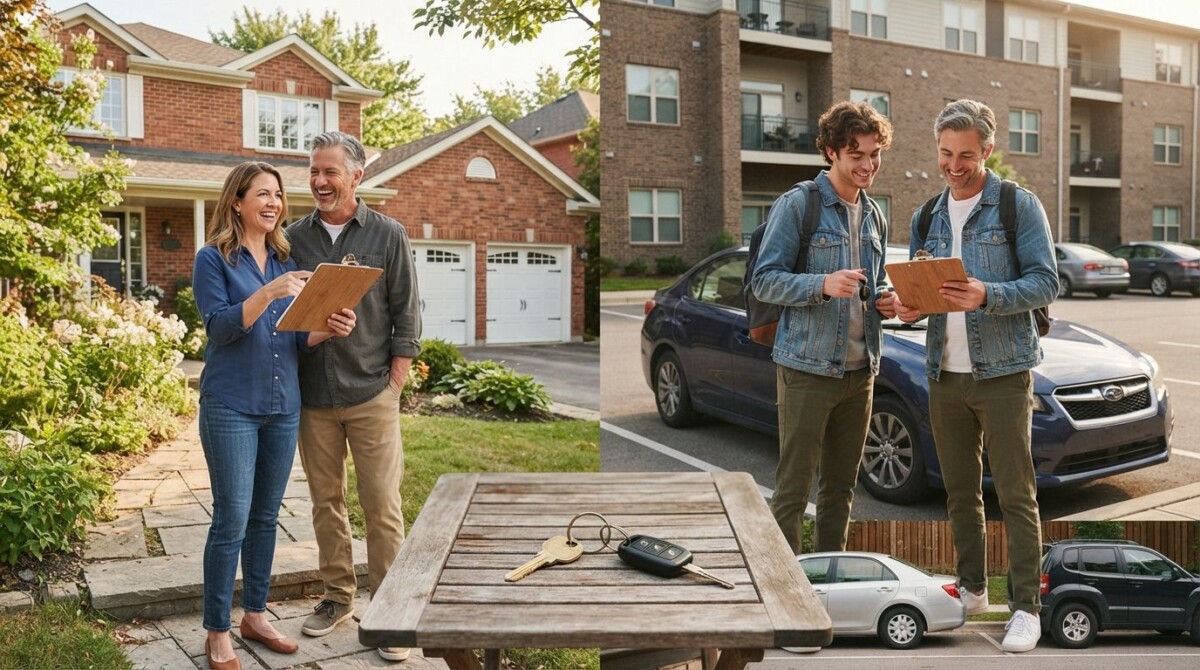
Your housing situation changes how you buy auto insurance, often in ways most drivers never consider. Renters and homeowners face different risks, different liability exposures, and different discount opportunities, yet many simply renew the same policy year after year without questioning whether it still fits. Understanding how your living arrangement interacts with your auto coverage can unlock real savings and close dangerous gaps in protection. This guide breaks down what renters and homeowners need to know, from bundling strategies to liability coordination, so you can make confident decisions instead of guessing.
Why Your Housing Status Changes Your Auto Insurance Needs
Insurance companies price risk based on patterns, and one of the strongest patterns they track is whether you own or rent your home. Homeowners tend to file fewer claims and maintain steadier payment histories, which is why many carriers offer them preferential auto rates. Renters, meanwhile, are often younger, more mobile, and less likely to hold multiple policies, factors that can push auto premiums higher unless you take steps to offset them.
Beyond pricing, your housing status affects what you actually need to protect. A homeowner with a detached garage, valuable tools, and a home-based business has different exposure than a renter in an apartment complex with a shared parking lot. If a guest trips over your extension cord and sues, your homeowners policy responds. If a neighbor in your building is injured by your dog, your renters policy handles it. Your auto policy sits alongside these coverages, and the way they interact determines whether you are fully protected or quietly underinsured.
Many drivers assume their auto policy stands alone. In reality, it is one piece of a personal risk portfolio that includes renters or homeowners insurance, umbrella coverage, and sometimes life insurance. When these pieces are coordinated, you avoid duplicate coverage and eliminate gaps. When they are not, you may pay twice for the same protection or discover too late that a claim falls between policies.
How Bundling Auto Insurance for Renters and Homeowners Works
Bundling simply means buying two or more policies from the same insurer, usually auto plus renters or auto plus homeowners. Insurers reward this loyalty because it reduces their administrative costs and lowers the chance you will switch carriers. Discounts typically range from 5 percent to 25 percent, though the exact amount depends on the insurer, your state, and the types of policies you combine.
For homeowners, the math is often straightforward: add your auto policy to your home policy and watch both premiums drop. For renters, the opportunity is less obvious but equally real. Renters insurance is inexpensive, often $15 to $30 per month, and pairing it with auto coverage can produce savings that exceed the cost of the renters policy itself. In some cases, the bundle discount on auto alone pays for the renters coverage entirely.
If you want a deeper walkthrough of how these discounts stack, our guide on auto insurance for renters and homeowners bundling tips explains the mechanics step by step. The key takeaway is that bundling is not automatic. You have to ask, compare, and sometimes negotiate to capture the full value.
What Bundling Actually Saves You
Consider a renter paying $140 per month for auto insurance and $20 per month for renters insurance from separate companies. By moving both to one carrier, that renter might see auto drop to $115 and renters stay at $18, saving roughly $27 per month or $324 per year. A homeowner paying $1,800 annually for home coverage and $1,600 for auto might bundle both for $3,050, saving $350 per year. These numbers are illustrative, but they reflect the scale of savings available to drivers who take the time to compare.
The savings compound when you add other discounts. Safe driver bonuses, paid-in-full discounts, paperless billing, and telematics programs can stack on top of bundle savings. The key is to ask your agent which discounts you qualify for and whether any of them conflict with each other.
Liability Coverage: Where Renters and Homeowners Differ Most
Liability is the part of your auto policy that pays for injuries or property damage you cause to others. It is also the area where your housing status creates the biggest planning differences. A homeowner with significant equity, savings, and income has more to lose in a lawsuit than a renter with few attachable assets. That does not mean renters can skimp on liability, but it does mean homeowners should often carry higher limits.
Standard auto liability limits of 25/50/25 (the minimum in many states) are rarely enough for anyone with assets to protect. A serious accident can easily produce medical bills exceeding $100,000, and if your policy caps out, the injured party can come after your personal assets. For homeowners, that could mean a lien on your house. For renters, it could mean wage garnishment and damaged credit.
A common strategy is to raise auto liability limits to at least 100/300/100 and add a personal umbrella policy for extra protection. Umbrellas typically start at $1 million in coverage for a few hundred dollars per year, and they sit above both your auto and home or renters liability. This layered approach is one of the most cost-effective ways to protect everything you have worked to build.
Coordinating Auto and Renters or Homeowners Liability
Your renters or homeowners policy includes personal liability coverage that follows you away from home, but it typically excludes auto-related incidents. That means your auto policy is the primary responder for car accidents, and your home or renters policy only steps in for non-auto liability claims. Understanding this boundary prevents the confusion that often delays claims.
If you operate a home-based business, host frequent gatherings, or own significant personal assets, talk to your agent about how your policies interact. In some cases, adding an endorsement or a separate umbrella policy is the cleanest solution. The goal is a seamless wall of protection where no claim falls through the cracks.
Key Coverage Options Every Renter and Homeowner Should Review
Beyond liability, several auto coverage options deserve attention based on whether you rent or own. These choices affect both your premium and your out-of-pocket exposure after a claim.
- Comprehensive and collision: Essential if your vehicle is financed or leased, and often worth keeping on newer cars even after the loan is paid off. Renters with newer vehicles should not skip these coverages to save a few dollars per month.
- Personal injury protection (PIP) or medical payments: Covers your own medical bills regardless of fault. Valuable in states with high medical costs or limited health insurance.
- Uninsured and underinsured motorist coverage: Protects you when the at-fault driver has no insurance or too little to cover your losses. This coverage is inexpensive and highly recommended for both renters and homeowners.
- Rental reimbursement: Pays for a rental car while yours is being repaired. Homeowners with a second vehicle may not need it, but renters with one car often do.
- Roadside assistance: Covers towing, jump-starts, and lockouts. Often available as a standalone membership or as a policy add-on.
Each of these options has a cost-benefit tradeoff. The right mix depends on your vehicle age, your emergency fund, your health insurance, and how much risk you can comfortably absorb. An independent agent can help you run the numbers without pushing you toward coverage you do not need.
Discounts That Reward Renters and Homeowners
Insurers offer dozens of discounts, and many of them align with responsible housing behavior. Knowing which ones apply to you can shave hundreds off your annual premium.
Homeowners often qualify for discounts tied to home security systems, newer roofs, and claims-free history. Renters can qualify for discounts tied to paying rent on time, living in a gated community, or having a garage or covered parking space. Both groups benefit from safe driver discounts, good student discounts, and loyalty programs.
One often-overlooked opportunity is the paid-in-full discount, which rewards you for paying your entire premium upfront rather than monthly. If you can afford it, this single change can reduce your premium by 5 to 10 percent. Another is the paperless and autopay combination, which is small but stacks with other savings.
For a closer look at how these savings add up, see our breakdown of auto insurance for renters and homeowners key bundling savings. The article walks through real discount combinations and explains which ones tend to produce the biggest returns.
Steps to Optimize Your Policy Today
Improving your auto insurance situation does not require a complete overhaul. A few targeted actions can produce meaningful savings and better protection within a single afternoon.
- Gather your current declarations pages. You need to see your exact limits, deductibles, and premiums for both auto and renters or homeowners coverage before you can compare accurately.
- Request bundled quotes from at least three carriers. Include your current insurer so you have a baseline. Independent agents can often pull multiple quotes in one session.
- Compare limits, not just prices. A cheaper policy with lower liability limits is not a better deal if it leaves your assets exposed.
- Ask about every discount you might qualify for. Mention your safe driving record, your home security system, your payment preferences, and any professional affiliations.
- Review your deductibles. Raising your deductible from $500 to $1,000 can lower your premium by 10 to 20 percent if you have the savings to cover the difference.
After you make changes, revisit your policies once a year or after any major life event: moving, buying a home, adding a driver, or paying off a vehicle. Insurance is not a set-it-and-forget-it product. The right coverage today may be the wrong coverage two years from now.
If you want a broader overview of how bundling fits into your overall strategy, our article on bundling auto insurance for renters and homeowners covers the fundamentals in plain language. And for a focused look at the savings side, see auto insurance for renters and homeowners bundling savings, which highlights where the biggest discounts tend to appear.
Common Mistakes That Cost Renters and Homeowners Money
The most expensive mistake is assuming your landlord’s or mortgage lender’s coverage protects you. A landlord’s policy covers the building, not your personal belongings or your liability. A mortgage lender’s requirement is only that you carry enough coverage to protect their investment, not enough to protect yours. You need your own renters or homeowners policy regardless of what anyone else carries.
Another frequent error is dropping renters insurance to save money after bundling auto. That reverses the savings and leaves you exposed to theft, fire, and liability claims that auto insurance will not cover. Renters insurance is one of the cheapest forms of protection available, and the bundle discount often makes it nearly free.
Finally, many drivers fail to update their address after a move. Your ZIP code is one of the biggest factors in auto insurance pricing, and an outdated address can lead to claim denials or unexpected premium adjustments. Update your address with your insurer and the DMV as soon as you move.
Frequently Asked Questions
Can renters bundle auto and renters insurance?
Yes. Most major insurers offer bundle discounts for combining auto with renters insurance, and the savings can be substantial relative to the low cost of renters coverage. The discount typically applies to both policies, though the exact percentage varies by carrier and state.
Is homeowners insurance required to bundle auto insurance?
No. You can bundle auto with renters insurance, condo insurance, or even a life insurance policy in some cases. The key is buying multiple policies from the same carrier. Homeowners insurance is one option, not the only one.
Does my renters insurance cover my car if it is stolen from my apartment lot?
Generally, no. Auto theft is covered by your auto policy’s comprehensive coverage, not your renters policy. Renters insurance covers personal property inside your home and your personal liability, with limited exceptions for items stored in your vehicle.
How much can I save by bundling auto and home or renters insurance?
Savings commonly range from 5 to 25 percent, depending on the insurer and your profile. In dollar terms, many households save between $200 and $600 per year. The only way to know your exact savings is to request quotes from multiple carriers.
Should I raise my deductible to lower my premium?
It depends on your emergency savings. If you can comfortably cover a $1,000 or $2,000 deductible after an accident, raising it can reduce your premium meaningfully. If a surprise bill would strain your finances, keep the lower deductible.
Auto insurance for renters and homeowners is not a one-size-fits-all product, and the differences matter more than most drivers realize. By understanding how your housing status shapes your risks, coordinating your policies, and capturing every discount you qualify for, you can protect your assets and keep more money in your pocket. Start with a quote comparison, ask the right questions, and revisit your coverage every year. A few hours of attention today can pay off for years to come.