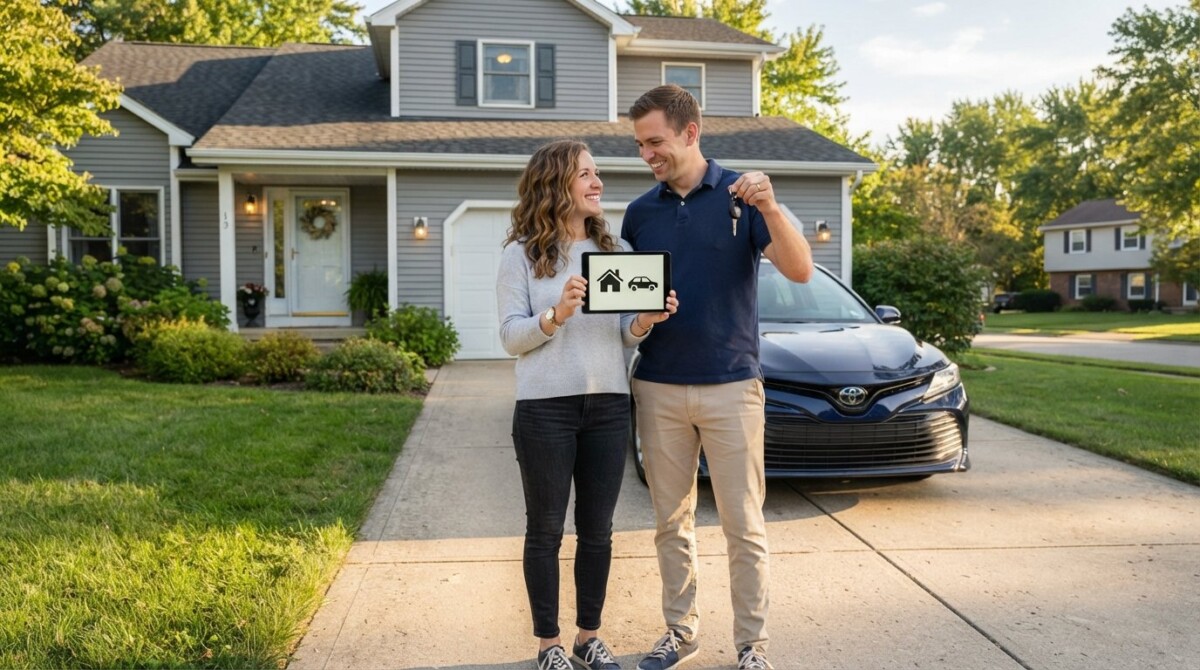
When you rent an apartment or own a house, you likely already know you need some form of property protection. But did you know that your auto insurance strategy can directly affect the cost and quality of that protection? Combining your car policy with renters or homeowners coverage is one of the smartest financial moves you can make, yet many drivers overlook it. In fact, the concept of auto insurance for renters and homeowners extends far beyond a simple discount. It involves understanding how insurers view risk, how coverage gaps form, and how a single policy bundle can simplify your life while saving you hundreds each year.
Let’s start with the basics. If you own a vehicle, you need auto insurance in nearly every state. If you rent an apartment or own a home, you need renters or homeowners insurance to protect your belongings and liability. Most people purchase these policies separately, often from different companies, without realizing that insurers reward customers who combine them. This article explains why bundling matters, what to watch for, and how to maximize your savings without sacrificing coverage.
Why Bundling Auto and Property Insurance Works
Insurance companies operate on volume and loyalty. When you hold multiple policies with the same carrier, you become a more valuable customer, and they reduce your rates to keep you. This is called a multi-policy discount, and it typically ranges from 5% to 25% off both your auto and property premiums. For example, if you pay $1,200 a year for car insurance and $800 for renters insurance, a 15% discount saves you $300 annually. That’s real money, and it requires no extra effort beyond combining policies.
Beyond the discount, bundling simplifies your insurance life. You have one agent, one login, one renewal date, and one bill. If you file a claim, you deal with a single company, which can reduce confusion and speed up the process. For renters, this is especially valuable because your auto insurer often has more robust customer service infrastructure than a small renters-only carrier.
However, bundling is not always the cheapest option. In rare cases, separate policies from different insurers can cost less, even without a discount. That’s why you should compare quotes. But as a general rule, auto insurance for renters and homeowners works best when you stay with one insurer for both. If you are already happy with your auto carrier, check their renters or homeowners rates before shopping elsewhere.
Key Differences Between Renters and Homeowners Coverage
Renters insurance and homeowners insurance share similarities, but they are not identical. Renters insurance covers your personal property, liability, and additional living expenses if your rental becomes uninhabitable. It does not cover the structure itself, because that is the landlord’s responsibility. Homeowners insurance includes structure coverage, plus personal property, liability, and additional living expenses. This distinction matters when you bundle because your auto insurer will assess your property risk differently.
For example, a homeowner with a large property and a swimming pool faces higher liability exposure than a renter in a small apartment. That higher risk can affect your auto insurance premium when bundled, though insurers usually apply the discount regardless. Conversely, renters often see a larger percentage discount because their property coverage is cheaper, making the overall bundle more attractive.
Let’s break down what each policy typically covers:
- Renters insurance: Personal belongings, personal liability, medical payments to others, loss of use, and optional endorsements for high-value items.
- Homeowners insurance: Dwelling coverage, other structures, personal property, personal liability, medical payments, loss of use, and additional endorsements like flood or earthquake.
- Auto insurance: Liability for bodily injury and property damage, collision, comprehensive, uninsured/underinsured motorist, and medical payments or personal injury protection.
When you bundle, you create a single risk profile. Insurers see that you are a responsible policyholder with multiple lines of coverage, which reduces their fear of fraud or neglect. This is why bundling often results in better customer service and faster claims handling, not just a discount.
How to Maximize Discounts on Your Bundle
Getting the full benefit of auto insurance for renters and homeowners requires more than just signing up for two policies. You need to actively manage your coverage and ask about every discount you qualify for. Start by reviewing your current policies and noting your renewal dates. Then contact your auto insurer and ask for a quote on renters or homeowners coverage. Many companies offer a quote online in minutes.
Before you switch or combine, compare your existing coverage limits and deductibles. If your renters policy has a $500 deductible and your auto policy has a $1,000 deductible, you might want to align them. Some insurers offer a disappearing deductible or a multi-policy deductible waiver if you bundle. Ask about these features because they can save you money if you ever need to file a claim.
Another effective tactic is to raise your deductibles on both policies. A higher deductible lowers your premium significantly, and the savings from bundling compound. For instance, if you raise your auto deductible from $500 to $1,000, you might save 10% to 20% on that portion. Combined with a 15% bundle discount, your total savings could exceed 30%. Just ensure you have enough in an emergency fund to cover the deductible if something happens.
Also, don’t forget to ask about loyalty discounts, paperless billing discounts, and safe driver discounts. Some insurers offer a discount just for having a policy for three years without a lapse. If you have a clean driving record and a good credit score, you already qualify for lower rates. Bundling amplifies those savings because the insurer sees you as a low-risk customer across all lines.
Common Mistakes to Avoid When Bundling
Bundling is straightforward, but many drivers make errors that reduce their savings or compromise their coverage. The most common mistake is assuming that bundling always gives you the best price. That is not true. You should still shop around every year or two, because rates change and new competitors enter the market. If you find a cheaper standalone policy, compare it to your bundle’s total cost. Sometimes splitting your policies between two insurers saves money, especially if one insurer specializes in auto and another in property.
Another mistake is underinsuring your property to save money. A renters policy with only $10,000 in personal property coverage might be cheap, but if a fire destroys your belongings, that amount won’t replace your furniture, electronics, and clothing. Similarly, homeowners who skimp on dwelling coverage might face a gap if rebuilding costs exceed their limit. Bundling should not push you to buy less coverage; instead, it should help you afford the right amount.
Finally, don’t forget to update your policy when your life changes. If you get married, buy a new home, add a teen driver, or start a home business, your insurance needs shift. Failing to report these changes can leave you underinsured and may void your coverage in a claim. Always contact your agent after major life events to adjust your bundle.
Real-World Examples of Savings
Let’s look at a concrete scenario. Sarah is a renter in Austin, Texas. She pays $1,300 a year for auto insurance with a national carrier. She also has a renters policy with a different company that costs $350 a year. Her total annual insurance spend is $1,650. After reading about bundling, she asks her auto insurer for a renters quote. The insurer offers her renters coverage for $300 a year and applies a 12% multi-policy discount to her auto premium, reducing it to $1,144. Her new total is $1,444, saving her $206 a year. Plus, she now has one agent and one renewal date.
For homeowners, the savings can be even larger. Consider a family in Ohio with a home valued at $250,000. Their homeowners policy costs $1,100 a year, and their two-car auto policy costs $1,800. Separately, they pay $2,900 annually. By bundling with one insurer, they receive a 20% discount on both policies. That cuts their homeowners premium to $880 and their auto premium to $1,440, for a total of $2,320. They save $580 in one year. Over five years, that’s nearly $3,000, enough to cover a major deductible.
These examples illustrate why bundling is so popular. But remember, the exact savings depend on your state, your insurer, and your personal profile. The best way to know is to request quotes from multiple companies and compare the bundled price to separate policies.
Frequently Asked Questions
Does bundling auto and renters insurance always save me money?
In most cases, yes, because insurers offer a multi-policy discount. However, the discount might be small, and your current separate policies could already be competitively priced. Always compare total costs, not just the discount percentage.
Can I bundle auto insurance with renters insurance if I don’t own a car?
No, you need an auto policy to bundle with renters. If you don’t own a vehicle, you can still buy renters insurance, but you won’t qualify for a multi-policy discount unless you have another type of policy, like a motorcycle or RV.
What happens to my bundle if I move from a rental to a home?
Your insurer can usually convert your renters policy to a homeowners policy seamlessly. Your premium will increase because homeowners coverage is broader, but you’ll maintain your multi-policy discount. Notify your insurer as soon as you close on a home to ensure continuous coverage.
Is it better to bundle with the same company or use an independent agent?
Both options work. A direct insurer might offer the best online discounts, but an independent agent can compare bundles from multiple carriers and find the cheapest combination. Go with whichever saves you more while providing the service you need.
Can I bundle auto and homeowners insurance if I have a poor driving record?
Yes, but you may not qualify for the best rates. A poor driving record raises your auto premium, and the bundle discount might not offset that increase. Still, bundling can prevent your homeowners insurance from being surcharged, because some insurers avoid raising property rates for auto violations.
If you still have questions, our guides on bundling auto and home insurance for renters and the benefits of bundling offer deeper insight. For a complete breakdown, see our smart bundling strategies and bundling guide.
Make Your Insurance Work Harder
Auto insurance for renters and homeowners is not just a buzzword; it’s a practical strategy to reduce your insurance costs while improving your coverage. By combining policies, you gain convenience, access to discounts, and often better claims service. Yet, you must remain vigilant about your coverage limits and compare prices regularly to ensure you’re not overpaying.
Start by reviewing your current policies, then request quotes from at least three insurers. Ask about multi-policy discounts and any additional savings you qualify for. If you’re already with a company you trust, a simple phone call can unlock the discount you’ve been missing. And if you’re not sure where to begin, use an online comparison tool to see how bundles stack up.
Your insurance should protect you, not confuse you. Bundling simplifies your life and puts more money back in your pocket. So, take action today. Review your coverage, talk to an agent, and see how much you can save. For personalized assistance, you can reach our team at 833-214-7506 to discuss your options.